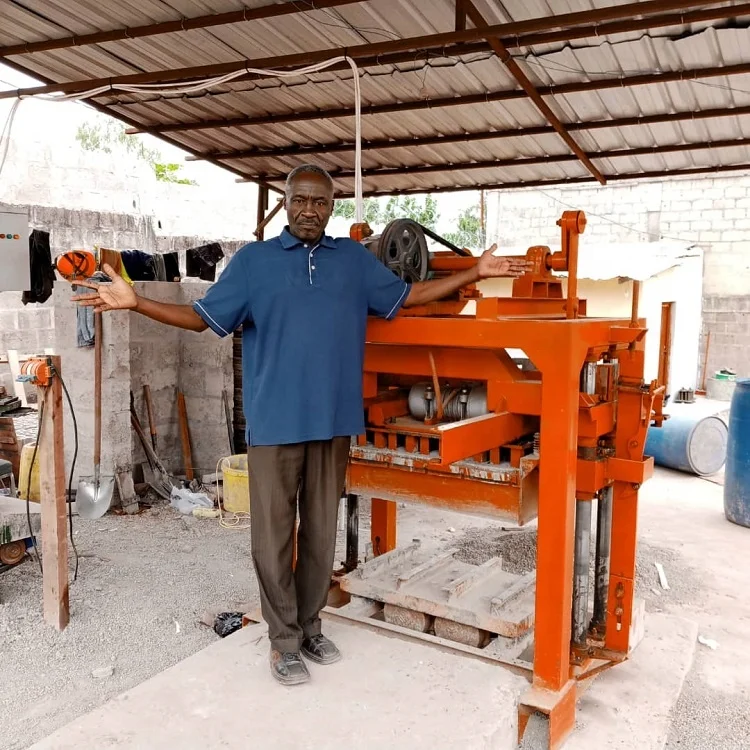
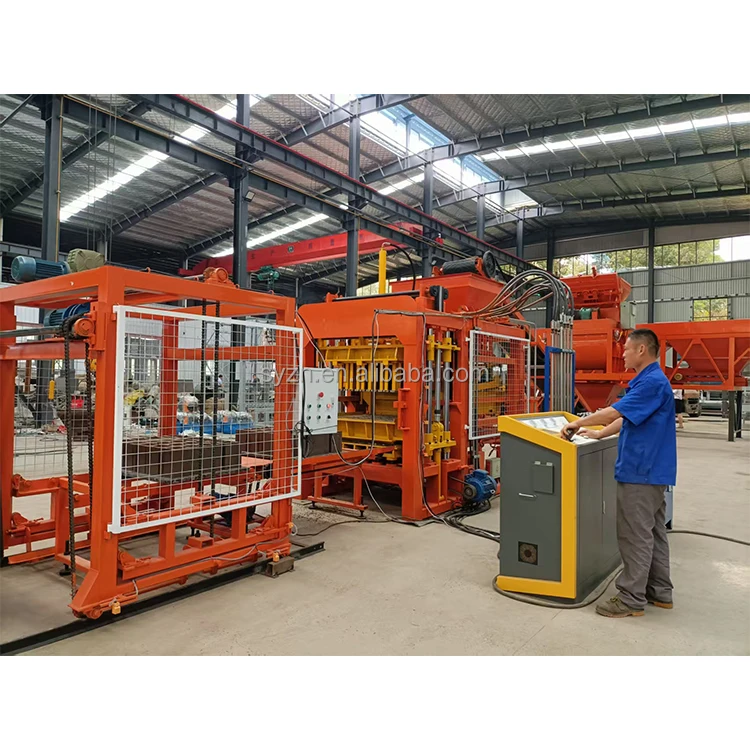
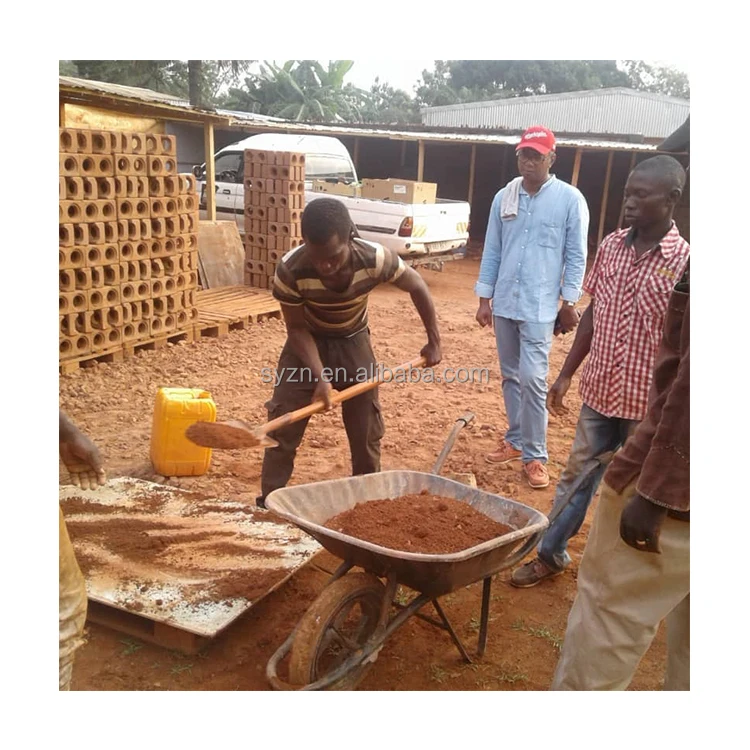
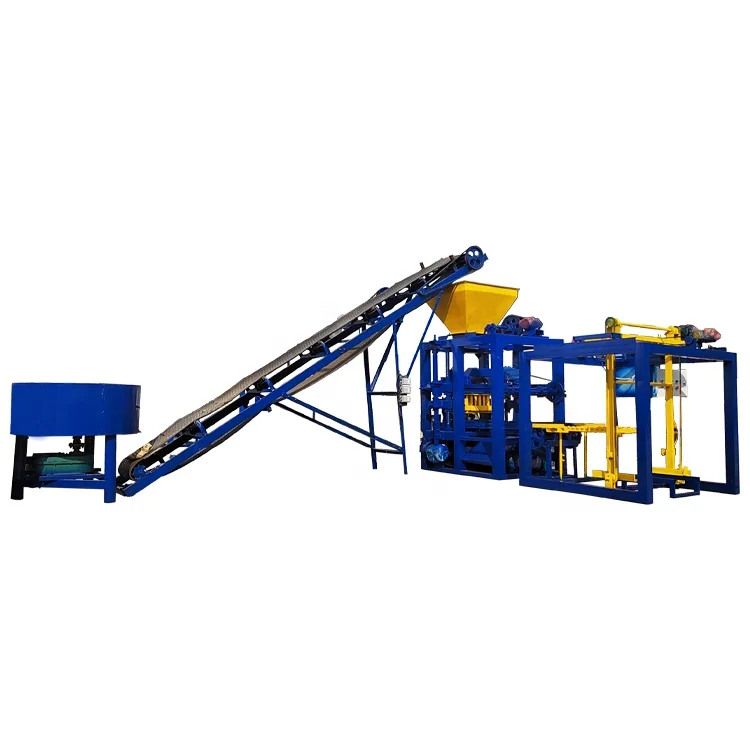
Matched System Sizing — the QT4-18 is specified as one coordinated unit where machine, mould, pallet, and handling are selected together against your actual block format rather than pulled from separate catalogues.
Technical Specifications
| Parameter |
Value |
| Model |
QT4-18 |
| Product Type |
Hydraulic Concrete Block Making Machine |
| Overall Dimensions (L×W×H) |
3900×1600×2300 mm |
| Molding Cycle |
15-25 s |
| Vibration Force (Exciting Power) |
40-50 kN |
| Rated Power |
24 kW |
| Mixer Model |
JQ350 |
| Pallet Size |
850×550×25 mm |
| Net Weight |
3 T |
| Control System |
PLC control system |
| Hydraulic Station |
Included |
| Included Equipment |
Block making machine, hydraulic station, PLC control system, pallet feeder, brick conveyor, block sweeper |
| Free Accessories |
Manual hydraulic trolley, spare parts and tools |
| Applied Products |
Paver, solid block, hollow block, curbstone |
| Raw Materials |
Crushed stones, sand, cement, dust, fly ash |
| Output Capacity (Hollow block 400×200×200 mm) |
1200-1680 pcs/hr (basis: 400×200×200 mm hollow block, 15-20 s cycle) |
| Output Capacity (Hollow block 400×150×200 mm) |
1800-2400 pcs/hr (basis: 400×150×200 mm hollow block, 15-20 s cycle) |
| Output Capacity (Solid brick 240×115×53 mm) |
3240 pcs/hr (basis: 240×115×53 mm solid brick, 15-20 s cycle) |
| 8-Hour Output (Hollow block 400×200×200 mm) |
9600-13440 pcs/8 hr |
| 8-Hour Output (Hollow block 400×150×200 mm) |
14400-19200 pcs/8 hr |
| 8-Hour Output (Solid brick 240×115×53 mm) |
16200-19440 pcs/8 hr |
| Automation Level |
Semi-automatic (pallet feeder included; stacking method basis to be confirmed) |
| Voltage & Frequency |
To be confirmed before commissioning |
| PLC Display Language |
To be confirmed before commissioning |
| Certification |
CE declaration available where applicable |
Application Suitability
| Application |
Material or Output |
| Hollow block production for small-to-medium plants |
Crushed stone, sand, cement, fly ash; 400×200×200 mm and 400×150×200 mm formats |
| Solid brick manufacturing |
Cement, sand, and dust blends; 240×115×53 mm standard brick format |
| Paver and interlocking block production |
Aggregate and cement mixes for pedestrian and light-traffic paving |
| Curbstone forming on-site |
Coarse aggregate mixes shaped through dedicated curbstone moulds |
| First block plant for entrepreneurs |
Multi-format entry-level line with semi-automatic material handling |
What "1200 Pieces per Hour" Actually Means on Your Floor
Every capacity figure here is tied to a specific block size and cycle time — no generic hourly claims.
The QT4-18 block making machine manufacturer catalogue might show a single headline number, but buyers quickly learn that a 400×200×200 mm hollow block and a 240×115×53 mm solid brick demand completely different vibration profiles, cycle durations, and mould setups. When a supplier quotes cycles per hour without stating the format, the real daily output often lands well below what the buyer planned for. [NEED_CITE: block format assumptions in capacity quotations across manufacturers]
Positioning the QT4-18 Across the Full Range
The QT4-18 occupies the compact tier of the SHIYUE block machine range. Buyers evaluating their first plant or replacing an ageing single-machine setup typically start here because the footprint fits inside a modest workshop and the semi-automatic configuration keeps initial capital manageable. For higher daily volumes or fully automatic stacking and cubing, the range extends upward to larger pallet sizes and faster cycle platforms.
How This Model Compares to Adjacent Tiers
Moving one tier up adds automatic stacking, larger pallets, and shorter cycle times suited to plants running a single format at high volume. Moving one tier down reduces automation further and suits mobile or egg-laying setups where blocks cure in place. The QT4-18 block making machine manufacturer offering sits between those extremes: it includes a pallet feeder, brick conveyor, and block sweeper so the press is not left idle waiting for manual pallet placement, yet it leaves room for the buyer to add automatic stacking later. [NEED_CITE: automation tier upgrade paths in block production lines]

Reading the Vibration, Pressure, and Cycle Numbers Together
Vibration force rated at 40-50 kN works alongside the hydraulic station to compact the mix inside the mould cavity. Higher vibration energy pushes fine particles into voids, while hydraulic pressure holds the mould head down during compaction. If your local sand carries high clay content — something I have seen repeatedly on West African sites — the standard vibration setting may not deliver enough energy to break through that cohesion, and blocks emerge weak at the edges. The 15-25 second molding cycle range gives operators room to extend dwell time when the mix demands it. The 850×550×25 mm pallet must align with your curing racks and forklift tine spacing; ordering pallets separately without checking this creates a bottleneck the moment blocks leave the press.
The Hidden Cost of Mismatched Line Components
When the pallet feeder cycle does not match the press cycle, the machine sits idle for seconds that add up across a full shift. A block sweeper that clears debris slowly forces the operator to wait before the next mould fill. These micro-stoppages are invisible during a factory demonstration but compound into noticeable daily shortfalls once production runs at pace. [NEED_CITE: impact of feeder-press cycle mismatch on daily block output] Choosing the QT4-18 as a matched system — press, feeder, conveyor, and sweeper specified together — removes this coordination risk from the buyer.
Why Source This Model Through SHIYUE
Block machinery is the single focus, so the QT4-18 is never treated as a standalone press bolted onto third-party conveyors. The configuration is set against the buyer’s actual mix design and local aggregate rather than a default catalogue entry. Mould design covers the formats your market actually sells, and custom mould drawings are available when standard shapes do not match local building codes. Automation level is selectable, meaning a buyer can start with the semi-automatic setup and add stacking equipment as volume grows. Installation support includes operator training on the PLC interface so the crew understands parameter adjustments from day one. [NEED_CITE: importance of operator training on PLC-controlled block machines]
Documentation & Verification
- Line layout and capacity calculation stating the exact block format assumed for each QT4-18 output figure
- Machine specification sheet with vibration force, hydraulic pressure, and pallet size matched to your aggregate
- Voltage, frequency, and PLC display language written confirmation before production begins
- Mould drawing and format list covering hollow block, solid brick, paver, and curbstone options
- Factory test record on your chosen block format before dispatch
- Operation and maintenance manual with wear parts and mould replacement schedule
Installation, Commissioning & Support
- Foundation pad sized to the 3900×1600 mm footprint with vibration isolation provisions
- Dedicated electrical circuit rated for the 24 kW load with confirmed voltage and frequency
- Machine arrives with hydraulic station, PLC cabinet, and pallet feeder as separate assemblies for site positioning
- First-run parameter tuning covering vibration duration and hydraulic pressure for your local mix
- Operator training on PLC display language, cycle adjustment, and mould change procedure
- Spare parts kit and manual hydraulic trolley included for immediate production start-up
Starting Your QT4-18 Inquiry
To size the QT4-18 correctly within the range, share the block formats your market demands and the daily output you need per format. Confirm your local voltage, frequency, and preferred PLC display language so the control cabinet is wired before shipment. If you already have curing racks or forklifts on site, send the pallet dimensions you currently use so the 850×550 mm pallet specification is validated against your existing handling infrastructure.
Frequently Asked Questions
Q: How do I verify the real daily output of the QT4-18 for my specific block format?
A: Request the line layout and capacity calculation document that states the exact block size and cycle time behind each output figure. Compare that number against your target shift length and factor in mould change intervals if you plan to run multiple formats in one day. The manufacturer should provide this breakdown before you commit to an order.
Q: Where does the QT4-18 sit in the range — should I consider a higher or lower tier?
A: This model fits buyers who need multi-format flexibility at moderate volume with a semi-automatic line. If your daily target exceeds what a single 850×550 mm pallet platform can deliver, a higher tier with larger pallets and automatic stacking may be more economical. If your project is short-term or site-specific, a mobile tier below could suffice.
Q: What automation level does the QT4-18 ship with, and can I upgrade later?
A: The standard configuration is semi-automatic, including a pallet feeder, brick conveyor, and block sweeper coordinated through the PLC. Automatic stacking and cubing can be added as the plant grows, provided the foundation and electrical capacity were planned with future expansion in mind from the outset.
Q: How is the pallet size chosen, and will it work with my existing curing area?
A: The 850×550×25 mm pallet is specified as part of the matched system. Before confirming your order, verify that your curing rack shelves, forklift tine width, and transport trolley all accept this dimension. Mismatched pallet sizing is a common source of post-delivery bottlenecks that delay production ramp-up.
Q: What voltage, frequency, and PLC language options are available for my market?
A: These parameters must be confirmed before the control cabinet is wired. Provide your site voltage and frequency along with the preferred PLC display language during the inquiry stage so the electrical schematic and HMI text files are prepared before the machine enters the production queue.

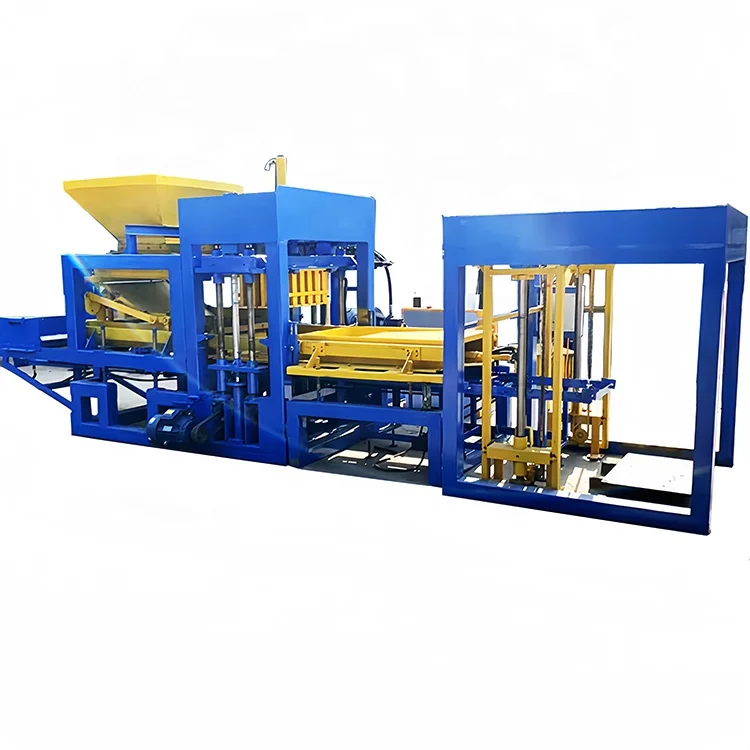
 High quality block machine