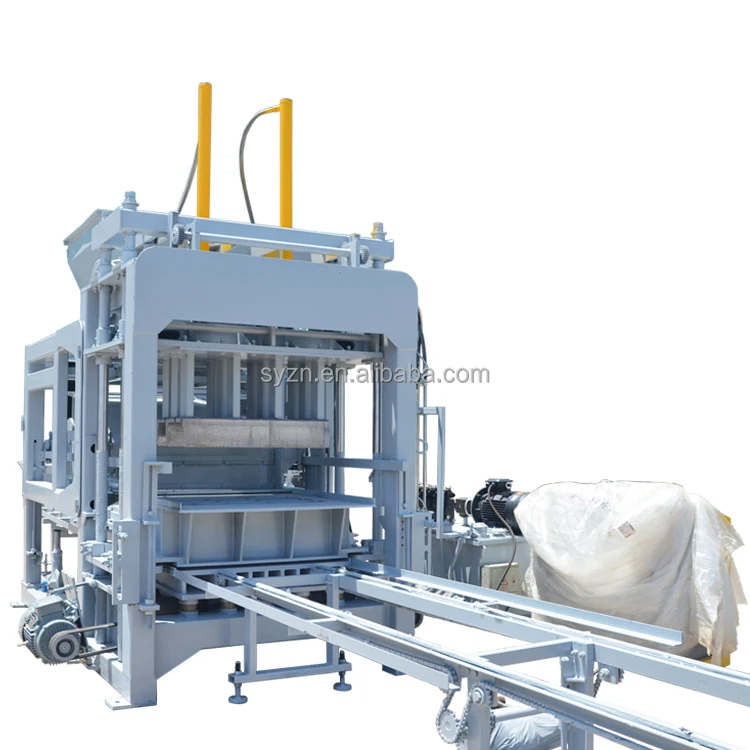
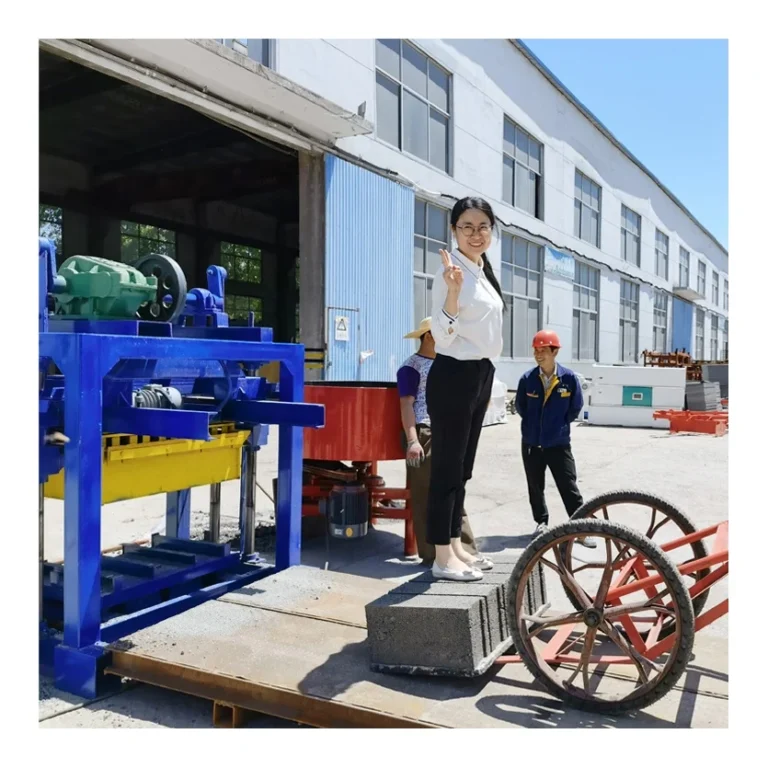
Matched System Approach — The QT4-18 block machine manufacturer configures press, pallet, mould and handling as one verified line rather than assembling unmatched components from separate vendors.
Technical Specifications
| Parameter |
Value |
| Model |
QT4-18 |
| Product Type |
Hydraulic Automatic Hollow Block Making Machine |
| Vibration Frequency |
0-60Hz |
| Vibration Form |
Platform Vibration |
| Pallet Size |
900×500mm |
| Molding Cycle |
18-25s |
| Vibration Force |
45kN |
| Demolding Method |
Hydraulic |
| Control System |
PLC |
| Capacity (Hollow 400×200×200mm) |
799 pcs/h based on 4 pcs/mould, 18s cycle |
| Capacity (Hollow 400×150×200mm) |
999 pcs/h based on 5 pcs/mould, 18s cycle |
| Capacity (Solid 240×115×52mm) |
5,199 pcs/h based on 26 pcs/mould, 18s cycle |
| Block Formats |
Hollow block, solid brick, color face brick, road curb rock, hydraulic block, sod brick |
| Automation Level |
Automatic (PLC & engine controlled, electric-hydraulic interlock) |
| Assembly State |
Stationary |
| Warranty |
1 year (excluding spare parts) |
Application Suitability
| Application |
Material or Output |
| Hollow block production for building walls |
Crushed stone, sand, cement, fly ash aggregates |
| Solid brick manufacturing for load-bearing structures |
Dense aggregate mix with fine sand grading |
| Color face brick for architectural facades |
Pigmented cement mix with smooth finish aggregate |
| Road curb rock for municipal paving |
Coarse aggregate with high cement ratio |
| Sod brick for landscaping and permeable surfaces |
Open-graded aggregate with controlled porosity |
| On-site block production for housing projects |
Locally sourced aggregate matched to regional supply |
Why the Voltage Question Must Precede Every Other Discussion
A machine that does not match local voltage and frequency is a stationary steel frame until an electrician rewires the panel — and that rewrite can take weeks.
I have stood on job sites where a brand-new automatic hollow block making machine for sale sat idle under a tarp because nobody confirmed whether the destination grid ran at 50Hz or 60Hz. The local electrician stared at a control panel built for a different standard, and the entire commissioning schedule collapsed. That delay is not a shipping error or a factory defect — it is a specification conversation that never happened [NEED_CITE: voltage and frequency standards by export market]. The QT4-18 block machine manufacturer treats voltage, frequency, and PLC display language as locked line items on the order document, not assumptions left to chance.
Positioning the QT4-18 Within the Full Stationary Range
The QT4-18 occupies the mid-tier of Shiyue’s stationary block machine lineup. Buyers stepping up from a semi-automatic press gain PLC-controlled electric-hydraulic interlock and repeatable cycle timing without committing to the footprint and capital outlay of a high-capacity automatic line. For entrepreneurs setting up a first block plant, this tier balances daily output with manageable operator requirements.
Where the Automatic Tier Earns Its Place
Semi-automatic machines demand constant manual pallet handling and operator-initiated cycles, which caps realistic daily throughput regardless of what the rated cycle time suggests. The QT4-18 removes those bottlenecks through its automatic sequence — material feed, vibration, hydraulic demolding, and pallet advance all execute under PLC control. That consistency matters most when a construction contractor needs reliable block supply across a multi-month housing project and cannot afford output swings between shifts [NEED_CITE: CE machinery directive requirements for industrial equipment].
Reading the Specifications That Actually Shape Output
The 45kN vibration force paired with a 0-60Hz frequency range gives the operator room to adjust compaction density across formats — a hollow block demands different energy input than a solid face brick. The 900×500mm pallet size is the governing constraint: it determines how many cavities each mould can carry and therefore how many pieces drop per cycle. Molding cycles between 18 and 25 seconds reflect format complexity rather than a single fixed number; a simple solid brick cycles faster than a tall hollow block that requires extended vibration to settle the mix evenly through deep cavities. The hydraulic demolding system applies controlled withdrawal force so freshly pressed blocks leave the mould without corner damage, which directly affects saleable yield at the curing rack.

The Cost of Skipping Configuration Detail
Buyers who confirm nothing beyond "automatic block machine" often discover after arrival that the pallet size does not match their existing curing racks or forklift dimensions, forcing a separate purchase of handling equipment. Moulds specified without reference to local aggregate gradation produce blocks that chip during demolding or fail compressive strength tests. These are not warranty claims — they are specification gaps that shift cost and delay onto the buyer’s side of the ledger [NEED_CITE: common commissioning failures from unconfirmed specifications].
Why Buyers Source This Tier Through Shiyue
Block machinery is our single focus, so the QT4-18 arrives with machine, mould, pallet, and handling specified as one matched system. We set configuration against the buyer’s actual mix design and target block format rather than shipping a catalogue default. Mould design covers the formats the buyer’s market actually sells, and custom drawings are reviewed before production. Automation level is selectable — a buyer can start with the QT4-18 and plan an upgrade path without replacing the entire press. Installation support includes operator training on the PLC interface so the crew is productive from the first production day.
Documentation & Verification
- Line layout stating block format assumed for each QT4-18 capacity figure
- Machine specification sheet confirming vibration force and pallet size per format
- Mould drawing and format list covering all compatible block types
- Voltage, frequency, and PLC display language confirmation before dispatch
- Factory test record on buyer’s target block format prior to shipment
- Hydraulic and electrical schematic for local maintenance reference
Installation, Commissioning & Support
- Foundation pad must accommodate the 900×500mm pallet footprint plus feeding clearance
- Dedicated power circuit sized for the QT4-18 hydraulic pump and vibration motor load
- PLC display language confirmed before shipment to match operator capability on site
- Hydraulic pressure and vibration frequency tuned to buyer’s local aggregate during commissioning
- Mould change procedure demonstrated with all supplied format plates during training
- Wear parts list provided with part numbers for first reorder cycle
What to Include in Your Inquiry
Send your target block formats with dimensions, daily volume requirement, and the aggregate materials available at your site. Confirm the local voltage, frequency, and preferred PLC display language so the control panel matches your electrical grid before the machine leaves the factory. If you already operate pallet handling or curing racks, share those dimensions so the line layout integrates with your existing equipment.
Frequently Asked Questions
Q: How is the QT4-18 capacity verified, and which block format does each figure assume?
A: Every output number ties to a specific block dimension and mould cavity count. The 799 pieces per hour figure, for example, assumes a 400×200×200mm hollow block with four cavities per mould and an 18-second cycle. We document the assumed format on the capacity calculation sheet so buyers can match figures to their own product mix.
Q: Where does the QT4-18 sit compared to semi-automatic and higher-output models?
A: It occupies the mid-tier of the stationary range. Buyers moving up from semi-automatic gain PLC-controlled cycles and electric-hydraulic interlock without stepping to a high-capacity line. Those needing higher volume can explore larger pallet platforms in the same range, keeping the upgrade path within a familiar control architecture.
Q: What voltage and PLC language options are available for different markets?
A: Voltage and frequency are configured to the destination grid before production. The PLC display language is confirmed on the order document so operators read instructions in a familiar language at first startup. This confirmation is a locked step — the machine does not ship until the electrical specification matches the buyer’s written requirement.
Q: What plant footprint does a QT4-18 stationary line require?
A: The line layout document specifies floor space for the press, pallet magazine, material feeder, and stacking area based on the 900×500mm pallet size. Buyers should share their building dimensions so the layout places curing racks within forklift reach and leaves clearance for mould changes and routine maintenance access.
Q: Which mould formats are standard, and how are custom moulds specified?
A: Standard formats include hollow block, solid brick, color face brick, road curb rock, and sod brick on the QT4-18 platform. Custom moulds are designed from buyer drawings or target block samples. Each mould drawing is reviewed and approved before manufacturing to confirm cavity count, cycle compatibility, and demolding clearance.

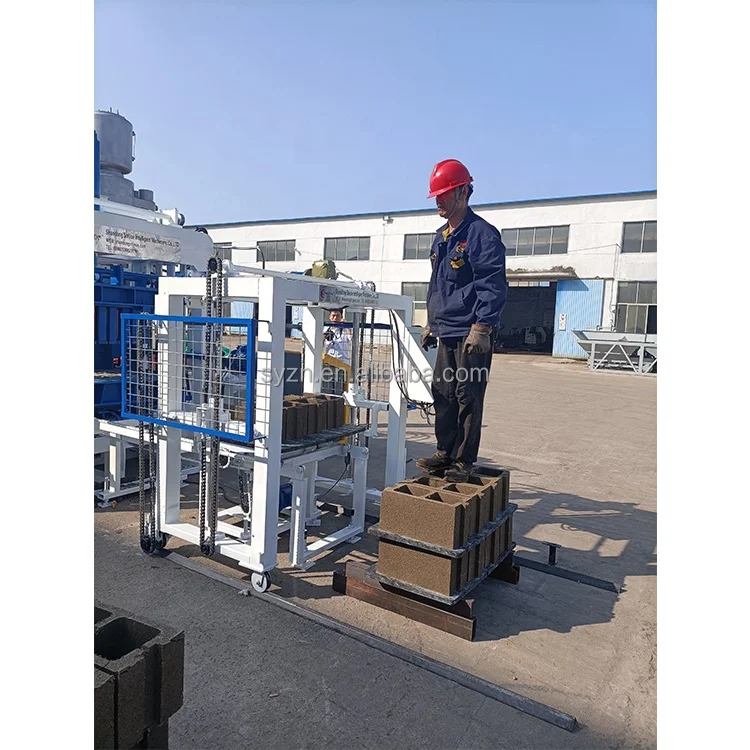
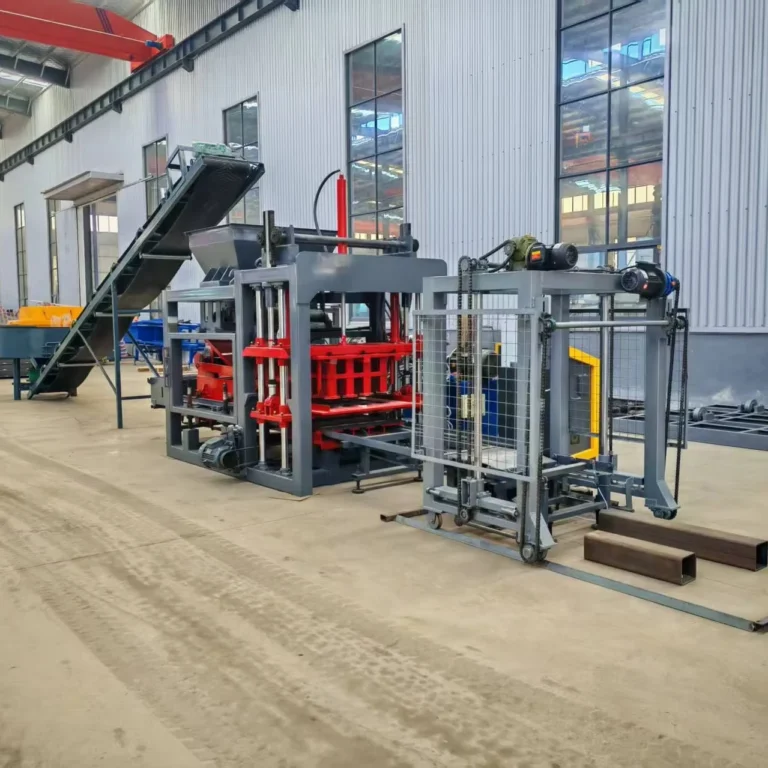 Stationary block machine