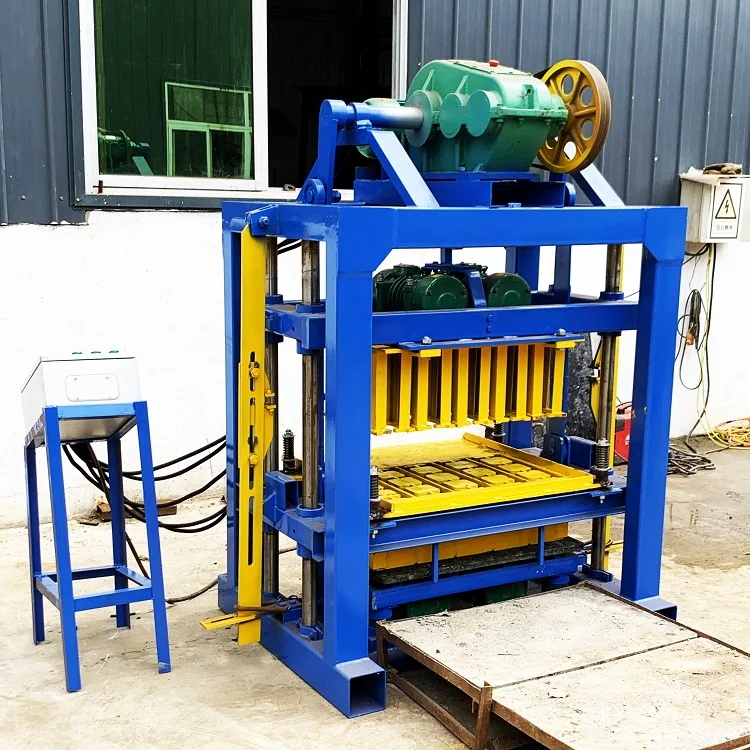
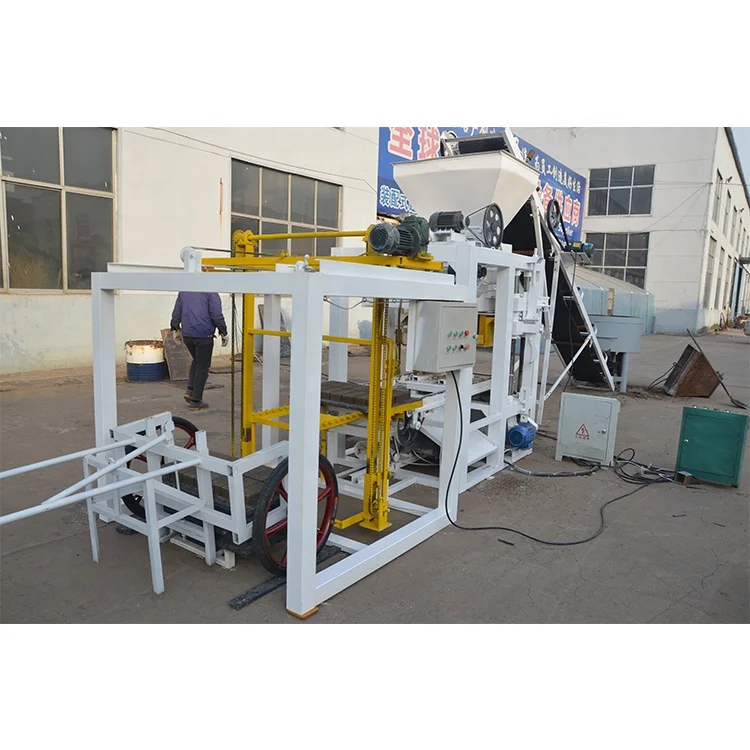
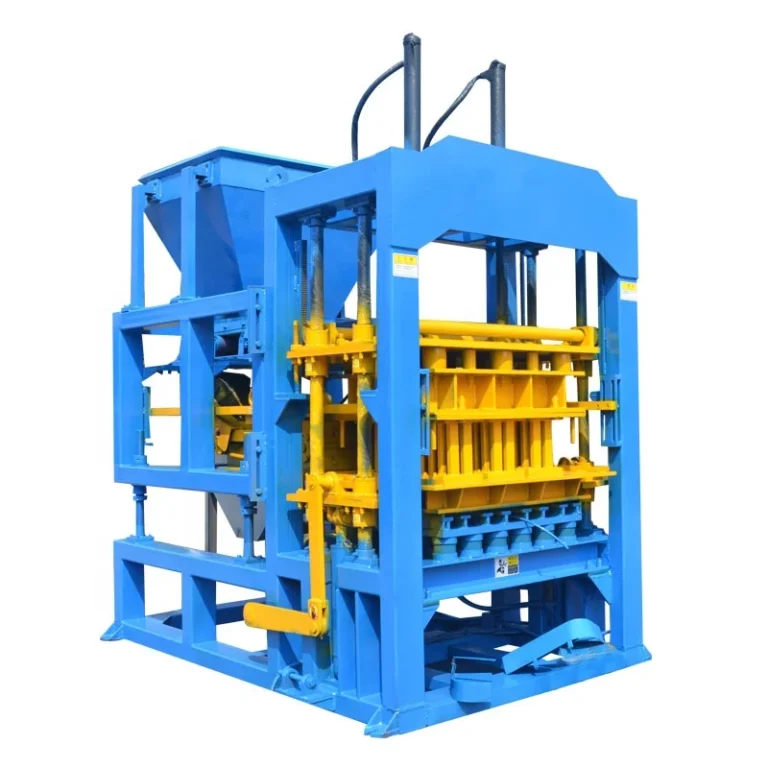
Matched System Integration — the QT4-15B is specified as one coordinated block production unit where press, mould, pallet and handling parameters are aligned before quotation, not assembled from separate catalogues after the order.
Technical Specifications
| Parameter |
Value |
| Model |
QT4-15B |
| Product Type |
Automatic Concrete Block Making Machine |
| Automation Level |
Fully automatic, computer controlled |
| Vibration Mode |
Multiaxis synchronizer vibration (vertically downward) |
| Hydraulic System |
High thermal efficiency, low heat generation |
| Mixer Type |
Multiaxis forced mixer system |
| Guide Bearing |
Long-period over-length guide bearing for upper mould and mould box alignment |
| Rack Construction |
High-strength steel with special welding technique, vibration-shock resistant |
| Control System |
Computer (PLC) controlled |
| Output Capacity (Hollow Block) |
900–1200 pcs/h (based on 400×200×200mm hollow block) |
| Output Capacity (150mm Block) |
1080–1440 pcs/h (based on 400×150×200mm block) |
| Output Capacity (100mm Block) |
1440–1920 pcs/h (based on 400×100×200mm block) |
| Output Capacity (Paving Block) |
2880–3840 pcs/h (based on 200×100×60mm paving block) |
| Output Capacity (Standard Brick) |
5930–6720 pcs/h (based on 240×115×53mm standard brick) |
| Cycle Time |
15–20s (basis not stated in source) |
| Mould Compatibility |
Hollow block, solid block, paving block, standard brick, multicellular brick |
| Warranty |
1 year for the whole machine (excluding spare parts) |
| Voltage & Frequency |
Configurable to buyer’s local supply (to be confirmed) |
| PLC Display Language |
Configurable (to be confirmed) |
| Overall Dimensions |
To be confirmed |
| Net Weight |
To be confirmed |
| Pallet Size |
To be confirmed |
| Hydraulic Pressure |
To be confirmed |
| Vibration Force |
To be confirmed |
| Certification |
To be confirmed (CE or other applicable standard) |
Application Suitability
| Application |
Material or Output |
| Hollow block production for residential and commercial walls |
Crushed stone, sand, cement, fly ash, water |
| Solid load-bearing block manufacturing |
Dense aggregate blends, cement, water |
| Paving block production for walkways and driveways |
Fine aggregate, cement, pigment additives |
| Standard brick production for infill and partition walls |
Clay替代 materials, stone dust, cement |
| Multicellular brick for lightweight wall applications |
Lightweight aggregate, perlite, cement |
Why "Pieces per Hour" Can Mislead a First-Time Buyer
Capacity means nothing without the block format attached to it.
I have watched buyers compare two automatic concrete block making machine for sale quotations side by side, pick the one with the higher hourly number, and then discover on commissioning day that the figure assumed a small solid brick while their market actually sells 200mm hollow blocks. The QT4-15B output is therefore stated per format: 900–1200 pieces per hour based on a 400×200×200mm hollow block, rising to 5930–6720 pieces per hour based on a 240×115×53mm standard brick. Any supplier who quotes a single cycles-per-hour number without naming the format is asking you to guess. [NEED_CITE: block format impact on realistic daily output]

Where the QT4-15B Sits Across the Output Range
The QT4-15B occupies the mid-tier of the Shiyue stationary block machine lineup. Below it sit semi-automatic models suited to smaller plants with lower initial investment and manual pallet handling. Above it are high-capacity automatic lines with fully automatic stacking and cubing for buyers who need continuous three-shift operation. This positioning matters because it determines not only the press itself but the supporting equipment around it — mixer capacity, pallet return speed, and curing rack handling must all match the press cycle so the machine is never left waiting for material or pallets.
Choosing Between Semi-Automatic and Full Automation
A buyer starting a first block plant often asks whether to begin semi-automatic and add automation later. The QT4-15B is delivered as a fully automatic, computer-controlled unit, meaning the PLC manages the press cycle, vibration timing, and hydraulic sequence without operator intervention at each stroke. The automation level across the range is selectable, so the same buyer can specify manual pallet feeding now and add automatic stacking and cubing when volume justifies it. The key is to decide the upgrade path before the foundation is poured, because pallet conveyor pits and stacking robot bases need to be cast into the floor from day one. [NEED_CITE: automation upgrade considerations for stationary block plants]
Vibration, Pressure, and Guide Precision on the Shop Floor
Three specifications on the QT4-15B directly shape what comes off the pallet. The multiaxis synchronizer vibration delivers force vertically downward, which matters because off-axis vibration causes uneven density — the block is hard on one side and crumbles on the other. The high-efficiency hydraulic system maintains pressure with low heat generation, so the press does not lose force after several hours of continuous cycling in a hot climate. The long-period over-length guide bearing keeps the upper mould aligned with the mould box throughout the stroke, preventing the flash and dimensional drift that forces a block plant to discard entire pallets of output. The high-strength steel rack with vibration-shock resistant welding is what holds these three systems in register over years of operation rather than weeks.
What Happens When the Mix Does Not Match the Machine
I once visited a block plant where the owner had purchased a mid-tier automatic press based on a catalogue test using clean, graded aggregate. His local stone dust carried a high clay content, and the vibration parameters had never been adjusted for that material. Block strength was inconsistent, surface finish was poor, and daily output dropped noticeably because the operator kept stopping the line to clear mould box buildup. The multiaxis forced mixer system on the QT4-15B is designed to handle varying raw material properties, but only if the mix design is confirmed before the machine is configured. Sending a sample of the local aggregate to the factory allows the vibration force and hydraulic pressure to be matched to the actual material, not a laboratory default. [NEED_CITE: raw material testing for block machine configuration]
Why This Machine Tier Works for Your Project
Block machinery is our single focus, so the QT4-15B is specified as one matched system — press, mould, pallet, and handling — rather than assembled from separate suppliers after the deposit is paid. Every capacity figure in the quotation states the block format it assumes, so there is no gap between the proposal and the first production shift. Mould design covers the formats the buyer’s market actually sells, including custom drawings when a project specifies a non-standard block dimension. The automation level is selectable, allowing a buyer to start with the QT4-15B as fully automatic and add stacking and cubing modules as output grows. Installation support includes operator training on the PLC interface, and the wear parts and mould list is provided before shipment so the first replacement order can be placed without downtime.
Documentation & Verification
- Line layout and capacity calculation stating the block format assumed for each QT4-15B output tier
- Machine specification sheet with hydraulic and electrical schematics for the configured voltage
- Mould drawing and format list covering every block type included in the quotation
- Factory test record on the buyer’s specified aggregate blend before dispatch
- Packing photographs showing dismantling state and container loading arrangement
- Voltage, frequency, and PLC display language confirmation signed before production begins
Installation, Commissioning & Support
- Foundation plan sized to the QT4-15B rack footprint and vibration load, cast before machine arrival
- Dedicated electrical circuit matching the confirmed voltage, frequency, and phase for the PLC and hydraulic pump
- Machine arrives dismantled for container loading; on-site reassembly includes guide bearing realignment check
- First-run commissioning verifies cycle time against the agreed block format and local mix design
- Operator training covers PLC fault codes, mould change procedure, and daily vibration system inspection
- Wear parts list provided with the machine so hydraulic seals and mould liners can be reordered before first failure
What We Need from You to Size the Line Correctly
To prepare a configuration proposal for the QT4-15B, please share the block formats your market sells and the daily output target for each. Include a sample or lab report of the local aggregate you plan to use, because the vibration and hydraulic settings depend on it. Confirm the available voltage, frequency, and phase at the site, as well as the preferred PLC display language, so the control cabinet can be built correctly before shipping.
Frequently Asked Questions
Q: How is output capacity verified, and which block format does each figure assume?
A: Every capacity figure for the QT4-15B is stated with the block format it assumes — for example, 900–1200 pieces per hour based on a 400×200×200mm hollow block. The factory test record confirms actual output on the buyer’s specified mix before dispatch, so the number in the quotation matches what the machine produces on site.
Q: Where does the QT4-15B sit compared to semi-automatic and high-capacity models?
A: The QT4-15B is the mid-tier fully automatic option, positioned above semi-automatic models with manual pallet handling and below high-capacity lines with automatic stacking and cubing. Buyers choose this tier when they need consistent PLC-controlled output without the investment of a full three-shift production line.
Q: What voltage, frequency, and PLC language options are available?
A: Voltage, frequency, and phase are configured to the buyer’s local supply and confirmed in writing before production. The PLC display language is also confirmed at the same stage, so the operator can read fault codes and cycle parameters in their working language from the first day of commissioning.
Q: What is the plant footprint and installation requirement for this tier?
A: The foundation must be cast to the QT4-15B rack footprint and vibration load, and a dedicated electrical circuit is required for the PLC and hydraulic system. The machine arrives dismantled for container loading, and on-site reassembly includes guide bearing alignment verification before the first production run.
Q: Can the automation level be upgraded after installation?
A: Yes. The automation level across the Shiyue range is selectable, and the QT4-15B can be upgraded with automatic stacking and cubing modules later. The upgrade path should be planned before the foundation is poured, because pallet conveyor pits and stacking bases need to be cast into the floor from the start.

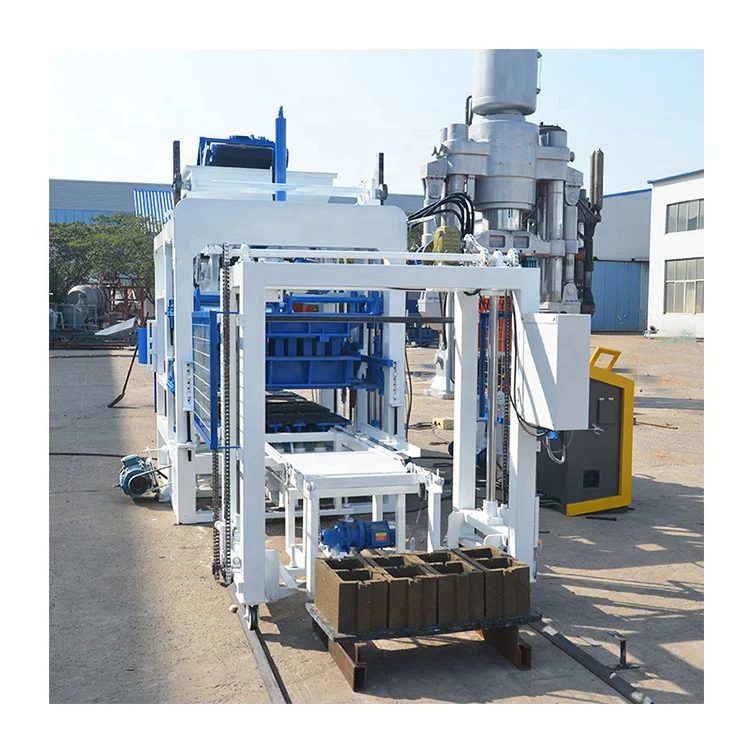
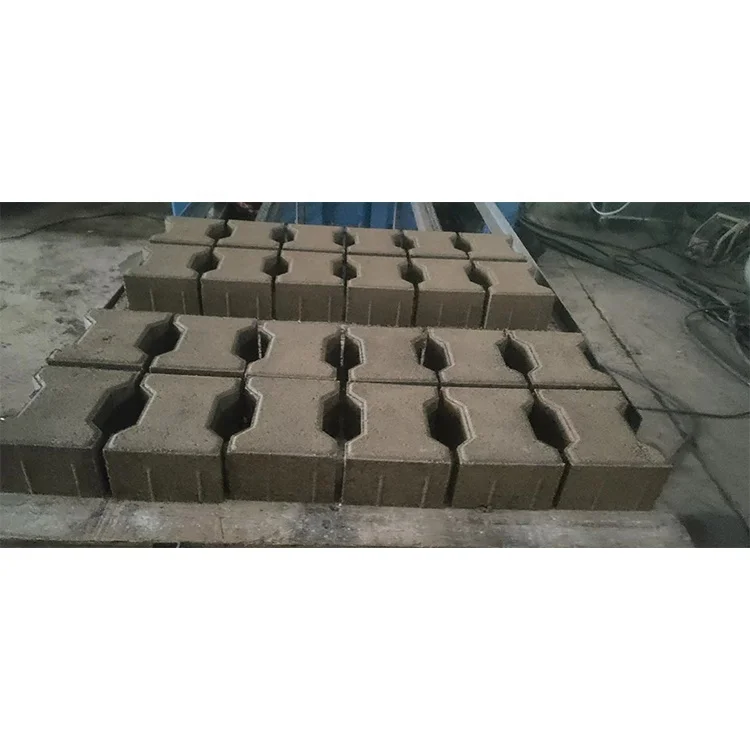 Stationary block machine