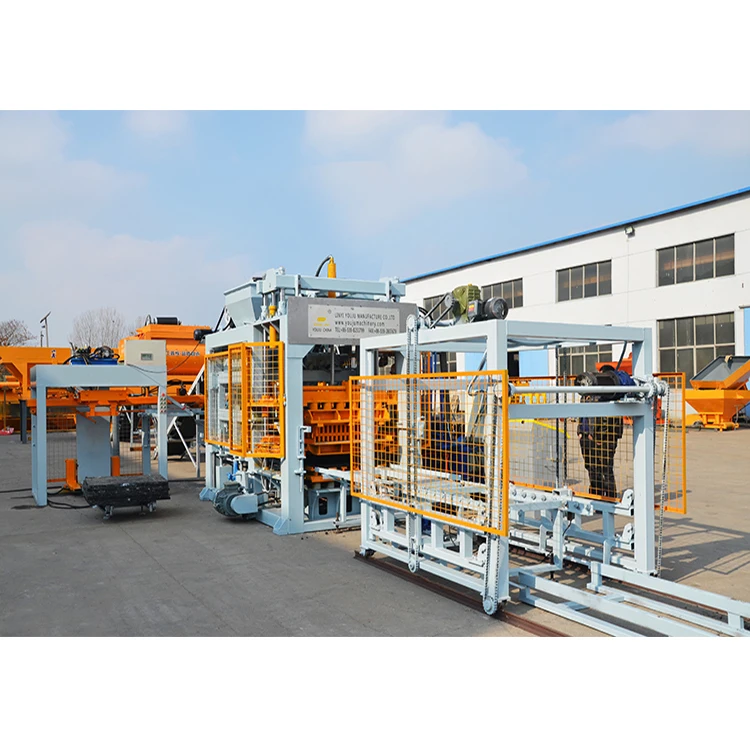
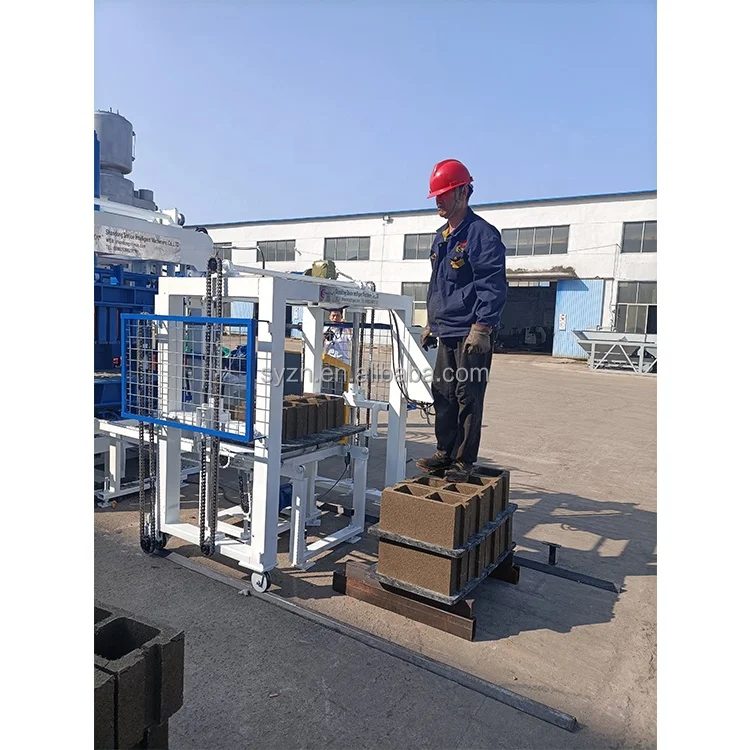
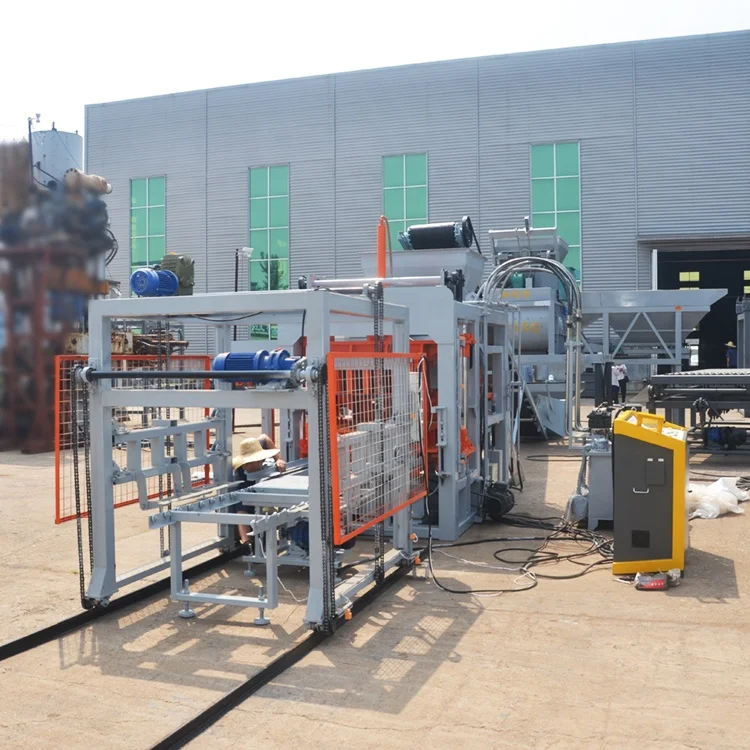
Mid-Tier Placement Clarity — the QT4-15A bridges semi-automatic workshop setups and high-capacity automatic lines, so buyers can see exactly where their investment tier sits before committing to a plant footprint.
Technical Specifications
| Parameter |
Value |
| Model |
QT4-15A |
| Product Type |
Fully Automatic Concrete Block Making Machine |
| Overall Dimensions (L×W×H) |
4100×1600×2600 mm |
| Rated Pressure |
16-21 MPa |
| Main Vibration Form |
Platform Vibration |
| Vibration Frequency |
4200 r/min |
| Vibration Force |
55 kN |
| Pallet Size |
880×550 mm |
| Molding Cycle |
25-30 s (basis not stated in source — confirm block format / material / thickness) |
| Overall Power |
18.45 kW |
| Total Mass |
4 T |
| Demolding Method |
Hydraulic |
| Factory Area Required |
300 m² |
| Automation Level |
Fully automatic |
| Applied Products |
Concrete blocks, hollow/solid blocks, pavers, interlocking blocks, curbstone, colored pavers |
| Raw Material Compatibility |
Crushed stone, sand, cement, dust, fly ash, gravel, slag |
| Warranty |
1 year (excluding spare parts) |
| Loading |
1×40HQ container (for basic equipment) |
Application Suitability
| Application |
Material or Output |
| Hollow block production for load-bearing walls |
Crushed stone, sand, cement blended with fly ash or slag |
| Solid block manufacturing for partition walls |
Local aggregate with cement binder, hydraulic compaction at 16-21 MPa |
| Paving block and interlocking brick for roads and walkways |
Colored face mix over base concrete, platform vibration at 4200 r/min |
| Kerbstone and curb units for municipal projects |
Heavier mix designs requiring matched vibration force and pressure |
| On-site production for housing developments |
Portable plant layout within 300 m² footprint |
What "25-30 Second Cycle Time" Actually Means for Your Daily Output
A cycle time figure without a block format assumption is not a capacity figure — it is a mechanical benchmark that only converts to daily output once your specific mould and mix are defined.
I have watched buyers sign contracts based on a single cycle number, then arrive on site to discover their hollow block format needs 30 seconds while the quoted capacity assumed a thinner paver running at 25 seconds. The fully automatic concrete block making machine manufacturer you choose should state throughput per format, not per machine. When aggregate moisture varies or cement content shifts, the vibration tune must follow — and that re-tune can add seconds to every cycle across an eight-hour shift [NEED_CITE: effect of aggregate moisture on vibration cycle duration]. Without a format-by-format capacity sheet attached to your quotation, daily output remains a guess.

Where the QT4-15A Sits in the Full Machine Range
The QT4-15A occupies the mid-tier position in our fully automatic concrete block making machine range, designed for buyers who have outgrown semi-automatic workshop volumes but do not yet need the footprint and capital of a high-capacity line. Below it, semi-automatic models trade lower investment for manual pallet handling. Above it, larger automatic presses add higher vibration force and bigger pallet sizes for continuous three-shift operation. This positioning helps a first-time plant owner or a distributor surveying options to identify the tier that matches their market volume before narrowing down mould configurations.
Matching Automation Level to Your Labour Market and Upgrade Path
Automation on this tier covers hydraulic demolding, automatic pallet feeding, and PLC-controlled cycle sequencing, removing the heaviest manual tasks from the operator. For buyers in markets where skilled press operators are scarce, this level of control reduces dependence on individual operator experience and improves batch-to-batch consistency across different shift teams. The machine can be specified with different PLC brands and display languages to match the local workforce [NEED_CITE: PLC language options for block machine control panels]. When production demand grows, the automation level is selectable — a buyer can begin with the QT4-15A and later integrate automatic stacking and cubing stations without replacing the press itself.
Reading the Specs That Determine Block Quality on Your Site
The rated pressure of 16-21 MPa and the 55 kN vibration force must work together: pressure compacts the mix while vibration settles fine particles into voids, and if either is mismatched to your local aggregate, block density drops. Platform vibration at 4200 r/min delivers energy through the pallet rather than the mould walls, which suits the 880×550 mm pallet size and keeps mould wear even across formats. A pallet dimension chosen without checking your existing curing racks and forklift forks can create a handling bottleneck that has nothing to do with the press itself. The 18.45 kW total power draw determines your transformer sizing and dedicated circuit requirements before the machine arrives. Hydraulic demolding rather than mechanical ejection gives cleaner block edges on complex formats like interlocking pavers, where a mechanical stripper can chip corners on fresh concrete.
The Hidden Cost of Specifying a Machine Without Your Mix in Mind
A block machine configured for a clean-graded crushed stone that your local quarry cannot supply will produce blocks with surface voids and lower compressive strength, regardless of how well the press is built. I have seen contractors in South Asia receive machines tuned for river sand, only to find their local source is manufactured sand with higher fines content — and the vibration parameters needed a full recalibration on site. When voltage and frequency are not confirmed before production, the motor winding arrives wrong for the local grid and commissioning stalls until a replacement is shipped [NEED_CITE: voltage and frequency standards by export market]. These are not warranty claims; they are specification gaps that cost weeks of idle labour and lost production days.
Why Buyers Source This Range Through a Single-Focus Supplier
Block machinery is the only product line here, which means the press, mould, pallet, and handling equipment are specified as one matched system rather than assembled from unrelated vendors. Configuration starts from your actual mix design and local aggregate, not a catalogue default — so the vibration force and hydraulic pressure are set for the material you can actually buy. Mould design covers the formats your local market sells, including custom drawings when standard moulds do not match regional block dimensions. The automation level is selectable, allowing a semi-automatic start with a defined upgrade path to full stacking and cubing. Installation support includes on-site commissioning with operator training, so the first production run is not a trial-and-error exercise.
Documentation & Verification
- Line layout with capacity calculation stated per block format, not as a single machine figure
- Machine specification sheet confirming voltage, frequency, and PLC display language before production
- Mould drawing and format list for verifying coverage against your local market demand
- Factory test record run on a mix profile matching your specified aggregate and cement ratio
- Pallet specification sheet aligned with your existing curing rack dimensions and forklift capacity
Installation, Commissioning & Support
- Foundation plan sized to the 4100×1600 mm footprint with anchor bolt layout for the 4 T mass
- Dedicated circuit provision for the 18.45 kW load with voltage and frequency matched to local grid
- Machine arrives dismantled for 40HQ container loading; reassembly supervised on site
- First-run commissioning includes vibration frequency and hydraulic pressure tuning to your mix
- Operator training covers PLC navigation, mould change procedure, and daily maintenance checkpoints
- Wear parts and mould inventory list provided so first replacement ordering happens before stock runs out
What to Prepare Before Requesting a Quotation
To place the QT4-15A correctly against other tiers in the range, share your target block formats with dimensions, the daily output you need per format, and the local raw materials you plan to use — including a sample if aggregate quality is uncertain. Confirm your site voltage and frequency, the PLC display language your operators will need, and the pallet size that fits your existing curing area and forklift fleet. With these details, the capacity calculation can be built around your actual product rather than a generic catalogue assumption.
Frequently Asked Questions
Q: Where does the QT4-15A sit in your full machine range — what tier is above and below it?
A: Below the QT4-15A, semi-automatic models offer lower investment with manual pallet handling for workshop-scale output. Above it, larger automatic presses carry higher vibration force and bigger pallet sizes for continuous high-volume production. The QT4-15A bridges these tiers with fully automatic hydraulic demolding and PLC control in a 300 m² footprint, suited to buyers who have outgrown manual operation but do not yet require a high-capacity line.
Q: How is daily output calculated, and which block format is assumed in the capacity figure?
A: Daily output is calculated per block format, not as a single machine-wide number. The 25-30 second molding cycle applies differently to a hollow block versus a thinner paver, and the capacity sheet attached to your quotation will state which format each figure assumes. This prevents the gap between quoted throughput and actual daily production that appears when a cycle time is cited without a format reference.
Q: What automation levels are available across the range, and can I upgrade from semi-automatic later?
A: The range spans from semi-automatic machines with manual pallet handling through to fully automatic lines with stacking and cubing. The QT4-15A is fully automatic at the press level, and additional automation stations can be integrated later as demand grows. This selectable approach lets a buyer start at an investment level that matches current volume and add handling automation without replacing the core press.
Q: What plant footprint and factory area does each tier require?
A: The QT4-15A requires approximately 300 m² of factory area for the press and immediate supporting stations. Smaller semi-automatic tiers can operate in reduced footprints, while higher-capacity automatic lines need larger floor space for extended curing racks and automatic cubing systems. Confirming your available area early ensures the tier you select fits the site without costly building modifications.
Q: How do voltage, frequency, and PLC language vary across the range, and when are they confirmed?
A: Voltage and frequency are configurable to match the local grid at the destination, and PLC display language is selected to match the operator workforce. These parameters are confirmed during the quotation and pre-production stage, before the machine enters assembly. Confirming them early avoids commissioning delays that occur when motor windings or control panels arrive configured for a different electrical standard.

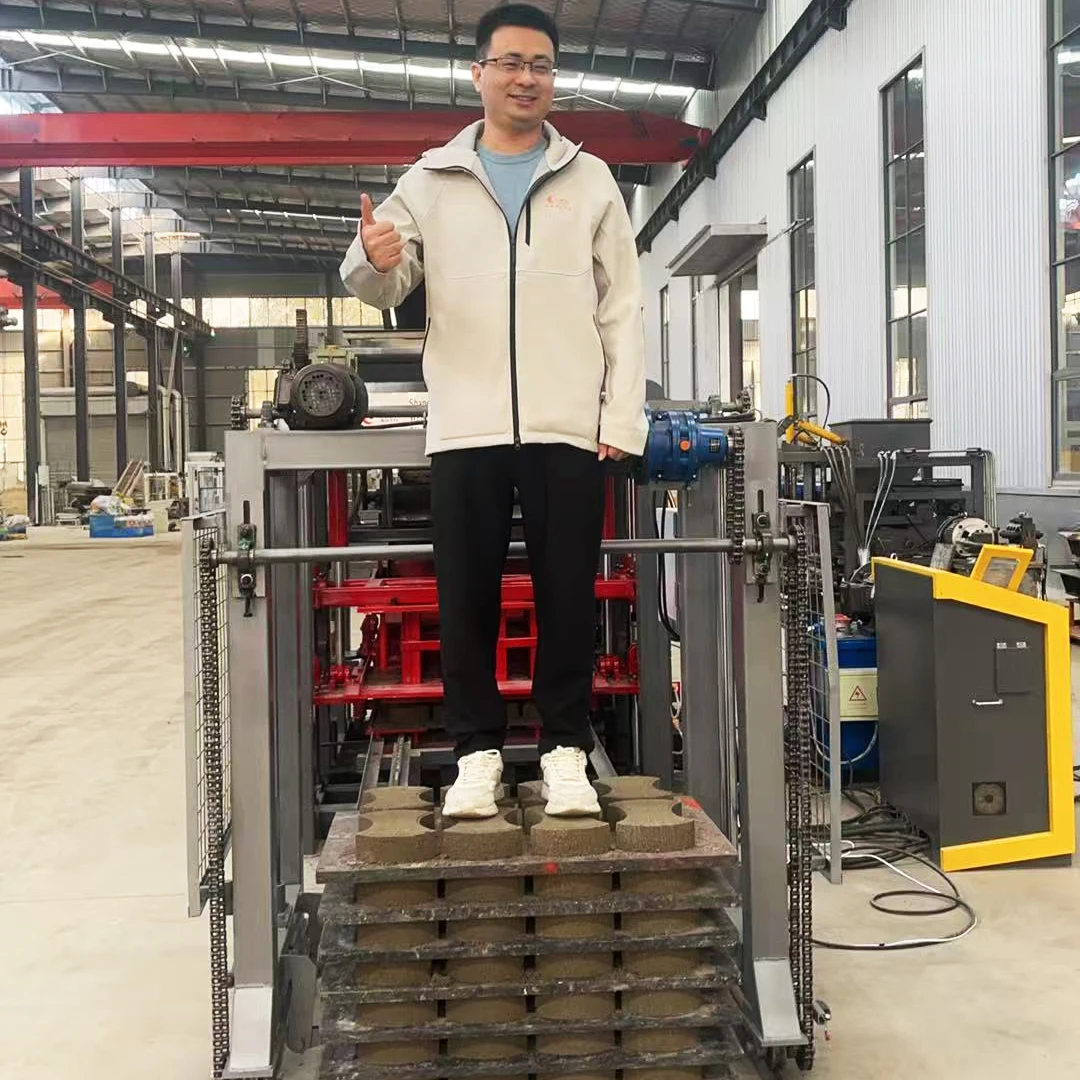
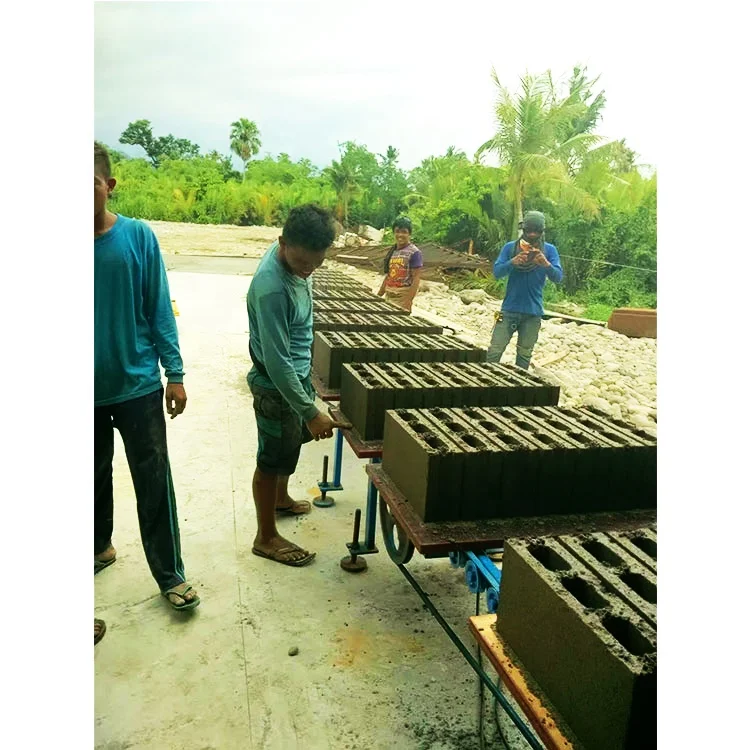 High quality block machine