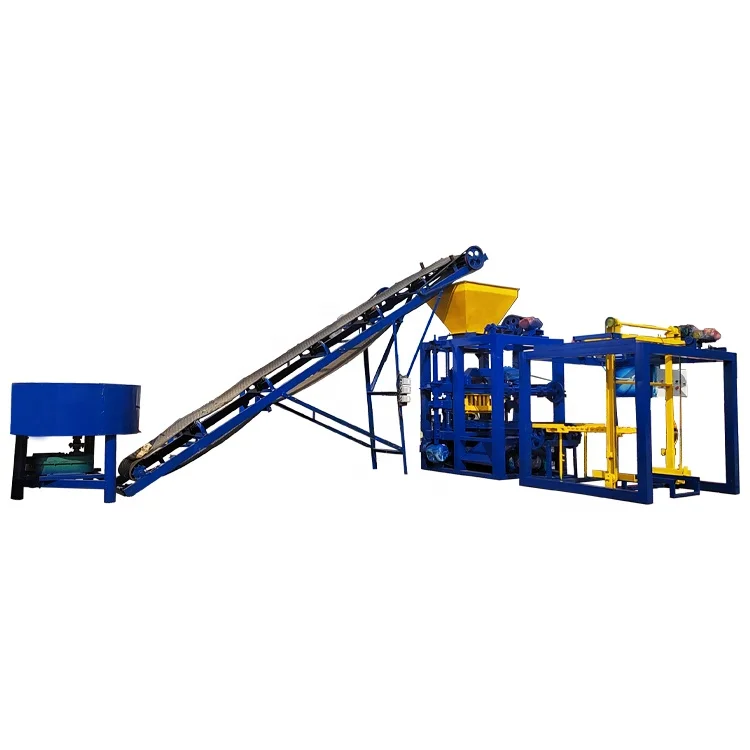
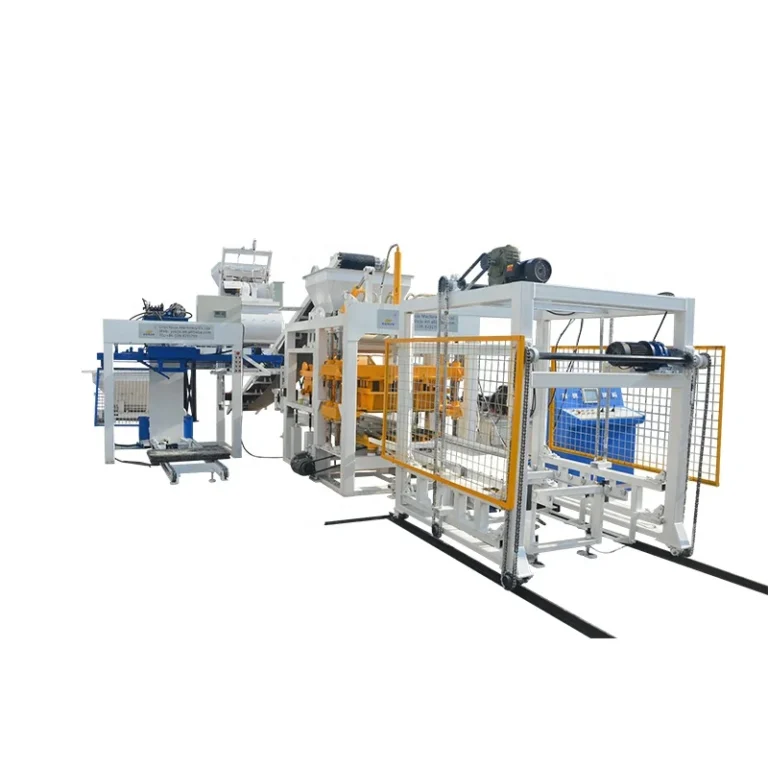
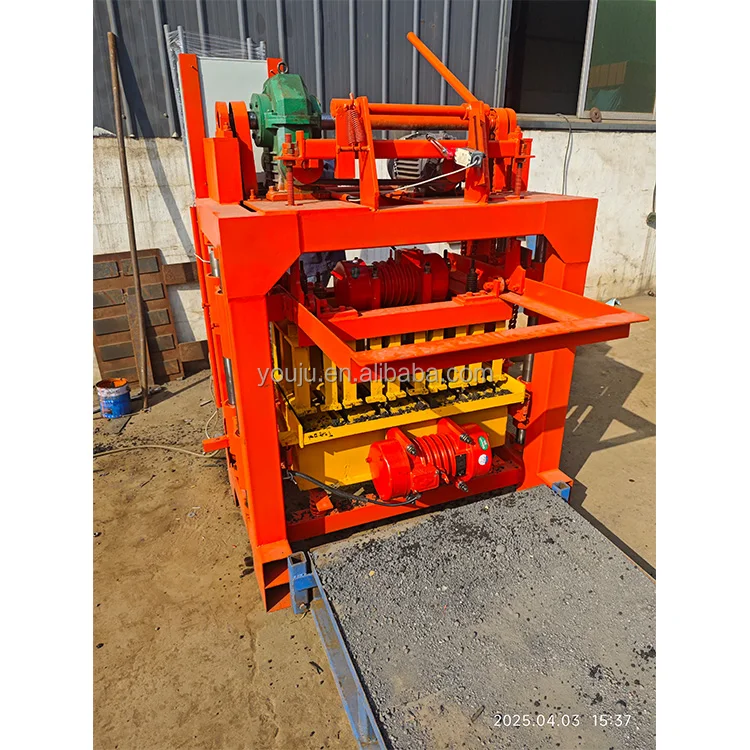
Matched System Specifying — Every QT4-15 block machine we ship arrives with mould, pallet and hydraulic wear parts mapped to the buyer’s actual format, not pulled from a catalogue default.
Technical Specifications
| Parameter |
Value |
| Model |
QT4-15 |
| Product Type |
Hydraulic Concrete Block Making Machine |
| Molding Cycle |
15–30 seconds |
| Pallet Size |
900 x 500 mm |
| Vibration Type |
Platform vibration |
| Vibration Frequency |
50–70 Hz |
| Product Height Range |
50–220 mm |
| Demolding Method |
Hydraulic |
| Overall Power |
24.5 kW |
| Control System |
PLC |
| Block Compressive Strength |
More than 15 MPa |
| Output Capacity (Hollow Block 400x200x200mm) |
900–1,200 pcs/hour (basis: 4 pcs/mould, 15–20s cycle) |
| Output Capacity (Hollow Block 400x150x200mm) |
1,080–1,440 pcs/hour (basis: 5 pcs/mould, 15–20s cycle) |
| Output Capacity (Hollow Block 400x100x200mm) |
1,440–1,920 pcs/hour (basis: 8 pcs/mould, 15–20s cycle) |
| Output Capacity (Paver 200x100x60mm) |
2,880–3,840 pcs/hour (basis: 16 pcs/mould, 15–20s cycle) |
| Output Capacity (Solid Brick 240x115x53mm) |
5,930–6,720 pcs/hour (basis: 28 pcs/mould, 15–20s cycle) |
| Raw Material Compatibility |
Flyash, slag, gangue, sand, crushed stone, cement, water |
| Assembly State |
(source value — verify against manufacturer catalog) |
| Voltage & Frequency |
(source value — verify against manufacturer catalog) |
| Overall Dimensions |
(source value — verify against manufacturer catalog) |
| Net Weight |
(source value — verify against manufacturer catalog) |
Application Suitability
| Application |
Material or Output |
| Medium-scale hollow block plant |
Flyash, slag, and crushed stone blended with cement for 400x200x200mm and 400x150x200mm formats |
| On-site contractor block production |
Local sand and aggregate for solid brick 240x115x53mm runs tied to housing project schedules |
| Paver and kerbstone format addition |
Standard aggregates for 200x100x60mm interlocking pavers sold to landscaping distributors |
| Industrial residue recycling |
Gangue and slag incorporated into hollow block mixes meeting 15 MPa compressive strength |
What "900 to 1200 Pieces per Hour" Actually Means for Your QT4-15 Block Machine
Capacity figures only hold when the block format, cycle time, and mould cavity count are stated together.
A stationary block machine manufacturer quoting cycles per hour without naming the block format leaves the buyer guessing. I have watched plant owners in West Africa receive a QT4-15 block machine for sale rated at a certain hourly number, only to discover on commissioning day that the figure assumed a 400x100mm hollow block while their market demanded 400x200mm. Daily revenue fell short from week one. We calculate the QT4-15 output per format, per mould, per confirmed cycle so the number on the quotation is the number on the pallet stack. [NEED_CITE: block format assumption in capacity quotations]

Placing the QT4-15 Within the Stationary Range
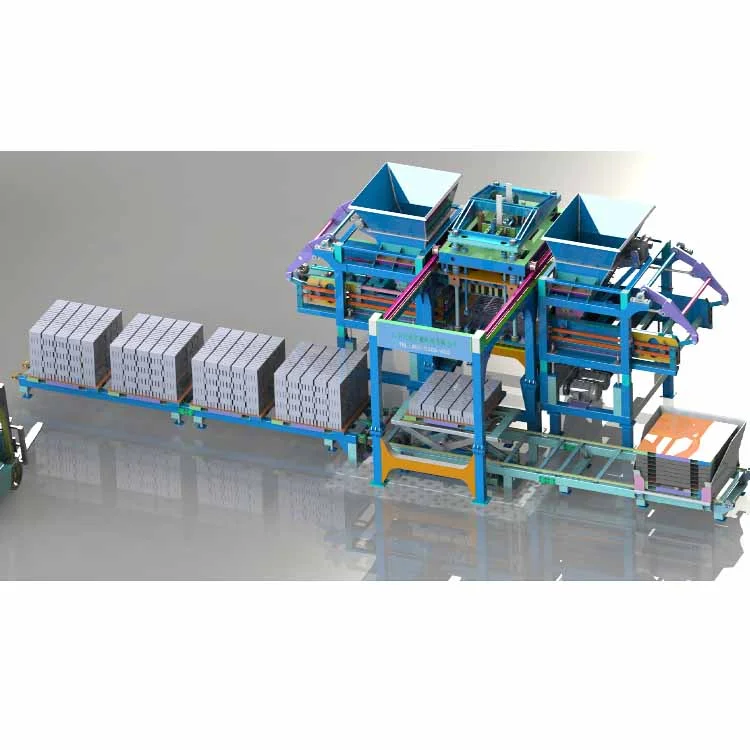
The QT4-15 occupies the middle tier of our stationary block machine lineup, bridging semi-automatic simplicity and fully automatic high-capacity lines. Buyers setting up a first plant or replacing an aging egg-laying machine land here when daily volume must exceed workshop scale but capital for a full cubing and stacking line is not yet justified. The 900 x 500 mm pallet size keeps curing rack footprints manageable while still accommodating 28-cavity solid brick moulds for peak throughput runs.
Automation Path and Future Expansion
Starting with the QT4-15 stationary block machine does not lock a buyer into manual pallet handling forever. The PLC architecture supports staged additions: automatic pallet feeding first, then stacking, and finally cubing as volume grows. I have seen contractors in South Asia begin with a single operator loading pallets by hand, then bolt on an automatic stacker eighteen months later without replacing the press or the control cabinet. The platform vibration and hydraulic demolding core stays constant; only the peripheral stations change. [NEED_CITE: PLC upgrade paths in block making plants]
Reading the Specs That Shape Daily Output
The 50–70 Hz platform vibration frequency directly influences block density and edge sharpness, particularly when the mix contains coarse crushed stone. Pair that vibration with hydraulic demolding and the QT4-15 holds product height within the 50–220 mm range without the cracking that mechanical stripping causes on thin pavers. The 24.5 kW overall power envelope covers mixer feed, hydraulic pump, and vibration motor simultaneously, so the press does not stall when the batching plant delivers a heavy load. A 15–30 second molding cycle range lets the operator extend dwell time for high-flyash mixes that need longer compaction, then shorten it for fast-setting paver runs.
The Hidden Cost of Skipping the Wear Parts Conversation
When a buyer purchases a QT4-15 block machine for sale without agreeing on a wear parts list, the first mould replacement becomes an unplanned shutdown. I walked onto a site in East Africa where the operator had run hollow block moulds for eight months with no spare liner plates; production stopped for two weeks while parts were air-freighted. The pallet size, hydraulic seals, and vibration motor brushes face the same risk. Locking the consumable list at quotation stage keeps the line running through the first year. [NEED_CITE: unplanned downtime from missing wear parts]
Why Buyers Source the QT4-15 Through This Stationary Range
Block machinery is our single focus, so the QT4-15 press, its moulds, pallets, and handling stations are specified as one matched system rather than assembled from separate vendors. Every configuration is set against the buyer’s actual mix design and local aggregate, not a catalogue default. Mould drawings cover the formats the buyer’s market sells, including custom profiles. Automation level is selectable, letting a buyer start semi-automatic and add stacking later. Installation support includes operator training on the exact PLC language confirmed before production. [NEED_CITE: matched block line specification approach]
Documentation & Verification
- Line layout showing QT4-15 footprint with curing area scaled to 900 x 500 mm pallets
- Capacity calculation sheet stating block format and cycle time for every quoted figure
- Mould drawing pack listing cavity count and dimensional tolerances per format
- Voltage and PLC display language confirmation signed before production begins
- Factory test record running the buyer’s chosen mix through a full molding cycle
- Hydraulic and electrical schematic matching the as-built QT4-15 configuration
Installation, Commissioning & Support
- Foundation plan sized to QT4-15 overall power of 24.5 kW with dedicated circuit breaker
- Machine dismantled into press, hydraulic station, and control cabinet for container loading
- On-site reassembly with platform vibration alignment checked against 50–70 Hz operating range
- PLC language and voltage confirmed before first block run to avoid commissioning delays
- Operator training covers mould change procedure within a single shift for 900 x 500 mm pallets
- Wear parts list including hydraulic seals and vibration motor brushes supplied with first shipment
What to Share When Requesting a QT4-15 Quotation
Tell us the exact block formats your market moves fastest — hollow, solid, paver, or a combination — along with the daily volume you need from each. Share your local aggregate type, cement source, and any industrial residues like flyash or slag you plan to incorporate. Confirm your site voltage, frequency, and preferred PLC display language so the QT4-15 stationary block machine arrives ready to run.
Frequently Asked Questions
Q: How does QT4-15 output change when switching from 400x200mm hollow blocks to 60mm pavers?
A: The mould cavity count rises from four to sixteen, so the hourly figure shifts from 900–1,200 pieces (basis: 4 pcs/mould, 15–20s cycle) to 2,880–3,840 pieces (basis: 16 pcs/mould, 15–20s cycle). Cycle time may extend slightly for pavers if the mix requires longer compaction, which the PLC lets the operator adjust within the 15–30 second window.
Q: What footprint does this stationary model require compared to mobile egg-laying machines?
A: The QT4-15 needs a fixed foundation, curing racks scaled to 900 x 500 mm pallets, and space for raw material storage beside the press. Mobile egg-layers skip the pallet and curing rack but sacrifice output consistency and format flexibility. A stationary plant occupies more ground area yet delivers higher daily volume and repeatable block strength above 15 MPa.
Q: Can the automation level be upgraded from this base model to include automatic stacking?
A: Yes. The PLC architecture on the QT4-15 supports adding automatic pallet feeding, stacking, and cubing as separate stages. Buyers often start with manual pallet handling to keep initial investment low, then bolt on stacking modules once daily volume justifies the added station. The press core and hydraulic demolding system remain unchanged during the upgrade.
Q: Which raw material mix designs are compatible with the 15 MPa strength target?
A: The QT4-15 handles flyash, slag, gangue, sand, crushed stone, cement, and water. Achieving more than 15 MPa depends on matching vibration frequency and hydraulic pressure to the specific aggregate gradation and cement content. We configure the machine against the buyer’s locally available materials rather than a generic catalogue mix.
Q: How is the machine dismantled for container loading and reassembled on-site?
A: The QT4-15 is separated into the main press frame, hydraulic power unit, PLC control cabinet, and pallet feeder for container loading. On arrival, our commissioning team reassembles the stations, aligns the platform vibration system, and runs a factory-confirmed test cycle using the buyer’s chosen block format before handing over to the plant operator.

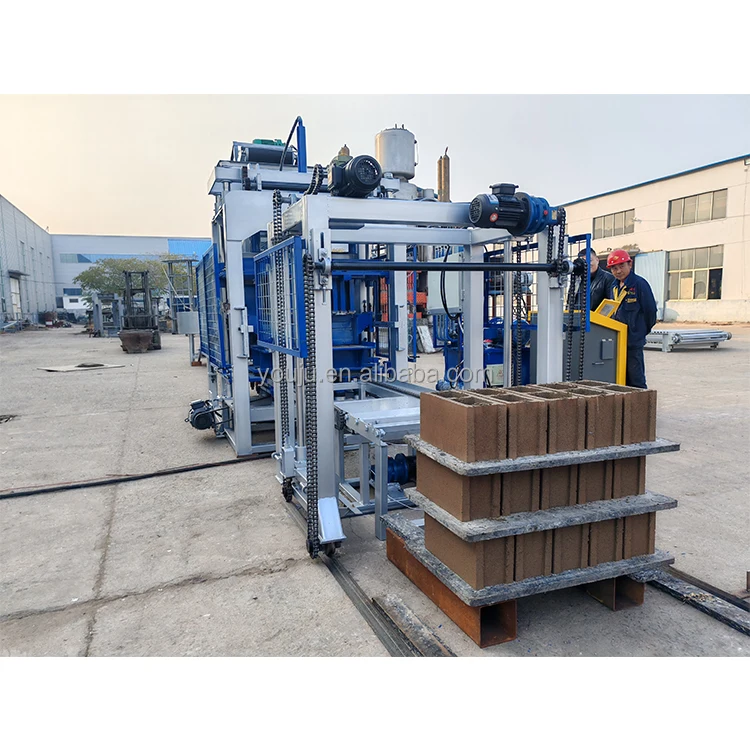
 Stationary block machine