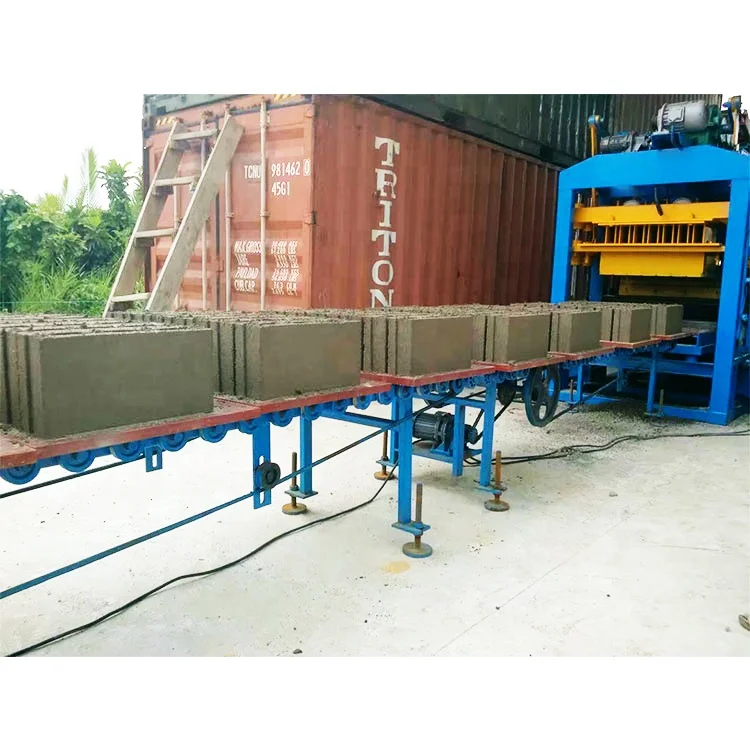
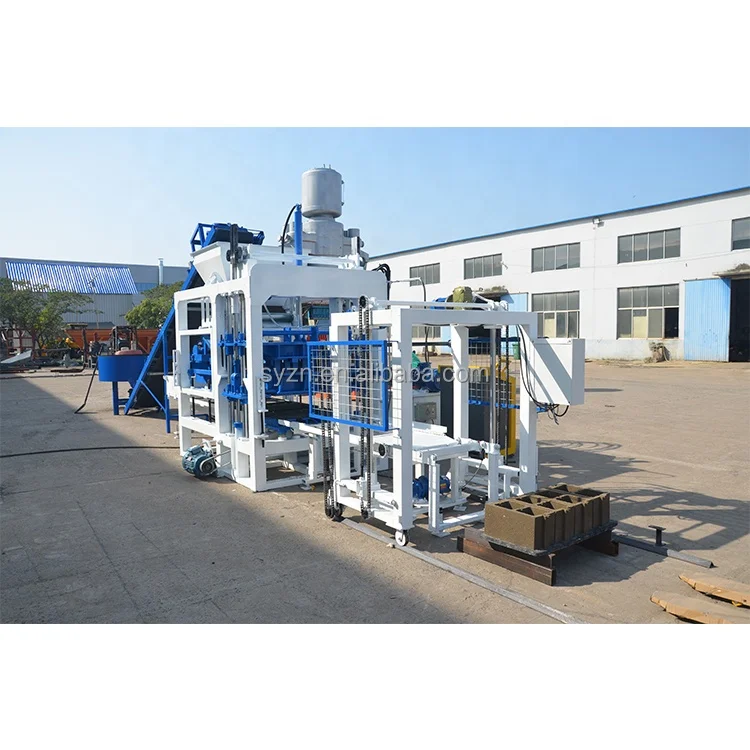
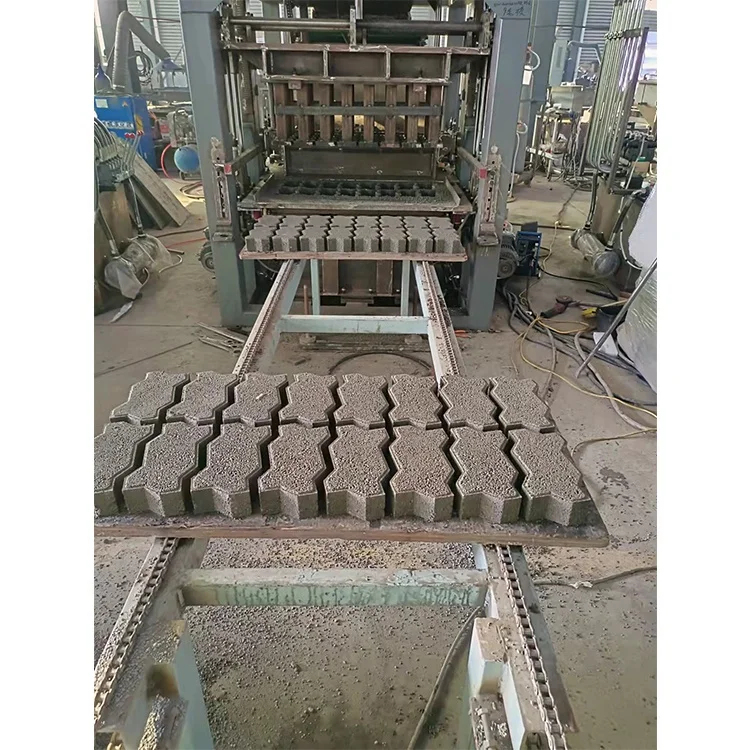
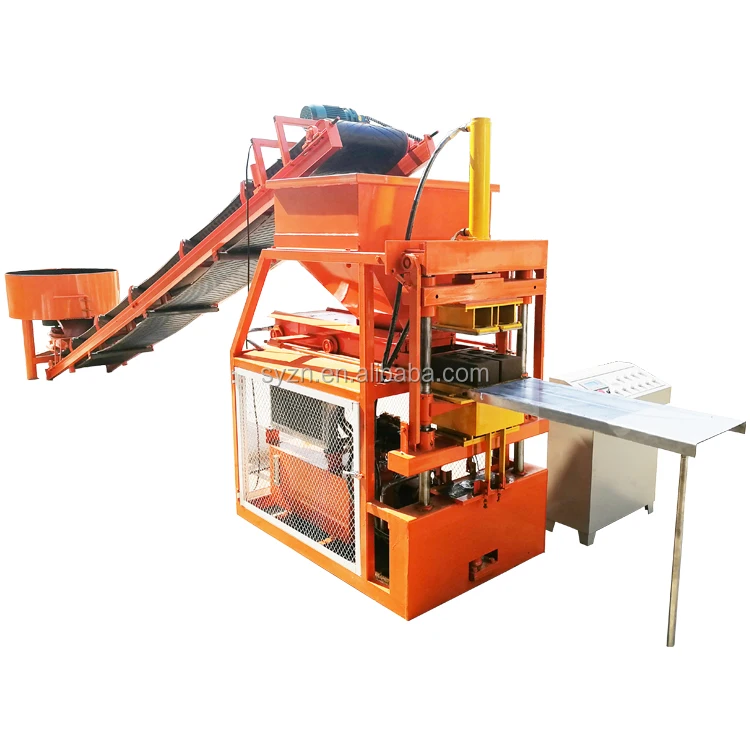
Mid-tier automation — the QT4-15A sits between workshop-scale presses and high-capacity lines, sized for buyers who need consistent daily block output without the footprint of a fully continuous plant.
Technical Specifications
| Parameter |
Value |
| Model |
QT4-15A |
| Product Type |
Fully Automatic Concrete Block Making Machine |
| Overall Dimensions (L×W×H) |
4100×1600×2600 mm |
| Total Mass |
4 T |
| Rated Pressure |
16–21 MPa |
| Vibration Form |
Platform Vibration |
| Vibration Frequency |
4200 r/min |
| Vibration Force |
55 kN |
| Pallet Size |
880×550 mm |
| Molding Cycle |
25–30 s (basis not stated in source — confirm block format / material / thickness) |
| Overall Power |
18.45 kW |
| Demolding Method |
Hydraulic |
| Factory Area Required |
300 m² |
| Automation Level |
Fully Automatic |
| Raw Material Compatibility |
Crushed stone, sand, cement, fly ash, gravel, slag, dust |
| Applied Products |
Hollow blocks, solid blocks, pavers, interlocking blocks, curbstone, colored pavers |
| Voltage & Frequency |
To be confirmed before production |
| Control System |
PLC details to be confirmed |
Application Suitability
| Application |
Material or Output |
| Hollow block production for wall construction |
Crushed stone, sand, cement with fly ash or slag blend |
| Solid concrete block manufacturing |
Dense aggregate mix with cement binder |
| Paver and colored paver runs |
Fine sand, cement, pigment additives |
| Interlocking brick production |
Gravel-dust blend with hydraulic pressing |
| Curbstone and kerb production |
Coarse aggregate with high-pressure molding |
Why "25–30 Seconds per Cycle" Needs a Block Format Attached
A cycle time only means something when you know which block it was measured on.
I once watched a buyer sign off on a mid-range fully automatic concrete block making machine manufacturer quote because the cycle number looked right. The quotation listed 25–30 seconds without naming the block format. His primary product was a 200 mm hollow block, but the test run used a thinner paver mold. When his actual hollow block format went into production, the cycle stretched well past what he had budgeted for, and his daily output dropped. The machine was not at fault — the expectation was. [NEED_CITE: block cycle time variation across hollow block versus paver formats]
This is the gap I see most often when buyers compare quotes across different suppliers. One factory tests on a lightweight format and advertises the faster number; another tests on a heavy curbstone and shows a slower one. Neither is wrong, but neither is directly comparable until the format, wall thickness, and mix density are spelled out. The QT4-15A’s platform vibration and hydraulic demolding are capable across multiple formats, but the realistic daily count for hollow blocks versus solid blocks versus pavers will differ on each one.

Where the QT4-15A Fits in a Growing Block Plant
Buyers surveying the full Shiyue machine range will find the QT4-15A positioned as the entry point into fixed-plant automatic production. Below it sit semi-automatic and mobile egg-laying models that demand less capital and less floor space but rely on manual pallet handling and lower cycle consistency. Above it, higher-output automatic lines add larger pallets, faster cycles, and full stacking automation. The QT4-15A gives a first-time plant entrepreneur a fully automatic concrete block making machine manufacturer configuration that does not require a warehouse-sized facility — 300 m² is enough for the press, mixer, and curing racks.
Matching Automation to Your Actual Operation
The step from semi-automatic to fully automatic removes manual pallet feeding from the operator’s task list and standardizes the pressing sequence through PLC control. For a buyer who is currently running a semi-automatic line and losing output to inconsistent manual pallet placement, the QT4-15A addresses that bottleneck directly. The 880×550 mm pallet size is common across the mid-range, meaning curing racks and forklifts spec’d for this tier will remain compatible if the plant later adds a second line of the same class. [NEED_CITE: pallet size compatibility across mid-tier block machine configurations]
Pressure, Vibration, and What They Decide Together
The 16–21 MPa rated pressure and 55 kN vibration force work as a paired system — pressure compacts the mix while vibration settles fine particles into voids. On a sandy mix with low fines, the vibration does more of the work; on a gravel-heavy mix, the hydraulic pressure carries the load. The 4200 r/min platform vibration frequency sits in the mid-range, which suits general-purpose hollow block and solid block production. If your local aggregate is predominantly fine sand with high clay content, the vibration force may need to be assessed against that specific mix before the machine is built. Pallet size at 880×550 mm defines the maximum block footprint per cycle, and that dimension also governs how many blocks fit on a standard curing rack — a detail that affects curing area planning more than buyers expect.
When the Wrong Pallet Size Costs You a Shift
A buyer who selects a machine without checking pallet dimensions against his existing curing racks ends up rebuilding the curing area or buying new forklifts. The QT4-15A’s 880×550 mm pallet is a mid-tier standard, but if your current racks were built for a smaller mobile machine, the mismatch will surface the day the first production run reaches the curing yard. [NEED_CITE: curing rack and forklift compatibility with block machine pallet dimensions]
Why Buyers Spec This Tier With Shiyue
Block machinery is our single focus, which means the QT4-15A’s press, molds, pallets, and handling equipment are specified as one matched system rather than sourced from separate vendors. Every configuration is set against the buyer’s actual mix design and target block format, not a catalog default. Molds are designed for the formats the buyer’s market sells, including custom drawings when standard formats do not cover local demand. The automation level is selectable, so a buyer can begin with the QT4-15A and plan a future line addition without replacing the existing pallet infrastructure. Installation includes operator training on the specific mix and formats in use, not generic machine operation.
Documentation & Verification
- Line layout with capacity calculation stating the block format assumed for the QT4-15A cycle time
- Machine specification sheet confirming voltage, frequency, and PLC display language for your market
- Pallet specification matched to your curing rack dimensions and forklift capacity
- Mold drawing and format list covering every block type your market requires
- Factory test record run on your confirmed mix and target block format before dispatch
- Hydraulic and electrical schematic for local maintenance teams
Installation, Commissioning & Support
- Foundation pad poured to level within tolerance for the 4100×1600 mm machine footprint
- Dedicated power circuit confirmed for 18.45 kW draw with correct voltage and frequency
- Machine arrives partially assembled with hydraulic and electrical systems pre-wired for site connection
- PLC language and display settings configured to operator preference before commissioning begins
- Molds installed and tested on-site with the buyer’s actual aggregate and cement blend
- Wear parts list and reorder schedule provided at handover
Before You Request a Quote
Tell us the exact block formats you plan to produce, the daily output you need for each format, and the aggregate materials available locally. Share your available floor area and ceiling height, and confirm your site’s voltage and frequency. If you already have curing racks, forklifts, or a mixer in place, include those specifications so the QT4-15A line can be configured around them.
Frequently Asked Questions
Q: How does the QT4-15A compare to semi-automatic and higher-output models in the range?
A: The QT4-15A sits at the entry point of fully automatic production in the Shiyue lineup. Below it, semi-automatic models require manual pallet handling and suit smaller workshops. Above it, larger automatic models offer bigger pallets and shorter cycles for high-volume plants. The QT4-15A fits buyers who want automatic pressing consistency within a 300 m² footprint.
Q: What floor space and investment level does this tier require?
A: The QT4-15A needs approximately 300 m² for the press, mixer, and curing rack area combined. This is substantially less than a high-capacity line but more than a mobile egg-laying setup. It suits first-time plant owners and expanding contractors who have moved past manual production.
Q: How is daily output calculated for different block formats on this machine?
A: Daily output depends on the molding cycle for each specific format, the number of blocks per pallet, and the operating hours. The 25–30 second cycle applies to a specific block type and mix — hollow blocks, solid blocks, and pavers each have different cycles. We provide a format-by-format capacity table with every proposal.
Q: Can I add more automation to the QT4-15A line later?
A: The mid-tier pallet size and line configuration allow additions such as automatic stacking or enhanced batching as production grows. The 880×550 mm pallet standard remains compatible across mid-range Shiyue equipment, so later upgrades do not require replacing existing curing racks.
Q: What supporting equipment matches the QT4-15A’s cycle time?
A: A mixer sized to feed the press without waiting, a pallet feeder aligned to the 880×550 mm pallet, and curing rack handling matched to daily output volume are the minimum supporting stations. We specify each component to the QT4-15A’s cycle so no station becomes a bottleneck.

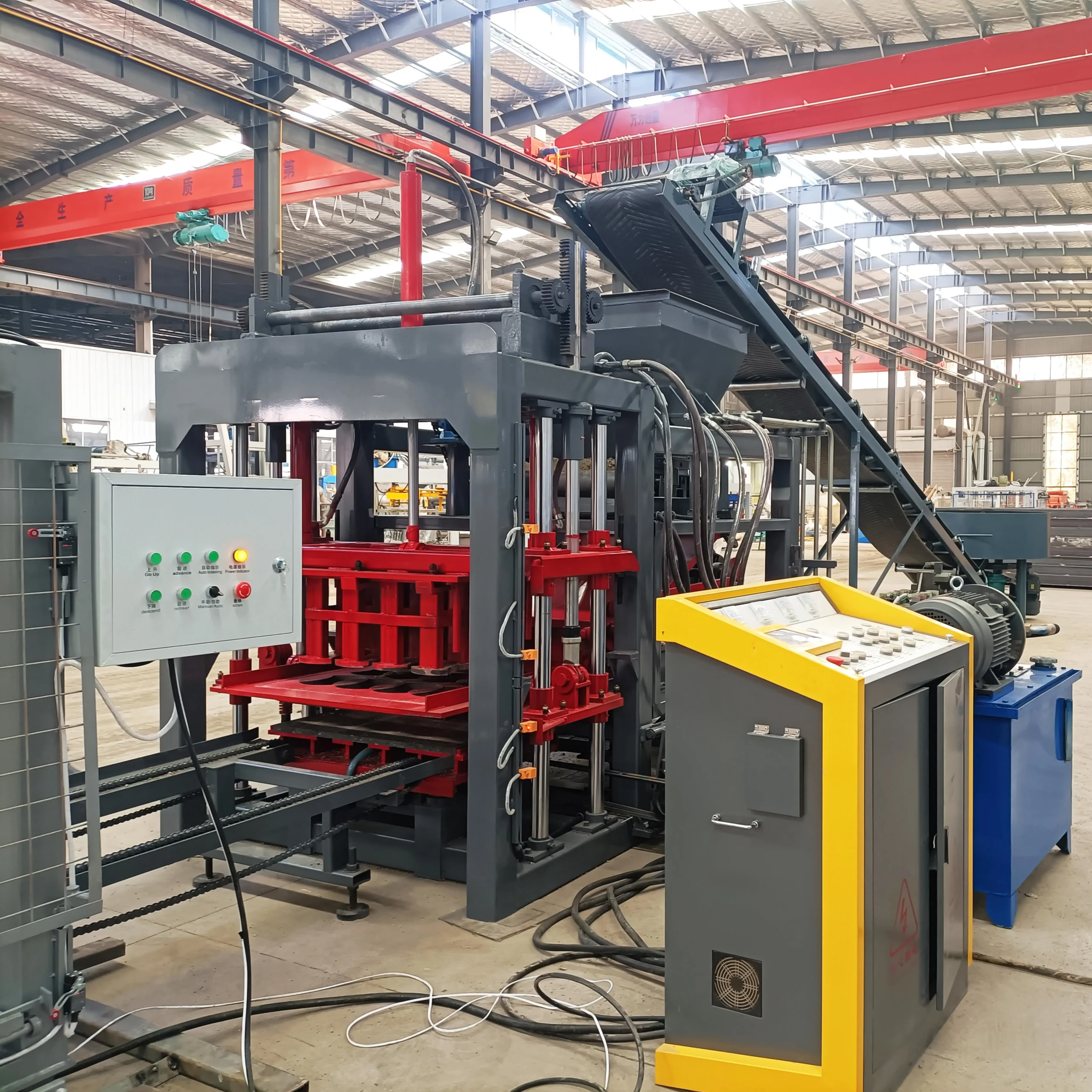
 High quality block machine