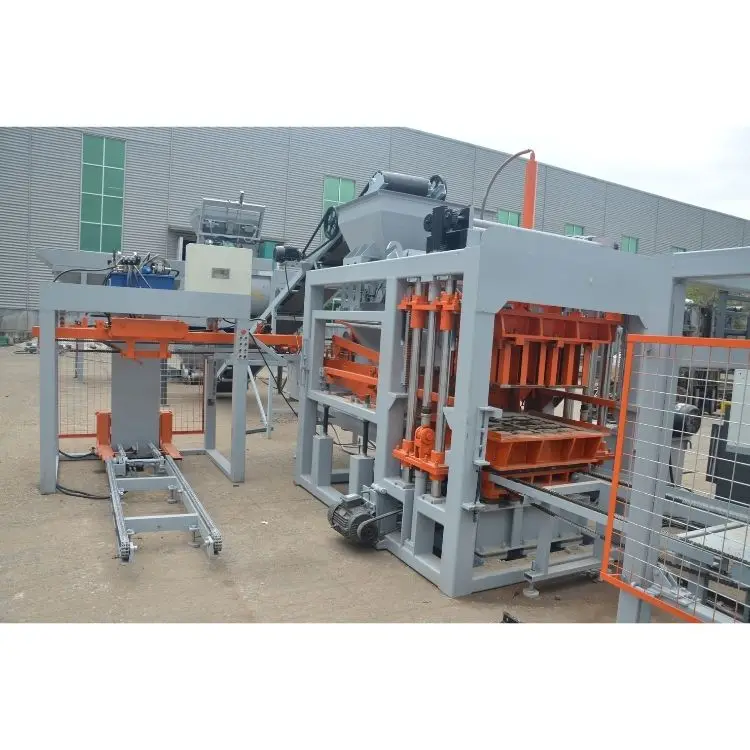
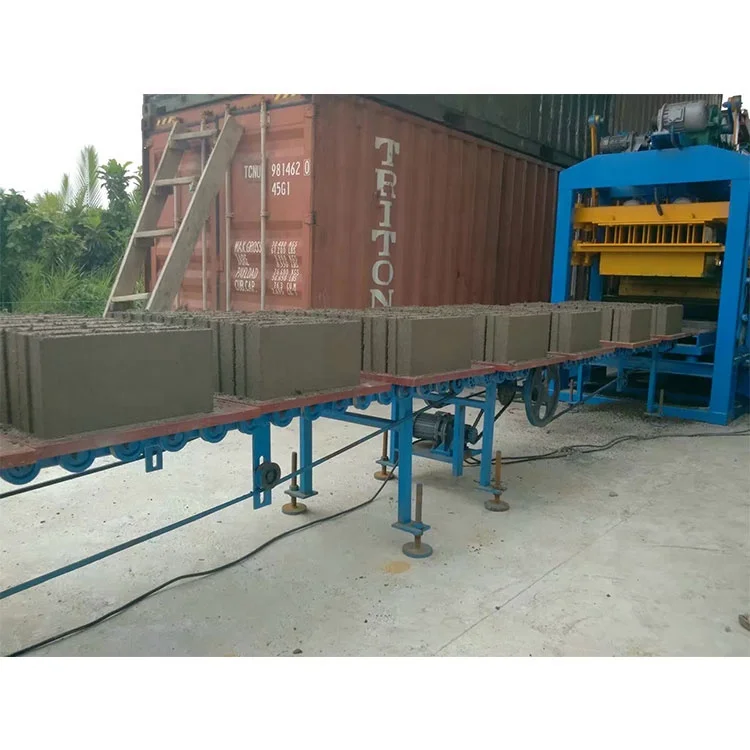
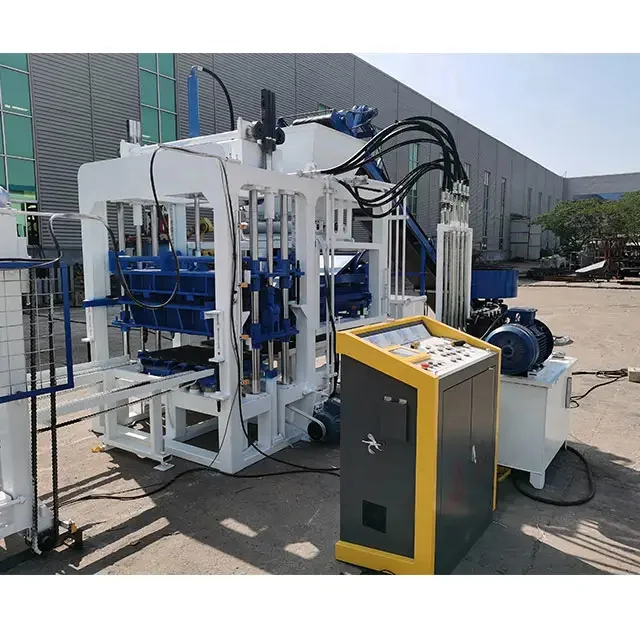
Matched System Integration — the QT4-15 automatic block making machine is specified as a coordinated line of press, mould, pallet and conveyor, not a standalone unit shipped without context.
Technical Specifications
| Parameter |
Value |
| Model |
QT4-15 |
| Product Type |
Automatic Concrete Block Making Machine |
| Overall Dimensions |
7100 x 1600 x 2610 mm |
| Rated Pressure |
16 MPa |
| Vibration Form |
Platform Vibration |
| Pallet Size |
1020 x 570 mm |
| Molding Cycle |
15–25 s (basis not stated in source — confirm block format / material / thickness) |
| Overall Power |
27.5 kW |
| Control System |
PLC electronic console |
| Automation Level |
Automatic (pallet feeder, material feeder, molding, block receiver conveyor) |
| Mould Change Method |
Manual bolt release, conveyor-assisted extraction |
| Assembly State |
Line configuration (mixer, pallet conveyor, host machine, block conveyor, curing yard) |
| Key Features |
Hydraulic pressure, PLC control, platform vibration, automatic pallet and material feeding |
Application Suitability
| Application |
Material or Output |
| Hollow block production |
Cement, sand, crushed stone aggregate |
| Interlocking block manufacturing |
Concrete mix with fine and coarse aggregate |
| Paving block production |
High-density concrete with pigment additives |
| Solid brick forming |
Cement, fly ash, sand and gravel blends |
What Capacity Quotations Leave Out for the QT4-15
Cycle time only matters when tied to a specific block format and mix.
Buyers often receive an automatic block making machine manufacturer quoting cycles per hour without stating which block size, wall thickness or material that figure assumes. The QT4-15 shows a 15–25 second molding cycle, but hollow blocks cure slower than pavers, and a fly ash mix behaves differently from pure crushed stone. Without that context, daily output projections fall apart before the first pallet leaves the curing yard [NEED_CITE: block format assumptions in capacity quotations]. I have watched buyers plan production schedules on a single cycle number, only to discover on-site that their actual format cuts realistic throughput in half.

Where the QT4-15 Sits in the Automatic Range
The QT4-15 occupies the mid-tier of the automatic block making machine manufacturer lineup. It delivers a full PLC-controlled cycle with hydraulic pallet feeding and a block receiver conveyor, removing the manual pallet transfer that slows smaller semi-automatic setups. Buyers stepping up from a mobile egg-layer or a workshop press will find the automation level covers the gap between hand-fed operation and a high-capacity fully automatic plant.
Matching the Pallet to Your Curing Infrastructure
Pallet dimensions of 1020 x 570 mm set the envelope for every mould the QT4-15 can accept. This matters beyond the press: the pallet must fit the curing racks already in the yard and match the fork pockets on the buyer’s existing forklift [NEED_CITE: pallet and curing area compatibility]. Ordering a pallet size without checking the downstream handling equipment creates a bottleneck that no amount of press speed can solve.
Reading the Pressure and Vibration Specs
The 16 MPa rated hydraulic pressure works alongside platform vibration to compact the concrete mix inside the mould cavity. Higher pressure alone does not guarantee block density — the vibration must distribute force evenly across the pallet area, particularly at the corners where fill tends to be uneven. The 27.5 kW overall power budget must drive the mixer, hydraulic pump and conveyor motors simultaneously, so checking the electrical panel layout against the buyer’s available transformer capacity prevents tripped breakers on startup. The molding cycle of 15–25 seconds will land at different points depending on block height and material moisture, making a site-specific test essential before locking in daily output targets.
The Cost of Skipping Voltage Confirmation
I once shipped a mid-tier block press to West Africa configured for 380V three-phase, only to find the site ran 415V. The contactor tripped on first connection, and the buyer waited over twenty days for a transformer swap while the machine sat idle under a tarp. Every QT4-15 order now goes through a written voltage and frequency confirmation before production begins, covering the main motor, hydraulic pump and PLC display language [NEED_CITE: voltage and frequency standards by export market]. Skipping that step turns a fast commissioning into a month-long delay that no specification sheet can predict.
Why Buyers Source This Range Here
Block machinery remains the single manufacturing focus, so the QT4-15 press, moulds, pallets and conveyors arrive as one engineered line rather than a collection of mismatched components. Configuration starts from the buyer’s actual mix design and local aggregate, not a catalogue default that may not match regional sand or fly ash sources. Mould drawings are produced against the specific formats the buyer’s market demands, including custom profiles from buyer-supplied sketches. Automation level can be selected to fit current staffing, with the option to add stacking and cubing later. Installation support includes operator training on the PLC console and hydraulic circuit, so the crew can run and maintain the line independently.
Documentation & Verification
- Line layout showing QT4-15 footprint with capacity stated per block format
- Machine specification sheet confirming hydraulic pressure and PLC language
- Mould drawing and format list mapped to the 1020 x 570 mm pallet
- Voltage, frequency and control display confirmation signed before production
- Factory test record on the buyer’s target block type before dispatch
Installation, Commissioning & Support
- Foundation must support the 7100 x 1600 mm host machine footprint plus conveyor runs
- Dedicated circuit required for 27.5 kW total load across mixer, pump and motors
- Machine ships in line configuration with bolt-together conveyor sections on site
- PLC console language and hydraulic pressure verified during first-day commissioning
- Operator training covers mould change procedure using manual bolt release method
- Wear parts list supplied with hydraulic seal and vibration motor replacement intervals
Before You Request a Quote
Tell us the block formats you sell, the daily output you need and the raw materials available at your site. Include your local voltage and frequency, the PLC display language your operators read, and whether you have existing curing racks and forklifts the pallet must match. The more site detail we receive upfront, the closer the QT4-15 configuration lands to your actual production conditions.
Frequently Asked Questions
Q: How is daily output calculated for the QT4-15, and which block format is assumed?
A: Output figures depend on the block format, material and wall thickness fed into the cycle. The 15–25 second molding cycle varies across hollow blocks, pavers and solid bricks. We provide a capacity calculation document that states the exact block format assumed, so daily projections match the products you actually produce rather than a generic best-case number.
Q: Where does the QT4-15 sit compared to smaller semi-automatic and larger fully automatic models?
A: It fills the mid-tier position in the automatic block making machine manufacturer range, offering PLC control and automatic pallet feeding without the investment and footprint of a high-capacity line. Buyers coming from manual presses gain consistent cycles, while those not yet ready for full stacking automation can add it later.
Q: What plant footprint and curing area does the QT4-15 line require?
A: The host machine measures 7100 x 1600 mm, with additional length for the pallet conveyor and block receiver. The curing yard must accommodate the 1020 x 570 mm pallet size and the daily output volume. We supply a line layout drawing showing the complete footprint before order confirmation.
Q: Can the QT4-15 pallet size match the forklift and curing racks I already have?
A: The standard pallet is 1020 x 570 mm, which sets the mould format envelope. We cross-reference this against your existing curing rack dimensions and forklift fork width before finalizing the pallet material and specification, avoiding a mismatch that would force you to replace downstream equipment.
Q: What voltage, frequency and PLC language are confirmed before shipment?
A: We confirm the local supply voltage, frequency and required PLC display language in writing before the QT4-15 enters production. This covers the main motor winding, hydraulic pump rating and the electronic console interface, preventing on-site electrical rework during commissioning.

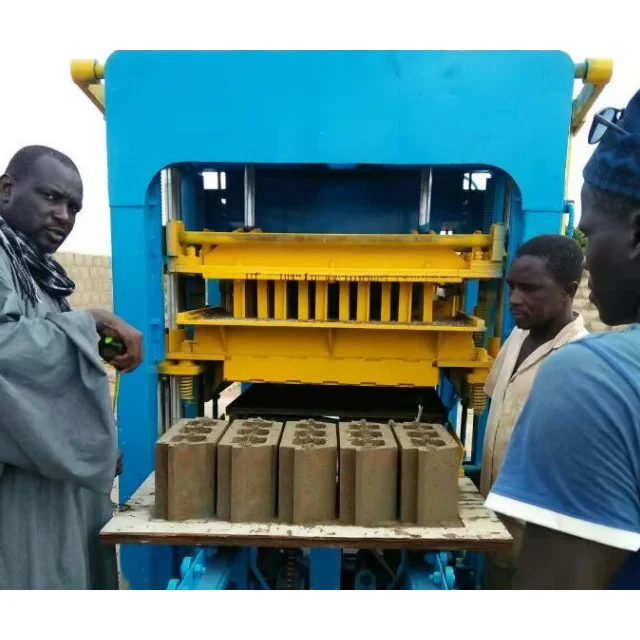
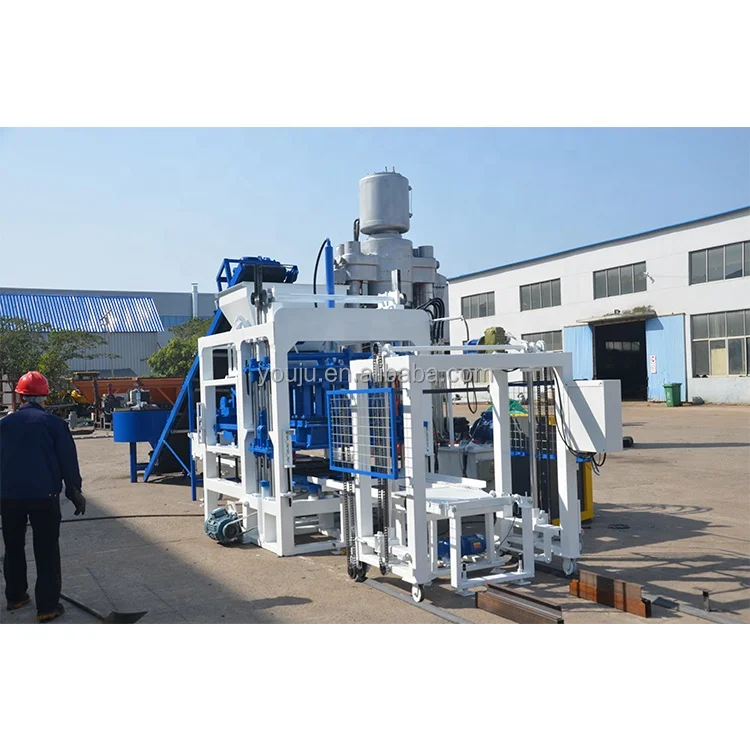 Automatic block machine