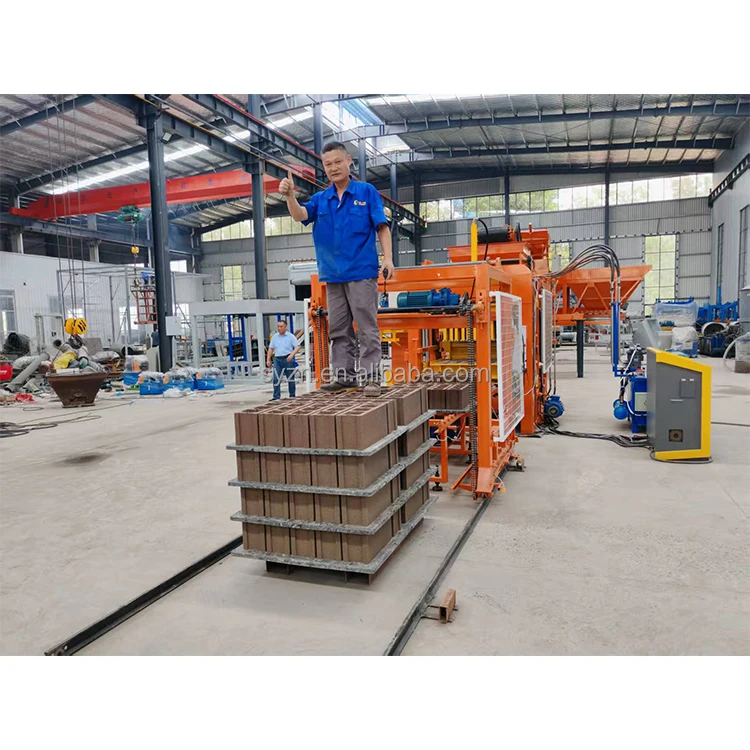
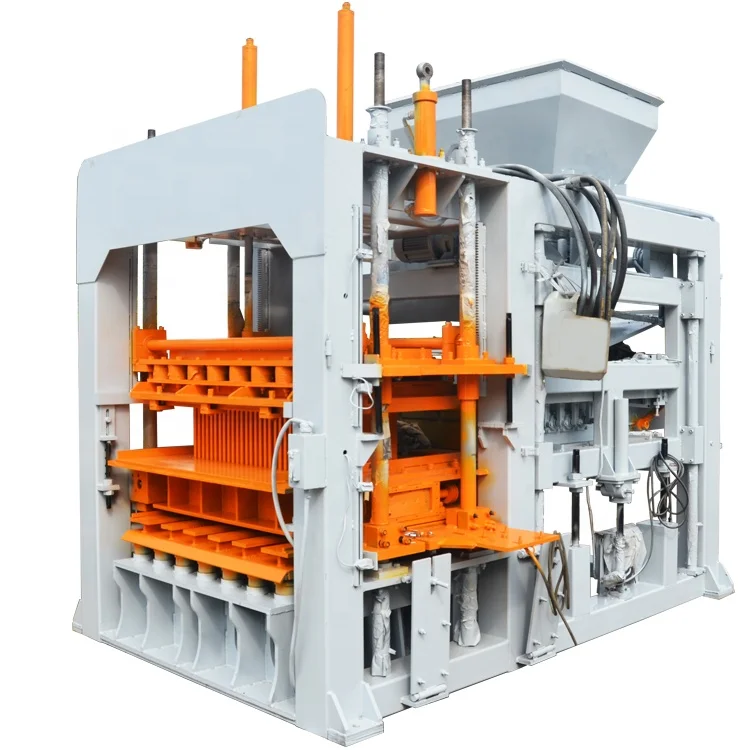
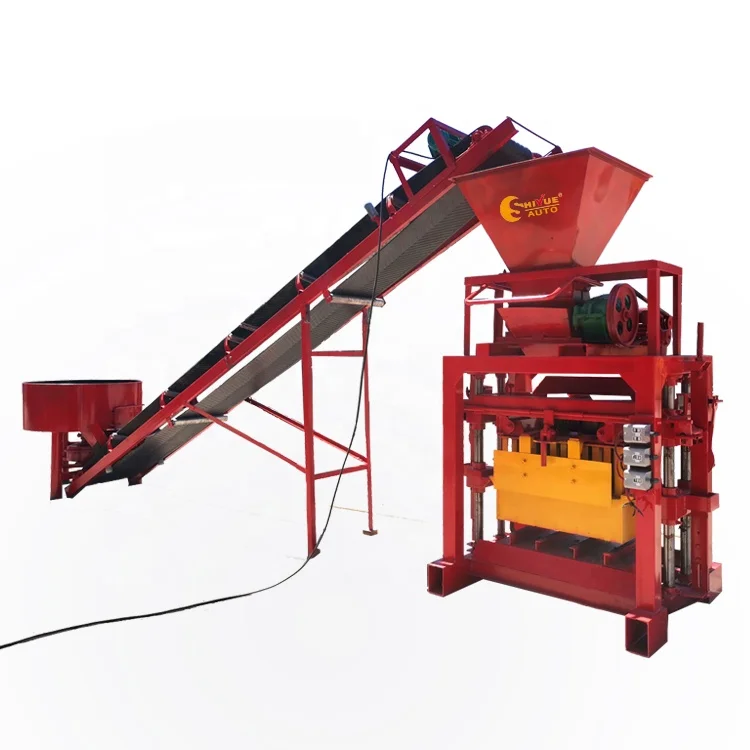
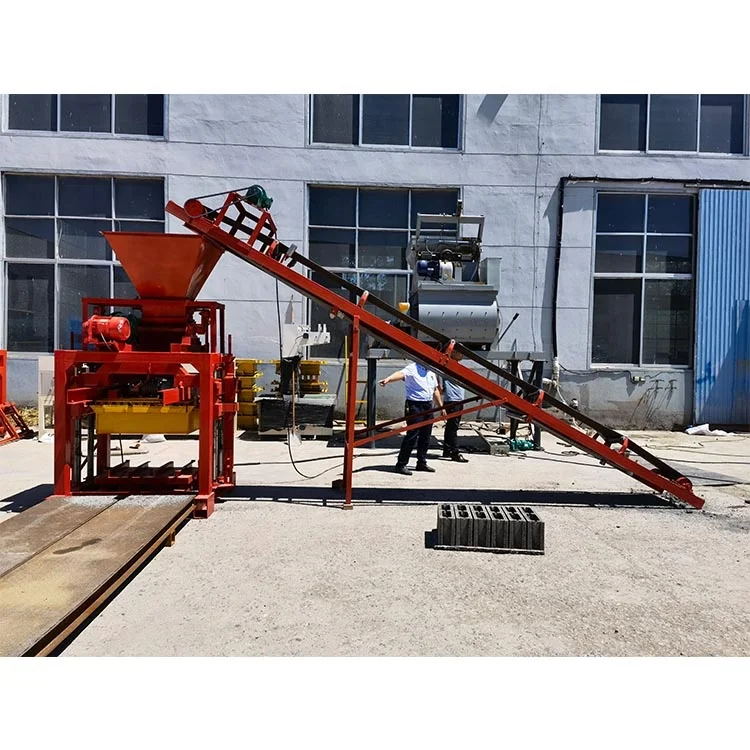
Matched System Design — the QT4-15A press, moulds, pallets and handling are specified as one coordinated unit rather than assembled from separate suppliers, so cycle time and curing logistics align from day one.
Technical Specifications
| Parameter |
Value |
| Model |
QT4-15A |
| Product Type |
Fully Automatic Concrete Block Making Machine |
| Overall Dimensions (L×W×H) |
4100×1600×2600 mm |
| Total Mass |
4 T |
| Rated Pressure |
16–21 MPa |
| Vibration Force |
55 kN |
| Main Vibration Form |
Platform Vibration |
| Vibration Frequency |
4200 r/min |
| Molding Cycle |
25–30 s (basis not stated in source — confirm block format, material, and thickness) |
| Pallet Size |
880×550 mm |
| Overall Power |
18.45 kW |
| Demolding Method |
Hydraulic |
| Automation Level |
Fully automatic |
| Factory Area Required |
300 m² |
| Loading |
1×40HQ container (basic equipment) |
| Warranty |
1 year (excluding spare parts) |
Application Suitability
| Application |
Material or Output |
| Hollow block production for commercial and residential wall systems |
Crushed stone, sand, cement, fly ash, and gravel blends |
| Solid block manufacturing for load-bearing structures |
Dense aggregate mixes with cement binder |
| Interlocking paver and colored paver runs |
Fine sand, cement, and pigment additives |
| Kerbstone and curb production for road and landscaping projects |
Coarse gravel, slag, and cement compositions |
| Porous brick output for permeable pavement installations |
Graded aggregate with controlled cement content |
What "25–30 Seconds per Cycle" Actually Means for Your Output
A molding cycle figure without the block format attached is a number that cannot be planned against.
I have watched buyers receive a QT4-15A automatic block making machine manufacturer quotation showing a cycle time and then discover on commissioning day that their primary product — a 200 mm hollow block with local volcanic aggregate — runs noticeably slower than the catalogue figure [NEED_CITE: aggregate density and moisture effects on vibration compaction time]. The press is not at fault; the mismatch is between the quoted assumption and the buyer’s real mix. Before any capacity number enters a business plan, the exact block format, wall thickness, and aggregate source must be written next to it. This is where plant planning either holds together or quietly unravels.

Where This Tier Sits in the Full Machine Range
The QT4-15A occupies the middle ground of our automatic block machine lineup. Below it, semi-automatic models serve smaller workshops that handle pallets manually and accept lower daily volume. Above it, high-capacity lines add larger pallets, faster cycles, and fully automatic stacking and cubing systems. A buyer evaluating the QT4-15A automatic block making machine manufacturer option is typically moving past workshop scale but not yet ready for the footprint and investment of a high-output plant. The 300 m² factory area requirement and single 40HQ container loading keep initial infrastructure manageable while still delivering fully automatic operation.
Understanding the Range Before Narrowing Down
Choosing between tiers is not about picking the largest machine the budget allows. A plant producing two or three block formats for a local market may find that this mid-tier press, paired with the right mould set, covers every product the market demands without paying for capacity that sits idle. On the other hand, a distributor serving multiple contractors may need the higher tier to keep up with aggregate demand across customers [NEED_CITE: block plant capacity planning methodologies for multi-format production]. The QT4-15A automatic block making machine manufacturer range is designed so that buyers can identify their position — first plant, format expansion, or volume scale-up — and then match the automation and output tier accordingly.
Reading the Specs That Determine Real Production Behaviour
The rated pressure of 16–21 MPa working together with 55 kN platform vibration force determines how densely the concrete mix is compacted inside the mould cavity. Higher compaction produces stronger blocks, but only when the vibration frequency of 4200 r/min is matched to the aggregate particle size in the buyer’s local supply — coarse gravel responds differently than fine sand or fly ash blends. The 880×550 mm pallet size defines how many blocks are produced per cycle and simultaneously dictates the curing rack dimensions and forklift specifications needed downstream. If the buyer’s existing curing yard uses a different pallet dimension, every pallet in the system must be replaced or the line will bottleneck at the stacking station. The hydraulic demolding method provides controlled block release, reducing edge chipping on thin-walled hollow blocks compared to mechanical ejection. Overall power at 18.45 kW places electrical demand within reach of standard industrial supply in most export markets, though voltage and frequency must still be confirmed before production begins.
When Configuration Is Left to Assumption
A machine configured for a standard sand-cement mix arrives at a site where the only available aggregate is lightweight volcanic stone. The vibration settings that produced strong blocks in the factory test now produce crumbly output because the force transmission through lightweight aggregate follows a different pattern [NEED_CITE: vibration compaction behaviour with lightweight and porous aggregates]. The buyer is told to change materials, adding cost and logistics that were never part of the project plan. Similarly, a pallet size confirmed after the machine is built forces the buyer to redesign curing racks and purchase new forklifts, turning a machinery order into a site reconstruction project.
Why Buyers Source This Tier Through Our Range
Block machinery is our single focus, so the QT4-15A is never quoted as a standalone press — the mould, pallet, and handling specifications are built around the same block format and output target the buyer provided. Configuration is set against the buyer’s actual mix design and local aggregate rather than a catalogue default, which is why we request material samples before finalising proposals. Mould design covers the formats the buyer’s market actually sells, with custom drawings available when standard formats do not match local building codes. Automation level is selectable within the range, allowing a buyer to begin with semi-automatic pallet handling and upgrade to full stacking later. Installation support includes operator training on the specific PLC language and control interface confirmed before shipment.
Documentation & Verification
- Line layout drawing showing the QT4-15A position with capacity calculated per stated block format
- Machine specification sheet with hydraulic and electrical schematics matched to confirmed voltage
- Mould drawing and format list identifying included and custom-designed moulds
- Pallet specification sheet matched to buyer’s curing area dimensions and forklift capacity
- Factory test record documenting cycle time on the buyer’s confirmed block format
- Packing photographs and customs documentation prepared for 40HQ container loading
Installation, Commissioning & Support
- 300 m² factory area with level concrete foundation to support the 4 T machine mass and vibration load
- Power supply matching confirmed voltage and frequency with dedicated circuit for 18.45 kW total draw
- Machine dismantled for 40HQ container shipment with reassembly supervised on site
- First production run supervised to verify molding cycle against the buyer’s actual block format and mix
- Operator training on PLC interface in confirmed display language covering mould change and daily maintenance
- Wear parts list with hydraulic seals and mould liners identified for first reorder cycle
What to Include With Your Inquiry
Provide the block formats you intend to produce, including dimensions and wall thickness, along with your local aggregate type and source. Share your available site area and ceiling height, current voltage and frequency supply, and the PLC display language your operators require. If you already have curing racks and forklifts, send the pallet dimensions and load ratings so the system is configured around them.
Frequently Asked Questions
Q: How is the 25–30 s molding cycle verified, and which block format does it assume?
A: The cycle range is measured during factory testing under specific conditions. The exact block format, wall thickness, and aggregate type used for that measurement must be stated alongside the figure. We confirm the cycle against the buyer’s own product specification and local material before the quotation is finalised, so the number in your proposal reflects your actual production scenario.
Q: Where does the QT4-15A sit compared to semi-automatic and high-capacity models?
A: It occupies the mid-tier of the automatic range. Semi-automatic models below it require manual pallet handling and suit lower investment levels. High-capacity lines above it use larger pallets and add automatic stacking and cubing. The QT4-15A serves plants that have outgrown workshop volume but do not yet need the footprint of a high-output installation.
Q: What voltage, frequency, and PLC language options are confirmed before shipment?
A: Voltage and frequency are confirmed during the proposal stage to match the buyer’s local grid supply. The PLC display language is selected from available options and written into the order specification. This prevents commissioning delays caused by electrical incompatibility or operators unable to read the control interface.
Q: Which mould formats are standard, and how are custom moulds handled?
A: Standard moulds cover common hollow block, solid block, paver, interlocking brick, and kerbstone formats. When a buyer’s market requires dimensions outside the standard catalogue, custom moulds are designed from buyer-supplied drawings or local building code specifications and manufactured to match the QT4-15A pallet and press parameters.

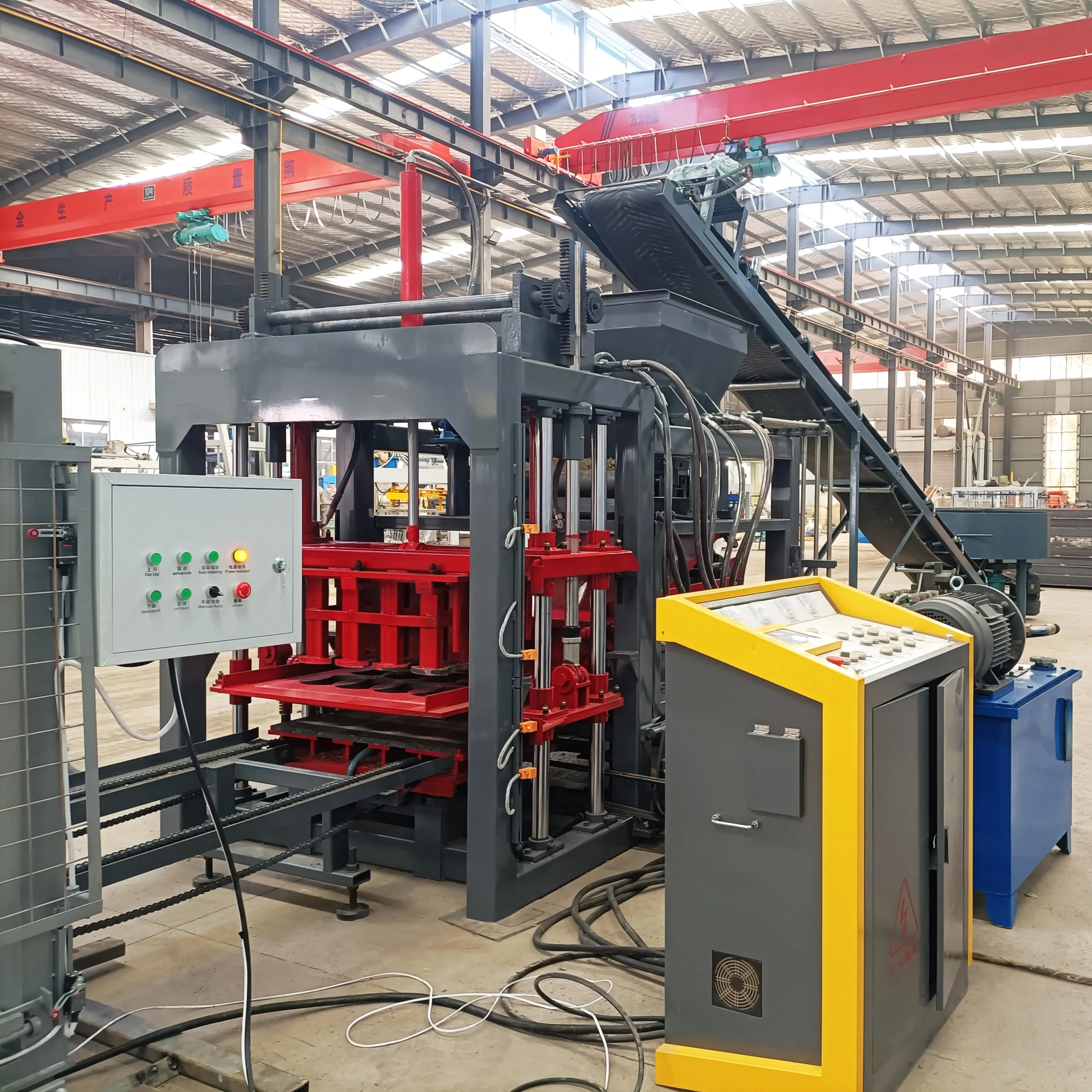
 High quality block machine