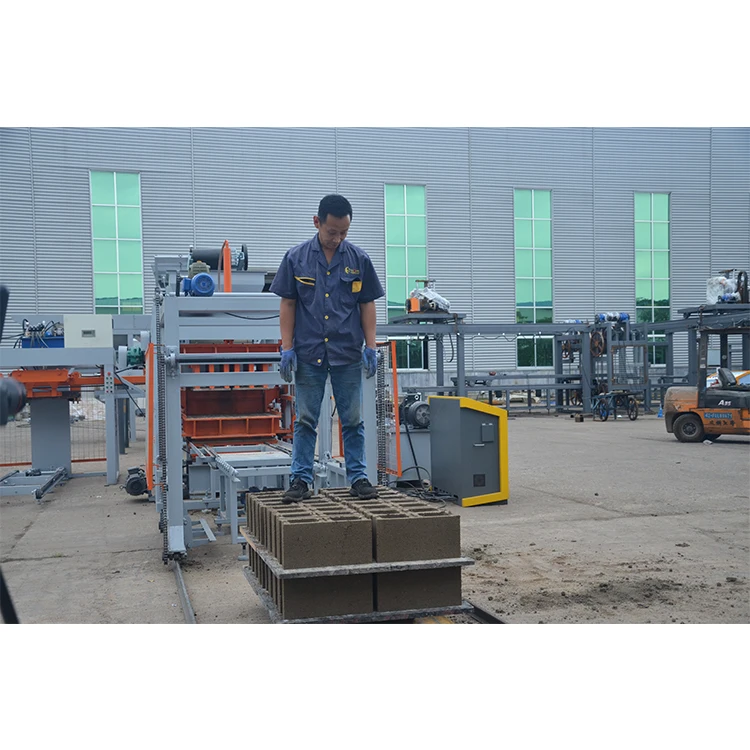
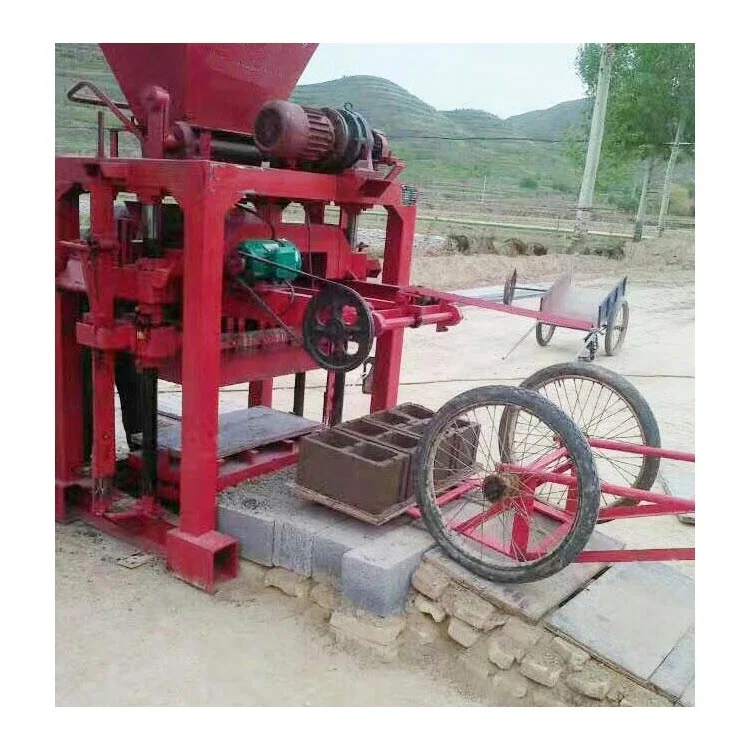
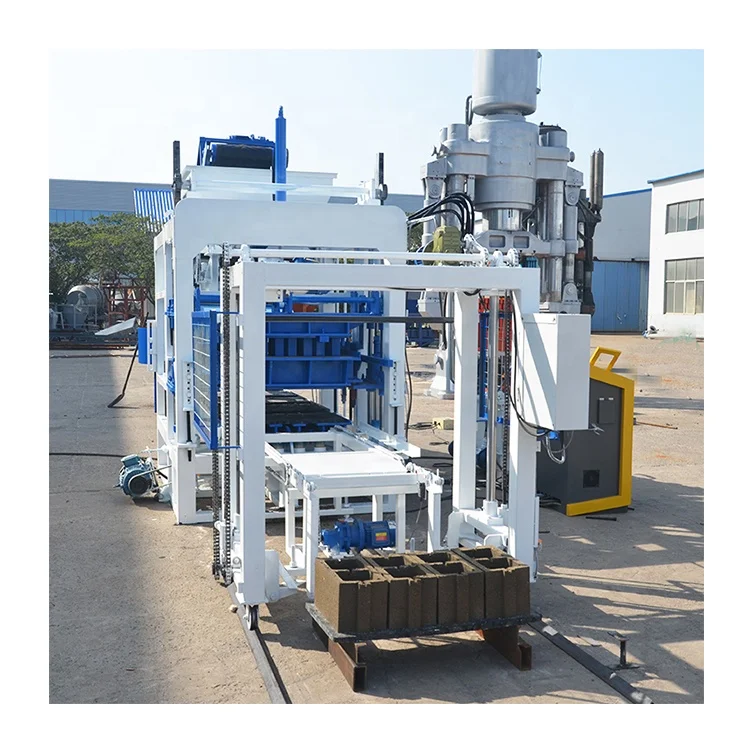
System Integration as One Unit — the QT4-15 ships with mixer, pallet conveyor, hydraulic station and PLC console specified together, so cycle times between stations match rather than leaving the press idle.
Technical Specifications
| Parameter |
Value |
| Model |
QT4-15 |
| Product Type |
Automatic Concrete Block Making Machine |
| Overall Dimensions (L×W×H) |
7100 x 1600 x 2610 mm |
| Rated Pressure |
16 MPa |
| Vibration Form |
Platform Vibration |
| Pallet Size |
1020 x 570 mm |
| Molding Cycle |
15–25 s (basis not stated in source — confirm block format, material and thickness) |
| Overall Power |
27.5 kW |
| Control System |
PLC electronic console |
| Automation Level |
Automatic (pallet feeding, material feeding, block conveying included) |
| Composition |
Mixer, pallet conveyor, molding machine, block conveyor, hydraulic station, electronic console (PLC) |
| Voltage & Frequency |
Configurable — confirm before order |
| Output Capacity |
To be confirmed per block format |
| Mould Change Method |
Manual bolt release, pallet-assisted extraction via block conveyor |
| Block Receiver |
Motor and reducer driven conveyor with idler wheels |
| Key Features |
PLC-controlled automatic cycle, platform vibration, integrated hydraulic station, motor-driven block conveyor |
Application Suitability
| Application |
Material or Output |
| Hollow block production |
Cement, crushed stone, sand and water mix for load-bearing and non-load-bearing walls |
| Interlocking brick production |
Finer aggregate blends for dry-stack wall systems |
| Paving block production |
High-density mix with coarse aggregate for pedestrian and light-traffic surfaces |
| Solid block and grass paver production |
Standard concrete mix for boundary walls, landscaping and erosion control |
| On-site production by contractors |
Local aggregate and cement sourced near the project location |
What "15 to 25 Seconds per Cycle" Actually Means for Your Daily Output
A molding cycle figure is only useful once you know which block format and wall thickness it was measured on.
Many buyers receive a single cycle time and multiply it across a full shift, only to find that thicker hollow blocks or denser paving blocks need longer vibration and pressing stages. The QT4-15 automatic block making machine lists a 15–25 second range, but the source does not state the block format behind those numbers. [NEED_CITE: block format and cycle time relationship in concrete block production] Without that link, a plant planning around the fast end of the range can fall noticeably short of daily targets. I have seen buyers commit to a machine on a catalogue cycle time and then discover their specific hollow block needs the slow end of the range, cutting expected output almost in half. That gap shows up first in the curing yard, where half-filled racks disrupt the entire logistics flow.

Placing the QT4-15 in the Full Machine Range
The QT4-15 automatic block making machine sits in the mid-range automatic tier, positioned above entry-level semi-automatic presses and below high-capacity automatic lines. For a buyer moving from manual pallet handling to automated feeding and conveying, this tier removes the heaviest labor stations while keeping the overall plant footprint within a standard industrial bay. The 7100 mm machine length, including the block conveyor, fits inside a modest production hall without requiring an extended curing building.
How the Line Stations Connect Around the Press
A press is only as productive as the slowest station feeding or clearing it. The QT4-15 package includes the mixer, pallet conveyor, hydraulic station and PLC console as matched components, meaning the pallet feed rate and block removal speed are set to keep the press cycling without idle gaps. When a buyer sources these stations from separate suppliers, mismatched conveyor speeds or mixer batch sizes create bottlenecks that no amount of press tuning can fix. [NEED_CITE: line synchronization in concrete block plants] The integrated composition of this model means the manufacturer takes responsibility for station-to-station timing from the start.
Reading the Numbers That Decide Block Quality
The 16 MPa rated hydraulic pressure and platform vibration work together to compact the concrete mix into the mould cavity. Higher pressure alone does not guarantee density; the vibration must liquefy the mix enough for the pressure to close voids. For hollow blocks, this balance determines wall strength, while for paving blocks it governs surface abrasion resistance. The 1020 x 570 mm pallet size dictates how many blocks fit per cycle — a 400 x 200 mm hollow block typically yields four per pallet, but smaller formats increase that count. Before sizing your curing racks and forklift routes, confirm the pallet dimensions against the equipment you already operate. The 27.5 kW total power draw covers the press motor, hydraulic pump, conveyor drives and mixer; verify that your site supply can handle this load plus any auxiliary equipment on a dedicated circuit.
The Hidden Cost of Ordering a Press Without the Line
When a quotation covers only the press, buyers often assume the rest of the line is optional or can be sourced locally. In practice, a mismatched pallet conveyor runs too slow or too fast, causing the press to pause between cycles. A mixer with the wrong batch size forces the press to wait for the next mix, and the molding cycle advantage disappears. [NEED_CITE: bottlenecks from unmatched line stations in block production] The manual bolt-release mould change on the QT4-15 also means the block conveyor must align precisely for pallet-assisted extraction; a third-party conveyor rarely matches that height without field modification. These small mismatches accumulate into a plant that never reaches the output the press alone was rated for.
Why Buyers Source This Tier Here
Block machinery is our single focus, so the QT4-15 is specified as a complete line — press, pallet conveyor, mixer, hydraulic station and PLC console — rather than a standalone press that leaves you sourcing the rest separately. Configuration is set against your actual mix design, local aggregate and target block format, not a catalogue default. Mould design covers the formats your market sells, and custom drawings are available when standard formats do not match. The automation level is selectable within the range, so a buyer starting with the QT4-15 can plan a future move to higher-capacity models without replacing the entire handling system. Installation support includes operator training so your team understands cycle adjustments for different block formats from day one.
Documentation & Verification
- Line layout drawing showing each station position and the QT4-15 footprint within your plant
- Capacity calculation sheet stating the assumed block format for each cycle time figure
- Mould drawing and format list so you can verify block dimensions before production
- Pallet specification including material and thickness, cross-referenced with your curing racks
- Voltage, frequency and PLC display language confirmation in writing before manufacturing
- Factory test record documenting the press running your chosen block format
Installation, Commissioning & Support
- Foundation pad must accommodate the 7100 x 1600 mm footprint plus working clearance on both sides
- Dedicated electrical circuit rated for the 27.5 kW total draw, with voltage and frequency confirmed before wiring
- Machine arrives as major assemblies; hydraulic station and PLC console connect on site during commissioning
- First production run includes cycle time adjustment for your specific block format and mix design
- Operator training covers PLC console navigation, mould change procedure and daily maintenance checkpoints
- Wear parts list and mould inventory provided so replacements are available when first change is due
Before You Request a Quotation
To size the QT4-15 automatic block making machine accurately, share your target block format with dimensions, expected daily output, and the local aggregate and cement you plan to use. Provide your site voltage and frequency along with the preferred PLC display language for your operators. If you already have curing racks or forklifts on site, send the pallet dimensions they accept so the 1020 x 570 mm pallet can be confirmed or adjusted. These details let us calculate a realistic capacity per format rather than a generic figure.
Frequently Asked Questions
Q: Where does the QT4-15 sit compared to semi-automatic and higher-capacity automatic models?
A: The QT4-15 occupies the mid-range automatic tier. It adds pallet feeding, material feeding and block conveying to the press, removing the heaviest manual stations, while staying below the footprint and investment of high-capacity lines. Buyers moving from semi-automatic operation find it a practical step up without overbuilding the plant.
Q: What plant footprint and foundation does this model need?
A: The machine measures 7100 x 1600 x 2610 mm including the block conveyor. You need a level concrete pad with working clearance on both sides for mould changes and maintenance access. The foundation specification is provided in the line layout drawing before shipment so your contractor can prepare the site.
Q: How do I calculate realistic daily output for my block format?
A: Start with the 1020 x 570 mm pallet and determine how many of your blocks fit per pallet. Then apply the molding cycle for your specific format — the 15–25 second range depends on block thickness and mix. Multiply by pallets per shift, subtracting breaks and mould changes. We provide a capacity sheet based on your confirmed format.
Q: Can the voltage, frequency and PLC language match my site?
A: Voltage and frequency are configurable and must be confirmed in writing before production begins. The PLC display language is also set to your preference during configuration. This avoids commissioning delays caused by mismatched electrical supply or unreadable control screens when the machine arrives.
Q: Is the QT4-15 a complete line or do I source other stations separately?
A: The package includes the mixer, pallet conveyor, molding machine, block conveyor, hydraulic station and PLC console as one matched system. You do not need to source these stations from separate suppliers. Pallets and moulds are specified alongside the press to ensure compatibility across the entire line.

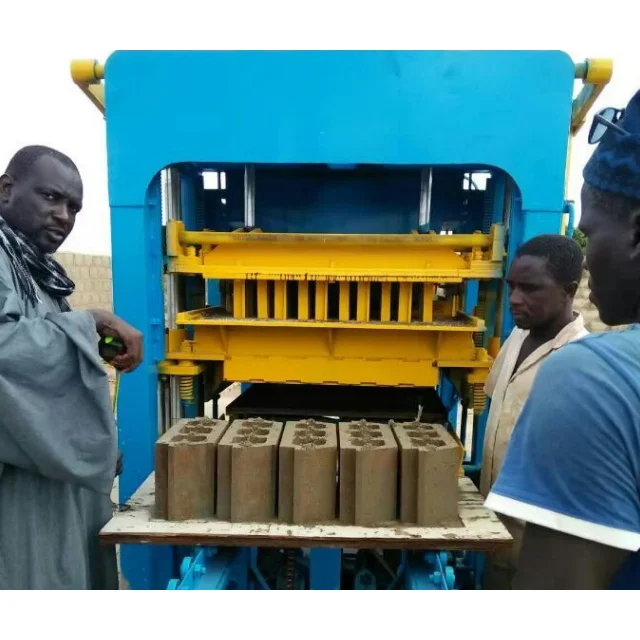
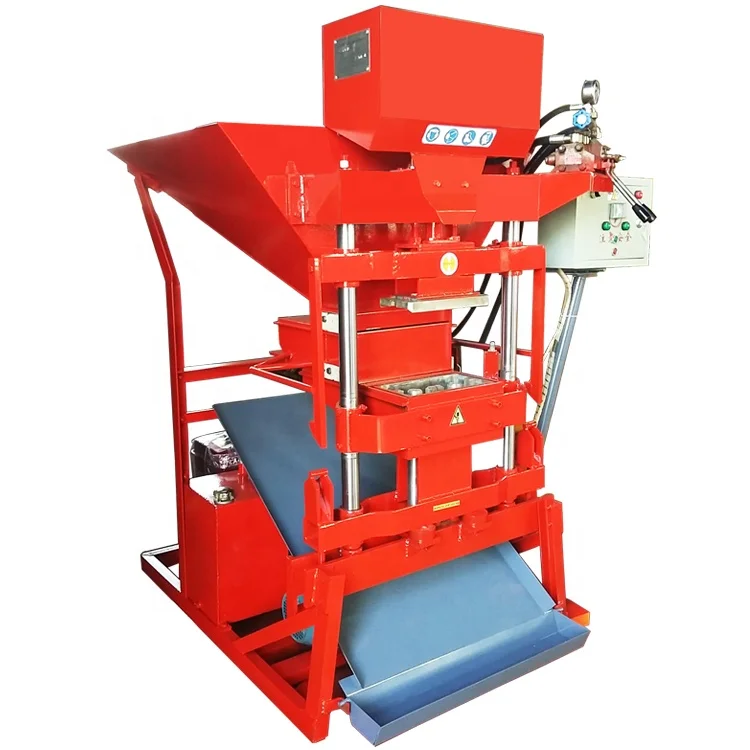 Semi automatic block