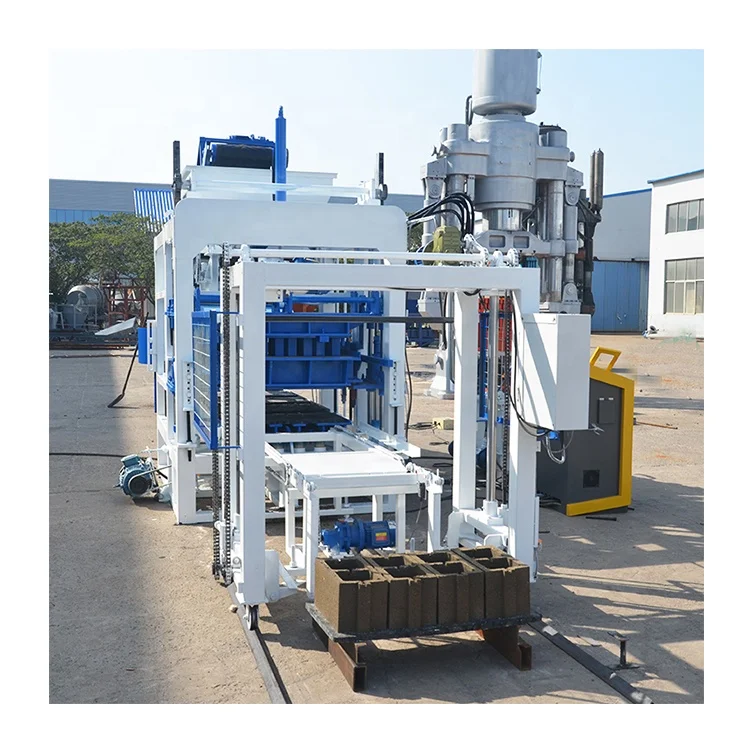
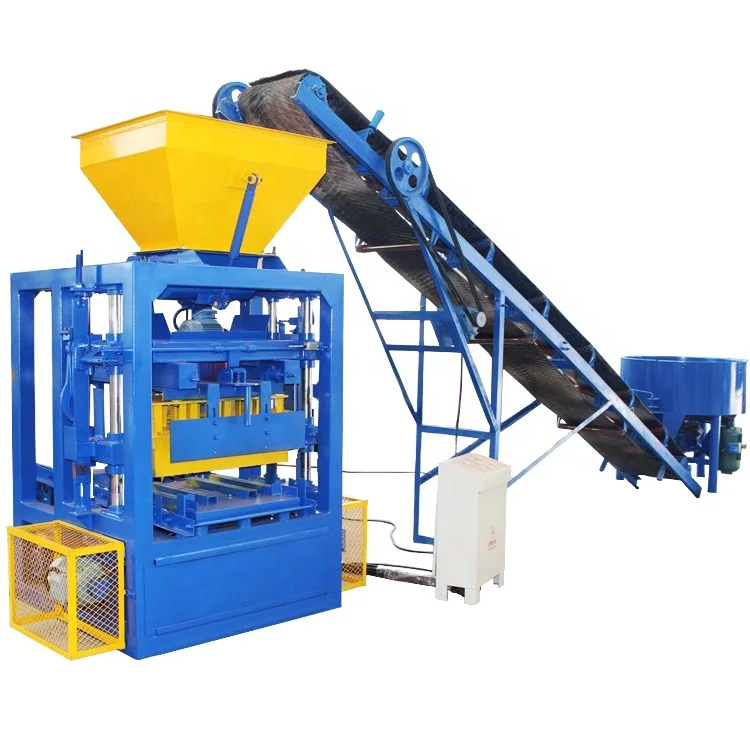
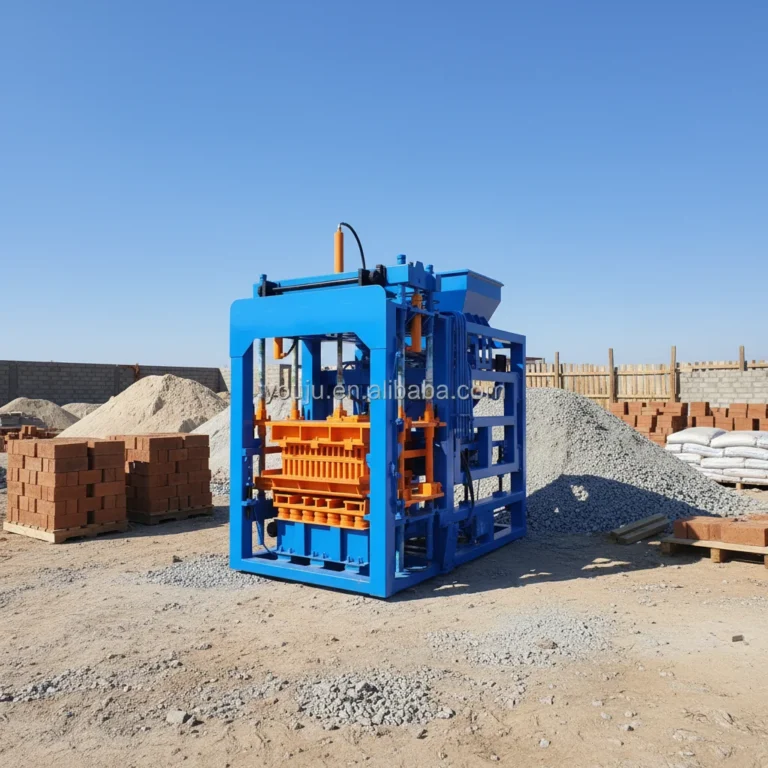
Integrated System Specification — The QT18-15 is presented as one matched system covering press, moulds, pallet handling and stacking, allowing buyers to position this high-capacity tier within the complete machine range before narrowing down.
Technical Specifications
| Parameter |
Value |
| Model |
QT18-15 |
| Product Type |
Fully Automatic Block Making Production Line |
| Brick Height Range |
50-300mm |
| Maximum Stacking Height |
0-1200mm |
| Main Vibration Form |
Platform Vibration |
| Vibration Frequency |
2800~4500 r/min |
| Vibration Power |
60 kW |
| Hydraulic System Power |
59 kW |
| Driving Method |
Hydraulic |
| Demolding Method |
Vibration and Hydraulic |
| General Water Consumption |
8 T/Day |
| Molding Cycle |
15-25 s (basis not stated in source — confirm block format / material / thickness) |
| Pallet Size |
1350×1350×120mm (source value — verify against manufacturer catalog) |
| Automation Level |
Fully automatic, PLC controlled with person-machine conversation interface |
| Raw Materials |
Crushed stone, sand, cement, dust, fly ash, gravel, slag |
| Applicable Products |
Concrete blocks, hollow/solid blocks, pavers, interlocking blocks, curbstone, colored pavers |
Application Suitability
| Application |
Material or Output |
| High-volume hollow block production plants |
Crushed stone, sand, and cement mixes for structural masonry |
| Paver and interlocking brick manufacturing |
Fine aggregates with color pigment for architectural paving |
| Curbstone production for infrastructure projects |
Dense concrete mixes with larger gravel fractions |
| On-site block production for housing developments |
Locally sourced fly ash and slag blended with cement |
What "Cycles Per Hour" Actually Means for Your Output
Cycle time must be stated per block format, not as a single blanket number.
A fully automatic block making machine manufacturer may quote a figure that assumes a thin paver, while the buyer intends to run large hollow blocks requiring longer press and vibration cycles. The QT18-15 shows a 15-25 second range precisely because cycle duration depends on the product. Without confirming which format drives the calculation, daily output projections remain unreliable [NEED_CITE: block production capacity calculation methods]. Buyers planning shift schedules and raw material deliveries need the per-format breakdown before signing the purchase order.

Placing the QT18-15 Within the Full Machine Range
This model occupies the high-capacity tier of our fully automatic block making machine manufacturer lineup, designed for buyers who need continuous production across multiple formats. Smaller automatic or semi-automatic tiers sit below it in both output and investment. The QT18-15 pairs platform vibration with a 59 kW hydraulic system, making it the appropriate choice when daily volume targets exceed what mid-range machines sustain over a full shift.
How the Range Scales From Semi-Auto to Fully Automatic
Moving up the range means more than higher cycle speeds. The QT18-15 includes PLC-controlled operation with a person-machine conversation interface, direct stacking up to 1200 mm, and integrated pallet feeding — elements that are optional or manually handled at lower tiers. Buyers evaluating this machine should compare not just output but the labour each tier demands. A fully automatic block making machine manufacturer should show where automation removes operators and where manual tasks remain [NEED_CITE: automation levels in block making machinery].
Vibration, Pressure, and What They Mean for Block Density
The 2800–4500 r/min vibration frequency works alongside the 59 kW hydraulic system to compact the concrete mix during pressing. Higher frequency alone does not guarantee denser blocks; the hydraulic pressure must simultaneously hold the mould closed under vibration. If vibration force exceeds what the hydraulic clamp can resist, flash forms at mould seams. If hydraulic pressure dominates without adequate vibration, internal voids reduce block strength. The QT18-15 specifies both parameters so buyers can cross-check against their mix design and local aggregate characteristics.
When the Wrong Configuration Costs More Than the Machine
Selecting a pallet size that does not match the curing racks or forklifts already on site forces the buyer to replace handling equipment after delivery. Similarly, specifying a pallet material unsuited to the local climate — such as wood pallets in humid regions where they absorb moisture and warp — leads to uneven block bases and increased rejection. Commissioning delays also arise when voltage, frequency, and PLC language are not confirmed before production [NEED_CITE: common causes of commissioning delays in exported block machinery]. These are configuration mismatches, not machine defects, yet they cost the buyer time and money.
Why Source This Tier From Our Range
Block machinery is our single focus, so the QT18-15 arrives with moulds, pallets, and handling specified as one system rather than assembled from separate suppliers. Each capacity calculation states the block format assumed, so buyers compare tiers on honest data. Moulds are designed for the formats the buyer’s market actually sells, including custom drawings when standard options do not cover a local requirement. The automation level is selectable within our range, meaning a buyer can begin semi-automatic and add stacking or cubing modules later. Installation support includes operator training at the buyer’s site.
Documentation & Verification
- Line layout showing QT18-15 station positions and pallet flow path
- Capacity calculation sheet listing cycle time per block format
- Mould drawing and format list covering all ordered configurations
- Hydraulic and electrical schematic with voltage and frequency confirmed
- Factory test record using buyer’s specified mix proportions
- Operation and maintenance manual in confirmed PLC display language
Installation, Commissioning & Support
- Foundation plan accommodating 2000 m² factory area with curing zone allocation
- Dedicated power circuit for combined 60 kW vibration and 59 kW hydraulic loads
- Machine dismantling for container shipment with reassembly sequence documented
- On-site parameter tuning matching vibration frequency to local aggregate density
- Operator training on PLC interface, mould change procedure, and safety interlocks
- Wear parts list with hydraulic seals and vibration motor brushes identified
Before You Request a Quote
To size the QT18-15 correctly within our range, share the block formats you intend to produce and the daily output target for each. Provide samples or a description of your local aggregate, including any clay or silt content, so we can run trial presses. Confirm your available factory area, existing pallet fleet dimensions, and site voltage with frequency so the quotation reflects a machine you can run on arrival.
Frequently Asked Questions
Q: How is capacity calculated for the QT18-15, and which block format does each figure assume?
A: Each output figure on our capacity sheet names the specific block format, dimensions, and material mix used for the calculation. The QT18-15 moulding cycle ranges from 15 to 25 seconds depending on product thickness and mix characteristics. We provide the per-format breakdown so buyers can verify against their own production targets rather than relying on a single headline number.
Q: Where does the QT18-15 sit in your full machine range compared to smaller automatic tiers?
A: The QT18-15 is our high-capacity automatic tier, specified for plants running continuous shifts across multiple formats. Smaller tiers in our range handle lower daily volumes with fewer integrated stations. Comparing tiers means looking at output per format, labour requirements, and which handling stations are included, not just the press cycle speed.
Q: Can I start at a lower automation level and upgrade to QT18-15 features later?
A: Yes. Our range is designed so buyers can begin with semi-automatic operation and add automatic pallet feeding, stacking, or cubing modules as production volume grows. The QT18-15 PLC platform supports these upgrades without replacing the core press. Discuss your phased plan during the inquiry so the initial configuration leaves the correct mechanical and electrical interfaces.
Q: How do you match vibration force and hydraulic pressure to my local aggregate?
A: We request a sample of your aggregate and mix proportions, then run trial presses at different vibration frequencies within the 2800–4500 r/min range. The hydraulic pressure is adjusted to hold the mould sealed under vibration. This ensures the QT18-15 produces blocks at the strength your market requires without excess flash or internal voids.
Q: What plant footprint does the QT18-15 require, and is pallet handling included?
A: The QT18-15 is configured for a factory area of approximately 2000 m² including curing and stacking zones. Pallet feeding, direct stacking up to 1200 mm, and pallet return are included as part of the matched system. We confirm pallet size against your existing curing racks and forklift capacity before finalising the line layout.

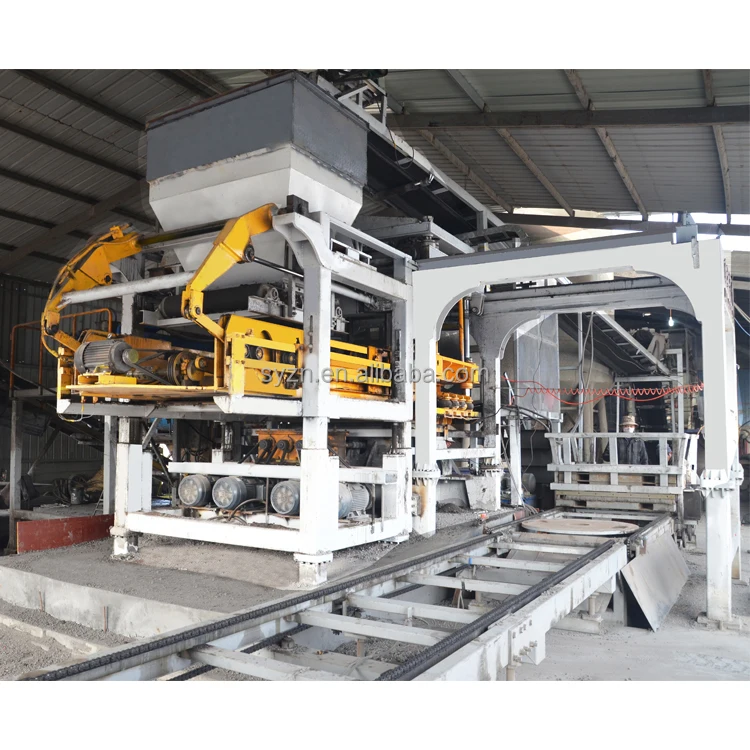
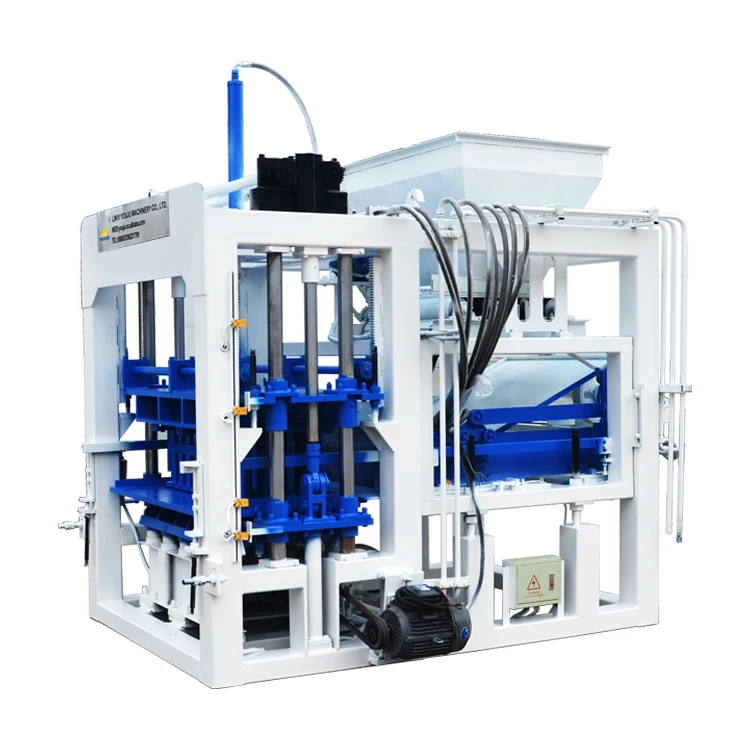 Stationary block machine