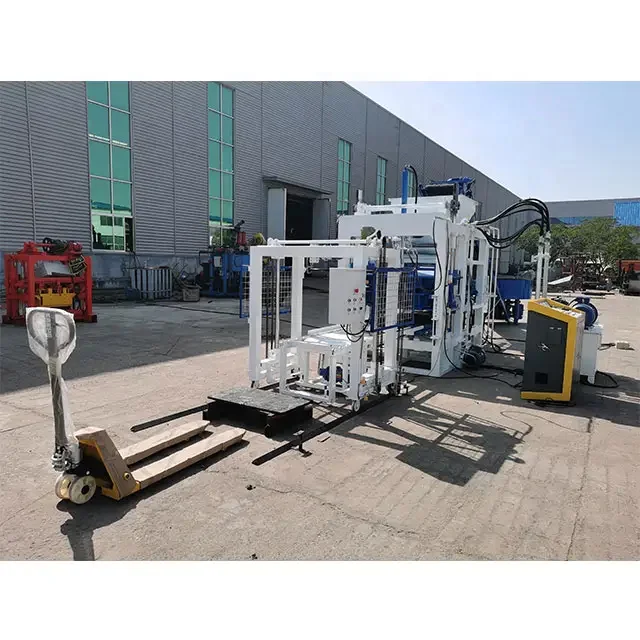
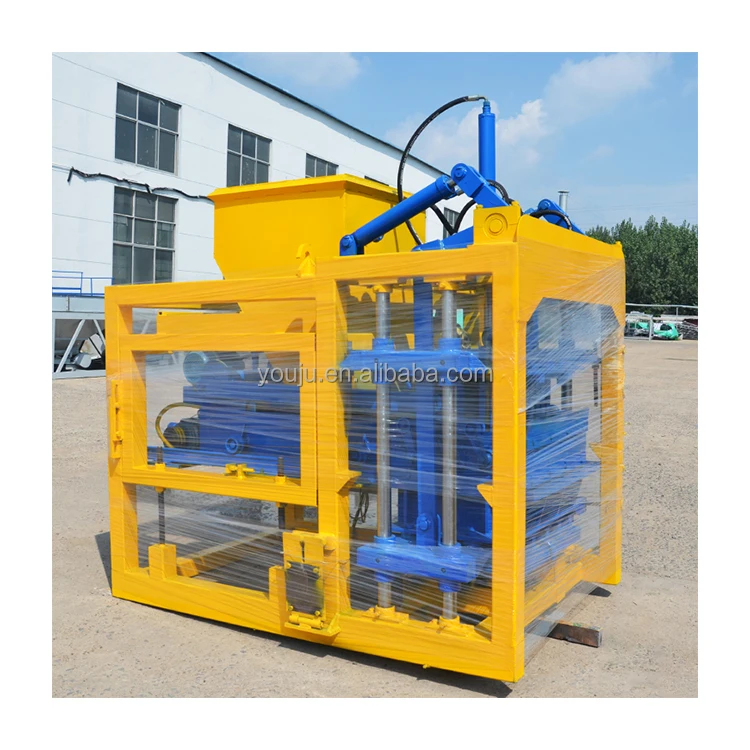
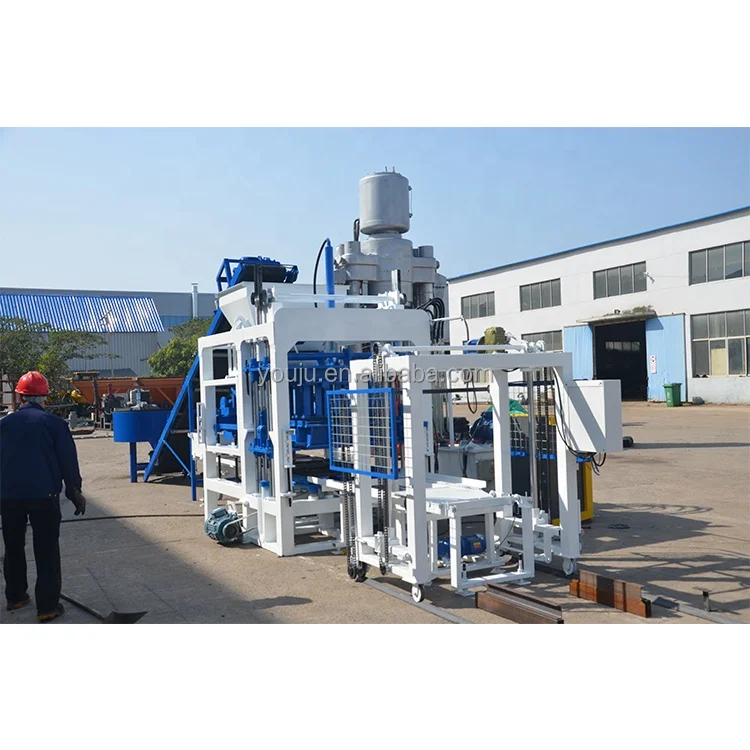
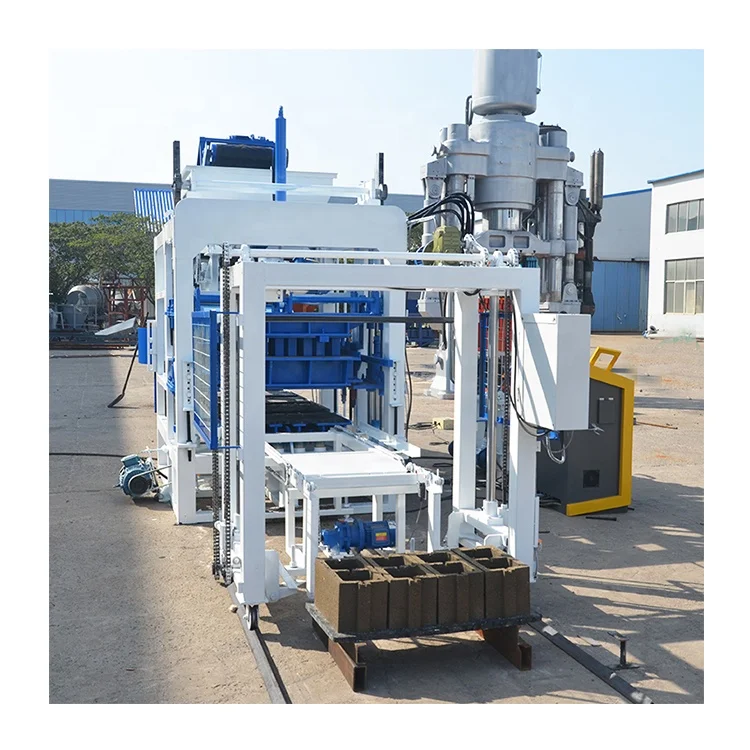
Matched System Design — the QT12-15 is supplied with pallets, moulds, and handling equipment configured as one production unit rather than separate purchases.
Technical Specifications
| Parameter |
Value |
| Product Type |
Automatic Concrete Block Making Machine |
| Model |
QT12-15 |
| Overall Dimensions (L×W×H) |
9350 x 2520 x 2950 mm |
| Rated Pressure |
21 MPa |
| Main Vibration Form |
Platform Vibration |
| Vibration Frequency |
2800-4500 r/min |
| Vibration Acceleration |
15-20 g |
| Exciting Force |
120 kN |
| Block Height Range |
50-200 mm |
| Pallet Size |
1350 x 850 mm |
| Molding Cycle |
15-25 s |
| Storage Hopper Volume |
0.4 m³ |
| Feeding Device Volume |
0.31 m³ |
| Total Power |
50.7 kW |
| Total Weight |
12000 kg |
| Control System |
PLC controlled (mechanical hydraulic synthesis) |
| Frame Structure |
Gantry frame type, super steel |
| Mould Material |
Manganese steel, carburizing and quenching, cartridge type welding |
| Compressive Strength of Blocks |
more than 15 MPa |
| Output Capacity (Hollow block 390×190×190mm, 12 pcs/mould) |
1720-2160 pcs/h, 13700-17200 pcs/day (8h) |
| Output Capacity (Porous block 240×115×90mm, 35 pcs/mould) |
5040-6300 pcs/h, 40300-50400 pcs/day (8h) |
| Output Capacity (Standard block 240×115×53mm, 62 pcs/mould) |
13100-14800 pcs/h, 105000-119000 pcs/day (8h) |
| Suggested Line Configuration |
PL1200 batching machine, JS500 or JS750 mixer, 8m conveyor belt, stacker |
Application Suitability
| Application |
Material or Output |
| Hollow block production |
Crushed stone, sand, cement, fly ash blends |
| Porous block manufacturing |
Lightweight aggregate with cement binder |
| Standard solid block output |
Dense aggregate mixes for load-bearing walls |
| Paving block and interlock brick |
High-strength concrete with fine aggregate |
| On-site project production |
Locally sourced sand and gravel with Portland cement |
What Buyers Miss When Reading Capacity Figures
Output numbers only hold meaning when the block format and mould cavity count are stated alongside them.
Many quotation sheets list a single hourly figure without specifying which block size it was measured on. A concrete block making machine manufacturer quoting 14,000 pieces per day could be referencing standard 240×115×53mm solid blocks, while the buyer intends to produce 390×190×190mm hollow blocks where daily output drops to a fraction of that figure. I have watched buyers sign contracts based on a headline number, then discover on commissioning day that their actual format yields far less than the brochure implied. The discrepancy is not a machine fault — it is a specification gap [NEED_CITE: block format assumptions in capacity quotations].

Positioning Within the Machine Range
The QT12-15 occupies the high-capacity tier of our block machine lineup, built for plants that need sustained daily volume across multiple block formats. A buyer moving from a semi-automatic workshop setup to this tier is committing to a larger curing area, dedicated pallet circulation, and a batching system that keeps pace with the press cycle. This concrete block making machine manufacturer offers smaller tiers for first-time producers, so the investment step should match realistic market demand rather than maximum theoretical output.
Tier Selection and Plant Footprint
Choosing the right tier depends on how many formats the buyer’s market actually purchases and how much curing space the site allows. The 1350 x 850 mm pallet used by the QT12-15 requires a corresponding curing rack layout and forklift capacity. Buyers who skip this step often find that wet blocks have nowhere to go, and the press sits idle while workers move pallets by hand. Matching the press to its surrounding line prevents bottlenecks that no amount of automation can fix [NEED_CITE: curing area planning for block production plants].
Spec Interpretation for Daily Production
The 21 MPa rated hydraulic pressure and 120 kN exciting force work together to compact concrete into the mould cavity. Higher vibration acceleration, here reaching 15-20 g, drives fine aggregate into voids and produces denser blocks with fewer surface defects. The adjustable vibration frequency between 2800 and 4500 r/min allows operators to tune the machine when switching between a dry hollow block mix and a wetter porous block blend. A moulding cycle of 15-25 seconds means the press completes a stroke quickly, but the actual daily throughput depends on how fast the upstream mixer and downstream pallet handling can keep up. The 50.7 kW total power draw requires a dedicated electrical circuit with voltage and frequency confirmed before the machine leaves the factory [NEED_CITE: industrial voltage and frequency standards by region].
Hidden Costs of Skipping Configuration Checks
When the pallet size is chosen without considering the buyer’s existing forklift and curing racks, new pallets may not fit the handling equipment already on site. Ordering a machine without confirming voltage and PLC display language leads to weeks of delay while transformers are sourced or control panels are reprogrammed after arrival. A mix design the machine was set up for may not match locally available aggregate, forcing the buyer to import materials or compromise on block strength. These are not equipment failures — they are specification oversights that surface only after the container is opened.
Why Source This Tier Here
Block machinery is our single production focus, so the QT12-15 press, its moulds, pallets, and handling equipment are designed to function as one system. Each machine is configured against the buyer’s actual aggregate and target block format rather than shipped with default catalogue settings. Mould design covers the formats the buyer’s local market demands, and custom drawings are accepted when standard cavities do not match. The automation level is selectable, allowing a buyer to begin with semi-automatic pallet handling and add automatic stacking later as volume grows. Installation support includes operator training so the crew understands cycle tuning and mould change procedures from the first production run.
Documentation & Verification
- Line layout showing QT12-15 capacity per block format with stated cavity count
- Machine specification sheet covering hydraulic pressure, vibration force, and pallet dimensions
- Mould drawing confirming block types and quantities per cycle
- Voltage, frequency, and PLC language confirmation record before production begins
- Factory test record with the buyer’s target block format and mix ratio
Installation, Commissioning & Support
- Gantry frame dimensions of 9350 x 2520 mm require a level concrete foundation with anchor bolts
- 50.7 kW total load needs a dedicated three-phase circuit matching confirmed voltage and frequency
- Machine ships dismantled for container loading; reassembly on site follows marked connection points
- First-run commissioning includes cycle tuning against the buyer’s specific mix and aggregate
- Operator training covers mould change procedure and PLC parameter adjustment for each block format
- Wear parts list identifies manganese steel mould inserts and hydraulic seals for initial spares stocking
Preparing Your Inquiry
To configure the QT12-15 correctly, provide the block formats your market purchases most and the daily volume you need for each. Share your local aggregate type and any existing mix proportions so the vibration settings can be matched before production. Confirm your site voltage, frequency, and preferred PLC display language to avoid delays during commissioning.
Frequently Asked Questions
Q: How is output capacity verified, and which block format does each figure assume?
A: Every output figure we publish names the exact block dimension and mould cavity count. For the QT12-15, hollow block output is stated at 390×190×190mm with 12 cavities, porous block at 240×115×90mm with 35 cavities, and standard block at 240×115×53mm with 62 cavities. If your target format differs, we recalculate based on the mould layout for that specific size.
Q: Where does the QT12-15 sit compared to semi-automatic and mobile models?
A: The QT12-15 is the high-capacity tier designed for plants running continuous daily shifts with multiple block formats. Semi-automatic machines in our range suit smaller plants with lower investment, while mobile egg-laying units serve on-site production without a fixed curing area. Buyers choose based on realistic market volume and available site infrastructure.
Q: Can I start semi-automatic and upgrade automation later?
A: Yes. The QT12-15 platform supports starting with manual pallet handling and adding automatic pallet feeding, stacking, and cubing as production volume grows. The PLC control system accommodates these additions without replacing the main press, protecting the initial investment while allowing the line to scale.
Q: How are pallet size and material chosen for my site?
A: The QT12-15 uses a 1350 x 850 mm pallet. We confirm your existing curing rack dimensions and forklift capacity before finalizing pallet material and thickness. A mismatch here causes handling delays once the line is running, so this verification happens during the proposal stage rather than at delivery.

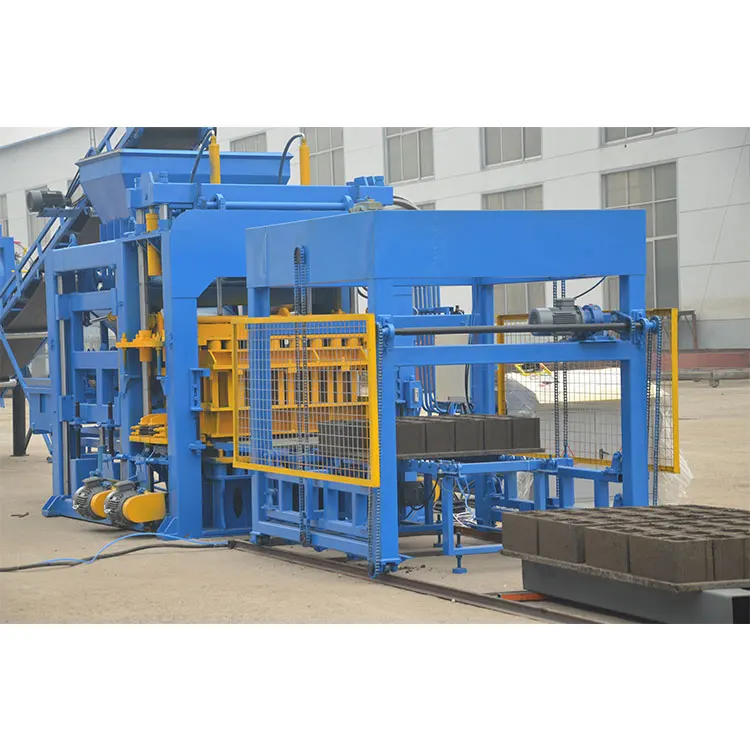
 Semi automatic block