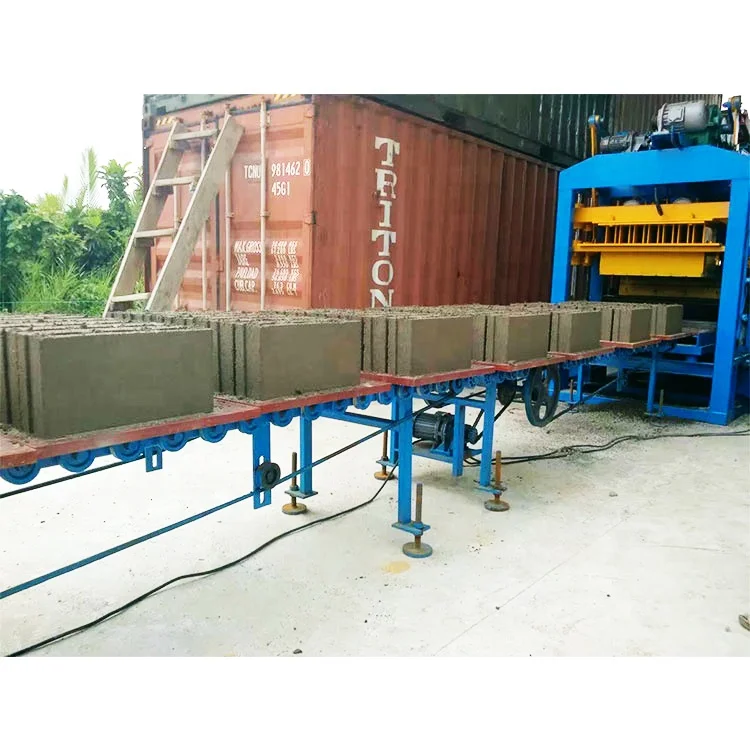
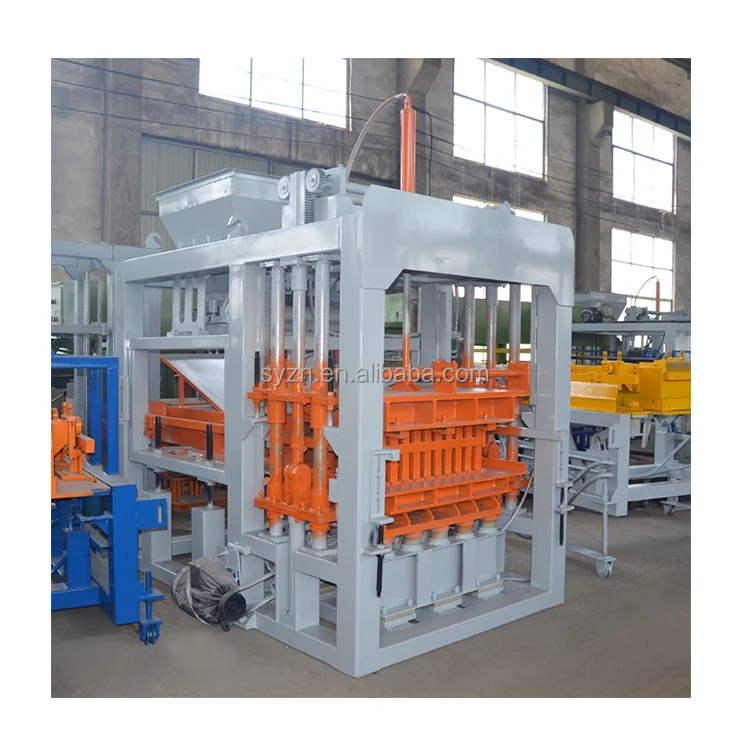
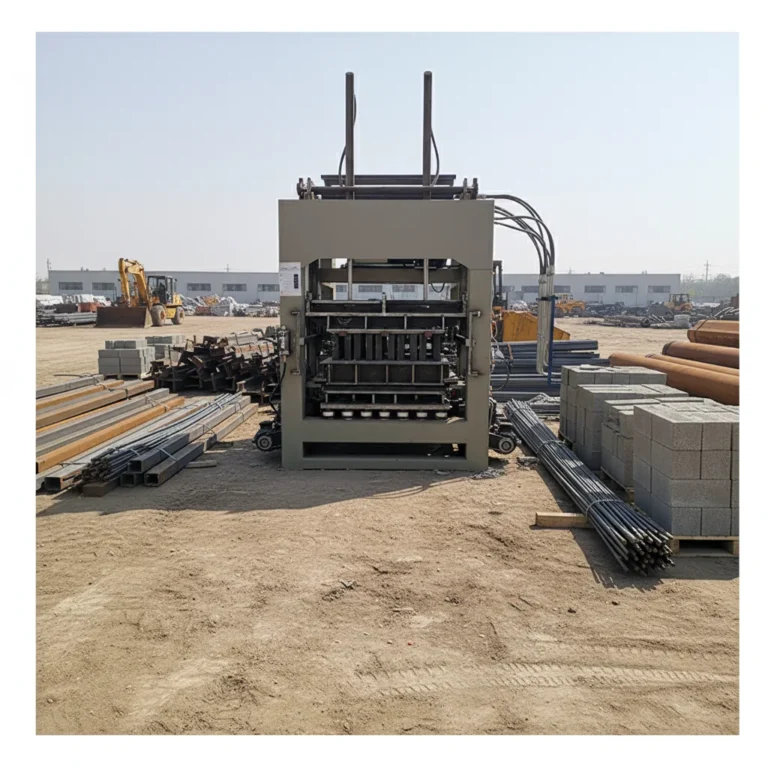
Integrated Line Sizing — Every QT12-15 configuration ships with a capacity calculation tied to a confirmed block format, not a headline cycle figure.
Technical Specifications
| Parameter |
Value |
| Model |
QT12-15 |
| Product Type |
Hydraulic Concrete Block Making Machine |
| Total Power |
62 kW |
| Pallet Size |
1300 × 900 mm |
| Vibration Type |
Table vibration with frequency conversion control |
| Synchronization System |
Four-axis vibration with forced synchronization gear shaft |
| Vibration Technology |
Dynamic and static table configuration |
| Vibration Acceleration |
up to 20g (source value — verify against manufacturer catalog) |
| Vibration Force |
120 kN (source labels as vibration frequency — verify against manufacturer catalog) |
| Moulding Cycle |
15–30 seconds (basis not stated in source — confirm block format, material, thickness) |
| Material Feeding |
360° rotating press-in arch breaker |
| Noise Reduction |
Flexible vibration reduction on pressure head; adjustable air bag on mould box |
| Voltage |
Customized according to local industrial voltage |
| Mould Compatibility |
Wall blocks, porous bricks, pavement bricks, slope protection bricks |
| Product Versatility |
One machine, multi-mould configuration |
| Certification |
CE declaration applicable |
Application Suitability
| Application |
Material or Output |
| High-capacity hollow block production |
Crushed stone, cement, sand aggregate mixes |
| Solid block manufacturing for load-bearing walls |
Dense concrete with local coarse aggregate |
| Paving block and kerbstone production |
Fine aggregate blends with pigment dosing |
| Porous and interlocking brick runs |
Permeable concrete mixes with graded stone |
| Slope protection brick for infrastructure |
Heavy-weight concrete with reinforced mould fills |
Why "15-30 Seconds per Cycle" Needs a Format Attached
A cycle time is only meaningful once the block format, mix design, and target strength are pinned down.
The QT12-15 block machine manufacturer specs often quote a cycle range without stating which product that range assumes. A 15-second cycle on a thin paving block and a 30-second cycle on a tall hollow block are fundamentally different production scenarios. Buyers who compare machines on cycle time alone end up with daily output figures that fall short of what was budgeted for. I have watched buyers commit to a high-capacity tier based on a single number, only to discover their primary product — say a 200 mm hollow block with coarse local aggregate — sits at the slow end of that range. That gap compounds across every shift. [NEED_CITE: block format and cycle time relationship in hydraulic press sizing]
Where the QT12-15 Sits on the Output Tier Map
The Shiyue range spans mobile egg-laying units for on-site work, semi-automatic machines for smaller plants, and fully automatic lines for industrial-scale output. The QT12-15 occupies the upper automatic tier, positioned for plants that need sustained high-volume runs across multiple block formats. Choosing this tier means committing to a fixed plant with a defined curing area, pallet return system, and stacking infrastructure — not a machine you relocate between job sites.
Pallet Size as the Line-Wide Constraint
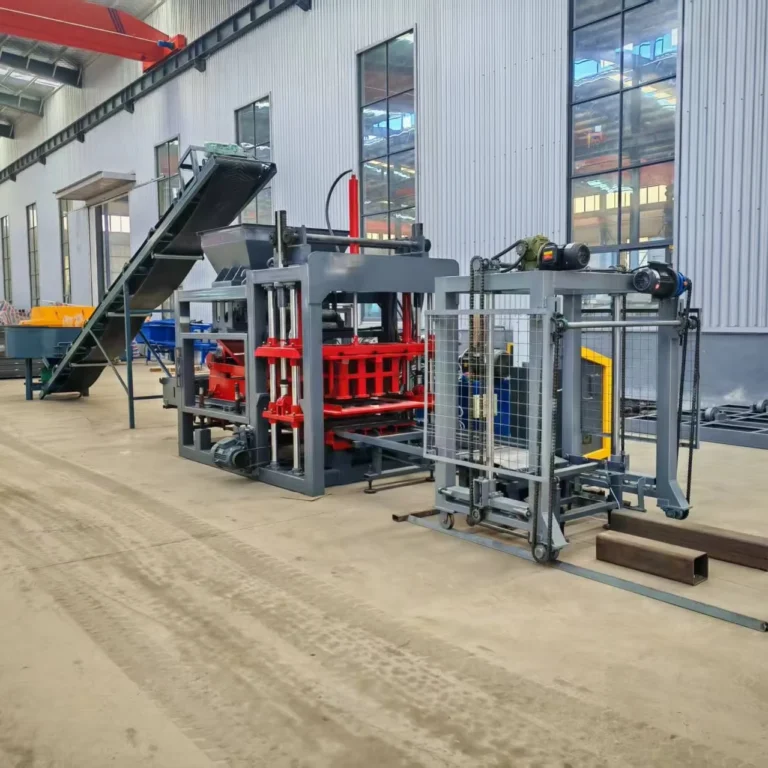
The 1300 × 900 mm pallet is not just a press specification. It dictates the mould footprint, the curing rack dimensions, the forklift tine spacing, and the stacking system geometry. Every station downstream of the QT12-15 high capacity block making machine for sale must be built around that pallet envelope. A buyer who selects pallet size without checking their existing curing yard and handling equipment faces rework across the entire line.
Reading the Vibration and Power Specs
The four-axis vibration with forced synchronization gear shaft addresses a common problem in large-format presses: uneven density across the mould cavity. When vibration force reaches the far corners of a 1300 × 900 mm pallet inconsistently, blocks on the edges cure weaker than those in the centre. The frequency conversion control on the dynamic and static table lets the operator adjust intensity per mix — finer aggregate needs different excitation than coarse crushed stone. At 62 kW total power, the QT12-15 demands a dedicated supply circuit; buyers running marginal electrical infrastructure will see tripped breakers during peak draw on the vibration motors. [NEED_CITE: vibration uniformity and block compressive strength correlation]

The Cost of Skipping Format-Level Capacity Confirmation
When a buyer orders without confirming the cycle time for their specific block format, the consequences surface after commissioning. Daily output misses the project schedule. The curing area, sized for a higher throughput, sits half empty. Labour planned for a two-shift operation stretches into overtime. The pallet return conveyor, specified for a faster cycle, idles between presses. These are not warranty issues — the machine performs exactly as configured. The mismatch lives in the quotation assumptions. [NEED_CITE: production planning errors from unspecified block format capacity]
What a Matched Line Looks Like Here
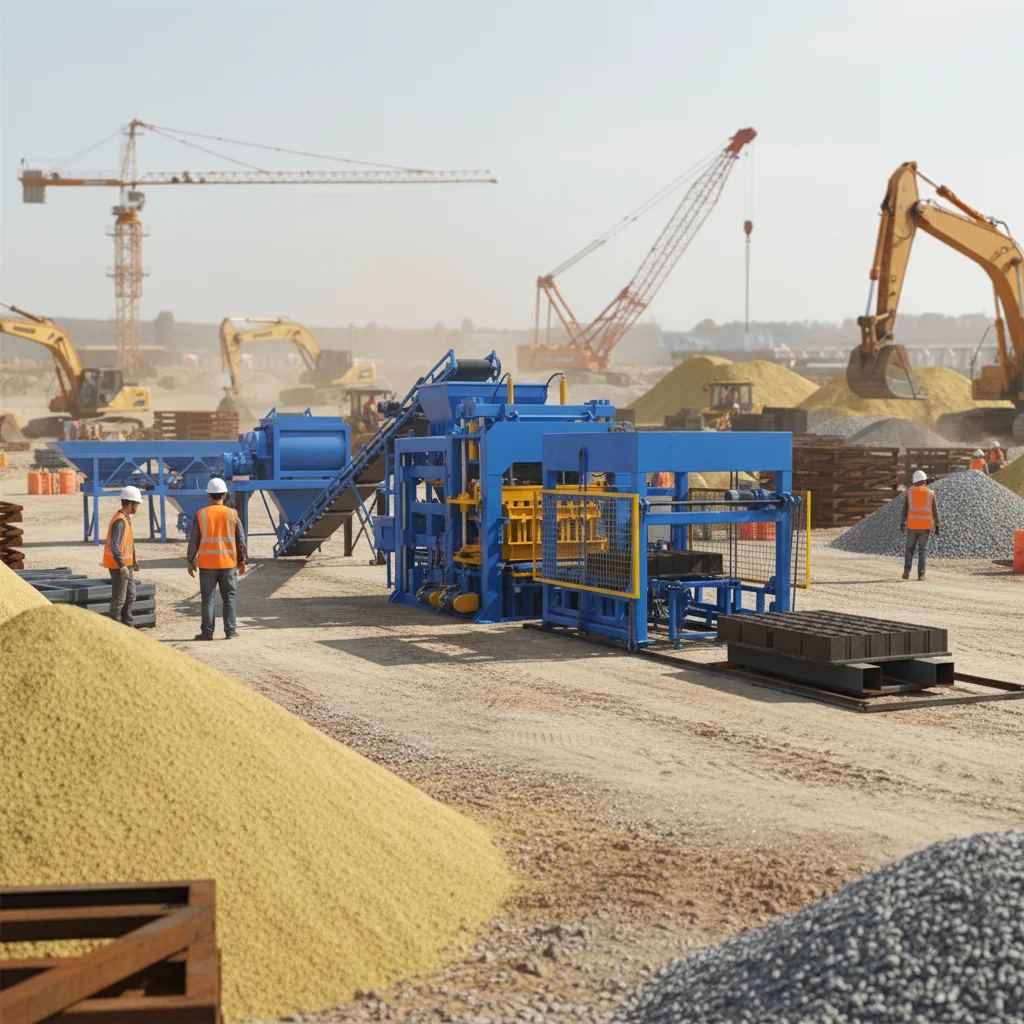
The QT12-15 is specified as part of a complete block line, not sold as a standalone press. The raw material feeding, mixing, pallet handling, stacking, and curing rack systems are configured to match the press cycle so no station becomes a bottleneck. Mould design covers the formats the buyer’s market actually sells, including custom drawings when standard formats do not fit. Automation level is selectable — a buyer can enter at semi-automatic and move to full automatic stacking and cubing as volume grows. Voltage, frequency, and PLC display language are confirmed before production begins, not discovered at commissioning. The factory test record documents performance on the buyer’s stated block format before the machine leaves the floor.
Documentation & Verification
- Line layout showing QT12-15 stations with capacity per confirmed block format
- Machine specification sheet with pallet size, vibration force, and cycle time per product
- Mould drawing and format list for every block type on the order
- Voltage, frequency, and PLC language confirmation record before build
- Factory test record on buyer’s target format before dispatch
- Hydraulic and electrical schematic for on-site maintenance reference
Installation, Commissioning & Support
- Foundation plan matched to the QT12-15 vibration load and 62 kW power draw
- Dedicated electrical circuit specified for the four-axis vibration motor startup surge
- Machine dismantled for container loading with reassembly sequence documented
- Commissioning includes cycle time verification on buyer’s actual mix and block format
- Operator training covers mould change procedure and vibration frequency adjustment
- Wear parts list with hydraulic seal and vibration shaft bearing replacement intervals
Before You Request a Quote
Share your primary block format with dimensions, your target daily output, and the local aggregate you plan to use. Include your site’s industrial voltage and frequency, plus the language you need on the PLC display. If you have existing curing racks or forklifts, send the dimensions so the 1300 × 900 mm pallet system can be checked for compatibility.
Frequently Asked Questions
Q: Where does the QT12-15 sit compared to semi-automatic and mobile tiers in the Shiyue range?
A: The QT12-15 is the high-capacity automatic tier, designed for fixed plants with continuous production schedules. Semi-automatic models serve smaller plants with lower investment and manual pallet handling. Mobile egg-laying machines handle on-site production without a fixed curing area. The right tier depends on your daily volume target and whether you need a permanent or relocatable setup.
Q: What plant footprint does a fully automatic QT12-15 line require?
A: A complete line includes raw material storage, mixing, the press, pallet return, stacking, and curing rack zones. The 1300 × 900 mm pallet defines the curing rack dimensions and aisle width for forklift access. Exact footprint depends on your chosen automation level and the curing time your block format demands. We provide a line layout drawing during the proposal stage.
Q: Can I start semi-automatic and move to QT12-15 automation later?
A: Yes. The Shiyue range allows buyers to enter at a lower automation tier and add automatic pallet feeding, stacking, and cubing as production volume justifies the investment. The QT12-15 press itself supports this upgrade path. Confirming your future automation plan at the ordering stage ensures the base machine is built with the necessary mounting points and control interfaces.
Q: How does the 1300 × 900 mm pallet affect my forklift and curing rack choices?
A: The pallet dimensions set the minimum fork tine spacing, rack slot width, and stacking alignment for the entire line. If your existing forklift or curing racks were sized for a different pallet, they may not be compatible. We check your handling equipment specifications against the QT12-15 pallet during the configuration stage to avoid post-delivery rework.
Q: What block formats can the QT12-15 produce, and does output change per format?
A: The machine handles wall blocks, porous bricks, pavement bricks, slope protection bricks, and custom formats through mould changes. Output varies significantly between a thin paver and a tall hollow block because the moulding cycle depends on product height, mix design, and required density. We state capacity per confirmed format in the proposal, not as a single figure across all products.

 High quality block machine