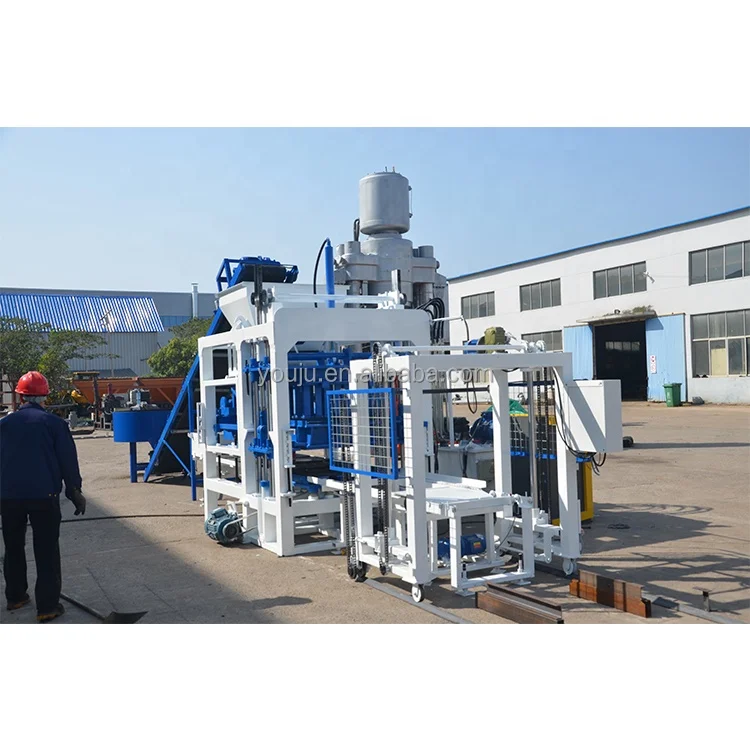
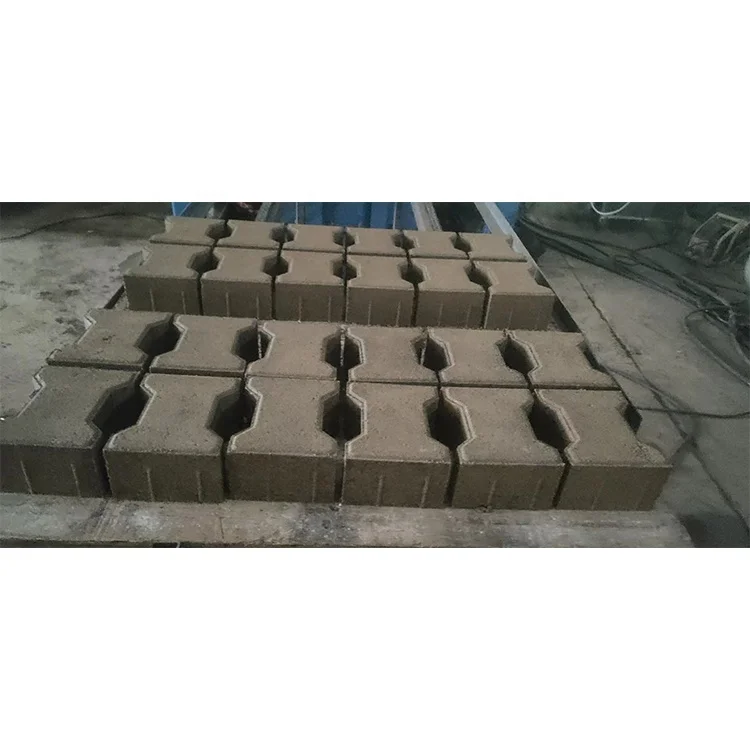
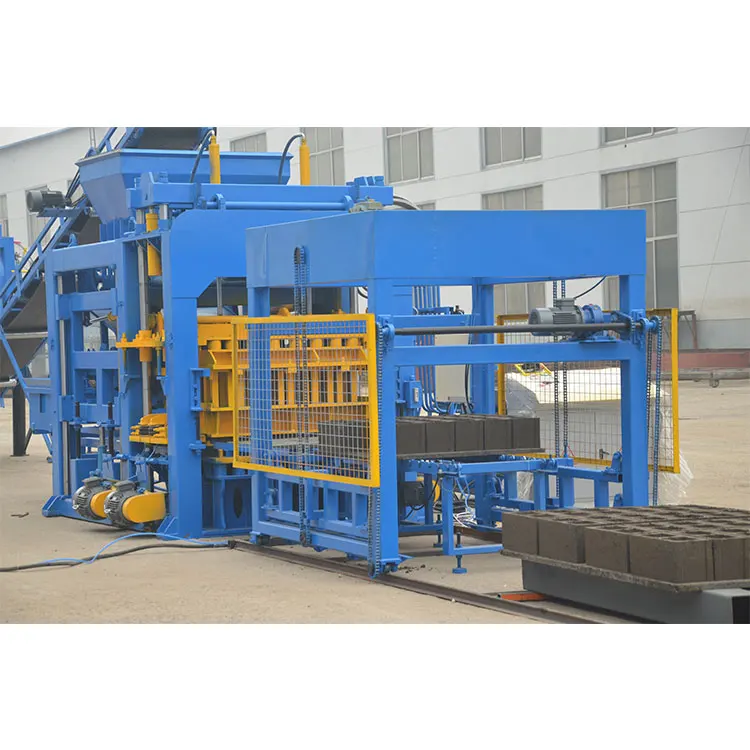
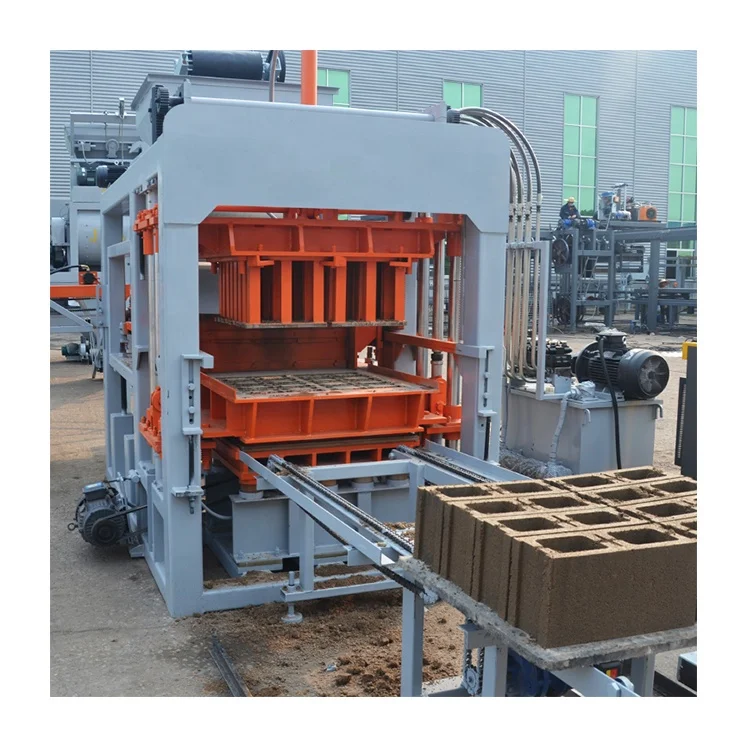
Configuration matched to buyer reality — the QT12-15 is positioned within a complete machine range where press, mould, pallet and handling are specified together, not sourced separately and left to mismatch on site.
Technical Specifications
| Parameter |
Value |
| Product Type |
Automatic Hydraulic Concrete Block Making Machine |
| Overall Dimensions (L×W×H) |
9350 x 2520 x 2950 mm |
| Rated Pressure |
21 MPa |
| Main Vibration Form |
Platform Vibration |
| Vibration Frequency |
2800–4500 r/min |
| Vibration Acceleration |
15–20 g |
| Exciting Force |
120 kN |
| Fixed Brick Height Range |
50–200 mm |
| Pallet Size |
1350 x 850 mm |
| Molding Cycle |
15–25 s |
| Storage Hopper Volume |
0.4 m³ |
| Feeding Device Volume |
0.31 m³ |
| Total Power |
50.7 kW |
| Total Weight |
12000 kg |
| Control System |
PLC controlled (mechanical hydraulic synthesis) |
| Frame Structure |
Gantry frame type, super steel, shock resistant |
| Material Feeding |
Net wave swing type feeding device, driving type material storage with independent foundation |
| Mould Material |
Manganese steel, carburizing and quenching, cartridge type welding |
| Output Capacity (Hollow block 390×190×190 mm, 12 pcs/mould) |
1720–2160 pcs/h, 13700–17200 pcs per 8h day |
| Output Capacity (Porous block 240×115×90 mm, 35 pcs/mould) |
5040–6300 pcs/h, 40300–50400 pcs per 8h day |
| Output Capacity (Standard block 240×115×53 mm, 62 pcs/mould) |
13100–14800 pcs/h, 105000–119000 pcs per 8h day |
| Block Compressive Strength |
More than 15 MPa |
| Voltage & Frequency |
Not stated in source (basis to be confirmed) |
| Automation Level |
Automatic (PLC controlled) |
| Suggested Line Configuration |
PL1200 batching machine, JS500 or JS750 mixer, 8m conveyor belt, stacker |
Application Suitability
| Application |
Material or Output |
| Hollow block production for building construction |
Crushed stone, cement, sand, fly ash mixes in 390×190×190 mm format |
| Porous block production |
Lightweight aggregate and cement blends in 240×115×90 mm format |
| Standard solid brick production |
Dense concrete mixes in 240×115×53 mm format |
| Paving and interlocking block production |
High-strength concrete with colour pigment options |
| Fly ash-based block manufacturing |
Industrial fly ash blended with cement and local aggregate |
Why "Pieces per Hour" Means Nothing Without a Block Format
The QT12-15 automatic block making machine manufacturer catalogue often quotes a single cycle speed, but cycle time shifts depending on whether you are pressing a 390 mm hollow block or a 53 mm solid brick. Real capacity only exists when tied to a specific format, mix design and pallet size.
I have seen buyers commit to a machine because the quoted hourly number looked right, then discover on site that their actual block format cycles slower, their aggregate requires longer vibration, and the daily total falls well below the contract number. That gap between brochure and reality is where project timelines break. The QT12-15 addresses this by listing output against three distinct block formats with mould counts stated, so you can match the figure to what your market actually buys. [NEED_CITE: block format effect on real cycle time in hydraulic presses]
Where the QT12-15 Sits in the Range
Buyers planning a first plant or replacing an older line need to place themselves on the output spectrum before committing capital. The QT12-15 occupies the high-capacity automatic tier, with a 1350 x 850 mm pallet and a 12-mould cavity count on hollow blocks. Below it, semi-automatic tiers suit lower daily volumes and smaller footprints. Above it, twin-pallet systems push throughput further at a proportionally larger investment. Understanding this placement prevents over-buying capacity you cannot feed or under-buying and bottling up demand within the first year.
Matching Automation Tier to Your Labour and Budget
Choosing between automatic and semi-automatic is not just about output — it is about operator count, pallet handling and stacking labour on the shop floor. The QT12-15 automatic block making machine manufacturer package includes PLC-controlled mechanical hydraulic synthesis, meaning cycle initiation, feed timing and vibration duration run without manual intervention. For a buyer currently running a semi-automatic press where two workers handle pallets every cycle, moving to this tier removes that repetitive task and redirects labour to quality checks and curing management. The upgrade path is also relevant: if your volume grows, the automation level is selectable so you can start at a configuration you can staff today and expand later. [NEED_CITE: automation level selection in block production plants]
Reading the Specs That Actually Shape Daily Output
The 21 MPa rated pressure and 120 kN exciting force work together — pressure compacts the mix while vibration settles aggregate into voids, and the balance between them determines whether blocks leave the press at consistent density. A mix that is too dry will not flow under vibration alone, producing weak corners; a mix that is too wet will slump after demoulding. The 2800–4500 r/min vibration frequency range allows the operator to tune the table to the specific aggregate grading available locally, which is why confirming your material source before finalising the machine configuration matters as much as the press itself.
The 1350 x 850 mm pallet size sets the mould cavity layout and defines how many blocks are produced per cycle. That pallet dimension must match the curing racks and forklift tines already in your yard — a mismatch means either buying new racking or hand-stacking wet blocks, both of which erase the throughput gain the QT12-15 was purchased to deliver. The 50–200 mm fixed brick height range covers hollow blocks, porous blocks and standard bricks on the same pallet size, giving format flexibility without a pallet changeover.
The gantry frame in super steel absorbs the continuous shock loading that platform vibration generates over thousands of cycles per day. A lighter frame would develop fatigue cracks around the vibration mounts within the first production season, leading to misalignment and uneven block height across the pallet. The 12000 kg total weight reflects the structural mass needed to keep the press stable under full exciting force.
What Happens When Configuration Is Left to Chance
A machine configured for a mix design the buyer cannot source locally forces a material substitution that alters block weight, strength and curing behaviour. The QT12-15 feeding system uses a net wave swing device with independent storage, calibrated to a specific aggregate density and moisture range — swap the aggregate without recalibrating and the fill volume per mould cavity drifts, producing blocks that pass dimensional checks but fail compressive strength tests. [NEED_CITE: aggregate substitution effects on block compressive strength]
Equally, specifying voltage and frequency after the machine is built rather than before leads to on-site discoveries like undersized transformers or incompatible motor windings. I once watched a fully wired line sit idle for weeks because the local supply fluctuated outside the motor’s tolerance, and the only fix was sourcing a step-down transformer from three hundred kilometres away. Confirming the electrical specification during the proposal stage costs nothing; discovering the gap at commissioning costs production days.
Why Buyers Source This Tier Here
The QT12-15 is specified as one matched system — press, mould, pallet and handling equipment selected together against the buyer’s block format and local aggregate, not assembled from separate catalogues that may not align at the connection points.
Configuration is set against the buyer’s actual mix design rather than a factory default, which means the vibration frequency, hydraulic pressure and feeding device calibration arrive tuned to the material the buyer can actually source.
Mould design covers the formats the buyer’s market sells, including custom drawings when the local building code requires a non-standard cavity or interlocking profile.
Automation level is selectable at order, allowing a buyer to begin with the PLC-controlled automatic tier and plan a future stacking or cubing upgrade without replacing the press itself.
Installation support includes operator training on the specific mould change procedure and PLC interface, reducing the gap between first power-on and steady production.
Documentation & Verification
- Line layout showing QT12-15 footprint with batching, mixing and stacking station positions
- Capacity calculation per block format with mould count and cycle assumption stated
- Mould drawing and format list covering every cavity type in the buyer’s product plan
- Voltage, frequency and PLC display language confirmation signed before production
- Factory test record with packing photographs for customs clearance support
Installation, Commissioning & Support
- Foundation pad sized to the 9350 x 2520 mm footprint with vibration isolation provisions
- Dedicated power circuit rated for the 50.7 kW total draw with confirmed voltage and frequency
- Machine shipped in dismantled sections for container loading, reassembled on site by the installation team
- PLC interface set to the buyer’s preferred language before first production run
- Mould change procedure trained on site with the specific cavity formats ordered
- Manganese steel mould wear parts list with reorder part numbers provided at handover
What to Share When You Are Ready to Spec
Tell me the block formats your market moves fastest — hollow, porous, paving, solid brick — and the daily volume you need to hit on each. Share your local aggregate type and cement source so the mix design can be confirmed against the QT12-15 feeding and vibration settings. Confirm your site’s voltage, frequency and available curing area dimensions so the pallet specification and electrical configuration are locked before the machine enters production.
Frequently Asked Questions
Q: How do I confirm the QT12-15’s real daily output for my block format?
A: We provide a capacity calculation that states the exact block format, mould cavity count and cycle time assumed for each output figure. You compare this against your target format and local aggregate, and we adjust the configuration if your material requires longer vibration or a different feeding calibration before the machine is built.
Q: When should I choose the QT12-15 over a semi-automatic or smaller automatic tier?
A: The QT12-15 suits buyers who need high daily volume on a consistent format mix and can support the 9350 mm line length with matching batching and curing space. If your volume is lower or your site footprint is tight, a semi-automatic or smaller automatic tier may deliver better return without the extra pallet handling infrastructure.
Q: What supporting equipment does a complete QT12-15 line require?
A: The suggested configuration includes a PL1200 batching machine, a JS500 or JS750 mixer, an 8m conveyor belt and a stacker. The exact sizing depends on your target output and the number of formats you plan to run. We map the full line layout so no station bottlenecks the press.
Q: How is voltage and PLC language confirmed before the machine ships?
A: During the proposal stage we collect your site voltage, frequency and preferred PLC display language, then lock these into the production order. This avoids the on-site commissioning delays that occur when electrical specifications are assumed rather than verified against the local supply.

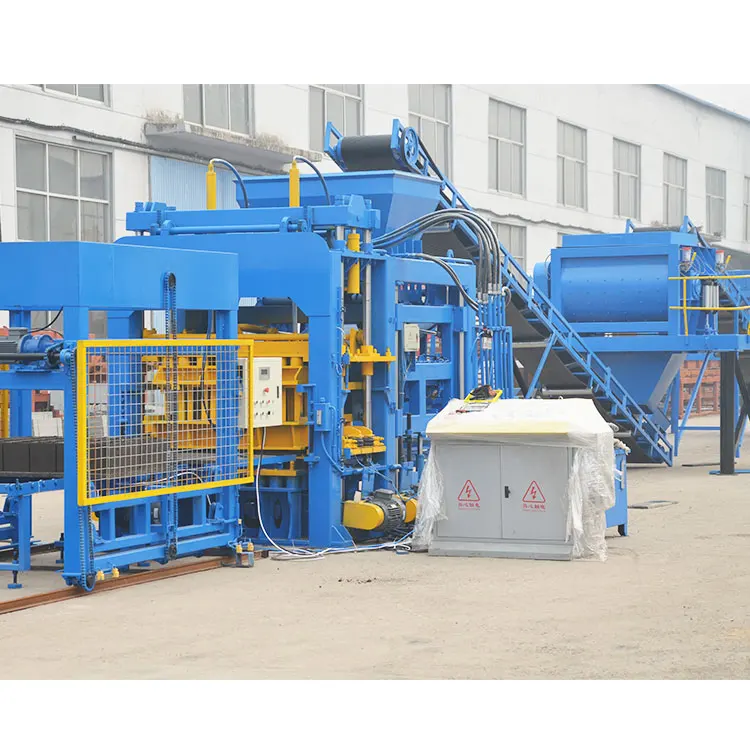
 Semi automatic block