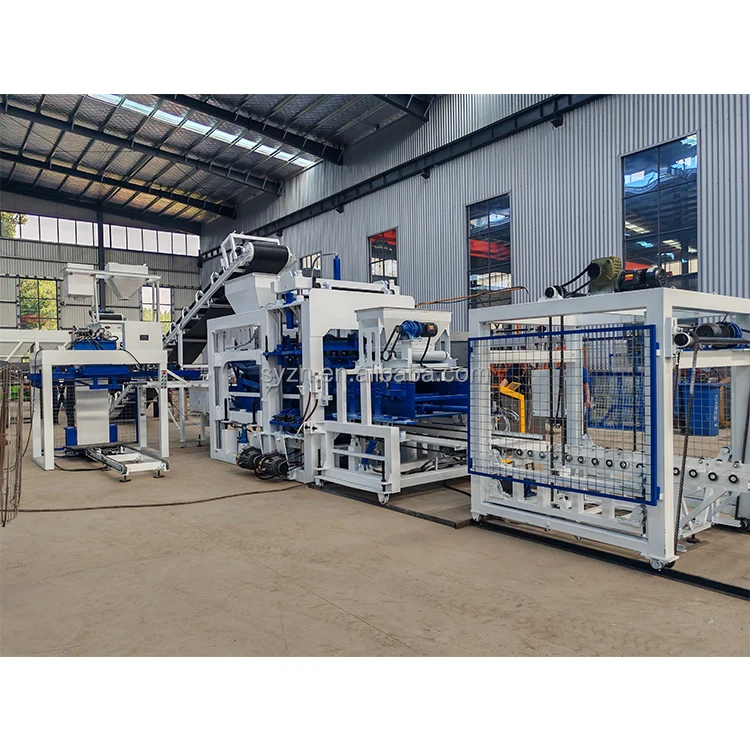
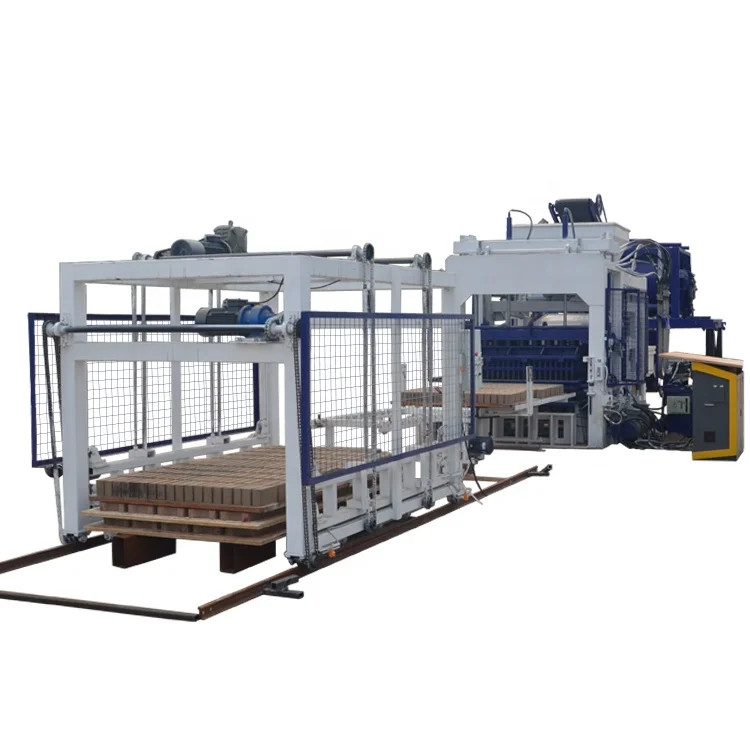
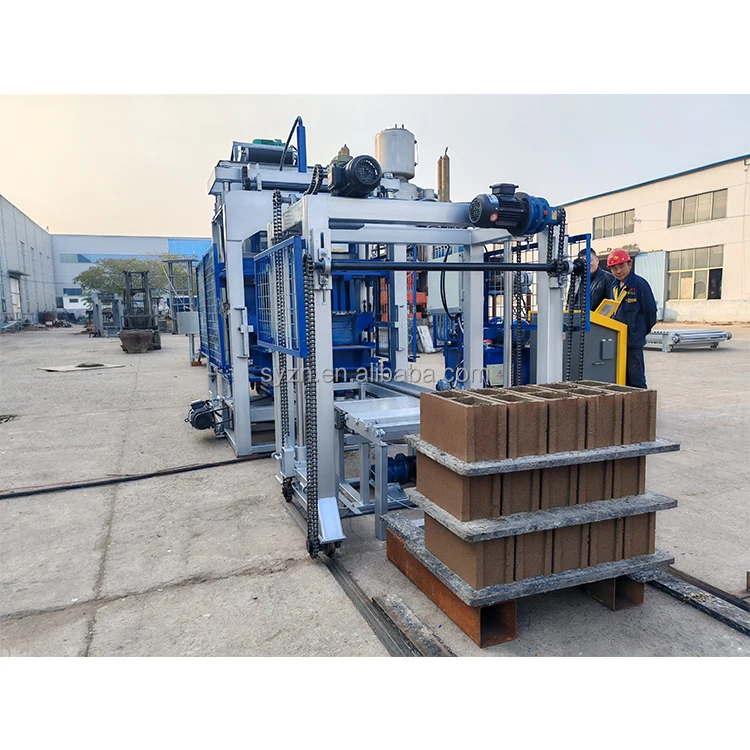
Matched System Integration — the QT10-15 is specified as one complete block line rather than a press with bolted-on accessories from separate vendors.
Technical Specifications
| Parameter |
Value |
| Model |
QT10-15 |
| Product Type |
Automatic Concrete Block Making Machine |
| Automation Level |
Automatic (PLC controlled) |
| Control System |
PLC control cabinet |
| Hydraulic System |
Independent integrated hydraulic station |
| Vibration Mode |
Vertical station mode resonance with automatic FM-AM |
| Mould Change |
Quick replacement (multi-function with one machine) |
| Line Components |
Pallet feed machine, block making machine, storage hopper, conveyor, hydraulic unit, PLC control cabinet |
| Hollow Block Output (400×200×200mm, 10 pcs/mould) |
1,800–2,400 pcs/hour (15–20s cycle) |
| Block Output (400×150×200mm, 12 pcs/mould) |
2,160–2,880 pcs/hour (15–20s cycle) |
| Solid Brick Output (240×115×53mm, 62 pcs/mould) |
8,928–11,160 pcs/hour (15–20s cycle) |
| Paving Block Output (200×100×60mm, 27 pcs/mould) |
5,184–6,480 pcs/hour (20–25s cycle) |
| Interlocking Block Output (225×112.5×60mm, 24 pcs/mould) |
4,032–5,040 pcs/hour (20–25s cycle) |
| Cycle Time |
15–25s depending on block format |
| Assembly State |
Complete line with supporting equipment |
| Voltage & Frequency |
(basis not stated in source — confirm with buyer’s local standard) |
| Pallet Size |
(basis not stated in source — confirm block format / pallet dimension) |
| Hydraulic Pressure |
(basis not stated in source — confirm against manufacturer catalog) |
| Vibration Force |
(basis not stated in source — confirm against manufacturer catalog) |
| Overall Dimensions |
(basis not stated in source — confirm against manufacturer catalog) |
| Rated Power |
(basis not stated in source — confirm against manufacturer catalog) |
| Warranty |
1 year (excluding spare parts) |
| Standards |
CE (declared where applicable) |
Application Suitability
| Application |
Material or Output |
| Hollow block production for commercial buildings |
Crushed stone, sand, cement, fly ash aggregate |
| Paving brick manufacturing for roadways and plazas |
High-density concrete mix with fine aggregate |
| Interlocking block production for retaining walls |
Coarse aggregate with cementitious binder |
| Solid brick production for residential masonry |
Standard concrete mix with local sand and gravel |
| On-site block production for housing projects |
Locally sourced aggregate matched to available materials |
| Format expansion for existing concrete product plants |
Multi-format mould changes on a single press |
What "1800 Pieces per Hour" Actually Means for Your Plant
Capacity figures only hold when the block format, mould cavity count, and cycle time are stated together — otherwise they are marketing numbers.
I once walked onto a project site in the Gulf where a QT10-15 block machine manufacturer had quoted peak output based on a small solid brick format. The buyer’s real product was a 400×200×200mm hollow block, and actual throughput sat well below the number on the quotation. The contractor had already signed supply contracts based on that inflated daily volume. [NEED_CITE: block output calculation standards by format and cycle time] This is the single most common dispute I see in block plant commissioning, and it always traces back to a quotation that quoted one format while the buyer planned production around another. The QT10-15 range addresses this by tying every output figure to a specific block dimension, mould cavity count, and cycle time band.

Positioning the QT10-15 Within the Full Block Machine Range
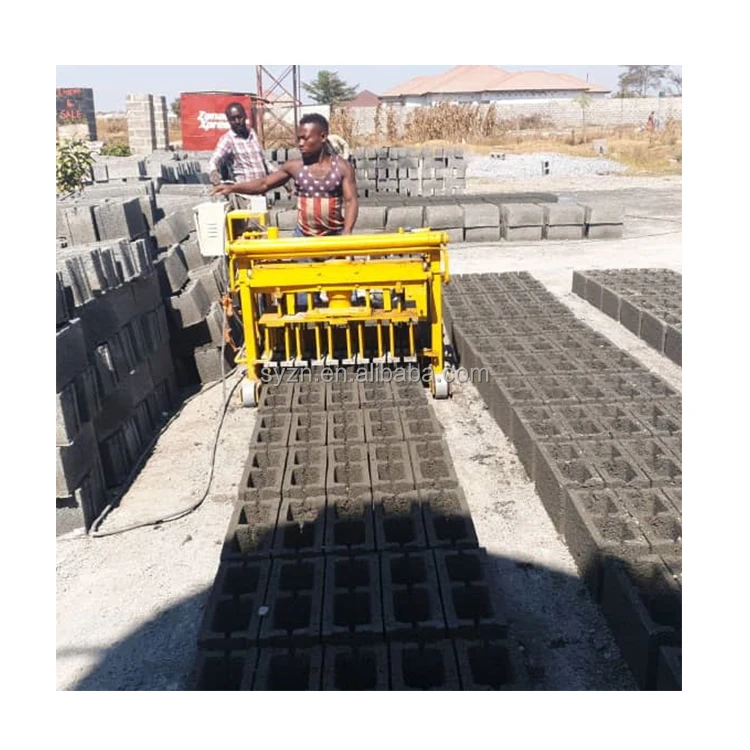
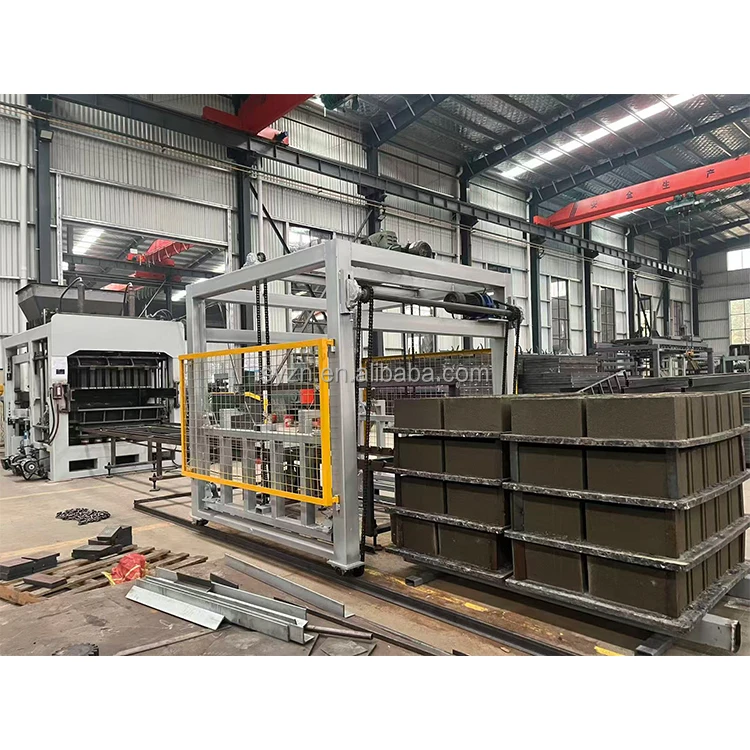
Shiyue’s block machinery lineup spans three tiers: mobile egg-laying machines for on-site work without a fixed plant, semi-automatic presses for smaller workshops with lower capital outlay, and fully automatic lines like the QT10-15 for plants targeting consistent daily volume across multiple formats. The QT10-15 block machine manufacturer catalog places this model in the high-capacity automatic tier, meaning it ships as a complete line — press, pallet feeder, storage hopper, conveyor, and hydraulic station — rather than a standalone press. Buyers stepping up from a semi-automatic setup will find the jump in output comes less from the press itself and more from eliminating manual pallet handling between stations.
How the Automatic Tier Compares to Semi-Automatic and Mobile Options
A mobile egg-laying machine eliminates pallets entirely by laying blocks directly on the ground, but it limits format variety and requires a flat cured-concrete floor. Semi-automatic presses reduce investment but still rely on operators to move pallets between the press and the curing area, which caps realistic daily output and introduces inconsistency between shifts. The QT10-15 sits above both tiers by automating the pallet feed and block discharge sequence through PLC control. For a buyer comparing tiers, the decision usually comes down to whether the project volume justifies the supporting equipment that ships with the automatic line — the pallet feeder, conveyor, and stacking sequence that keep the press cycling without manual intervention. [NEED_CITE: automation level comparison in concrete block production plants]
Reading the Specs That Matter on the Factory Floor
Hydraulic pressure and vibration force together determine the density and compressive strength of every block that leaves the press. The QT10-15 uses an independent integrated hydraulic station, which physically separates the hydraulic valves and pumps from the vibration table and dust environment — this matters because vibration transmitted into hydraulic lines causes premature seal wear and pressure drift over a production shift. The vertical station mode resonance vibration with automatic FM-AM adjusts frequency and amplitude to match the mix, so a coarse aggregate for interlocking blocks and a finer mix for paving bricks each receive appropriate compaction energy. Cycle time varies between 15 and 25 seconds depending on block format, which directly shapes daily output when multiplied across an eight-hour shift. The quick mould change system allows operators to switch from hollow block to paving format within the same production day, which is where the "multi-function with one machine" claim earns its keep on a plant running multiple SKUs.
The Cost of Specifying the Press Without the Line
Quoting a block press without confirming pallet size, curing rack handling, and stacking equipment leaves the buyer to source and integrate those stations separately. I have seen plants where the press arrived and ran perfectly, but pallets were the wrong dimension for the curing racks already built on site, forcing a complete rack rebuild before commissioning could finish. [NEED_CITE: pallet dimension and curing area mismatch in block plants] When the QT10-15 is specified as a complete line, pallet size is confirmed against the buyer’s curing area layout and forklift capacity before production begins, not discovered after the container is unloaded.
Why Sourcing the QT10-15 Through Shiyue
Block machinery is Shiyue’s single focus, so the press, mould, pallet, and handling equipment are engineered as one system rather than assembled from unrelated suppliers. Configuration starts with the buyer’s actual mix design and local aggregate — not a default catalogue setting — which matters because I have watched lines stall when a machine calibrated for clean river sand met aggregate with high clay content. Mould design covers the formats the buyer’s market actually sells, including custom drawings when standard moulds do not match local block dimensions. Automation level is selectable within the range, so a buyer can commission the QT10-15 at its current automation tier and plan an upgrade path as volume grows. Installation support includes operator training on the PLC interface and mould change procedure, reducing the time from container arrival to first saleable block. [NEED_CITE: block machine installation and commissioning scope]
Documentation & Verification
- Line layout and capacity calculation stating the block format assumed for each output figure
- Machine specification sheet covering hydraulic pressure, vibration force, pallet size, and PLC configuration
- Voltage, frequency, and PLC display language confirmation document signed before production
- Factory test record on buyer’s target block format before dispatch
- Mould drawing and format list matching the quotation
- Packing photographs and customs documentation support for shipment
Installation, Commissioning & Support
- Foundation plan specifying load points for the QT10-15 press and integrated hydraulic station
- Dedicated electrical circuit sized to the rated power of the complete automatic line
- Machine dismantled for container loading and reassembled on site with alignment verification
- First-run commissioning covering PLC parameter tuning for the buyer’s specific block format
- Operator training on mould change procedure and quick replacement system
- Wear parts list identifying hydraulic seals and vibration table components for first reorder
What to Prepare Before Requesting a Quotation
To size the QT10-15 correctly within the full block machine range, share your target block formats with dimensions, required daily output per format, local raw material type and aggregate grading, available curing area and pallet dimensions already in use, and site voltage and frequency. If you are expanding an existing plant, include the current equipment layout so the supporting stations can be matched to what is already running.
Frequently Asked Questions
Q: How is the QT10-15 output calculated for each block format?
A: Every output figure is tied to a specific block dimension, mould cavity count, and cycle time range. For example, the 400×200×200mm hollow block output assumes 10 pieces per mould at a 15–20 second cycle. Daily capacity is then calculated by multiplying the hourly rate across an eight-hour shift for that exact format, not averaged across multiple formats.
Q: Where does the QT10-15 sit compared to semi-automatic and mobile block machines?
A: It occupies the high-capacity automatic tier. Mobile machines eliminate pallets but limit format variety. Semi-automatic presses reduce investment but require manual pallet handling. The QT10-15 automates pallet feeding, block discharge, and conveyor transport, which removes manual handling between the press and curing area.
Q: Can I start with semi-automatic operation and upgrade the QT10-15 later?
A: The automation level within Shiyue’s range is selectable, so a buyer can commission at a lower automation tier and add automatic stacking or pallet handling stations as production volume grows. The PLC control architecture supports this upgrade path without replacing the core press.
Q: What voltage and PLC language options are confirmed before shipment?
A: Voltage, frequency, and PLC display language are confirmed in writing before production begins. This prevents commissioning delays caused by electrical mismatch or an operator interface in an unreadable language. Buyers provide local grid specifications at the inquiry stage.
Q: What plant footprint and supporting equipment does the line require?
A: The QT10-15 ships as a complete line including pallet feeder, storage hopper, conveyor, and hydraulic unit. Plant footprint depends on curing area size and pallet circulation layout. A line layout document is provided during the proposal stage showing station placement and space requirements.

 High quality block machine