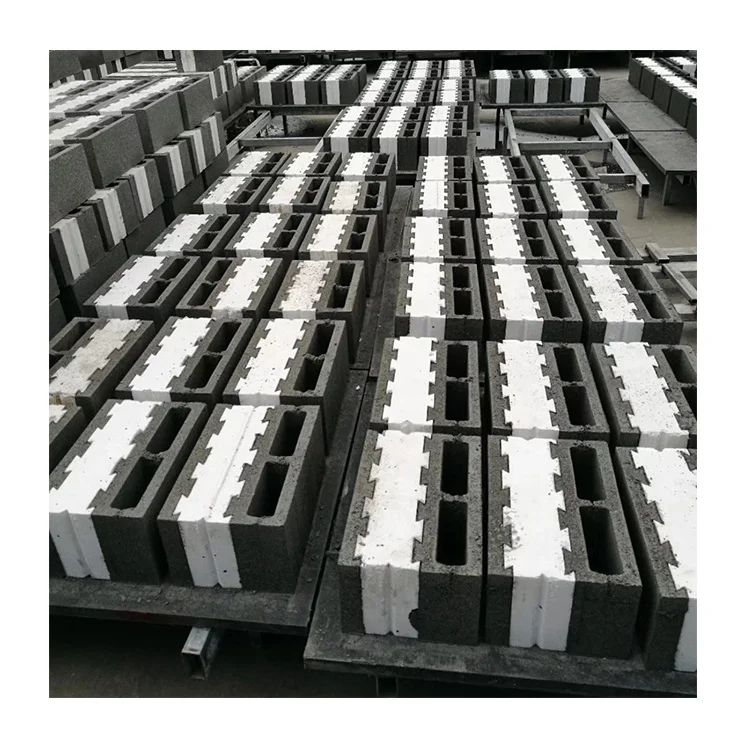
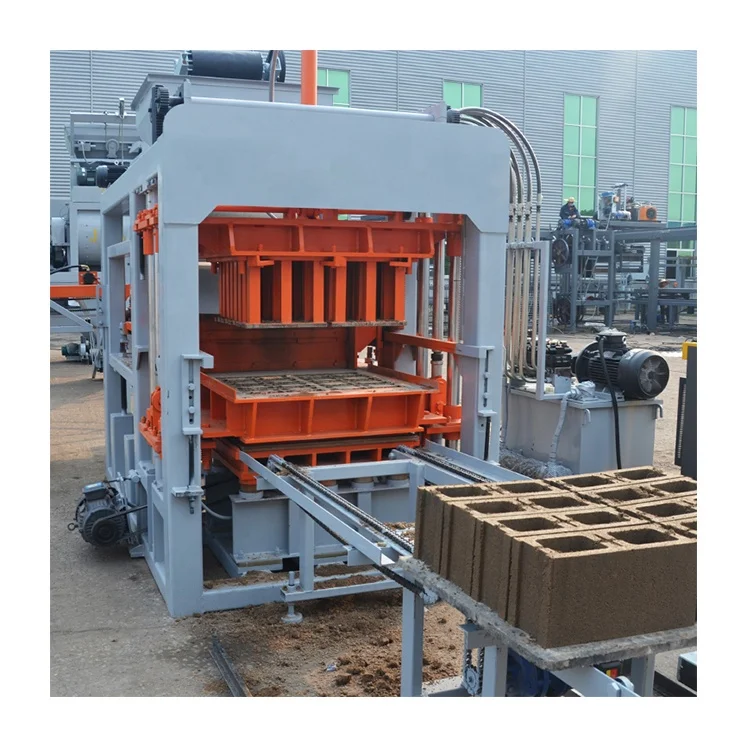
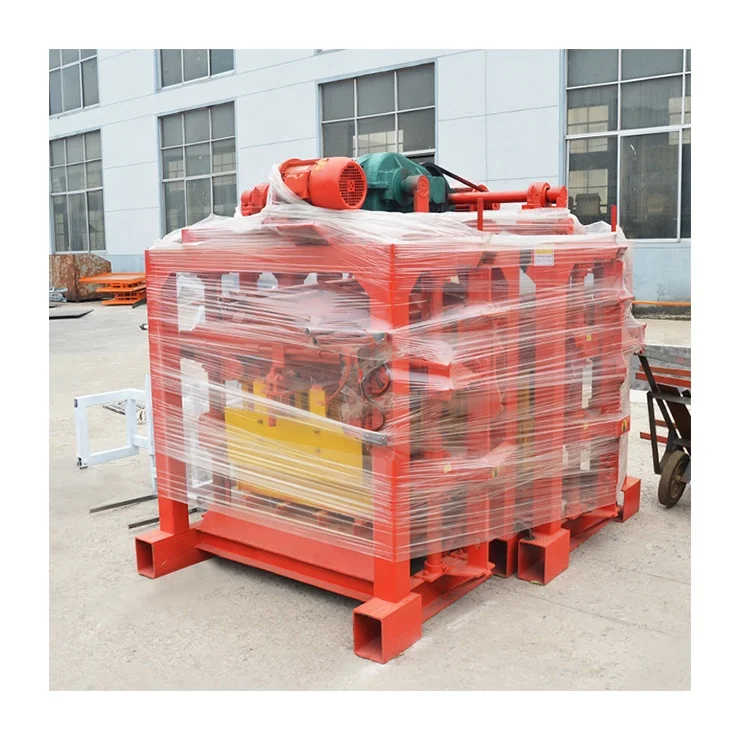
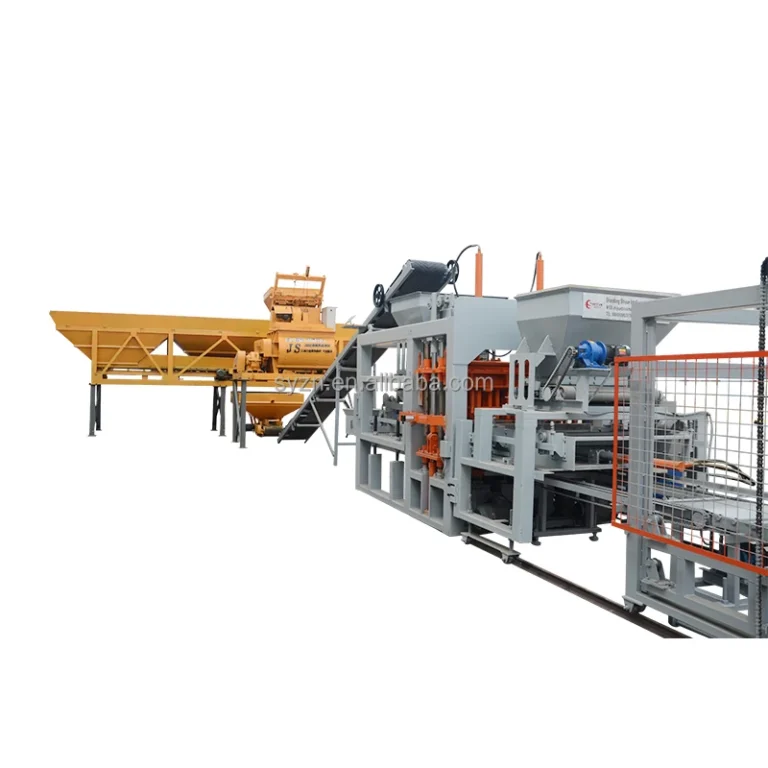
Complete system specification — The QT10-15 is offered as a matched block machine line rather than a standalone press, so the mould, pallet and handling equipment are selected together against your target block format.
Technical Specifications
| Parameter |
Value |
| Model |
QT10-15 |
| Product Type |
Concrete Block Making Machine |
| Moulding Method |
Vertical vibration, resonance |
| Automation Level |
Automatic (PLC controlled) |
| Control System |
PLC control cabinet |
| Hydraulic System |
Independent integrated hydraulic station |
| Cycle Time |
15–20 s (basis: 400×200×200mm hollow block, 10 pcs/mould) |
| Output Capacity |
1,800–2,400 pcs/h (basis: 400×200×200mm hollow block, 10 pcs/mould) |
| Output Capacity |
2,160–2,880 pcs/h (basis: 400×150×200mm hollow block, 12 pcs/mould) |
| Output Capacity |
8,928–11,160 pcs/h (basis: 240×115×53mm solid brick, 62 pcs/mould) |
| Output Capacity |
5,184–6,480 pcs/h (basis: 200×100×60mm paving block, 27 pcs/mould) |
| Output Capacity |
4,032–5,040 pcs/h (basis: 225×112.5×60mm interlocking block, 24 pcs/mould) |
| Components Included |
Pallet feed machine, block making machine, storage hopper, conveyor, hydraulic unit, PLC control cabinet |
| Mould Change |
Simple replacement, multi-function with one machine |
| Warranty |
1 year for whole machine (excluding spare parts) |
Application Suitability
| Application |
Material or Output |
| Hollow block production |
400×200×200mm and 400×150×200mm formats from crushed stone, sand and cement |
| Solid brick production |
240×115×53mm format from fly ash, sand and cement blends |
| Paving block production |
200×100×60mm format from high-strength aggregate and cement mixes |
| Interlocking block production |
225×112.5×60mm format from laterite, crushed stone or local aggregate |
| Block plant setups |
High-capacity automatic lines for established concrete product manufacturers |
What "10,000 Blocks per Day" Actually Means on the QT10-15
Capacity figures are only honest when the block format behind them is stated.
I once quoted a QT10-15 concrete block making machine for sale to a buyer in West Africa, and the catalogue showed a headline daily figure based on standard solid bricks. The buyer’s market, however, ran almost entirely on 400mm hollow blocks. Once we recalculated against the actual format — 10 pieces per mould at a 15–20 second cycle — the realistic output dropped significantly from the brochure number. That gap between catalogue capacity and real output is where most block plant disputes start [NEED_CITE: common causes of block machine capacity disputes in export markets]. Before any quotation goes out, we now run the numbers against the buyer’s specific block format and local aggregate.

Where the QT10-15 Sits in the Full Shiyue Range
The Shiyue range spans mobile egg-laying machines at the entry tier, semi-automatic presses for smaller plants, and high-capacity automatic lines at the top. The QT10-15 concrete block making machine for sale sits in the upper tier, designed for buyers who need consistent volume across multiple block formats and have the curing area to absorb that output. Below it, semi-automatic models trade throughput for lower initial investment and smaller footprint.
Matching Output Tier to Your Market Demand
A block plant that sells primarily to one housing development may not need the QT10-15 tier at all — a mid-range semi-automatic press could cover the project volume without the pallet and handling infrastructure that full automation requires. Conversely, a distributor supplying multiple contractors across a region will find that the lower tiers create a bottleneck during peak construction season. Placing yourself on the range before narrowing down prevents over-investing in capacity the market cannot absorb or under-investing and losing contracts to better-equipped competitors [NEED_CITE: block plant capacity planning for regional distributors].
Understanding the Specs That Matter on Site
The vertical vibration and resonance moulding method means the machine uses both vibration frequency and hydraulic pressure to compact the mix into the mould. On the QT10-15, these two forces must be tuned to the buyer’s specific aggregate density and cement ratio — a lightweight volcanic aggregate requires different vibration settings than dense crushed granite. The independent integrated hydraulic station sits away from the main vibration zone, which keeps hydraulic seals and valves from wearing prematurely under constant shock loading. Cycle time varies between 15–20 seconds for standard hollow blocks and 20–25 seconds for paving and interlocking blocks, because denser formats need longer compaction to reach target strength. The PLC control cabinet manages these parameters automatically once the operator selects the active mould profile.
What Happens When Pallet Size Is an Afterthought
One pain point that surfaces repeatedly is pallet specification being left until after the machine arrives. The QT10-15 requires pallets sized to match both the mould footprint and the curing rack system already on site. If the buyer’s forklift and curing area were set up for a different pallet dimension, every pallet in circulation becomes a mismatch — either too large for the racks or too small for the fork pockets. Retrofitting a new pallet fleet after the machine is installed is one of the most expensive oversights in block plant setup [NEED_CITE: pallet handling costs in concrete block production]. Confirming pallet size and material before production avoids this entirely.
Why Buyers Choose Shiyue for the QT10-15
Block machinery is our single focus, so the QT10-15 is quoted as a matched system — machine, mould, pallet and handling — rather than a press assembled from separate suppliers. Configuration is set against the buyer’s actual mix design and local aggregate, not a catalogue default. Mould design covers the formats the buyer’s market sells, with custom drawings available where standard formats do not match local demand. Automation level is selectable, meaning a buyer can begin with semi-automatic pallet handling and upgrade the stacking and cubing stations later without replacing the press itself. Installation support includes on-site commissioning with operator training so the line runs at stated capacity from the first production day.
Documentation & Verification
- Line layout and capacity calculation stating the block format assumed for each QT10-15 output figure
- Machine specification sheet with confirmed vibration force, hydraulic pressure and pallet dimensions
- Mould drawing and format list showing which block types the quoted moulds cover
- Voltage, frequency and PLC display language confirmation document before production begins
- Factory test record on the buyer’s target block format before dispatch
- CE declaration documentation where applicable for the destination market
Installation, Commissioning & Support
- Site preparation must account for the QT10-15 footprint and the pallet circulation loop length required for continuous cycling
- Power supply must match confirmed voltage and frequency, with a dedicated circuit for the independent hydraulic station
- Machine ships in dismantled modules; reassembly sequence is covered in the installation manual
- First production run includes cycle time calibration against the buyer’s actual aggregate and cement blend
- Operator training covers PLC profile selection, mould change procedure and daily maintenance checkpoints
- Wear parts list and mould maintenance schedule provided at handover for ongoing production continuity
Before You Request a Quotation
To size the QT10-15 correctly, start by sharing the block formats your market currently sells and the daily volume each format requires. Confirm your local aggregate type — whether crushed limestone, volcanic rock, river sand or fly ash — because this directly affects vibration and pressure settings. Provide your site voltage, frequency and the language your operators read so the PLC interface matches from day one. If you already have curing racks and forklifts in place, send the pallet dimensions currently in use so the line is built around your existing handling infrastructure.
Frequently Asked Questions
Q: How is the QT10-15 capacity verified, and which block format is each output figure based on?
A: Every output figure is tied to a specific block format, pieces per mould and cycle time. For example, 1,800–2,400 pieces per hour is based on a 400×200×200mm hollow block at 10 pieces per mould with a 15–20 second cycle. Paving block output is lower because the denser format requires a 20–25 second cycle. We provide a written capacity calculation per format with every quotation.
Q: Where does the QT10-15 sit in the full Shiyue range?
A: The QT10-15 occupies the high-capacity automatic tier, above semi-automatic models that trade throughput for lower investment and smaller footprint. Below it are mid-range presses suited to single-project contractors. Above it are larger-format lines for buyers running multiple shifts. The range lets you match investment level to realistic market demand rather than over-specifying.
Q: What plant footprint and investment level does the QT10-15 require?
A: The QT10-15 line includes pallet feeding, the press, stacking and curing rack handling, so the total footprint extends beyond the press alone. Buyers need sufficient curing area to absorb the output volume and space for raw material storage. Investment scales with automation level — starting semi-automatic and adding handling stations later is a common path for growing plants.
Q: Which voltage, frequency and PLC language options are available?
A: Voltage, frequency and phase are confirmed with each buyer before production begins, matching the destination market’s electrical standards. The PLC display language is also confirmed at this stage so operators can read all menus and fault codes in their working language. This prevents commissioning delays when the machine arrives on site.
Q: Can I start semi-automatic and upgrade to full automation later?
A: Yes. The QT10-15 platform supports a phased automation approach. A buyer can begin with manual pallet handling and basic stacking, then add automatic pallet feeding, stacking and cubing stations as production volume grows. The press and mould system remain the same — only the peripheral handling equipment changes, avoiding a full machine replacement.

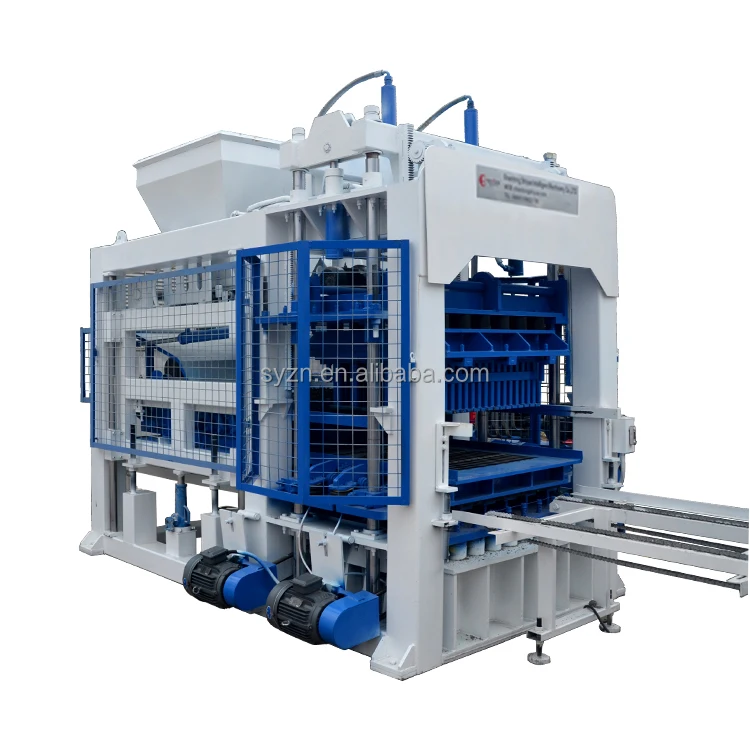
 High quality block machine