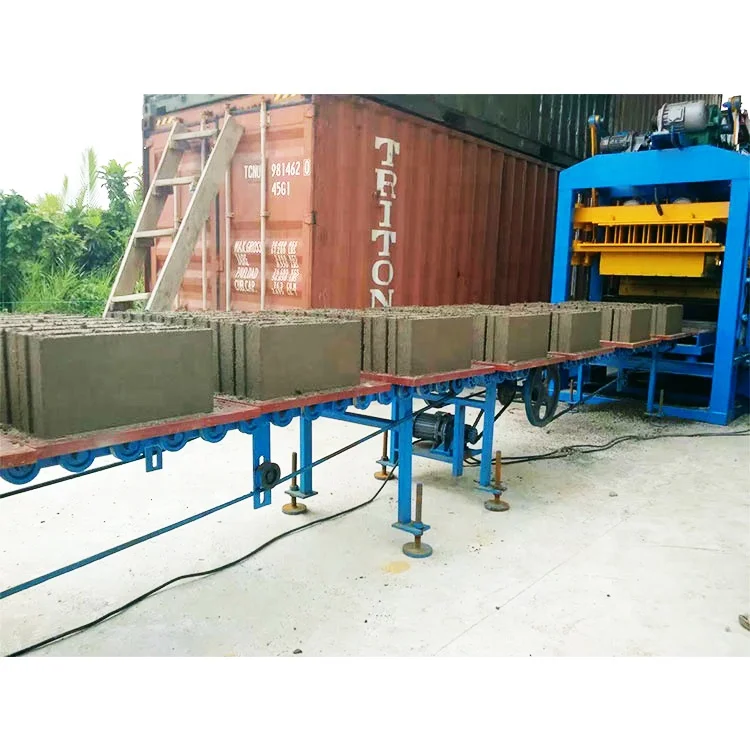
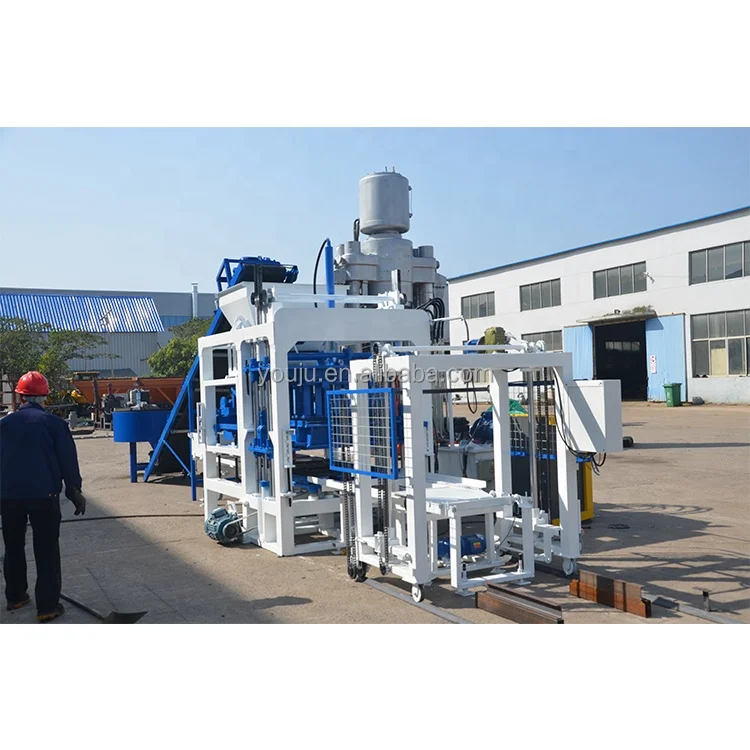
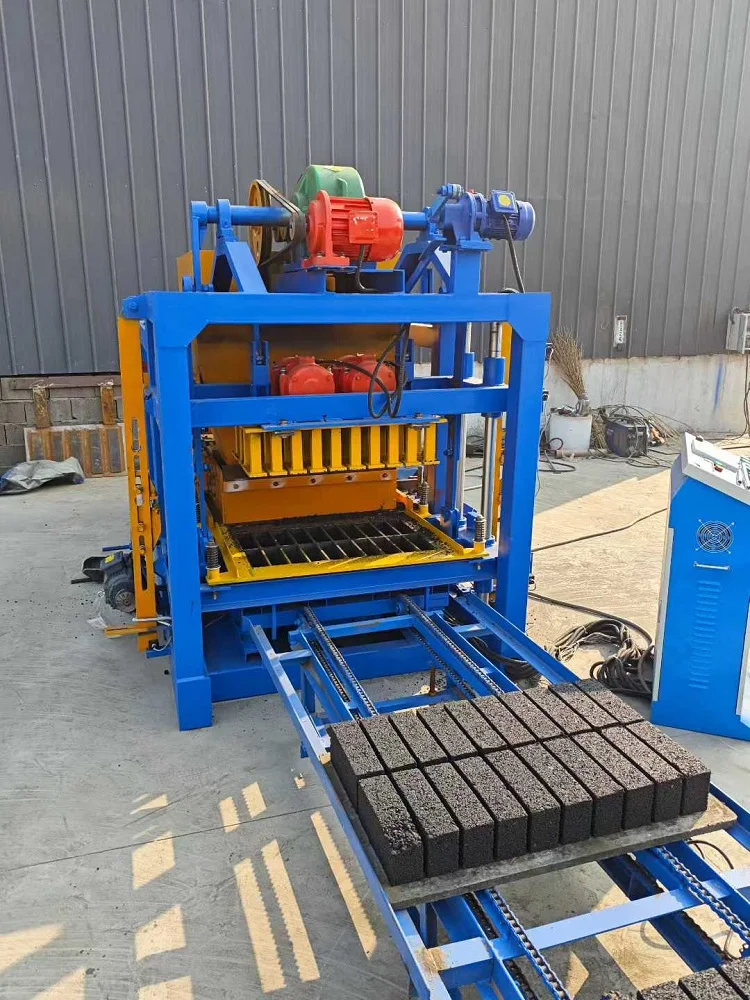
Complete System Matching — Every QT10-15 configuration ties the press, mould, pallet size, and handling equipment to the buyer’s actual block format and daily target, not a standalone catalogue number.
Technical Specifications
| Parameter |
Value |
| Model |
QT10-15 |
| Product Type |
Automatic Hydraulic Concrete Block Making Machine |
| Control System |
PLC control cabinet |
| Hydraulic System |
Independent integrated hydraulic station |
| Vibration Mode |
Vertical station mode resonance, automatic FM-AM |
| Mould Change |
Simple mould replacement for multi-format production |
| Core Components |
Pallet feed machine, block making machine, storage hopper, conveyor, hydraulic unit, PLC control cabinet |
| Output — 400×200×200 mm Hollow Block |
10 pcs/mould, 1800–2400 pcs/hour, 14400–19200 pcs/8hr (basis: 15–20s molding cycle) |
| Output — 400×150×200 mm Hollow Block |
12 pcs/mould, 2160–2880 pcs/hour, 17280–23040 pcs/8hr (basis: 15–20s molding cycle) |
| Output — 240×115×53 mm Solid Brick |
62 pcs/mould, 8928–11160 pcs/hour, 71424–89280 pcs/8hr (basis: 15–20s molding cycle) |
| Output — 200×100×60 mm Paving Block |
27 pcs/mould, 5184–6480 pcs/hour, 41472–51840 pcs/8hr (basis: 20–25s molding cycle) |
| Output — 225×112.5×60 mm Interlocking Brick |
24 pcs/mould, 4032–5040 pcs/hour, 32256–40320 pcs/8hr (basis: 20–25s molding cycle) |
| Cycle Time |
15–20s (hollow blocks, solid bricks); 20–25s (pavers, interlocking bricks) |
| Automation Level |
Automatic (pallet feed, hydraulic press, PLC-controlled cycle) |
| Warranty |
1 year for the whole machine (excluding spare parts) |
Application Suitability
| Application |
Material or Output |
| Hollow block production for commercial and residential walls |
Crushed stone, river sand, cement, fly ash blends |
| Solid brick manufacturing for load-bearing masonry |
Dense aggregate and cement mixes |
| Paving block production for walkways, driveways, and yards |
High-strength concrete with fine aggregate |
| Interlocking brick for retaining walls and landscape |
Coarse aggregate and cement at controlled moisture |
| Kerbstone and multicellular brick runs |
Varied aggregate gradings with adjusted vibration |
Why "Pieces per Hour" Without a Format Name Misleads Buyers
The capacity number on a nameplate means nothing until you know which block it was measured on.
An automatic block machine manufacturer quoting a single output figure leaves the buyer guessing whether that rate applies to a 400 mm hollow block, a small solid brick, or a dense paver. The QT10-15 molds ten hollow blocks per cycle but sixty-two solid bricks in the same footprint, so the hourly spread runs from roughly 1,800 pieces to over 11,000 depending entirely on format. [NEED_CITE: concrete block machine output claims in B2B quotations]. When the assumed format goes unstated, the production plan built on that quote collapses the first week on the floor.

Range Positioning Within the Shiyue Automatic Line
The QT10-15 occupies the upper-mid tier of the Shiyue automatic block machine range, bridging workshop-scale output and full high-capacity production lines. Buyers moving up from a semi-automatic press find the jump here comes from PLC coordination of the pallet feed, storage hopper, and conveyor rather than raw motor size alone. The investment step is meaningful, but the plant footprint stays manageable for a contractor who wants paver and hollow block capability on one platform.
Where This Machine Fits a Buyer’s Next Move
A block plant replacing an aging semi-auto line typically lands on the QT10-15 when daily demand crosses what a smaller press can sustain across an eight-hour shift. Housing project contractors producing multiple formats on-site benefit from the quick mould swap rather than buying a dedicated machine per product. Distributors expanding a catalogue with interlocking and paving options use this platform to test market response before committing to a higher-tier line. [NEED_CITE: block plant expansion planning by format diversification].
Reading the Specs That Actually Shape Your Daily Run
Hydraulic pressure and vibration force work together to compact the mix into the mould cavity; when either is mismatched to the buyer’s aggregate, block density drops and breakage during pallet transfer rises. The vertical station mode resonance on the QT10-15 adjusts frequency and amplitude automatically, which matters when a plant switches from lightweight hollow blocks to dense pavers mid-shift. Pallet size determines how many blocks ride to the curing area per cycle, and choosing a dimension that conflicts with the buyer’s existing forklift or rack spacing creates a bottleneck no press speed can fix. The PLC-controlled cycle ties pallet feed, material distribution, and press stroke into one timed sequence, so a delay at any station holds the entire line.
The Hidden Cost of Skipping Configuration Details
A machine arriving with voltage set for a market the buyer no longer ships to sits idle until a transformer is sourced locally, adding weeks to commissioning. Moulds cut for a pallet size that does not match the curing racks already on-site force the buyer into manual restacking every cycle. When hydraulic wear parts are not listed and stocked before first shipment, the first replacement order turns into a multi-week stoppage. [NEED_CITE: equipment commissioning delays from unconfirmed electrical specifications]. These are not engineering failures; they are specification gaps that a proper pre-order checklist prevents.
Why Procurement Conversations Start Here
Every QT10-15 quotation opens with the buyer’s target block format and local aggregate, so the capacity calculation reflects the product the buyer actually sells. The independent hydraulic station sits isolated from host vibration and dust, extending service intervals on a machine running two shifts. Mould design covers the formats the buyer’s market demands, and custom drawings are accepted when a standard cavity does not match local dimensions. Automation level is selectable, allowing a buyer to begin with semi-automatic pallet handling and upgrade the stacking and cubing stations later without replacing the press. Documentation arrives as a matched set — line layout, spec sheet, mould drawing, and factory test record — so the buyer’s installation team works from one source of truth.
Documentation & Verification
- Line layout with capacity calculation naming the block format assumed per output tier
- Machine specification sheet confirming hydraulic pressure, vibration force, and pallet dimensions
- Mould drawing and format list matching the buyer’s local market product range
- Factory test record and packing photographs captured before container loading
- Voltage, frequency, and PLC display language confirmed in writing before production starts
Installation, Commissioning & Support
- Foundation plan drawn to the QT10-15 footprint and vibration load before pour
- Dedicated electrical circuit sized to the confirmed rated power and local voltage
- Machine shipped in dismantled modules with reassembly supervised on-site
- First-run parameter tuning for the buyer’s specific mix design and aggregate source
- Operator training covering PLC interface, mould change procedure, and daily checks
- Wear parts and mould inventory list provided for the first replacement cycle
What to Share Before Requesting a Quotation
To size the QT10-15 accurately, send the target block formats with dimensions, the daily output you need per format, and the raw materials available locally including aggregate type and grading. Confirm the site voltage and frequency, the PLC display language your operators read, and whether existing pallets, forklifts, or curing racks constrain the pallet size. If you have a project deadline, state it upfront so lead time and container scheduling align with your timeline.
Frequently Asked Questions
Q: How is the QT10-15 capacity verified per block format?
A: Every output figure on this page names the exact block dimension and the molding cycle time it depends on. Hollow blocks at 400×200×200 mm run a 15–20 second cycle yielding 1,800–2,400 pieces per hour, while paving blocks at 200×100×60 mm need 20–25 seconds, shifting the rate to 5,184–6,480 per hour. We provide a line layout showing these figures for your chosen format before you commit.
Q: What electrical details are confirmed before production begins?
A: We confirm voltage, frequency, and PLC display language in writing during the quotation stage. This prevents the machine from arriving with a control panel your operators cannot read or a motor wound for a supply standard your site does not provide. Any mismatch caught here avoids weeks of idle equipment after delivery.
Q: How do I select the right pallet size and material?
A: Pallet size must match both the mould footprint and the curing racks or forklift tines already on your site. We ask for your existing equipment dimensions before finalizing the specification. Material choice — typically bamboo, PVC, or steel — depends on the moisture in your mix and the handling method between press and curing area.
Q: What is included beyond the press itself?
A: The standard QT10-15 package covers the block making machine, pallet feed machine, storage hopper, conveyor, hydraulic unit, and PLC control cabinet. Stacking, curing rack handling, and cubing stations are configurable additions. We itemize every station in the quotation so you know which tasks remain manual and which are automated from day one.
Q: Can custom moulds be designed to my block drawings?
A: Yes. If your market sells a format outside the standard cavity range, we design and manufacture moulds from your drawings or agreed dimensions. The mould drawing and format list are included in the documentation package so you can verify cavity count, block dimensions, and compatibility with the QT10-15 pallet size before the mould enters production.

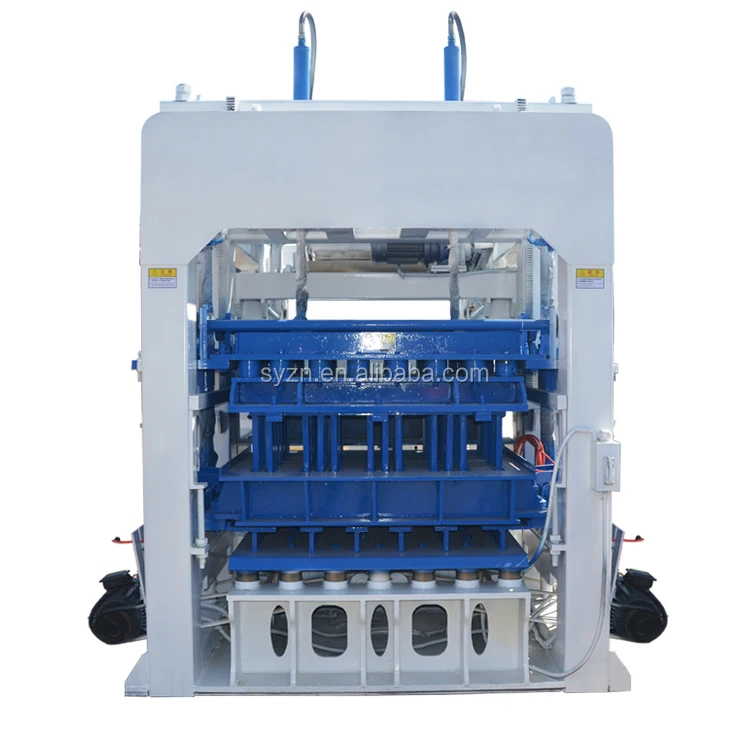
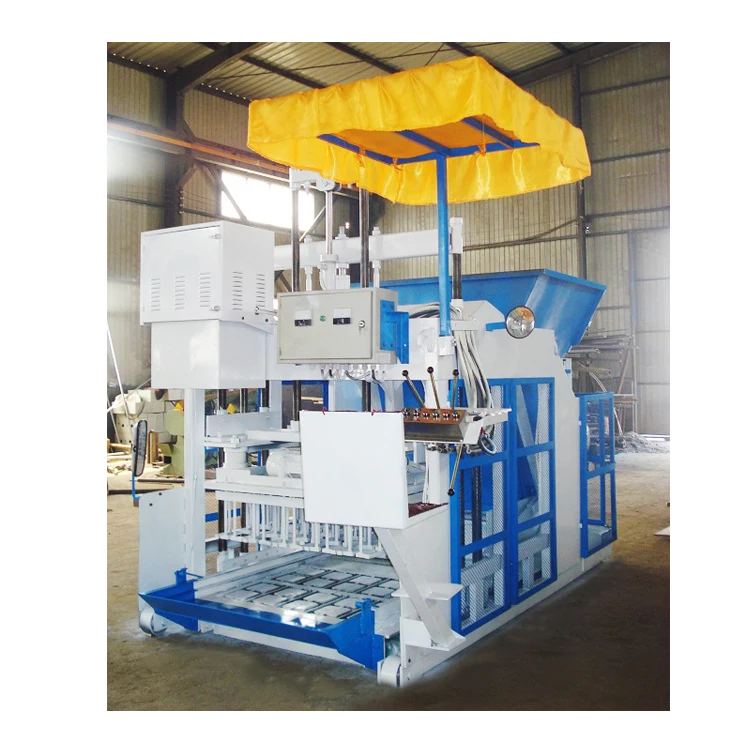 Automatic block machine