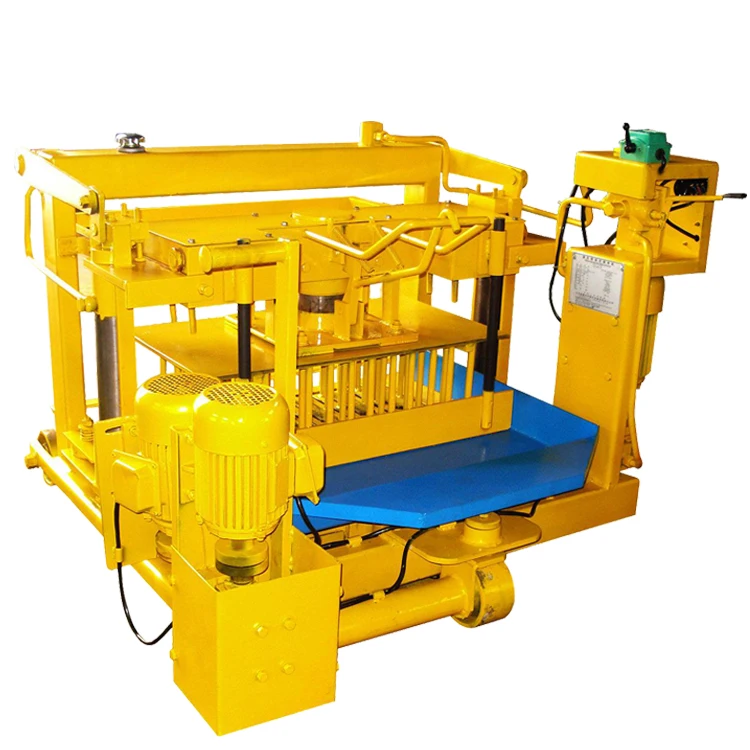
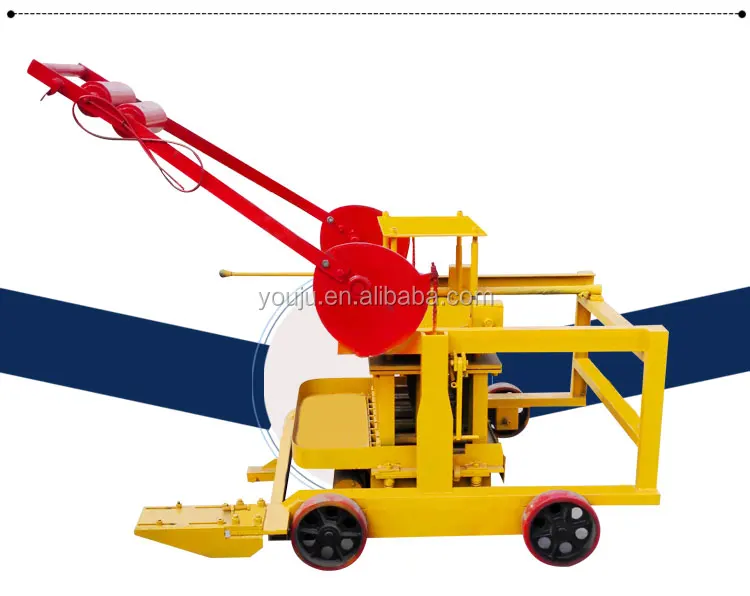
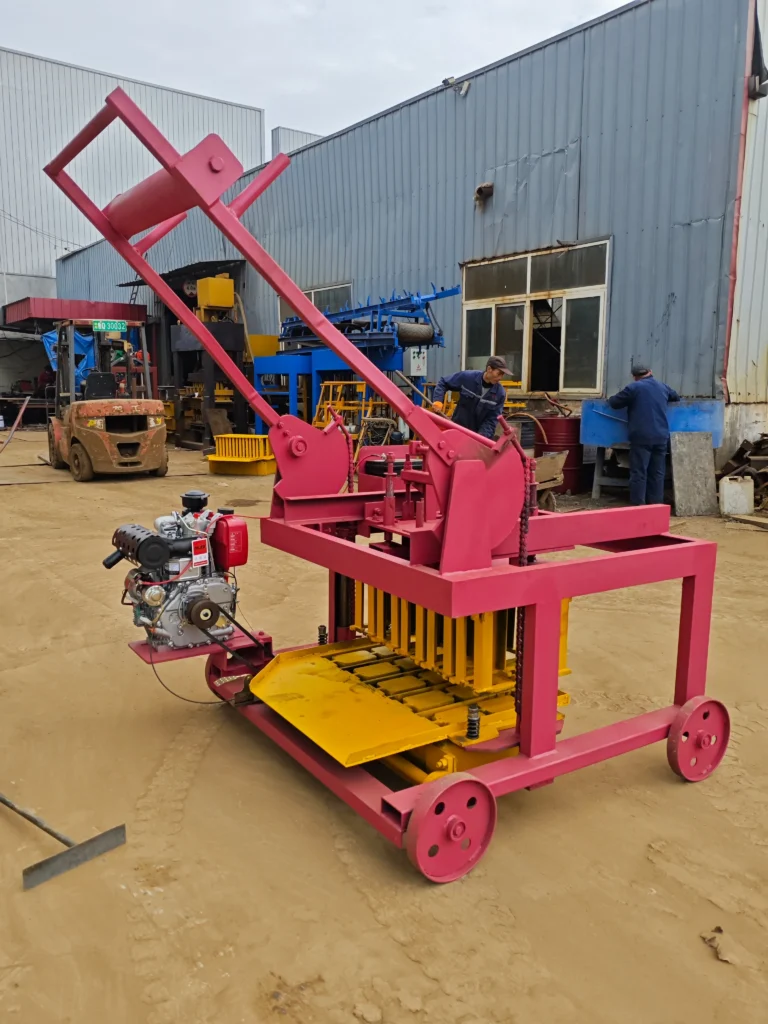
Matched System Specification — Every capacity figure for the QMY4-30 is tied to a specific block format and molding cycle, so buyers see real output instead of a single inflated number.
Technical Specifications
| Parameter |
Value |
| Model |
QMY4-30 |
| Product Type |
Mobile Hydraulic Concrete Block Making Machine |
| Machine Type |
Mobile (egg-laying) |
| Rated Power |
5 kW |
| Molding Cycle |
30 seconds |
| Overall Dimensions |
1200 × 1200 × 1100 mm |
| Net Weight |
950 kg |
| Raw Materials |
Cement, sand, crushed stones, slag |
| Capacity (400×200×200 mm hollow block) |
4 pcs/mold, 480 pcs/hour, 3840 pcs/8 hours |
| Capacity (400×150×200 mm hollow block) |
5 pcs/mold, 600 pcs/hour, 4800 pcs/8 hours |
| Capacity (400×100×200 mm hollow block) |
7 pcs/mold, 840 pcs/hour, 6720 pcs/8 hours |
| Block Formats |
Hollow block, solid brick |
| Mould System |
Changeable moulds for different formats |
Application Suitability
| Application |
Material or Output |
| On-site construction block production |
Hollow blocks from cement, sand, and crushed stone laid directly on the ground |
| Small-scale block manufacturing workshop |
Solid bricks and hollow blocks for local sale |
| Housing project contractor supply |
400×200×200 mm hollow blocks produced at the build site |
| Entrepreneur first block plant entry |
Mixed format output starting with hollow blocks, expanding to solid bricks |
| Development project local production |
400×100×200 mm hollow blocks for partition walls on residential sites |
What "480 Blocks per Hour" Actually Means on Site
Capacity only holds meaning when the block format is named beside the number.
Too many mobile block machine quotations lead with a single output figure and leave the buyer guessing which block size that number assumes. I have watched contractors arrive at a job site expecting to lay thousands of hollow blocks per day, only to discover the quoted throughput was based on a smaller format their project did not need. The QMY4-30 mobile block machine manufacturer listing here states each capacity alongside its exact dimensions: 480 pieces per hour assumes a 400×200×200 mm hollow block, while 840 pieces per hour applies only to the 400×100×200 mm format. [NEED_CITE: common misrepresentation of block machine capacity in export quotations] When the format is clear, the buyer can match daily output against actual project demand instead of working backward from a misleading headline number.

Where the QMY4-30 Sits in the Mobile Range
This machine occupies the entry tier for contractors who need on-site production without investing in a fixed batching plant. The egg-laying design means blocks are deposited directly onto the ground as the machine moves forward, eliminating the need for pallets and a dedicated curing rack system. For a housing development where blocks are consumed within the same project, that simplicity removes an entire layer of handling infrastructure.
The 5 kW power requirement keeps the machine compatible with portable generators commonly available on construction sites. A mobile block machine manufacturer should confirm voltage and frequency before dispatch, because a machine wired for the wrong supply will sit idle while an electrician reconfigures the motor connections on site.
Matching Mould Options to the Blocks Your Project Actually Uses
The QMY4-30 supports changeable moulds, allowing a single machine to switch between hollow block formats and solid bricks. The mould change itself is a manual process on this tier, so buyers should plan format changes between production runs rather than within a single shift. [NEED_CITE: mould change procedures for egg-laying block machines]
What matters here is that the moulds are specified to the buyer’s actual block dimensions before the order is placed. A machine configured with moulds for formats the local market does not buy is simply dead weight on the site. The mobile block machine range at this tier is built around the idea that format flexibility starts with the mould list, not the machine frame.
Reading the Specs That Actually Shape Daily Output
The 30-second molding cycle is the heartbeat of this machine. Every capacity figure in the table above derives from that cycle time divided across the number of cavities in each mould. A four-cavity mould for 400×200×200 mm blocks yields four pieces every 30 seconds, which translates directly to the stated 480 pieces per hour.
The 950 kg net weight matters for a mobile unit because it determines how the machine behaves on uneven ground. A machine that is too light will shift during vibration, producing misshapen blocks. The QMY4-30 carries enough mass to stay stable during the hydraulic vibration cycle while remaining movable by a small crew or a light forklift between production rows.
Raw material compatibility covers cement, sand, crushed stones, and slag. The mix design must be matched to local aggregate gradation, because a mix calibrated for one region’s sand may produce weak or cracked blocks when the particle size distribution changes at the project site.
The Cost of Skipping Format and Voltage Confirmation
When a mobile block machine arrives on site with moulds that do not match the block dimensions the contractor sells, the buyer faces weeks of delay while replacement moulds are manufactured and shipped. That idle time is compounded if the voltage and frequency were never confirmed against the local grid, because the machine cannot even be test-run until an electrician sources the correct transformer or rewinds the motor. [NEED_CITE: commissioning delays caused by unconfirmed electrical specifications] These are not engineering failures. They are specification gaps that a mobile block machine manufacturer should close before the machine leaves the factory floor.
Why Buyers Source This Tier Here
Block machinery is the single production focus, which means the QMY4-30 is not bundled from separate suppliers who have never tested their components together. The machine, mould, and handling requirements are specified as one system.
Capacity calculations are stated per block format, so buyers can verify daily output against their project schedule before placing an order. Mould design follows the buyer’s market requirements, including custom drawings when standard formats do not match local demand. The automation level at this tier is intentionally simple, allowing an entrepreneur to start with manual pallet handling and add supporting equipment as production volume grows. Installation guidance and operator training are included so the first production run happens under supervision rather than trial and error. [NEED_CITE: on-site commissioning practices for mobile block making equipment]
Documentation & Verification
- Line layout showing block format assumed for each capacity calculation
- Machine specification sheet with mould drawing and format list
- Voltage and control language confirmation signed before production
- Factory test record demonstrating cycle time per stated format
- Packing photographs and customs documentation for export shipment
Installation, Commissioning & Support
- Level ground preparation for the 1200 × 1200 mm machine footprint
- 5 kW power supply with dedicated circuit matching confirmed voltage and frequency
- Mould installation and first-run parameter adjustment on buyer’s actual mix
- Operator training covering mould change procedure and daily maintenance points
- Wear parts list with hydraulic seal and vibration component replacement intervals
What to Include in Your Inquiry
Send the exact block dimensions your project or market requires, along with the daily output target based on an eight-hour shift. Confirm the local voltage and frequency at your site so the motor and control panel are wired correctly before dispatch. If your raw material source uses a specific aggregate type, include a brief description so the mix design can be reviewed before the mould is finalized.
Frequently Asked Questions
Q: How is capacity calculated and which block format does each number assume?
A: Every capacity figure for the QMY4-30 is tied to a named block format and the 30-second molding cycle. The 480 pieces per hour applies to 400×200×200 mm hollow blocks at four per mould, while 840 pieces per hour assumes 400×100×200 mm blocks at seven per mould. No single headline number is quoted without its format attached.
Q: What voltage options are available and how is this confirmed before shipment?
A: Voltage and frequency are confirmed during the order stage based on the buyer’s site power supply. A written confirmation is signed before production begins so the motor winding and control panel match the local grid, preventing commissioning delays when the machine arrives.
Q: Which block formats can the QMY4-30 produce and how long does mould change take?
A: The machine supports hollow blocks in multiple dimensions and solid bricks through changeable moulds. Mould change is a manual process planned between production runs. Buyers receive a mould drawing and format list before production so every required format is covered from the first shipment.
Q: What raw materials work with this machine and how does local aggregate affect block strength?
A: Cement, sand, crushed stones, and slag are all compatible. Block strength depends on matching the mix design to local aggregate gradation, because particle size distribution varies by region. The mix should be reviewed before production to ensure vibration force and hydraulic pressure produce consistent density.
Q: What documentation comes with the machine to verify capacity claims before purchase?
A: Buyers receive a factory test record showing cycle times and output per stated format, a machine specification sheet with mould drawings, and voltage confirmation documentation. These records allow the buyer to verify capacity against project requirements before the machine is dispatched.

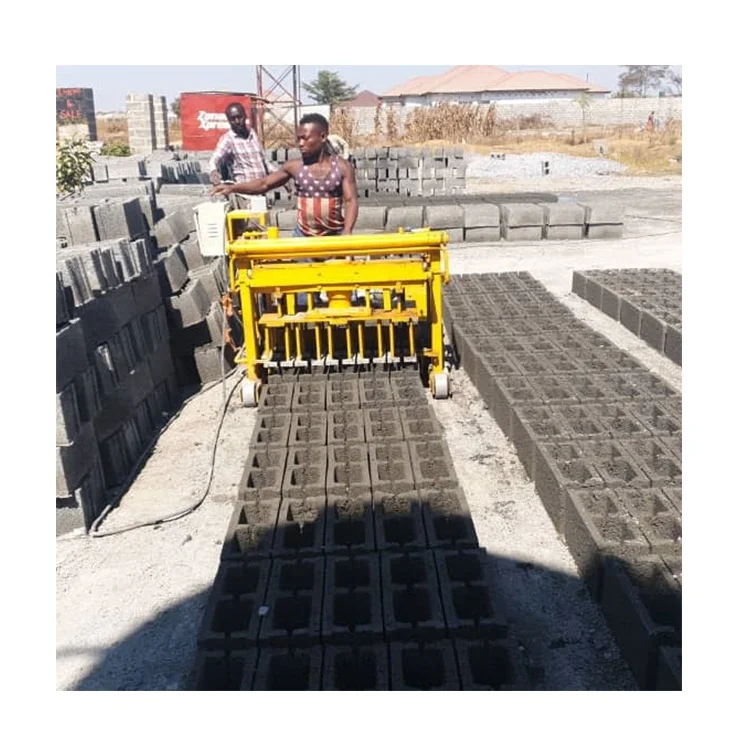
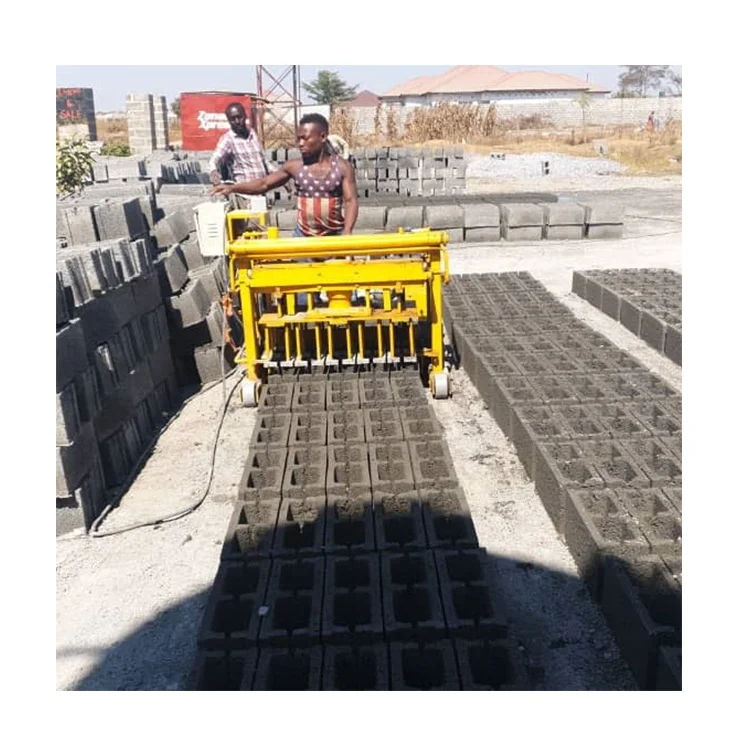 Mobile block machine