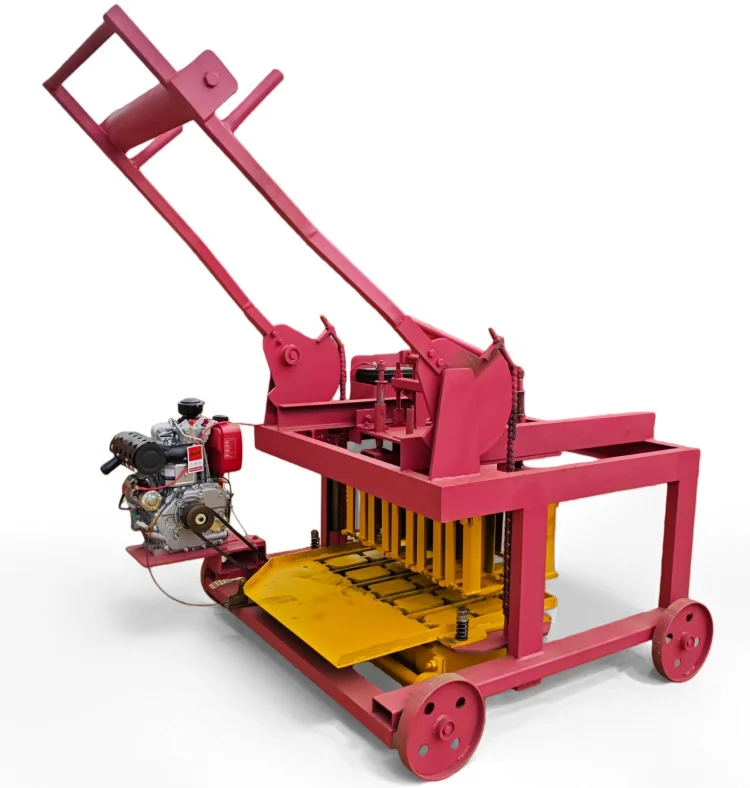
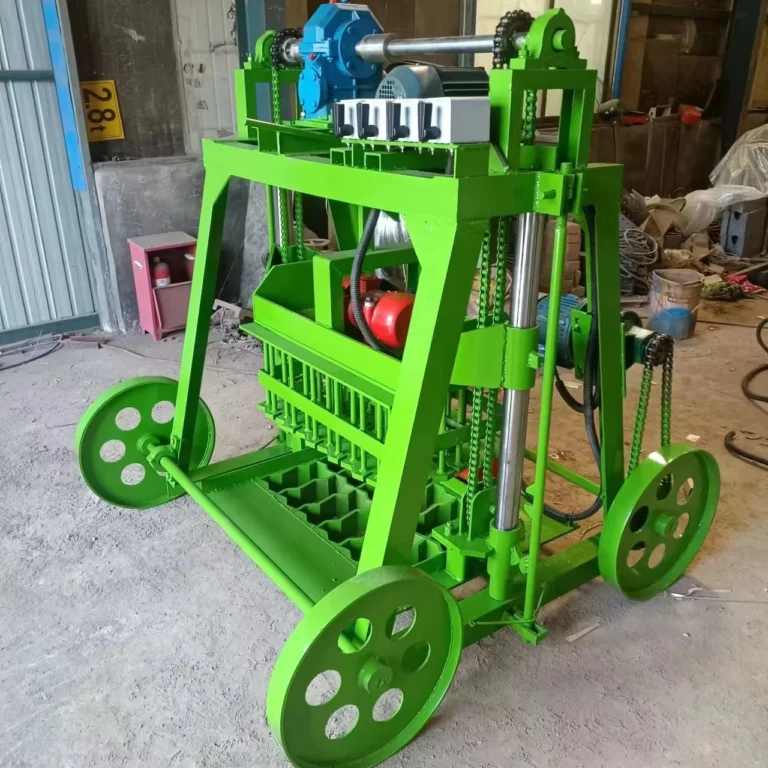
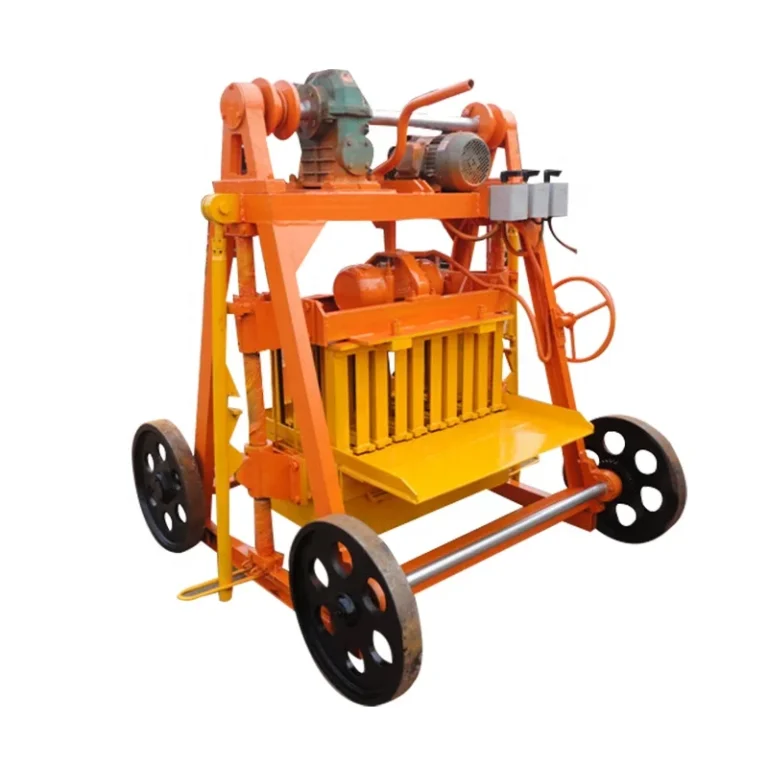
Matched to your material, not a catalogue default — We confirm the local aggregate and block format before locking in the QMY18-15 configuration, so capacity expectations align with what actually comes out of the machine on your site.
Technical Specifications
| Parameter |
Value |
| Model |
QMY18-15 |
| Product Type |
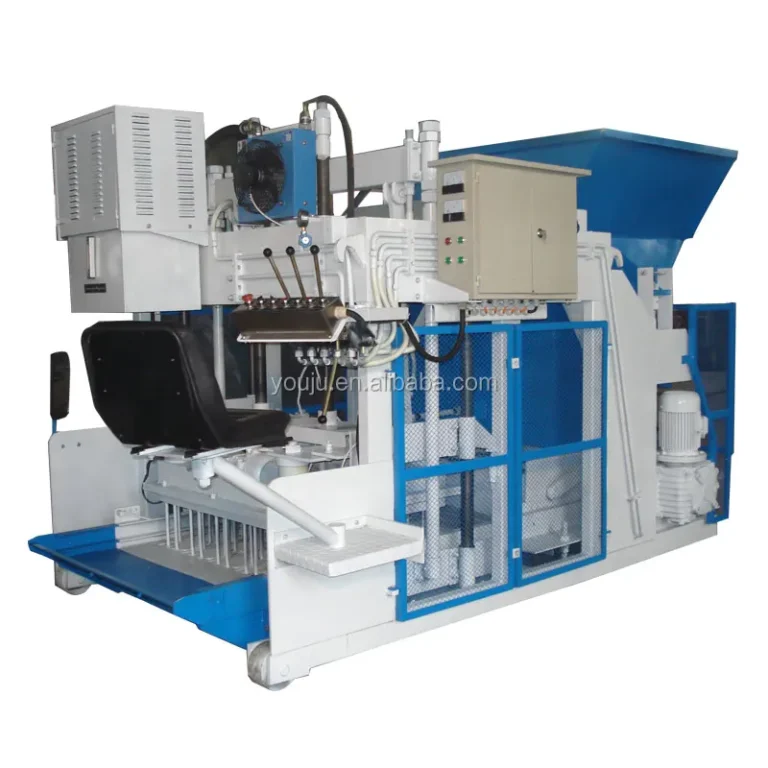
Mobile Hydraulic Egglaying Block Making Machine |
| Base Platform |
Upgraded from QMY12-15 |
| Machine Type |
Mobile / Egglaying (no pallet required) |
| Power Source |
Hydraulic |
| Operation Mode |
Man-machine unity, simplified labor requirement |
| Pallet Requirement |
None |
| Block Density |
High density (basis to be confirmed depending on mix design and local aggregate) |
| Dimensional Accuracy |
Accurate size per mould tolerance (basis to be confirmed) |
| Output Capacity |
Large output relative to QMY12-15 (basis not stated in source — confirm block format, material, and wall thickness) |
| Energy Consumption |
Low energy consumption (basis to be confirmed per motor rating and cycle duty) |
| Mould Formats |
Hollow block, solid block, paving block, interlocking brick (mould-dependent) |
| Voltage & Frequency |
Configurable to target market (must confirm before production) |
| Control System |
Configuration-dependent (to be confirmed per buyer specification) |
Application Suitability
| Application |
Material or Output |
| On-site block production for building contractors |
Crushed stone, sand, and cement mixes laid directly on a level concrete slab |
| First plant setup by entrepreneurs with minimal infrastructure |
Locally sourced aggregate where pallet investment and curing racks are not yet justified |
| Housing and development project production at remote locations |
Standard hollow and solid blocks produced in place to eliminate transport cost |
| Small workshop paver and kerbstone runs |
Interlocking pavers and kerbstone formats with mould change between production runs |
What "Large Output" Actually Means on a QMY18-15
Capacity numbers only matter when you know which block format they assume.
Many mobile egglaying block machine quotations state a single output figure without naming the block size, wall thickness, or aggregate type behind it. A QMY18-15 running lightweight volcanic ash will not match the cycle speed of one pressing dense crushed-stone hollow blocks. I have seen buyers on project sites discover this gap after the machine arrived — the daily count fell far short of what the quote implied, and the masons were standing idle waiting for stock. [NEED_CITE:] Realistic output planning starts with the specific format you sell, not the best-case number on a spec sheet.

Where the QMY18-15 Sits in the Full Machine Range
The QMY18-15 belongs to the mobile egglaying tier — machines that produce blocks directly on the ground with no pallet handling system. This tier demands the lowest fixed infrastructure: a level concrete slab, a power connection, and curing space. It sits below semi-automatic stationary machines, which add pallet feeding and vibration pressing for higher consistency, and well below fully automatic lines that include batching, stacking, and cubing. Buyers evaluating a Mobile Hydraulic Egglaying Block Machine manufacturer should understand this positioning before comparing output across tiers.
Matching Investment Level to Your Project Phase
For contractors running a single housing development or entrepreneurs testing block demand in a new market, the QMY18-15 removes the capital burden of pallets, curing racks, and forklift handling. The trade-off is output ceiling — egglaying machines cannot match the cycle speed and block consistency of a stationary press. When daily demand grows beyond what a mobile unit sustains, the upgrade path leads to a semi-automatic line with pallet circulation. Knowing where you sit on this range prevents over-investing in capacity you cannot fill or under-investing in a machine that bottlenecks your crew. [NEED_CITE:]
Reading the Specs That Actually Affect Your Site
Hydraulic pressure and vibration force together determine whether the QMY18-15 can compact your local aggregate into a block that meets strength requirements. If the pressure is set for dense crushed stone but your site uses a lightweight volcanic material, the blocks will either crack under over-pressing or remain too weak under insufficient force. The no-pallet design eliminates pallet cost and handling labor, but it demands a well-prepared slab — uneven ground produces blocks with inconsistent height. The man-machine unity operation means one operator manages the cycle with simplified controls, reducing the crew size compared to older mechanical egg-laying units.
The Cost of Skipping the Material Conversation
Ordering a mobile egglaying machine on catalogue specs alone creates problems that surface only after installation. If the hydraulic pressure and vibration settings were configured for an aggregate you cannot source locally, the machine will produce blocks that fail strength tests or crumble during handling. Moulds cut for a block format your market does not buy become expensive steel sitting in a corner. Voltage and control language left unconfirmed delay commissioning by days or weeks while panels are reprogrammed and transformers are sourced. [NEED_CITE:]
Why Source the QMY18-15 Through a Single-Focus Block Machinery Supplier
Block machines, moulds, and handling equipment configured as one matched system means the QMY18-15 arrives with moulds sized to the formats your market actually sells — not a generic set chosen from a catalogue. Machine settings are proposed against your mix design and local aggregate, not left at factory defaults. The automation level is selectable, so you can start with simplified manual operation and plan an upgrade to semi-automatic later. Mould drawings and format lists are provided before production, letting you verify that the hollow block wall thickness or paver dimensions match local building codes. Installation support includes operator training on the specific controls and cycle sequence of your machine.
Documentation & Verification
- Machine specification sheet with capacity calculated per your target block format
- Mould drawing and format list confirming hollow, solid, and paver dimensions
- Voltage, frequency, and control language confirmation record before shipment
- Factory test record on your specified aggregate mix before dispatch
- Hydraulic and electrical schematic for local maintenance teams
- Operation and maintenance manual in the operator’s working language
Installation, Commissioning & Support
- Level concrete slab preparation with dimensions matching the QMY18-15 travel path and curing area
- Power connection rated for the machine’s hydraulic motor and vibration system at your confirmed voltage
- Machine arrives assembled with mould installed — no heavy dismantling required for container loading
- First-run commissioning includes parameter tuning to your local aggregate mix and target block density
- Operator training covers cycle start, mould change procedure, and daily hydraulic fluid checks
- Wear parts list provided with mould and hydraulic seal replacement intervals
What We Need Before Quoting
To size the QMY18-15 correctly, share the block formats your market sells, the aggregate available at your site, and your target daily output per format. Include the local voltage and frequency standard, the language your operators read, and whether you already have a level slab and curing area or need guidance on site preparation.
Frequently Asked Questions
Q: What output can the QMY18-15 realistically produce per day, and for which block format?
A: Realistic daily output depends entirely on the block format, wall thickness, and aggregate density. A standard hollow block cycle differs significantly from a solid paver cycle. We calculate output per format based on your specific mix design rather than quoting a single number that may not apply to your production.
Q: Where does a mobile egglaying machine sit compared to semi-automatic and automatic tiers?
A: Mobile egglaying machines require the least infrastructure — no pallets, no curing racks, no fixed plant. Output is lower than semi-automatic stationary machines and far below automatic lines. This tier suits project-site production and first-plant setups where capital and space are limited.
Q: What voltage, frequency, and control language options are available for the target market?
A: Voltage and frequency are configured to match your local power standard before production begins. Control system language is confirmed during the order stage. Both must be locked in before manufacturing to avoid commissioning delays when the machine arrives at your site.
Q: What block formats and mould options are compatible with this machine?
A: The QMY18-15 supports hollow blocks, solid blocks, paving blocks, and interlocking bricks through mould changes. Custom mould designs are available based on your drawings. Mould change time and format availability should be confirmed against your production schedule before ordering.
Q: How does on-site egglaying production compare to a fixed-plant setup in terms of footprint and investment?
A: Egglaying production eliminates the cost of pallets, curing racks, stacking systems, and a dedicated factory building. The trade-off is lower output ceiling and greater dependence on slab quality. It suits project-based demand where a fixed plant would be under-utilized after the contract ends.

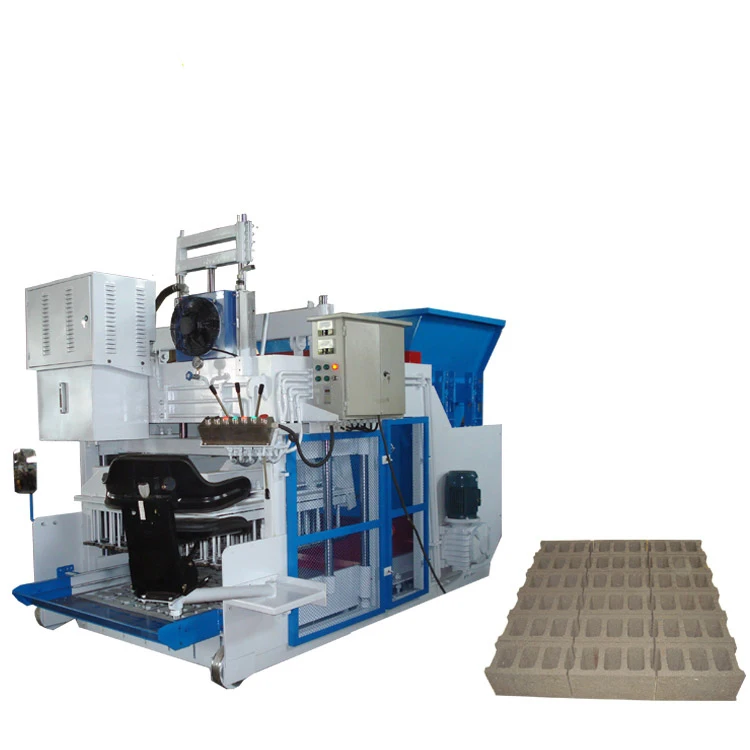
 Mobile block machine