Matched System — every output tier on this page is tied to a specific block format and local material, not a catalogue default, so you know where the QMY10-15 sits before narrowing down.
Technical Specifications
| Parameter |
Value |
| Model |
QMY10-15 |
| Product Type |
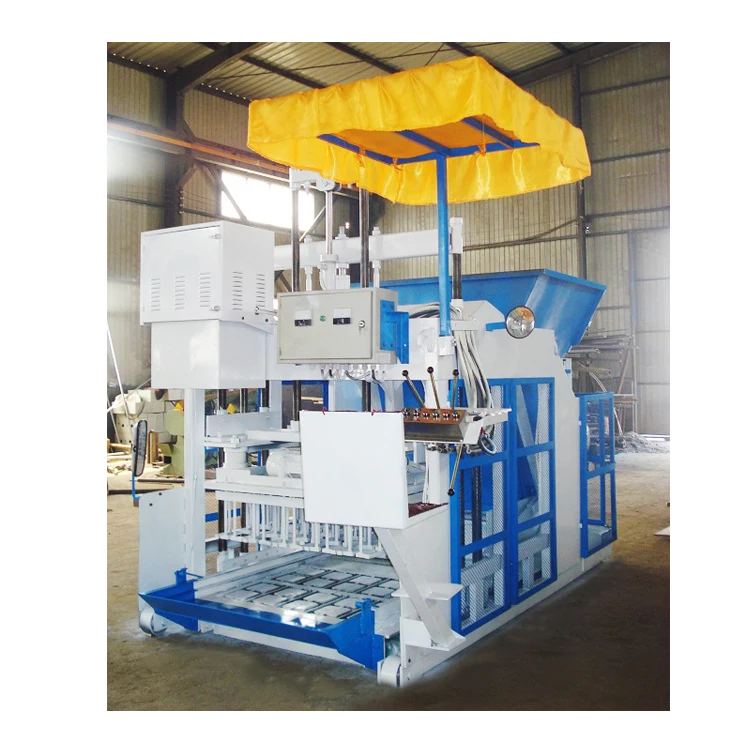
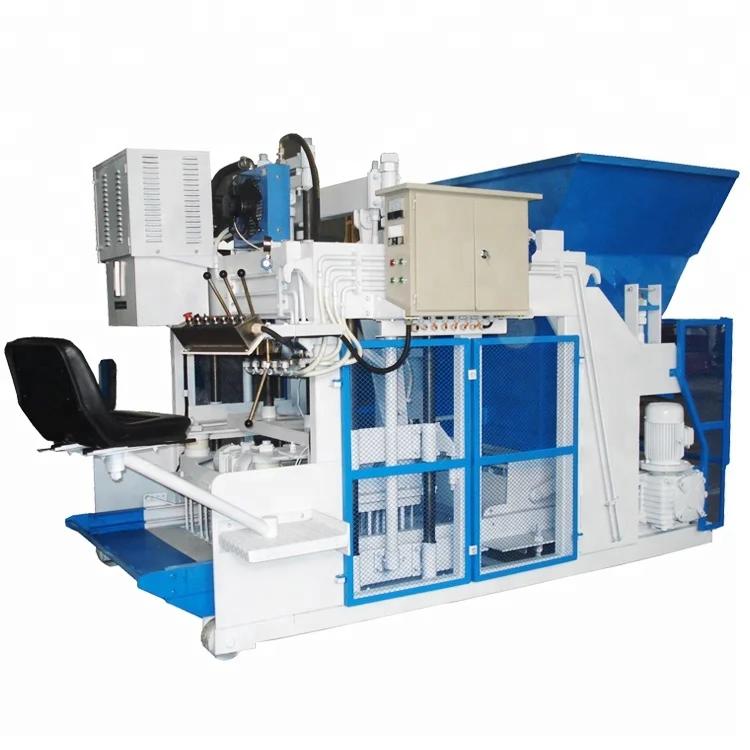
Mobile Automatic Cement Hollow Block Machine |
| Overall Dimensions (L×W×H) |
3150×1800×2400 mm |
| Total Mass |
4500 kg |
| Hydraulic Method |
Mould vibration |
| Demould Method |
Hydraulic |
| Pressure |
21 MPa |
| Excitation Frequency |
4500 r/min |
| Molding Cycle |
15 s |
| Molding Capacity |
10 pcs/mould (based on 400×200×200 / 390×190×190 mm block format) |
| Output Capacity |
2400 pcs/h (based on 400×200×200 mm block) |
| Output Capacity |
3360 pcs/h (based on 400×150×200 mm block) |
| Output Capacity |
3840 pcs/h (based on 400×120×200 mm block) |
| Output Capacity |
4320 pcs/h (based on 400×100×200 mm block) |
| Daily Output (8h) |
19200 pcs (400×200×200 mm block) |
| Daily Output (8h) |
26800 pcs (400×150×200 mm block) |
| Daily Output (8h) |
30720 pcs (400×120×200 mm block) |
| Daily Output (8h) |
34560 pcs (400×100×200 mm block) |
| Compatible Block Formats |
390×240×190 / 390×150×190 / 390×115×190 mm / Customizable |
| Raw Materials |
Crushed stone, sand, cement, fly ash, cinder, slag, gangue, gravel, perlite, industrial waste |
| Total Power |
16 kW |
| Voltage & Frequency |
380V, 3-phase, 50Hz (customizable) |
| Automation Level |
Automatic (mobile/egg-laying) |
| Warranty |
1 year (excluding quick-wear parts) |
Application Suitability
| Application |
Material or Output |
| On-site hollow block production at construction projects |
Crushed stone, sand, cement, fly ash blends |
| Housing development sites producing blocks locally |
Slag, cinder, gangue and gravel mix designs |
| First block plant for entrepreneurs entering the market |
Standard hollow formats 390×240×190 to 390×115×190 mm |
| Contractors replacing manual block production |
Mobile egg-laying output without a fixed facility |
Why "Pieces per Hour" Without a Format Is Useless
Many QMY10-15 mobile block machine manufacturer quotations show a single capacity number and leave the block format unstated, so the figure means nothing until you know what size block it assumes.
Every output number on this page is tied to a specific block dimension.
When a supplier quotes a blanket figure, the buyer often arrives at the site and discovers the daily volume falls far short of what was needed for the project timeline. I saw this happen when a buyer in West Africa planned an entire building schedule around a quoted capacity, only to find the number assumed a smaller format than the 200 mm hollow blocks the local market actually demanded. The machine ran fine; the output just never matched the expectation because the format assumption was never part of the conversation [NEED_CITE: common block machine capacity quoting practices in export markets].

Where This Machine Sits in the Range
The QMY10-15 occupies the mid-to-upper tier of mobile block machines, delivering automatic mould vibration and hydraulic demoulding without requiring a fixed production plant or a pallet return system. Buyers who need hollow block output directly at a building site, but are not yet ready to invest in a stationary automatic line with conveyors and stackers, find this QMY10-15 mobile block machine manufacturer tier a practical entry point. The machine moves between sites, so it suits contractors working on multiple projects across a region.
Mobile Versus Stationary — The Real Trade-Off
A stationary line with feeding, mixing, stacking and cubing will always outproduce a mobile unit in raw volume, but it also demands a dedicated facility, curing racks, forklift access and a larger upfront outlay. The mobile egg-laying design removes the pallet handling system entirely — blocks are laid directly on the ground and cured in place. For housing developments where transport costs eat into margins, producing on-site with the QMY10-15 removes the logistics chain between a fixed factory and the building location [NEED_CITE: on-site versus off-site concrete block production cost structures].
Reading the Numbers That Actually Matter
The 21 MPa hydraulic pressure combined with 4500 r/min mould vibration determines the density and compressive strength of every hollow block the machine forms. If your local aggregate contains high clay or silt content, the vibration frequency and pressure must be matched to that specific mix — otherwise the blocks crack during curing or fail compression tests. The 15-second molding cycle holds across all listed formats, but the output changes with block thickness: a 100 mm wall block yields 4320 pieces per hour while a 200 mm wall block yields 2400, because each mould cavity produces fewer pieces per cycle in the larger format. The 16 kW total power requirement means most project sites with a standard diesel generator can run this machine without a dedicated transformer.
The Cost of Skipping the Material Conversation
When a machine arrives configured for a standard clean-aggregate mix but the buyer’s local sand carries high silt content, the vibration parameters push the fines to the surface and leave voids inside the block wall. The result is a batch that crumbles under hand pressure and fails any structural requirement. I have watched a full day’s production go to scrap because the excitation frequency was never adjusted for the material on hand. That loss is not just the raw material — it is the labour, the project delay and the trust the buyer loses with their client [NEED_CITE: effect of aggregate silt content on concrete block compressive strength].
Why Sourcing Through This Range Works
Block machinery is the single production focus here, so the QMY10-15 is specified together with its mould, power configuration and documentation as one matched package rather than assembled from separate suppliers. The capacity calculation states which block format each figure assumes, removing guesswork before the order is placed. Voltage, frequency and PLC display language are confirmed before production starts, so the machine arrives ready to commission instead of waiting for an electrician to sort out a mismatch. Moulds are available for the formats the buyer’s local market sells, including custom drawings when a project requires a non-standard dimension. Factory testing runs against the buyer’s target parameters before the machine is dismantled for shipment.
Documentation & Verification
- Capacity calculation sheet stating the exact block format for each output figure
- Machine specification with hydraulic and electrical schematic for the QMY10-15
- Mould drawing and format list for all ordered block dimensions
- Voltage, frequency and control language confirmation record before production
- Factory test record verifying molding cycle and pressure before dispatch
- Operation and maintenance manual with wear parts and mould replacement list
Installation, Commissioning & Support
- Flat concrete ground required; the 3150×1800 mm footprint needs a level working area with curing space around it
- 380V 3-phase 50Hz supply or local equivalent confirmed; 16 kW total draw requires a dedicated circuit or adequately rated generator
- Machine shipped dismantled for container loading; reassembly on site covers hydraulic lines and electrical connections
- First-run commissioning checks the 21 MPa pressure and 4500 r/min vibration against the buyer’s mix design
- Operator training covers mould change procedure, cycle timing and daily maintenance points
- Quick-wear parts list and mould inventory supplied with the initial shipment
What to Send with Your Inquiry
Provide the hollow block format your market sells, including wall thickness and overall dimensions, along with the daily volume your project requires. Share details on your local raw materials — especially aggregate type and any clay or silt content in the sand — so the vibration and pressure settings can be matched before the QMY10-15 leaves the factory. Confirm your site voltage, frequency and preferred control display language to avoid commissioning delays after arrival.
Frequently Asked Questions
Q: How is the quoted capacity calculated and which block format does each figure assume?
A: Every capacity figure on this page states the block format it assumes. For the QMY10-15, output ranges from 2400 pcs/h based on a 400×200×200 mm hollow block to 4320 pcs/h based on a 400×100×200 mm block, with the 15-second molding cycle constant across all formats. Daily output figures assume an 8-hour production shift.
Q: Where does the QMY10-15 sit compared to semi-automatic and stationary automatic machines?
A: This mobile unit sits in the mid-to-upper tier of the mobile range, offering automatic vibration and hydraulic demoulding without a fixed plant. Stationary lines add raw material feeding, pallet handling, stacking and cubing for higher throughput but require a dedicated facility and larger investment.
Q: What voltage and frequency options are available?
A: The standard configuration is 380V, 3-phase, 50Hz, but the electrical system is customizable to match local supply standards. Voltage and frequency are confirmed with the buyer before production starts so the machine arrives ready for immediate connection and commissioning.
Q: What is the difference in footprint between this mobile machine and a stationary line?
A: The QMY10-15 requires only a level ground surface measuring roughly 3150×1800 mm plus curing space, with no fixed building, pallet return system or conveyor layout. A stationary automatic line needs a dedicated facility with raw material storage, curing racks, forklift access and a larger overall footprint.
Q: Can I start with the QMY10-15 and move to a stationary line later?
A: Yes. The automation level across the range is selectable, and buyers often begin with a mobile machine to establish production at project sites before investing in a stationary line with full feeding, stacking and cubing systems when volume demands grow.

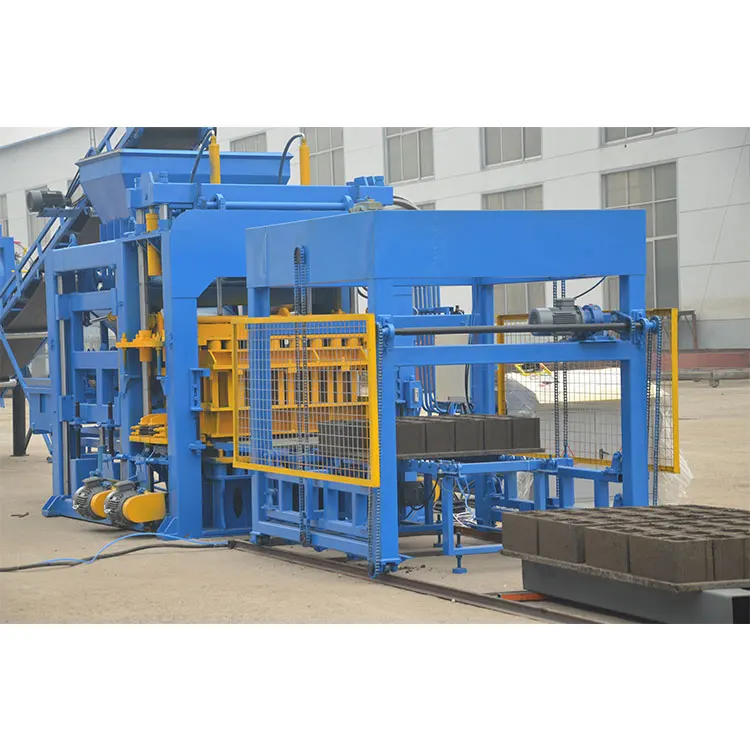 Automatic block machine