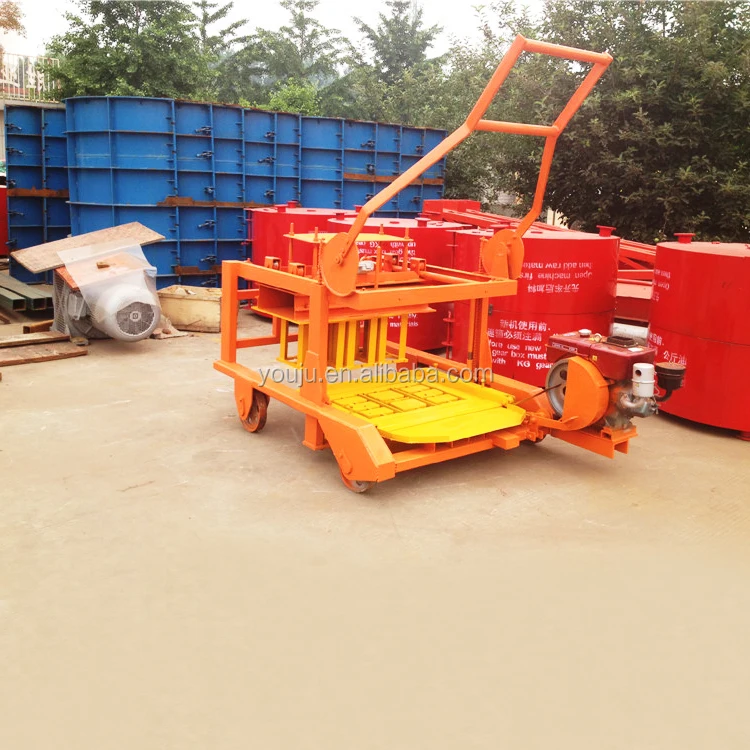
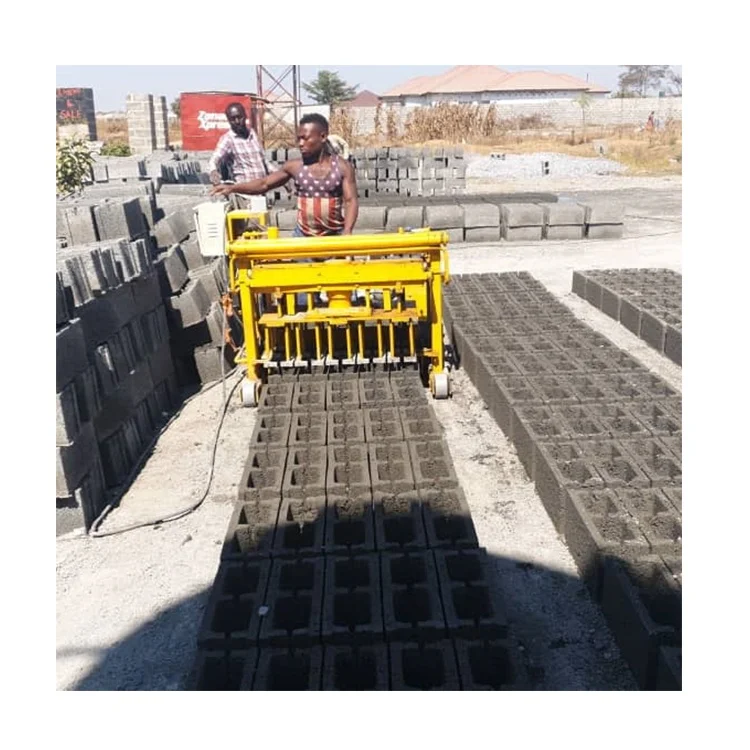
Integrated Block Line Design — machine, mould, and power source configured against your actual site conditions, not a catalogue default, so the QMR4-45 arrives ready to produce the formats your market demands.
Technical Specifications
| Parameter |
Value |
| Model |
QMR4-45 |
| Product Type |
Mobile Concrete Block Making Machine |
| Power Source |
Diesel Engine / Petrol Engine / Electric Motor (selectable) |
| Overall Dimensions (L×W×H) |
1100 × 950 × 2100 mm |
| Net Weight |
810 kg |
| Molding Cycle |
30–45 seconds per cycle |
| Output Capacity |
2,560 pcs/day (basis not stated in source — confirm block format and material) |
| Pallet Requirement |
None — egg-laying design |
| Mobility |
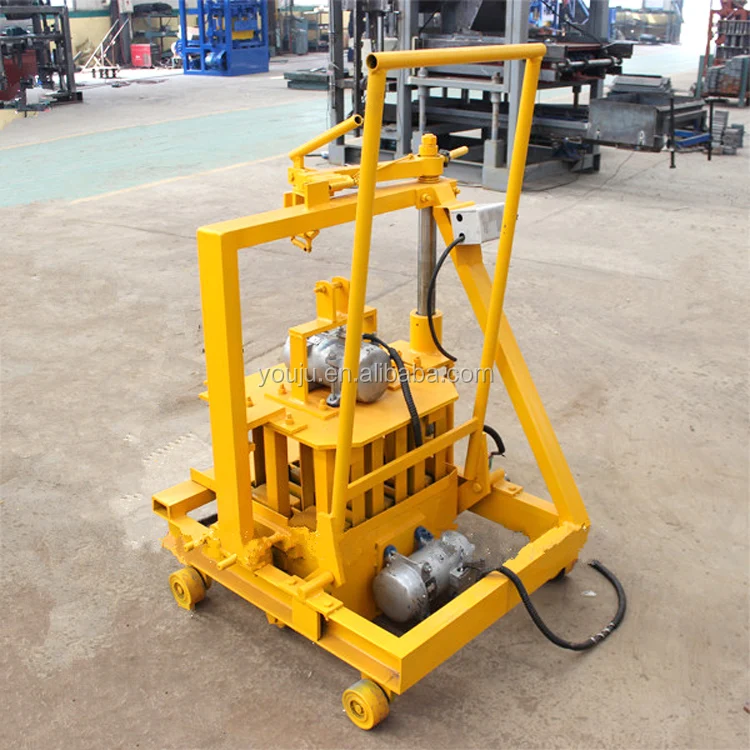
Wheel-mounted mobile frame |
| Compatible Block Formats |
Hollow block, solid brick, paver brick, fly ash brick |
| Included Supporting Equipment |
JZC350 Diesel Concrete Mixer or JQ350 Diesel Electric Mixer; material trolley |
| Automation Level |
Manual operation |
| Warranty |
1 year |
Application Suitability
| Application |
Material or Output |
| On-site block production for building contractors |
Crushed stone, sand, and cement mixes laid directly on prepared ground |
| Small-scale hollow block manufacturing |
Hollow blocks in 100 mm and 150 mm wall thicknesses |
| Remote housing project supply |
Solid bricks and pavers produced at the job site without grid power (diesel option) |
| First plant for entrepreneurs entering block production |
Fly ash brick and interlocking paver formats with minimal capital outlay |
What "2,560 Pieces per Day" Actually Means for Your Block Format
Daily output figures quoted without naming the block format are the single biggest source of buyer disappointment in mobile block machines.
A mobile block making machine manufacturer quoting a flat daily number typically assumes a small solid brick. Switch to a standard 400×200×200 mm hollow block and each cycle produces fewer units, so realistic throughput drops accordingly. I once watched a contractor in West Africa plan his entire crew schedule around a catalogue number, only to discover on the first production day that his hollow block count was barely half what he had budgeted [NEED_CITE: common capacity misalignment in mobile block machine procurement]. Before we confirm any output figure on the QMR4-45, we ask which exact block format you intend to sell and calculate the cycle-by-cycle yield for that shape.

Dual Power Configuration for Off-Grid Job Sites
The QMR4-45 is available with a diesel engine, petrol engine, or electric motor, letting you match the power source to your site reality. Remote housing developments and rural infrastructure projects often lack stable three-phase grid supply, making the diesel mixer and diesel press combination a practical default. Where grid power exists, the electric motor reduces running cost and noise on the production floor. As a mobile block making machine manufacturer, we confirm voltage, frequency, and plug type before production starts so the machine commissions on arrival without an adapter hunt.
Pallet-Free Egg-Laying Design and What It Eliminates
Egg-laying machines lay blocks directly onto the ground, removing the need for pallets entirely. That means no pallet purchase, no pallet storage racks, and no daily pallet handling labour — factors that silently inflate the operating cost of stationary machines. The trade-off is that the curing surface must be a flat, level concrete apron large enough to hold one day’s output. We work with you to calculate the apron area your target format requires so curing space never becomes the bottleneck [NEED_CITE: curing area planning for egg-laying block machines].
Reading the Numbers That Matter on the Spec Sheet
The 30–45 second molding cycle range reflects the difference between a simple solid brick and a multi-cavity hollow block; thicker walls and larger formats push the cycle toward the upper end. The 810 kg net weight keeps the machine within towable range yet provides enough mass to resist walking during vibration — a lighter frame would require anchoring on every move. Wheel-mounted mobility means one operator can reposition the press along the curing apron as the day’s production progresses. The included JZC350 or JQ350 mixer ensures batch consistency from the first mix to the last, which matters more on a manual machine where there is no automated batching system to compensate for proportioning drift.
The Hidden Cost of Skipping Power Source Confirmation
Shipping a diesel-configured QMR4-45 to a site that already has three-phase power means paying premium diesel prices every production day for no reason. Conversely, landing an electric machine on a remote job site without a generator forces a complete production standstill until a genset is sourced locally — often at inflated rental rates. Voltage mismatch is another silent delay: a 220 V motor on a 440 V supply burns out within hours, and warranty does not cover electrical misconfiguration [NEED_CITE: motor burnout from voltage mismatch in exported machinery]. We lock in power source, voltage, and frequency during the quotation stage, not after the machine is crated.
Why Source This Machine From SHIYUE
Block machinery is our single product focus, which means the QMR4-45 press, its moulds, the mixer, and the trolley are specified as one matched set rather than assembled from unrelated suppliers. Every configuration starts from your local aggregate type and target block format, not a default catalogue build. Mould design covers the formats your regional market actually sells, and custom mould drawings are available when you need a shape outside the standard range. The automation path is open: buyers who start with the QMR4-45 can step up to a semi-automatic stationary line later, reusing the mix knowledge and market relationships they have already built. Installation support includes operator training on your specific block format, and wear parts lists ship with every machine so the first replacement order is never a guess.
Documentation & Verification
- Machine specification sheet confirming diesel or electric power source, voltage, and frequency
- Mould drawing and format list matching the block types your local market requires
- Factory test record showing molding cycle times on your specified block format before dispatch
- Operation and maintenance manual with illustrated wear parts identification
- Packing photographs and customs documentation support for smooth port clearance
Installation, Commissioning & Support
- Flat concrete curing apron sized to your daily output and block format before machine arrival
- Dedicated power circuit matched to confirmed voltage and frequency for electric motor variants
- Machine ships assembled on wheel frame — position on apron, connect mixer, and begin production
- First-day commissioning with parameter adjustment for your local aggregate and mix proportion
- Operator training covers mold change procedure, vibration timing, and mix consistency judgment
- Wear parts and mould list included so initial spares can be ordered before first replacement is due
Preparing Your Inquiry for an Accurate Configuration
To size the QMR4-45 correctly we need the block formats your market sells most — dimensions, wall thickness, and whether hollow or solid. Tell us whether your site has grid power available or whether the diesel option is the default. Share your local aggregate type and any existing mixer or material handling equipment so we avoid duplicating what you already have.
Frequently Asked Questions
Q: How is the 2,560 pcs/day capacity calculated, and which block format does it assume?
A: That figure is a manufacturer reference value whose underlying block format is not stated in the source documentation. Actual daily output depends on the specific block size, wall thickness, and mix design you run. We calculate realistic throughput based on your target format and confirm it in writing before the order is placed.
Q: Diesel vs. electric — how do I choose the right power source for my site?
A: If your job site lacks stable three-phase grid power, the diesel configuration keeps production running independently. Where grid power is reliable, the electric motor lowers daily fuel cost and reduces noise. We confirm voltage and frequency during quotation to avoid commissioning delays on arrival.
Q: What block formats and mould options are available for the QMR4-45?
A: Standard moulds cover hollow blocks, solid bricks, paver bricks, and fly ash bricks in common regional sizes. Custom mould design is available to your drawings when your market requires a shape outside the standard range. Mould change is manual, so we recommend starting with the two or three formats that move fastest in your area.
Q: How does this mobile machine compare to stepping up to a semi-automatic stationary line?
A: The QMR4-45 offers the lowest entry cost and zero pallet investment, but output is limited by manual operation and egg-laying speed. A semi-automatic stationary line adds pallet-based production, higher cycle consistency, and optional stacking automation. Many buyers start mobile, establish their market, and upgrade once daily volume demands justify the investment.
Q: What supporting equipment is included, and what do I need to source locally?
A: The package includes either a JZC350 diesel concrete mixer or a JQ350 diesel-electric mixer plus a material trolley. You provide the flat curing apron, raw materials (cement, aggregate, water), and any wheelbarrow or loader for moving mixed material from the mixer to the press.

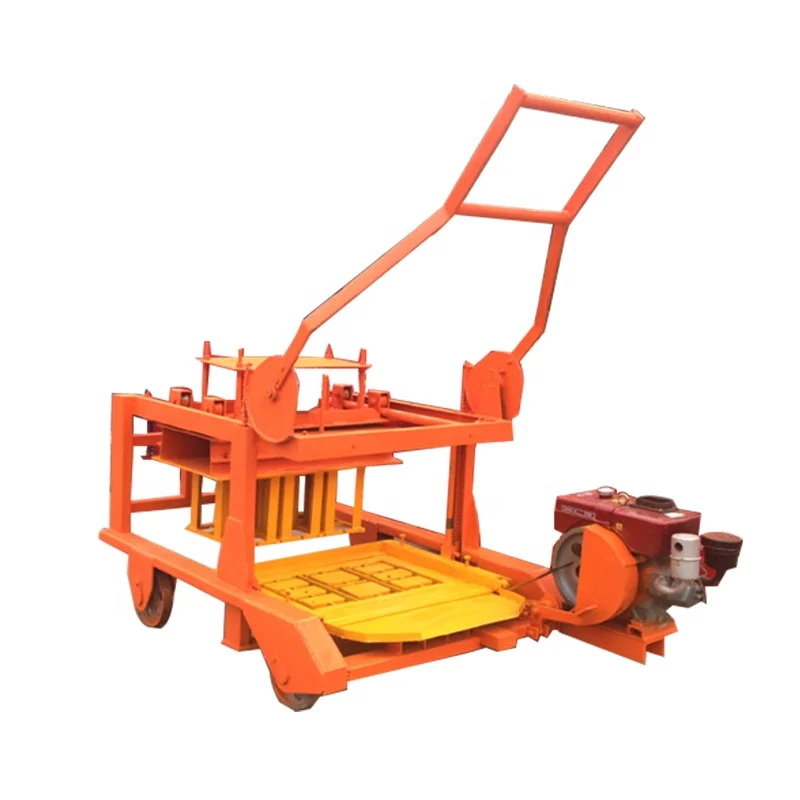
 Mobile block machine