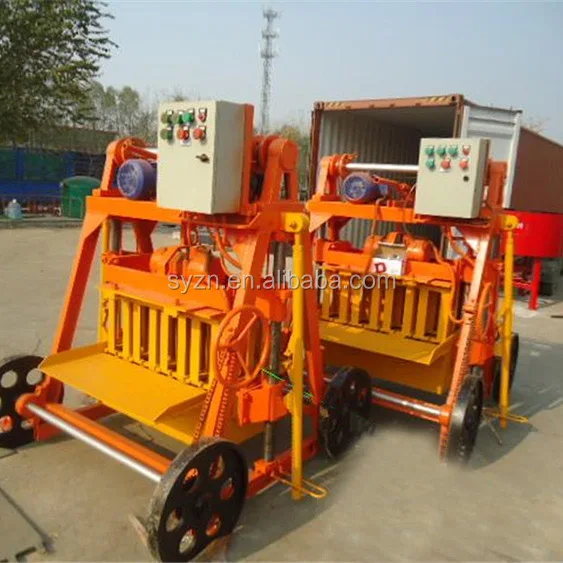
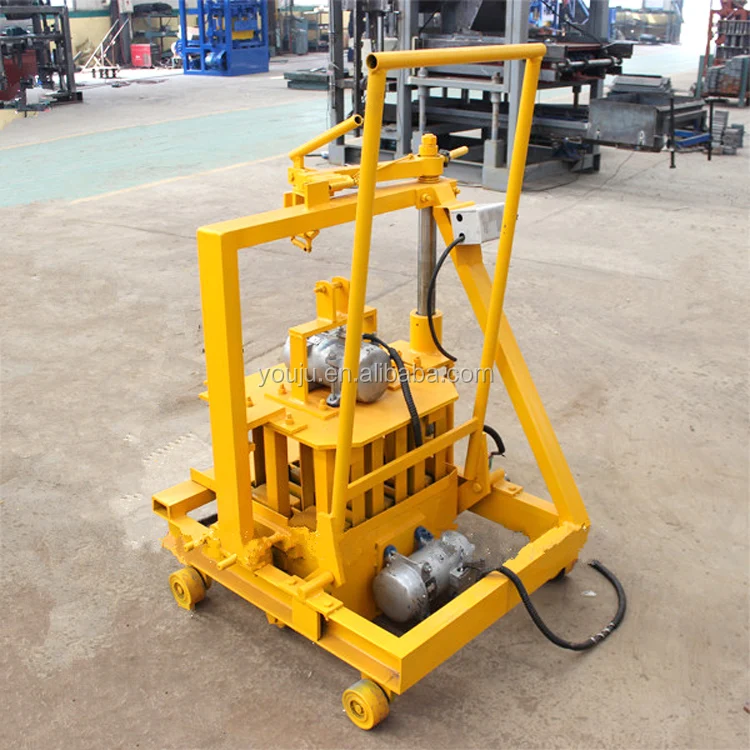
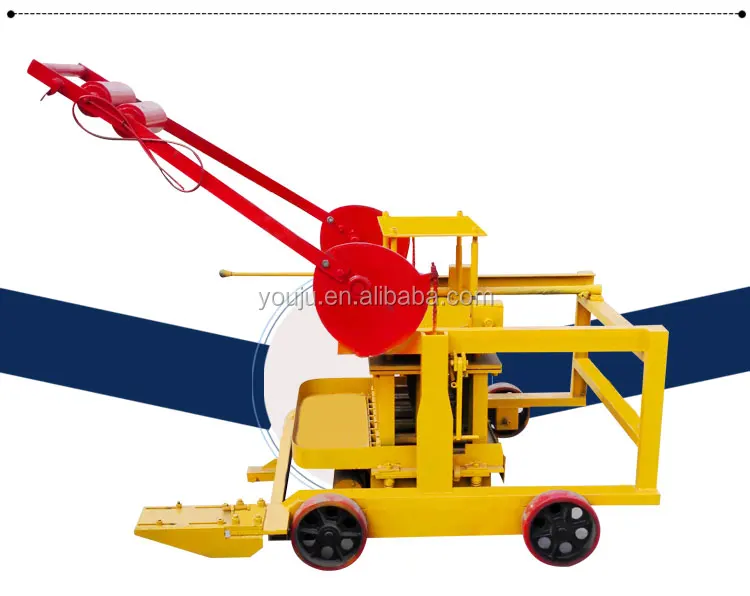
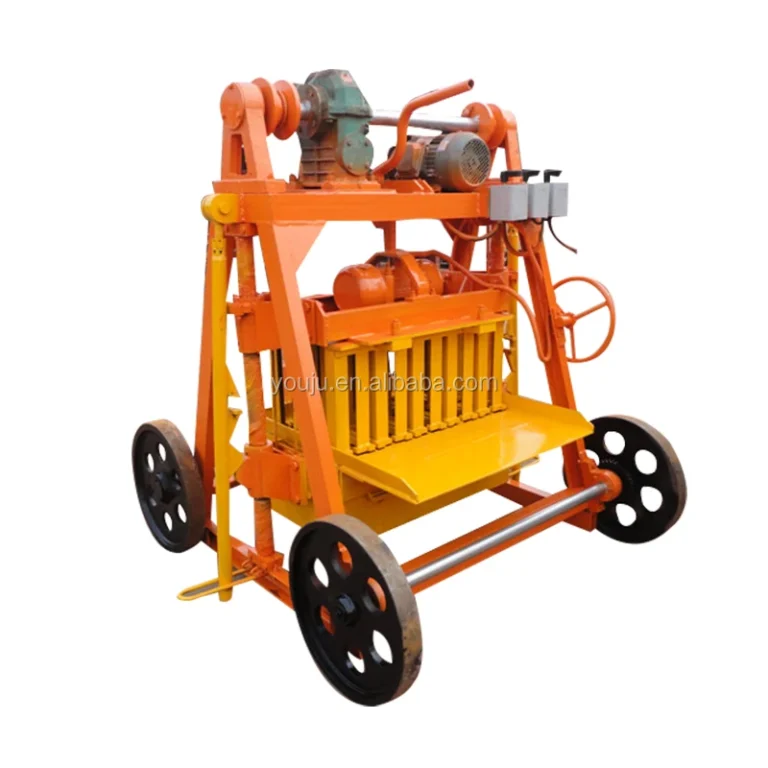
Single-Focus Block Machinery Sourcing — The QMR4-45 is evaluated as a complete matched system including the press, mould formats, and ground-curing workflow rather than as a standalone unit.
Technical Specifications
| Parameter |
Value |
| Model |
QMR4-45 |
| Product Type |
Diesel Egg-Laying Block Making Machine |
| Overall Dimensions (L×W×H) |
2420×1320×1650 mm |
| Net Weight |
810 kg |
| Moulding Cycle |
40-45 s |
| Pallet Requirement |
No pallet (egg-laying type) |
| Rated Power |
6 kW |
| Power Source Option |
6 kW Electric Motor or 6-8 HP Diesel Engine |
| Voltage Options |
220 V / 380 V / Configurable to local grid |
| Output Capacity |
3000 pcs/day (basis: 400×200×200 mm hollow block) |
| Standard Mould Formats |
400×200×200 mm (4 pcs/mould), 400×150×200 mm (5 pcs/mould), 400×120×200 mm (6 pcs/mould) |
| Automation Level |
Manual / Mobile |
| Warranty |
1 Year |
Application Suitability
| Application |
Material or Output |
| On-Site Contractor Production |
Hollow blocks using locally sourced river sand, crushed stone, and cement |
| Remote Housing Projects |
Block production in areas without reliable grid electricity using diesel power |
| Small-Scale Cement Product Mfg. |
Multiple hollow block formats via manual mould change on a single machine |
| Entrepreneurial Startups |
Low-footprint block manufacturing without fixed plant infrastructure or pallet inventory |
Why "3000 Pieces a Day" Can Be Misleading for Mobile Block Machines
Capacity figures are meaningless unless the specific block format and material density are defined.
In the mobile machinery sector, buyers frequently encounter quotations promising high daily outputs that vanish once the machine arrives and production begins on a specific local aggregate. When a diesel egg-laying block machine for sale is rated for 3000 pieces, that number usually assumes the largest standard hollow block (400×200×200 mm). If your market demands the 400×120×200 mm format, the cycle dynamics change, and the daily volume shifts [NEED_CITE: realistic output calculation methodologies for mobile concrete presses]. Understanding these baselines prevents the frustration of under-delivery on active construction sites.

Positioning Within the Block Machine Hierarchy
The QMR4-45 occupies the entry-level tier of our range, designed specifically for buyers who cannot justify the footprint or capital of a stationary plant. Unlike semi-automatic or fully automatic lines that require pallet return systems and curing racks, this diesel egg-laying block machine for sale deposits the block directly onto the ground. This "egg-laying" mechanism removes the need for pallet investment, making it the most accessible option for first-time entrepreneurs or contractors needing immediate, decentralized production across various job sites.
The Role of Diesel Power in Off-Grid Production
For many development and housing project contractors, the stability of the local grid is a primary bottleneck. The availability of a 6-8 HP diesel engine option ensures that the QMR4-45 remains operational in remote locations where voltage fluctuations would otherwise stall an electric motor. This power flexibility allows the machine to move with the project, providing consistent block output regardless of the infrastructure maturity at the site [NEED_CITE: advantages of diesel-driven construction equipment in developing regions].
Vibration and Moulding Cycle Dynamics
The 40-45 second moulding cycle is the heartbeat of this manual machine, balancing the need for thorough compaction with the speed of manual operation. In an egg-laying design, the vibration force must be sufficient to consolidate the mix while allowing the machine to "walk" forward without damaging the freshly laid block. The 6 kW power rating supports the high-torque vibration necessary for dense hollow blocks, though final block strength will always depend on the buyer’s specific mix design and the quality of local aggregates used in the hopper.
The Cost of Ignoring Site Surface Preparation
A common oversight in mobile block production is assuming the machine can operate on any terrain. Because the QMR4-45 is an egg-laying type with no pallets, the ground surface itself becomes the curing bed. An uneven or soft surface leads to block deformation and inconsistent stacking heights. Buyers often overlook this requirement, resulting in a high rejection rate of the final product [NEED_CITE: site preparation standards for mobile concrete block production]. Ensuring a level, hardened concrete floor is a prerequisite for achieving the dimensional accuracy listed in the specifications.
Why Sourcing from a Block Machinery Specialist Matters
Our focus remains entirely on block making machinery, which means every diesel egg-laying block machine for sale is evaluated as part of a larger production ecosystem. We specify the QMR4-45 against your actual target block format and local raw material availability, rather than shipping a generic catalogue unit. Our documentation includes a capacity calculation that explicitly states the format assumed, ensuring your project expectations align with the machine’s physical output. Furthermore, our mould design capabilities allow for custom formats that match your regional market demands.
Documentation & Verification
- Line layout and capacity calculation stating the 400×200×200 mm hollow block basis.
- Mould drawing and format list confirming the three standard hollow block sizes.
- Voltage and control language confirmation sheet for 220 V or 380 V systems.
- Factory test record demonstrating the 40-45 s cycle time per specific mould.
- Operation and maintenance manual covering diesel engine and vibration motor care.
- Packing photographs and customs documentation for international shipment.
Installation, Commissioning & Support
- Requires a level, hardened concrete floor area to support the 810 kg machine weight during movement.
- Electrical connection must match the confirmed 220 V or 380 V, 3-phase supply or utilize the diesel engine.
- Machine arrives fully assembled; only the mould installation and hopper attachment are required on-site.
- Commissioning includes setting the vibration duration to match the buyer’s specific aggregate density.
- Operator training covers the manual mould change process between the three included formats.
- Wear parts list provided for the mould box liners and vibration motor bearings.
- Daily maintenance checklist focuses on cleaning the mould box and checking diesel engine fluid levels.
Moving Forward with Your Inquiry
To ensure the QMR4-45 is the correct tier for your production needs, we require details on your target block format, the specific type of local aggregate available, and your daily volume requirements. This information allows us to verify if the manual egg-laying configuration meets your project deadlines or if a higher-tier semi-automatic line is more appropriate.
Frequently Asked Questions
Q: How is the daily capacity calculated for the QMR4-45?
A: The 3000 pcs/day figure is based specifically on the 400×200×200 mm hollow block format. Output changes based on the block size; for example, smaller formats like the 400×120×200 mm may yield up to 4500 pcs/day, provided the material feed and cycle consistency are maintained throughout the shift.
Q: What are the site requirements for operating this diesel egg-laying block machine for sale?
A: The machine requires a level, hardened surface (usually a concrete floor) to lay the blocks directly. You also need a covered curing area and a consistent supply of raw materials. The diesel option requires standard fuel storage, while the electric version needs a stable power source matching the confirmed voltage.
Q: When should I consider upgrading from the QMR4-45 to a semi-automatic line?
A: You should consider upgrading if your project requires a higher daily volume that exceeds the manual feed speed or if you need consistent pallet-based curing for specialized pavers. The QMR4-45 is ideal for startups and remote sites, but larger commercial plants typically benefit from automatic stacking and batching systems.
Q: What is the process for changing moulds on this machine?
A: The mould change is a manual process that involves unbolting the current mould box and securing the new one. While the QMR4-45 supports multiple formats, frequent changes within a single shift can reduce total daily output, so most operators dedicate a full shift or day to a single block size.

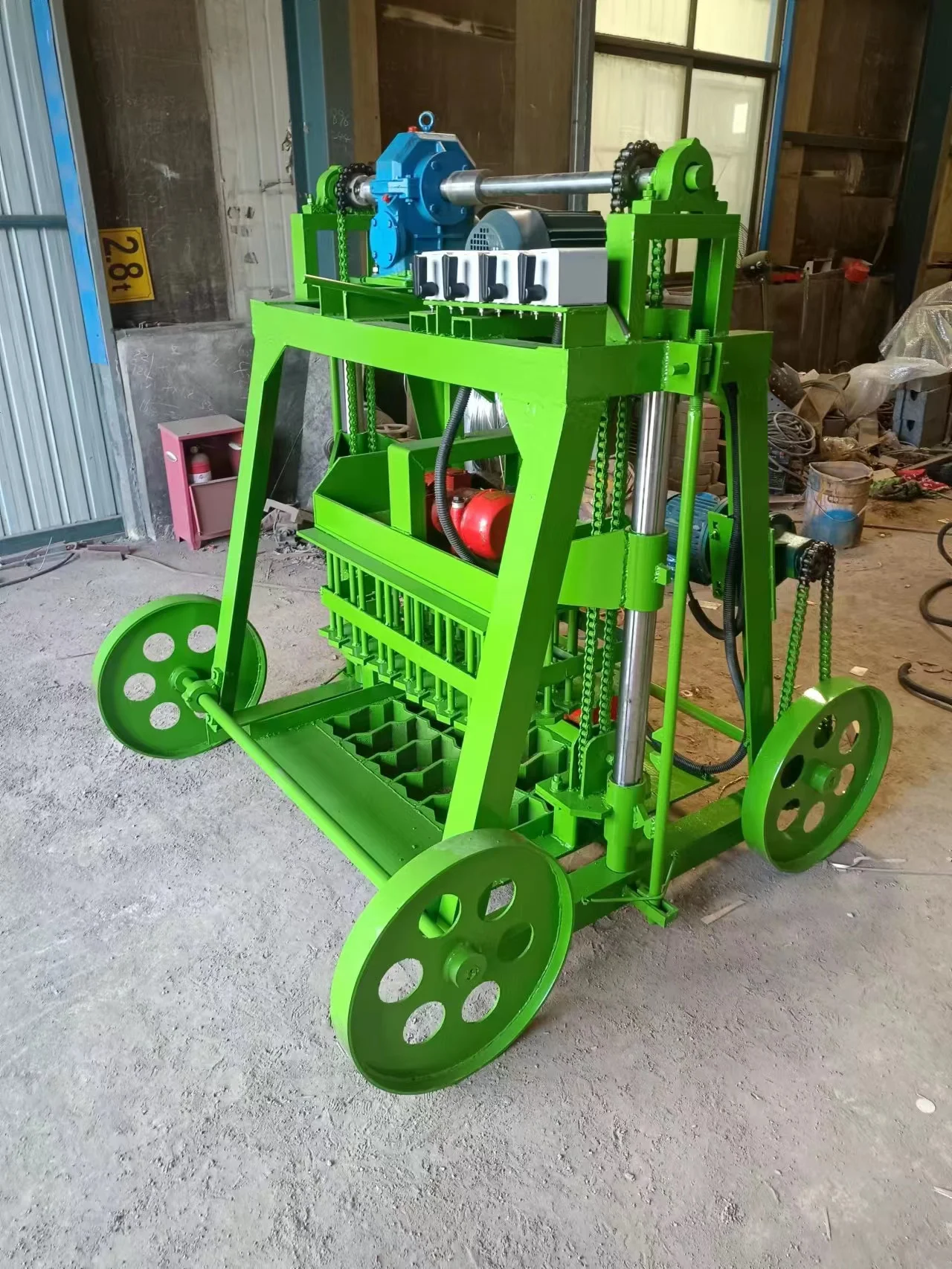
 Mobile block machine