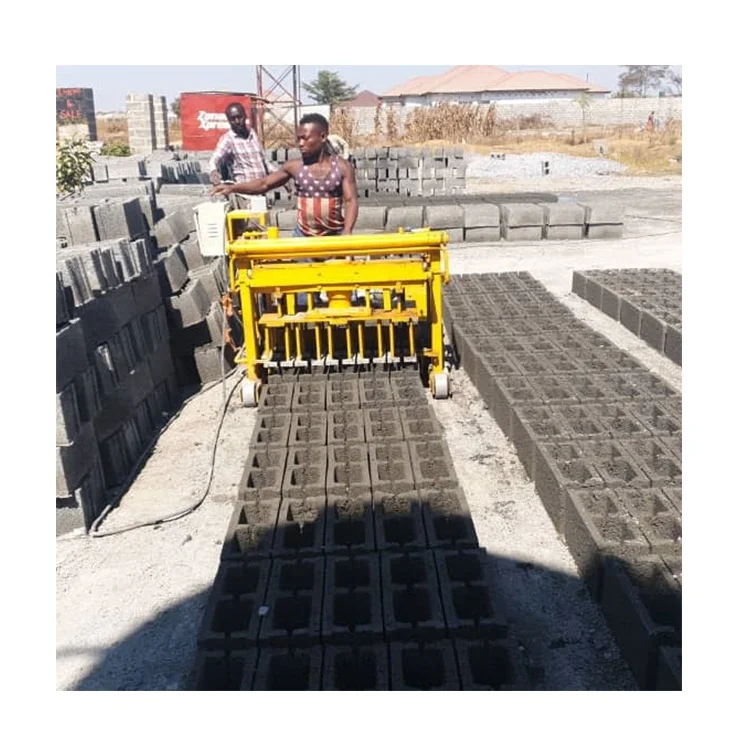
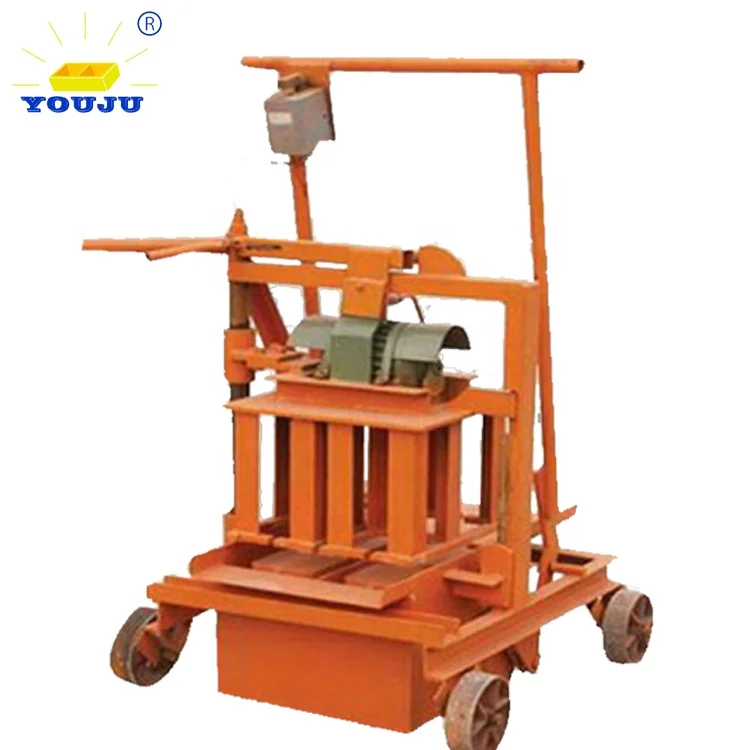
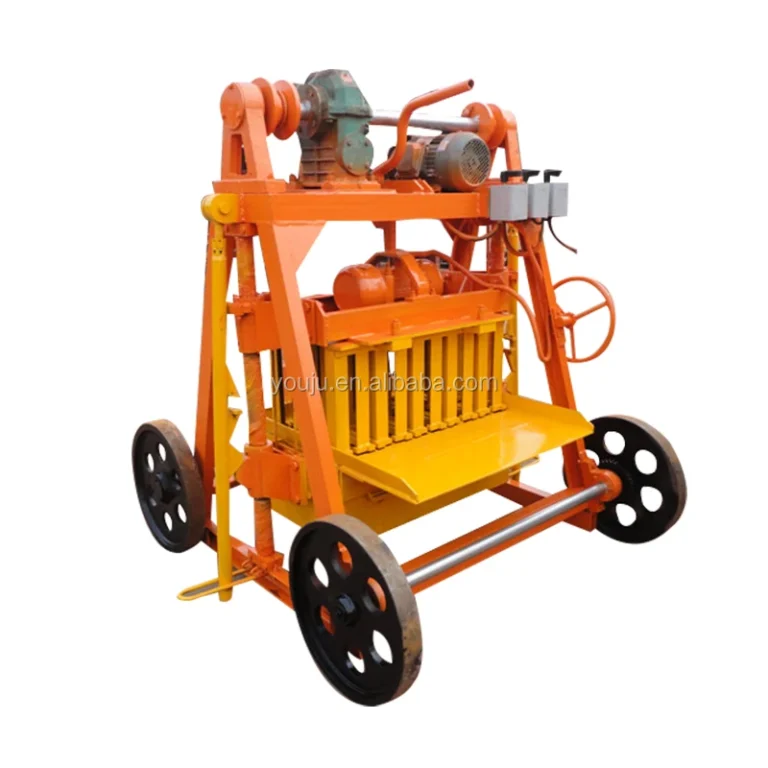
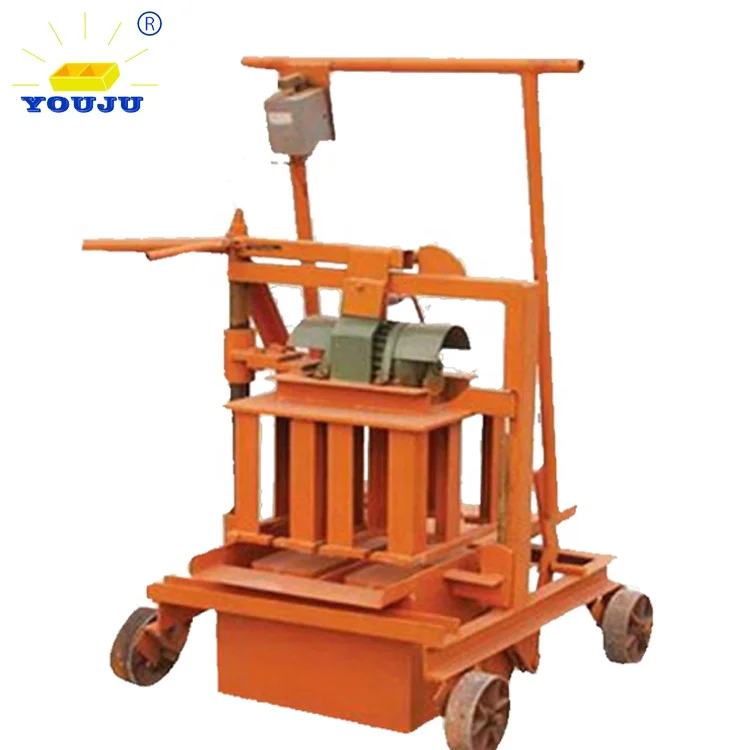
Diesel-driven mobility — the QMR4-45 produces bricks directly on the ground without pallets, grid power, or fixed infrastructure, keeping first-time buyers and remote-site contractors within reach of block production.
Technical Specifications
| Parameter |
Value |
| Model |
QMR4-45 |
| Product Type |
Diesel Powered Mobile Egglaying Brick Making Machine |
| Power Source |
Diesel engine |
| Machine Type |
Mobile / Egglaying |
| Automation Level |
Manual operation |
| Control System |
Manual (no PLC) |
| Pallet Requirement |
Not applicable — pallet-free egglaying production |
| Hydraulic Pressure |
Not applicable — mechanical vibration system |
| Voltage & Frequency |
Not applicable — diesel powered |
| Assembly State |
Fully assembled mobile unit |
| Mould Format |
Interchangeable moulds (basis not stated in source — confirm block format) |
| Output Capacity |
(basis not stated in source — confirm block format and cycle time) |
| Cycle Time |
(basis not stated in source — confirm block format) |
| Vibration Force |
(source value not specified — verify against manufacturer catalog) |
| Overall Dimensions |
(source value not specified — verify against manufacturer catalog) |
| Net Weight |
(source value not specified — verify against manufacturer catalog) |
Application Suitability
| Application |
Material or Output |
| On-site housing development block production |
Hollow and solid blocks from local crushed stone, sand, and cement |
| Remote rural building projects off-grid |
Clay or concrete bricks produced with diesel as the sole power source |
| First-time brick-making enterprises |
Standard brick formats with minimal capital and no factory build-out |
| Contractor-produced kerb and paving units |
Interlocking pavers and kerbstones using site-available aggregates |
What "Pieces per Hour" Means Nothing Without the Block Format
Capacity only matters when tied to a specific block size, mix, and cycle time.
I have watched buyers receive a mobile egglaying brick making machine for sale rated at a certain hourly output, only to discover that figure assumed a small solid brick while they needed hollow blocks four times the volume. The cycle time stretches, the daily count drops, and the project timeline slips before anyone realizes the mismatch. Quoted throughput without a stated format is a number detached from reality. [NEED_CITE: block machine capacity calculation standards by format and cycle time]

Where the QMR4-45 Sits in the Full Machine Range
The QMR4-45 occupies the entry tier of our block machine lineup. It is a diesel-powered mobile egglaying brick making machine for sale to buyers who have no fixed plant, no grid connection, and no budget for pallet inventory. The machine moves along a cleared production area, laying blocks directly onto the ground surface. For contractors working a single housing project or entrepreneurs testing a local market, this tier removes the infrastructure barriers that stationary lines demand.
When to Stay at This Tier and When to Step Up
A buyer choosing this mobile egglaying brick making machine for sale typically values low upfront investment and site flexibility over volume. If daily output requirements grow beyond what manual operation can sustain, or if block strength specifications tighten for commercial supply contracts, stepping up to a semi-automatic stationary line becomes the practical path. The decision hinges on whether the buyer’s market rewards format variety and mobility, or consistent high-volume output. [NEED_CITE: factors influencing block machine tier selection for emerging markets]
Matching Vibration and Mix Design to Local Aggregate
The QMR4-45 relies on mechanical vibration rather than hydraulic pressure to compact the mix. This means block density depends heavily on how well the vibration force matches the buyer’s local aggregate grading and moisture content. Coarse gravel with high clay content in the sand requires different vibration duration and amplitude than clean washed river sand. Before we confirm any configuration, we ask for a sample of the buyer’s actual stone and sand so we can adjust the vibration parameters accordingly. Getting this wrong produces blocks that crumble under handling or fail compressive strength tests at the construction site.
The Hidden Cost of Skipping the Ground Condition Check
Egglaying machines deposit wet blocks directly onto the earth, which means the ground surface becomes part of the production system. Uneven, soft, or poorly drained ground causes blocks to deform under their own weight before initial set occurs. I once worked with a buyer who cleared a production area but left the topsoil in place — the first week’s output tilted and cracked as the soil absorbed moisture unevenly. A compacted gravel base with a slight gradient for drainage costs little to prepare but prevents significant early-stage waste. [NEED_CITE: ground preparation requirements for pallet-free egglaying block production]
Why Buyers Source This Tier From Us
Block machinery is our single focus, so the QMR4-45 arrives as a matched system — machine, mould options, and handling workflow specified together rather than assembled from disconnected suppliers. We configure the vibration settings against the buyer’s submitted aggregate samples and target block format, not a catalog default. Mould designs cover the formats the buyer’s local market actually purchases, with custom drawings available for non-standard sizes. Our documentation includes a capacity calculation that states the exact block format and cycle time behind every output figure. Installation guidance covers ground preparation, diesel engine maintenance intervals, and mould change procedures so the buyer’s crew operates correctly from the first day.
Documentation & Verification
- Capacity calculation sheet stating the exact block format and cycle time assumed for each output figure
- Mould drawing and format list confirming available brick sizes and custom options
- Machine specification sheet covering diesel engine rating, vibration force, and overall dimensions
- Operation and maintenance manual with wear parts list for first-replacement planning
- Factory test record on the buyer’s specified block format before dispatch
Installation, Commissioning & Support
- Requires a compacted, level gravel base with drainage gradient for pallet-free egglaying operation
- Diesel engine arrives fully assembled — no electrical wiring or grid connection needed on site
- Mould change procedure trained on-site so operators switch formats without extended downtime
- First production run supervised to confirm vibration settings match the local aggregate sample provided
- Wear parts list supplied with recommended replacement intervals for mould liners and vibration components
- Operator training covers mix proportioning adjustments when local sand moisture content varies seasonally
What We Need to Configure Your Machine
Tell us the block formats your local market demands — solid, hollow, paving, or interlocking — along with the daily volume you need to sustain your operation. Share a sample or specification of your available stone and sand so we can match the vibration parameters to your actual materials. Let us know whether your production site has any ground preparation already in place or if you need guidance on base preparation before the machine arrives.
Frequently Asked Questions
Q: How is the daily output of the QMR4-45 calculated, and which block format does it assume?
A: Daily output depends on the specific block format, cycle time, and the number of operating hours. We provide a capacity calculation document that states the exact block size and cycle time behind each output figure, so buyers know what to expect before the machine ships rather than discovering a shortfall after arrival.
Q: What block formats and mould options are available for this egglaying machine?
A: The QMR4-45 supports interchangeable moulds for various brick and block formats including solid bricks, hollow blocks, and interlocking pavers. We confirm available formats and provide mould drawings before production. Custom mould designs based on buyer-supplied drawings are also available for non-standard sizes.
Q: Where does the QMR4-45 sit in the full range, and when should a buyer step up?
A: This machine sits at the entry tier for buyers needing low-investment, mobile, pallet-free production without grid power. When a buyer’s market demands higher daily volume, tighter block strength consistency, or reduced manual labor, stepping up to a semi-automatic or automatic stationary line becomes the appropriate move.
Q: What ground conditions are required for egglaying production without pallets?
A: The production area needs a compacted, level surface with adequate drainage to prevent block deformation during initial curing. Soft or uneven ground causes wet blocks to tilt and crack. We provide ground preparation guidance as part of the installation documentation before the machine arrives on site.
Q: How does the investment and footprint compare to a semi-automatic stationary line?
A: The QMR4-45 requires no fixed plant structure, no pallet inventory, and no electrical infrastructure, keeping both capital outlay and site footprint minimal. A semi-automatic line demands a dedicated building, pallet investment, curing area, and grid connection. The choice depends on whether the buyer prioritizes mobility and low entry cost or higher automated volume.

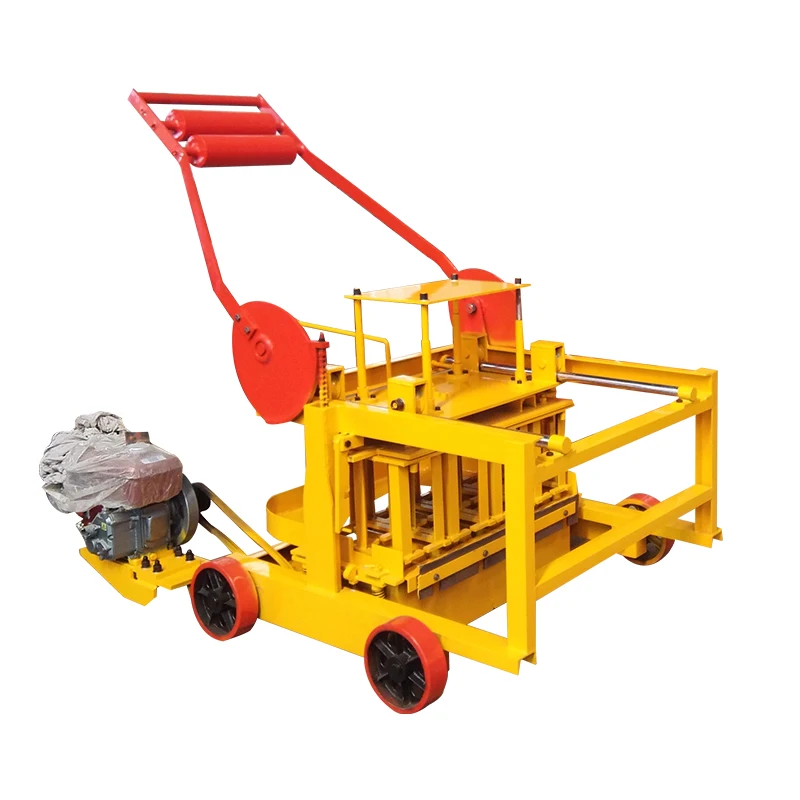
 Mobile block machine