
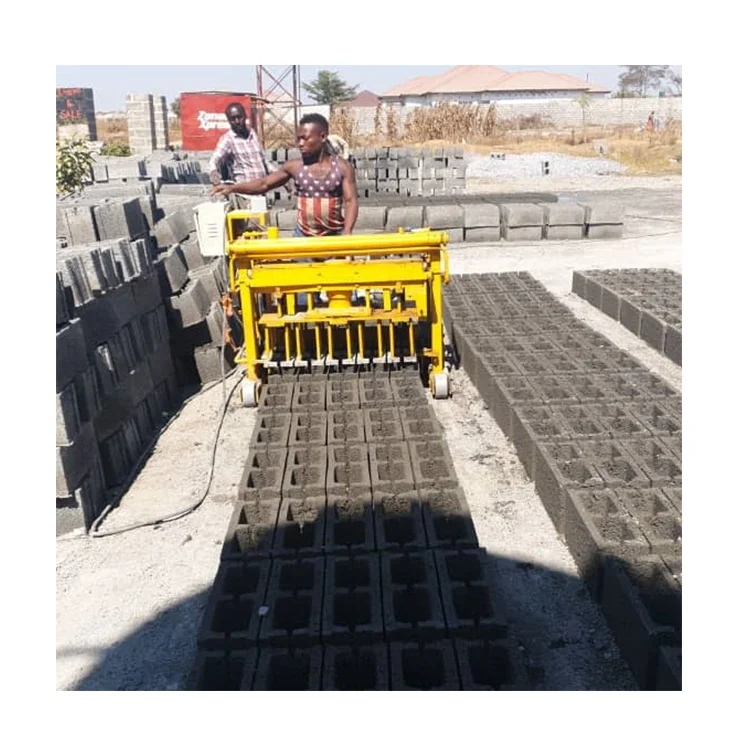
 Mobile block machine
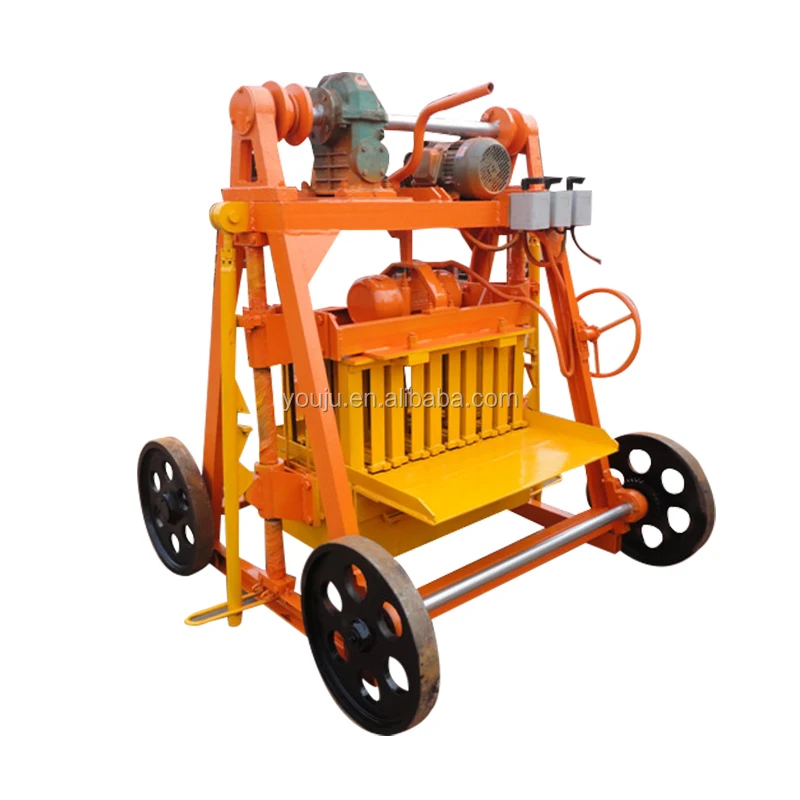 Mobile block machine
Concrete Machinery
QMJ4-45 Mobile Block Machine for Concrete – Full Range
<p><strong>QMJ4-45 Mobile Egg-Laying Block Machine, Manual Operation, Twice-Vibration Molding Core</strong> — positioned at the entry level of the full block machine range for buyers who need on-site production without a fixed plant, pallets or handling equipment.</p> <ul> <li>Lays blocks directly on the ground and moves across the working site, eliminating secondary transport and handling damage</li> <li>Mould interchangeability supports multiple block formats from a single machine, with custom moulds available to buyer drawings</li> </ul> <p>Specified as a matched system covering machine, mould and operational support rather than a standalone press, with configuration set against your local aggregate and target block format.</p>
CE Certified
European Standards
Ships 15-30 Days
Fast Delivery
108+ Countries
Global Export
After-Sales Support
Training Included
24h Response
Free Technical Consultation
Product Details
Matched System, Not Parts List — the QMJ4-45 egg-laying block machine is specified alongside its moulds and local mix design, so the output you see on site reflects what the catalogue promised before shipment.
Technical Specifications
| Parameter | Value |
|---|---|
| Model | QMJ4-45 |
| Product Type | Mobile Egg-Laying Concrete Block Making Machine |
| Machine Type | Egg-laying mobile block making machine |
| Vibration System | Twice vibrations of molding core (modified from single vibration) |
| Mobility | Moves around working site without fixed plant |
| Mould Change | Supported; various block types via mould change, custom mould by drawings |
| Pallet Size | Not applicable (egg-laying type, no pallet required) |
| Automation Level | Manual |
| Stacking Method | Not applicable (blocks laid on ground, cured in place) |
| Output Capacity | Depends on block format and mix design (basis to be confirmed) |
| Cycle Time per Format | Depends on block format and operator pace (basis to be confirmed) |
| Mould Change Time | Depends on operator familiarity and block format (basis to be confirmed) |
| Hydraulic Pressure | Confirm with manufacturer |
| Vibration Force | Confirm with manufacturer |
| Rated Power | Confirm with manufacturer |
| Voltage & Frequency | Configurable to target market standard |
| Control System | Manual operation |
| Overall Dimensions | Confirm with manufacturer |
| Net Weight | Confirm with manufacturer |
| Certification | CE (verify applicability to specific configuration) |
Application Suitability
| Application | Material or Output |
|---|---|
| On-site concrete block production | Crushed stone, sand, cement, water — no fixed plant infrastructure required |
| Small-scale or startup block production | Low initial investment entry into block manufacturing with minimal footprint |
| Construction contractors producing blocks at building sites | Solid blocks, hollow blocks, paving blocks subject to mould selection |
| Entrepreneurs setting up a first block plant | Multiple block formats achievable through mould change on one machine |
| Supplementing existing fixed-line output | Mobile unit deployed where a fixed line cannot reach |
Why "Blocks per Hour" Means Nothing Without the Format Attached
The QMJ4-45 output must always be quoted against a specific block format and mix design, because cycle time shifts dramatically between a small solid paver and a large hollow block. I have seen buyers compare two mobile block machine for sale listings side by side, both claiming impressive hourly numbers, only to discover one figure assumed a tiny solid brick while the other assumed a standard hollow block — the gap between them collapsed entirely once the format was clarified. That mismatch is not a deception; it is simply an incomplete quotation. When you evaluate this machine, ask for the capacity calculation sheet broken down per format, not a single headline number. The vibration cycle for a dense paving block runs longer than for a lightweight hollow block, and your local aggregate gradation changes the mix behaviour inside the mould [NEED_CITE: influence of aggregate gradation on concrete block cycle time]. A supplier who quotes capacity without stating the format is asking you to trust a number that may never appear on your production floor.
Where the QMJ4-45 Sits in the Range
The QMJ4-45 occupies the entry tier of the block machine lineup. It is a manual, egg-laying unit that moves across your working area and deposits blocks directly on the ground, eliminating the need for pallets, pallet-return conveyors, or a dedicated curing rack system. Buyers who need on-site production without building a fixed plant find this tier practical because the capital outlay stays low and the footprint is essentially the size of your curing yard. The trade-off is labour: an operator guides the machine, manages the mix feed, and oversees curing. For a first block plant or a construction project where blocks are consumed on the same site, this position in the range keeps things simple.
When to Look Beyond the Entry Tier
If your daily volume requirement grows or your market demands tighter dimensional consistency across large batches, the semi-automatic and automatic tiers become relevant. A semi-automatic line introduces pallet-based pressing with controlled vibration cycles, while a full automatic line adds batching, pallet feeding, stacking, and cubing — removing most manual handling from the process. The QMJ4-45 serves as a starting point, and buyers who later expand often keep it running as a supplementary unit for smaller orders or remote site work [NEED_CITE: typical progression from mobile to stationary block production]. Understanding where you sit on this range before ordering prevents buying a machine that will feel undersized within its first year.
Reading the Vibration and Mobility Specs for Real Production
The twice-vibration molding core is the defining engineering feature of the QMJ4-45. A single-vibration system sends one shock through the mix, which can leave density gradients — the bottom of the block compacts while the top remains looser. Twice vibration applies a second pulse that redistributes pressure, producing more uniform block strength from face to face. Because this is an egg-laying machine, there is no pallet involved; the block is formed and left in place while the machine rolls forward to the next position. This removes pallet cost and pallet-handling labour entirely but demands a level, prepared ground surface for curing. The mould change system supports multiple block formats — solid, hollow, paving — and custom moulds can be manufactured to buyer drawings, giving format flexibility within the manual tier. Voltage and frequency are configurable before shipment to match your site supply, a detail that must be confirmed early to avoid commissioning delays [NEED_CITE: voltage and frequency standards by export market].
The Cost of Skipping Configuration Questions Before You Order
A mobile block machine for sale that arrives with the wrong voltage specification sits idle until an electrician rewires the panel or a transformer is sourced locally. A mould sized for a block format your market does not buy becomes dead weight in a shipping container. I once saw a buyer receive a machine configured for fine silica sand when his local supply was coarse volcanic aggregate; the mix would not flow into the mould corners, and the blocks crumbled at the edges until the vibration timing and mix ratio were reworked entirely. These are not warranty failures — they are specification failures, and they happen when the inquiry skips the questions about local material, site power, and target block format. Every hour spent confirming these details before production saves days of on-site troubleshooting after arrival.
Why This Source Approach Differs
Block machinery is the single focus here, which means the QMJ4-45 is not bundled from separate suppliers who have never spoken to each other — the machine, mould, and handling assumptions are specified as one system. Configuration is set against your actual mix design and local aggregate rather than a catalogue default, so the machine behaves as expected with the materials you can actually source. Mould design covers the formats your market sells, including custom drawings when standard options do not match. The automation level is selectable across the range, so starting with a manual egg-laying unit now does not close the door on upgrading later. Installation support and operator training accompany the machine to site, and mould and wear parts remain available when the first replacement cycle arrives.
Documentation & Verification
- Line layout showing block format assumed in capacity calculation for the QMJ4-45
- Machine specification sheet confirming vibration type, mobility, and control configuration
- Mould drawing and format list covering standard and custom options for this unit
- Voltage, frequency, and control language confirmation documented before production
- Factory test record with packing photographs captured prior to dispatch
- Operation and maintenance manual written for manual egg-laying operation
Installation, Commissioning & Support
- Level, compacted ground surface required for egg-laying block curing without pallets
- Power supply matching confirmed voltage and frequency must be available at site before arrival
- Machine arrives assembled; mobility features allow immediate positioning on prepared ground
- First production run supervised to adjust vibration timing against your local aggregate
- Operator training covers mould change procedure and manual feed management on the QMJ4-45
- Wear parts and mould list provided so first replacements can be ordered before stockout
What to Prepare Before Requesting a Quotation
When you are ready to discuss the QMJ4-45 or any mobile block machine for sale in this range, bring your target block format and dimensions, your estimated daily output requirement, and a description of your local raw materials — especially the aggregate type and gradation. Confirm your site voltage and frequency, and note whether your operation will run on a grid connection or a generator. If you already have a curing area, describe its size and surface condition so the egg-laying workflow can be planned around it.
Frequently Asked Questions
Q: What daily output can I expect per block format on the QMJ4-45?
A: Output depends entirely on which block format you are producing and the mix design you run. A small solid paver cycles faster than a large hollow block, and your aggregate type affects mould fill time. Request a capacity calculation sheet that states the assumed block format, cycle time, and shift length so the daily figure matches your actual product.
Q: Which block formats and mould options are available for this machine?
A: The QMJ4-45 supports solid blocks, hollow blocks, and paving blocks through mould change, and custom moulds can be built to buyer drawings. The available format list should be confirmed during the quotation stage, along with mould dimensions, to ensure the shapes match what your local market demands.
Q: What are the power and voltage requirements, and can they match my site supply?
A: Voltage and frequency are configurable to your target market standard before the machine enters production. Confirm your site supply — whether grid or generator — and the required voltage, phase, and frequency early in the inquiry so the electrical system is built correctly and commissioning is not delayed.
Q: Where does the QMJ4-45 sit in the full range — when should I consider upgrading?
A: The QMJ4-45 is the entry-tier manual egg-laying unit, ideal for on-site production without a fixed plant. If your volume grows or you need consistent output with less manual handling, semi-automatic and automatic tiers introduce pallet-based pressing, stacking, and batching. Starting here leaves the upgrade path open.
Q: What mould and wear parts support is available after the first replacement cycle?
A: Moulds and hydraulic wear parts remain available for reorder, and a wear parts list is supplied with the machine documentation. Confirming your first expected replacement timeline during the order stage helps avoid production pauses when components reach end of life.
Get a Quote
Request Price for QMJ4-45 Mobile Block Machine for Concrete – Full Range
Fill in your requirements and our export manager will respond within 24 hours with pricing, specs and a customized solution.
You May Also Like
Related Products
Mobile block machine
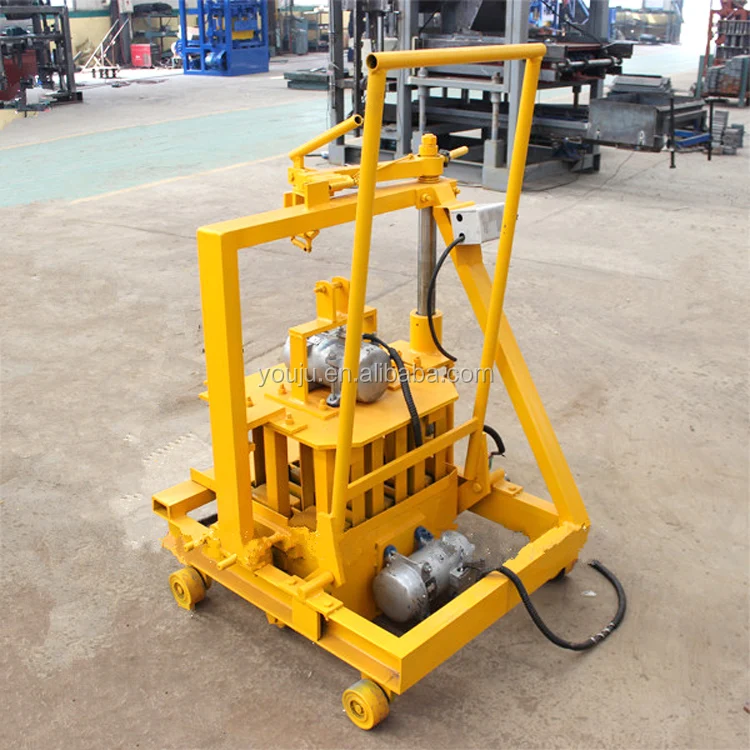 Mobile block machine
QMJ2-45 Mobile Block Making Machine for Hollow Brick – Full Range
QMJ2-45 Mobile Block Making Machine, Egg-Laying Type, Pallet-Free, 25–30s Molding Cycle — designed for on-site...
View Details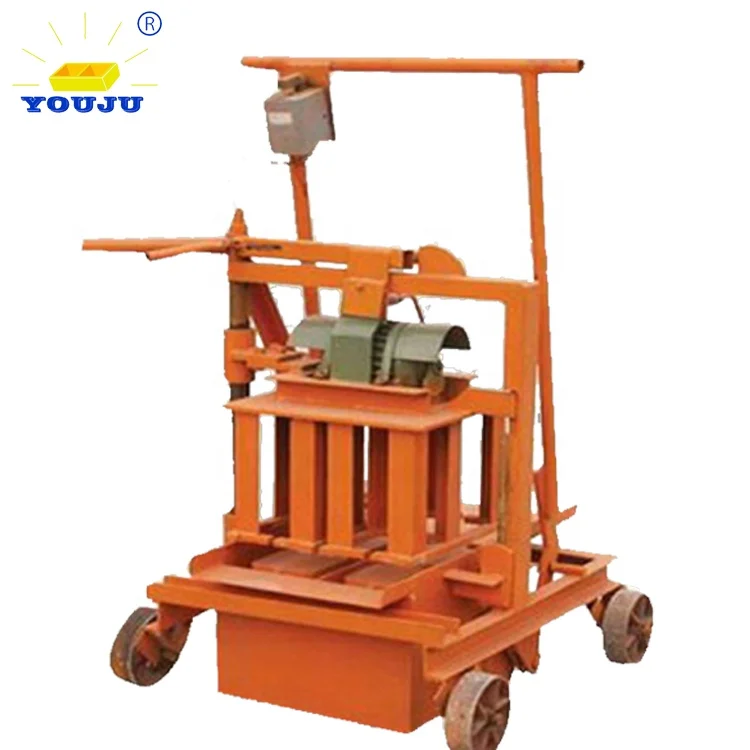 Mobile block machine
QMJ2-45 Mobile Block Machine for Hollow Brick – Small Workshop
QMJ2-45 Mobile Block Machine, Hand-Pushed Egg-Laying, No Pallet Required — produces hollow bricks directly on...
View Details
Mobile block machine
Mobile Block Making Machine with Electric Engine – Factory Supply
QMJ2-45 Mobile Block Making Machine, Electric Engine, Pallet-Free Egg-Laying Type — manual mobile press producing...
View Details
Established Manufacturer · Since 2005
Ready to Start Your Concrete Production Line?
Our 320+ engineers will design a customized solution for your local materials, voltage and site conditions. Get a free layout plan and ROI estimation within 24 hours.
108+ Countries Exported
46,000㎡ Factory
320+ Engineers
24h Response Guaranteed