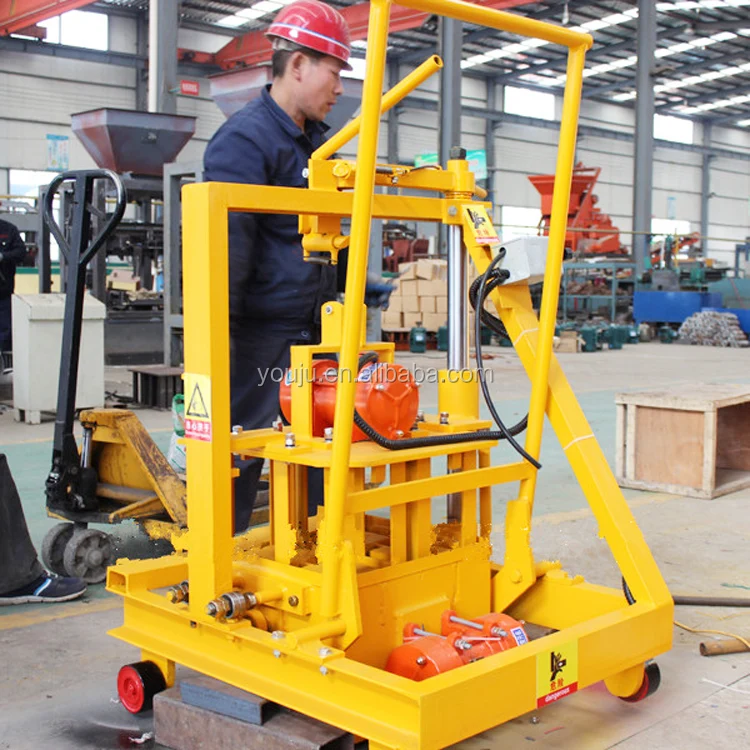
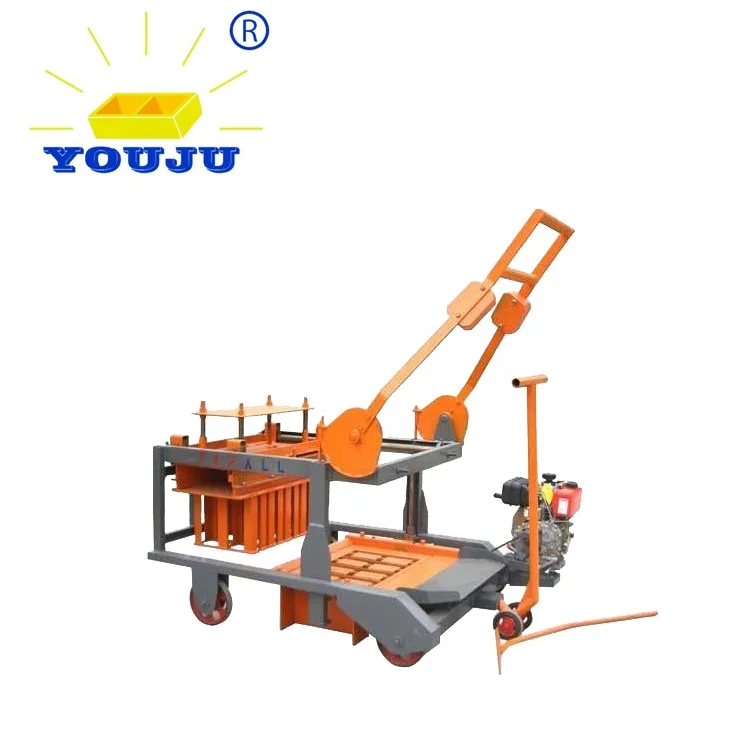
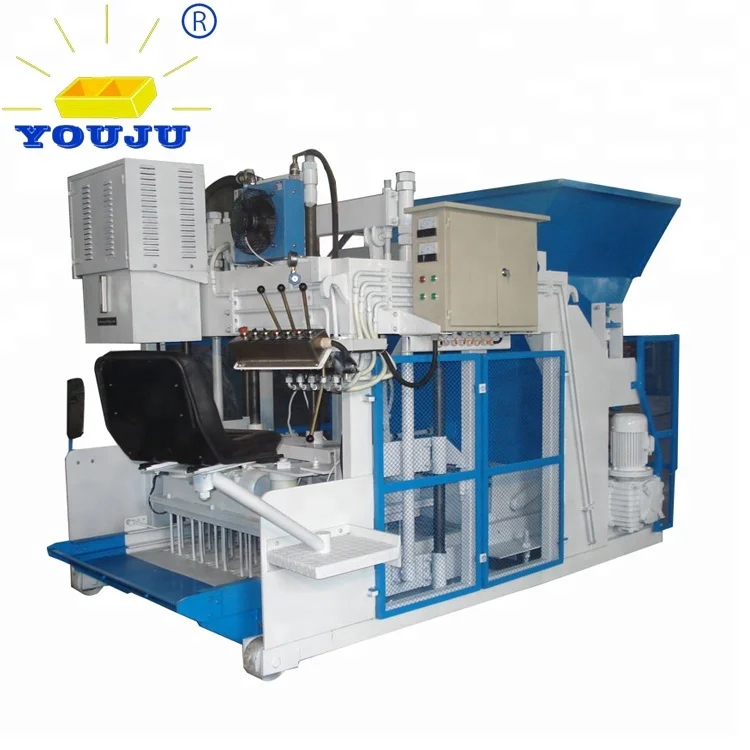
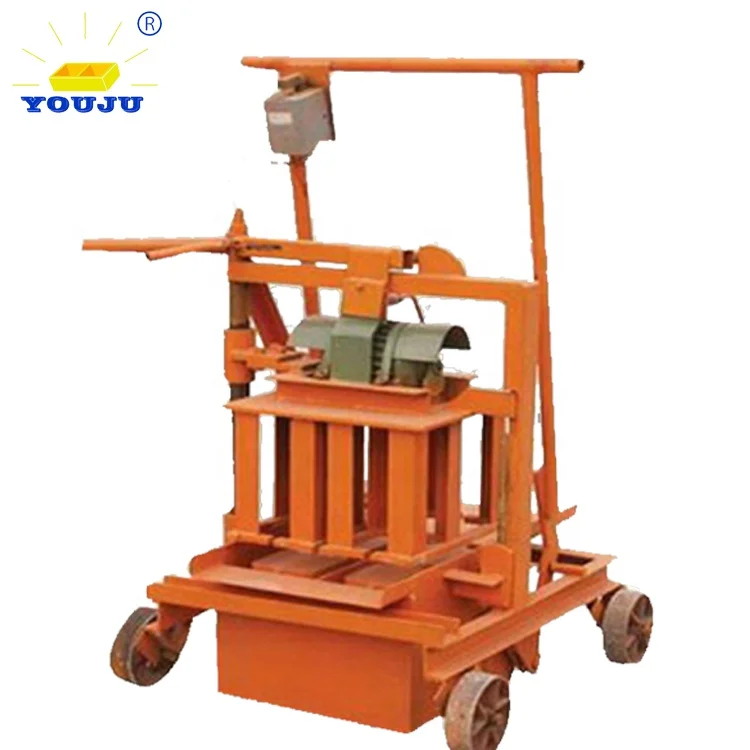
Matched System Configuration — The QMJ4-45 mobile egg laying block machine is specified as a complete unit with engine, mould, and manual handling balanced for on-site production, rather than assembled from mismatched components.
Technical Specifications
| Parameter |
Value |
| Model |
QMJ4-45 |
| Product Type |
Mobile Egg Laying Block Making Machine |
| Molding Capacity |
4 pcs/mould (400×200×200mm hollow block basis) |
| Vibration Frequency |
2400 r/m |
| Productivity |
2600-4000 pcs/day (basis to be confirmed by block format and material) |
| Forming Method |
Mold vibration |
| Demold Method |
Manual |
| Turning Method |
Manual |
| Total Power |
6 KW |
| Power Source |
Diesel/Petrol engine |
| Molding Cycle |
45 S |
| Automation Level |
Manual operation |
| Pallet Requirement |
Not specified (consumption pallets can be reduced) |
| Block Formats Supported |
Hollow block (400×200×200mm, 400×150×200mm, 400×120×200mm) |
| Cycle Time per Format |
40-45 s |
Application Suitability
| Application |
Material or Output |
| On-site cement block production |
Crushed stone, sand, cement, water |
| Remote construction sites |
Diesel or petrol engine operation without grid power |
| Housing project contractors |
Hollow block, multicellular brick, paving brick |
| First-time block plant setup |
Low capital outlay with manual operation |
Why "3000 Pieces Per Day" Often Misses the Mark on Site
The QMJ4-45 mobile egg laying block machine manufacturer output figure assumes a specific block format, mix design, and ground condition that rarely match the buyer’s actual site.
Many buyers receive a productivity quote of 2600-4000 pcs/day and plan their project timeline around it. On arrival, the local aggregate has higher clay content than the test mix, the ground is uneven, and the crew takes twice as long to turn and demould each block. Real output drops, the site falls behind schedule, and the machine gets blamed [NEED_CITE: on-site aggregate variability effects on block成型 density]. The honest approach is to calculate daily capacity against the buyer’s confirmed block format, local material sample, and crew skill level before the order is placed.

Where the Mobile Tier Fits in the Range
The QMJ4-45 sits at the entry point of the block machine range. It requires no fixed plant, no pallet circulation system, and no three-phase power connection. For a contractor producing blocks directly on a housing development or a entrepreneur testing market demand before committing to a stationary line, this mobile tier removes the infrastructure barrier. The trade-off is labor intensity and cycle speed, which are acceptable when daily volume requirements are modest and the site is temporary.
Engine-Driven Operation for Sites Without Grid Access
Diesel and petrol engine options eliminate the dependency on local electrical infrastructure. Early-stage construction sites, rural development projects, and remote locations often lack stable three-phase power. The 6 KW total power requirement is met entirely by the onboard engine, meaning the machine can begin producing blocks the day it arrives on site [NEED_CITE: diesel engine block machine deployment in off-grid construction]. This is the defining advantage of the mobile egg laying block machine manufacturer offering over stationary alternatives that demand transformer installation and cabling before commissioning.
Understanding the Vibration and Cycle Relationship
The 2400 r/m vibration frequency works with the mould to compact the concrete mix into the block cavity. A 40-45 second molding cycle is the time required for vibration, compaction, and manual demoulding. The twice-vibration molding core, upgraded from earlier single-vibration designs, delivers higher block density and more even strength distribution across the block face. When the vibration force is matched to the buyer’s specific mix design and aggregate gradation, block strength remains consistent from the first piece to the last. Mismatched vibration and mix is the most common cause of inconsistent block quality in mobile operations [NEED_CITE: vibration frequency and concrete mix design correlation].
The Cost of Skipping Ground Preparation
An egg laying machine deposits blocks directly onto the ground surface. If the ground is soft, uneven, or poorly compacted, blocks settle before the concrete sets, resulting in dimensional inaccuracy and breakage during handling. Contractors who skip ground leveling to save time end up with higher waste rates and weaker blocks that fail compression testing. The QMJ4-45 manual demould and turning process is forgiving, but it cannot compensate for a poor curing surface [NEED_CITE: ground preparation standards for mobile block production].
Why Buyers Choose This Manufacturer
The QMJ4-45 is specified as a matched system — engine, vibration motor, mould, and manual handling are balanced for the buyer’s confirmed output target and site conditions. Configuration is set against the buyer’s actual mix design and local aggregate, not a catalogue default. Mould design covers the hollow block formats the buyer’s market sells, with custom drawings available. The automation level is selectable, so a buyer can start with manual operation and plan an upgrade path as volume grows. Installation support includes operator training on mould change procedures and routine engine servicing.
Documentation & Verification
- Line layout and capacity calculation stating the hollow block format assumed for each productivity figure
- Machine specification sheet confirming vibration frequency, engine type, and molding cycle by format
- Mould drawing and format list for 400×200×200mm, 400×150×200mm, and 400×120×200mm hollow blocks
- Operation and maintenance manual covering mould change procedure and engine servicing intervals
- Factory test record on the buyer’s confirmed block format before dispatch
Installation, Commissioning & Support
- Ground must be level, compacted, and free of standing water before the 6 KW engine-driven unit begins production
- Fuel type (diesel or petrol) confirmed before dispatch to match local availability and site storage
- Machine arrives assembled; operator training covers manual demould, turning, and mould change sequence
- First production run supervised to verify cycle time and block density against buyer’s mix design
- Mould wear parts list provided with recommended replacement intervals based on production volume
Before You Request a Quote
Provide your target block format and dimensions, estimated daily output requirement, and the local aggregate type you plan to use. Confirm whether the site has any power access or if engine-only operation is mandatory. Describe the ground surface condition and the curing area available for block drying. This information allows the mobile egg laying block machine manufacturer to calculate a realistic capacity figure and recommend the correct mould configuration before pricing.
Frequently Asked Questions
Q: How is the daily output figure calculated for the QMJ4-45?
A: The 2600-4000 pcs/day range assumes a specific hollow block format, standard concrete mix, and level ground surface. Output varies significantly with block dimensions — a 400×120×200mm block yields more pieces per day than a 400×200×200mm block because more pieces fit per mould cycle. Accurate calculation requires confirming your target format and local material before quotation.
Q: Where does the QMJ4-45 fit compared to semi-automatic and fully automatic machines?
A: The QMJ4-45 is the entry-level mobile tier, requiring no fixed plant, pallet system, or grid power. Output and labor requirements are lower than semi-automatic stationary lines, but capital investment is also lower. It suits contractors producing on temporary sites or entrepreneurs testing market demand before upgrading to higher automation levels.
Q: What ground conditions are needed to operate an egg laying machine?
A: The ground must be level, compacted, and free of soft spots or standing water. Blocks are deposited directly on the surface and left to cure in place. Poor ground preparation causes blocks to settle unevenly, resulting in dimensional inaccuracy and breakage. A compacted gravel or concrete pad delivers the most consistent results.
Q: Can the automation level be upgraded later if volume grows?
A: Yes. The QMJ4-45 manual operation can be replaced by a semi-automatic stationary line with pallet circulation and mechanical stacking as production volume increases. The mobile unit remains useful for on-site or secondary production, while the stationary line handles primary output. Planning the upgrade path at the initial purchase stage avoids wasted investment.

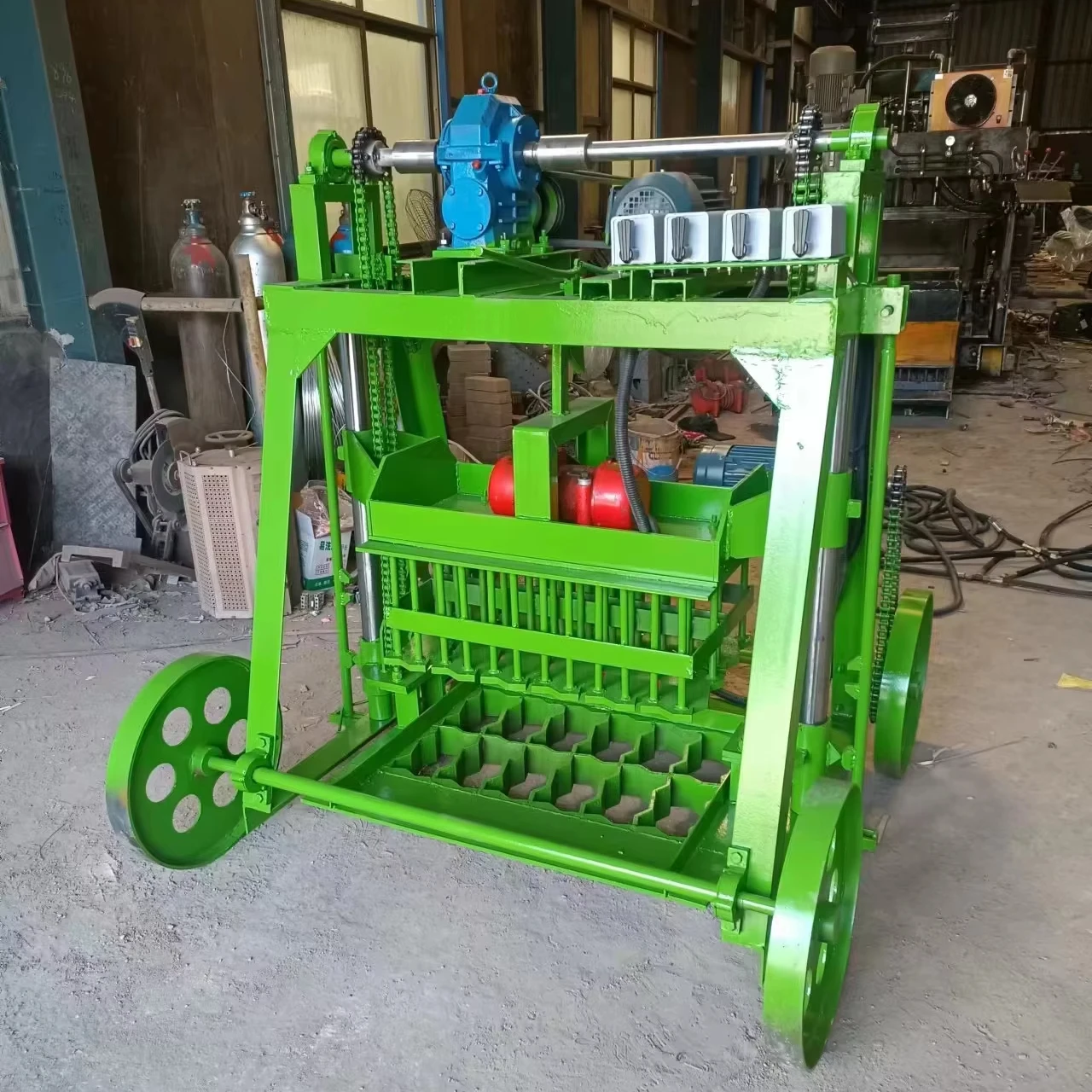
 Mobile block machine