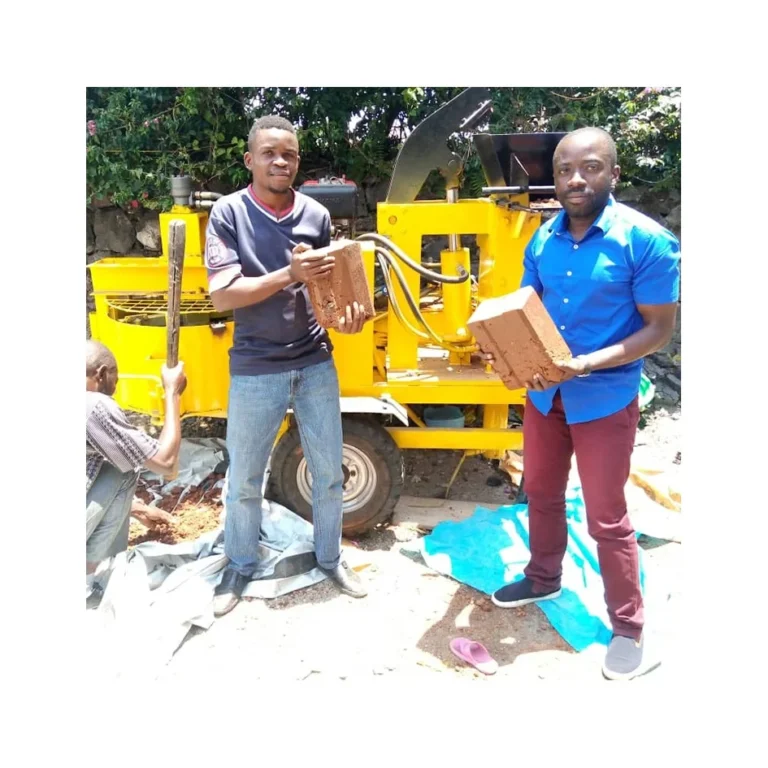
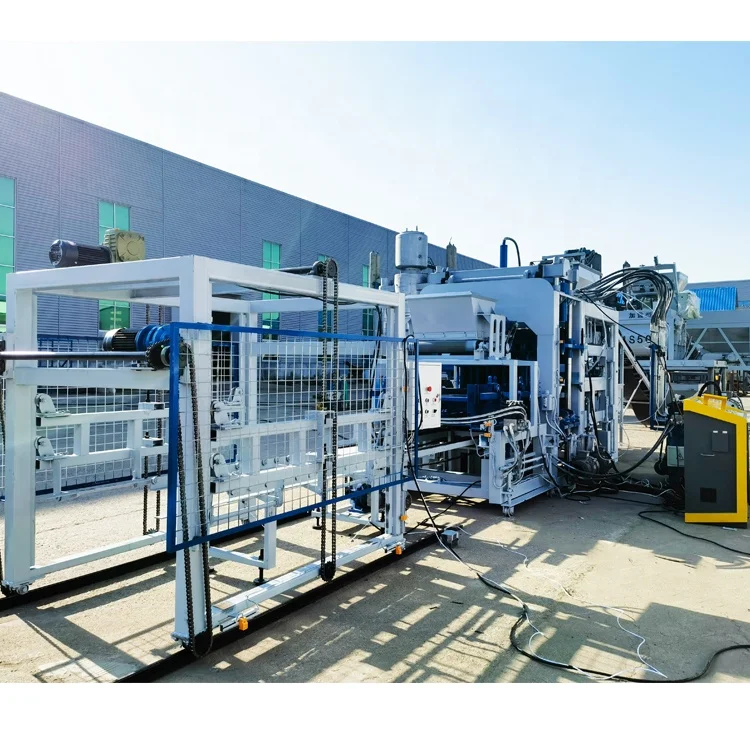
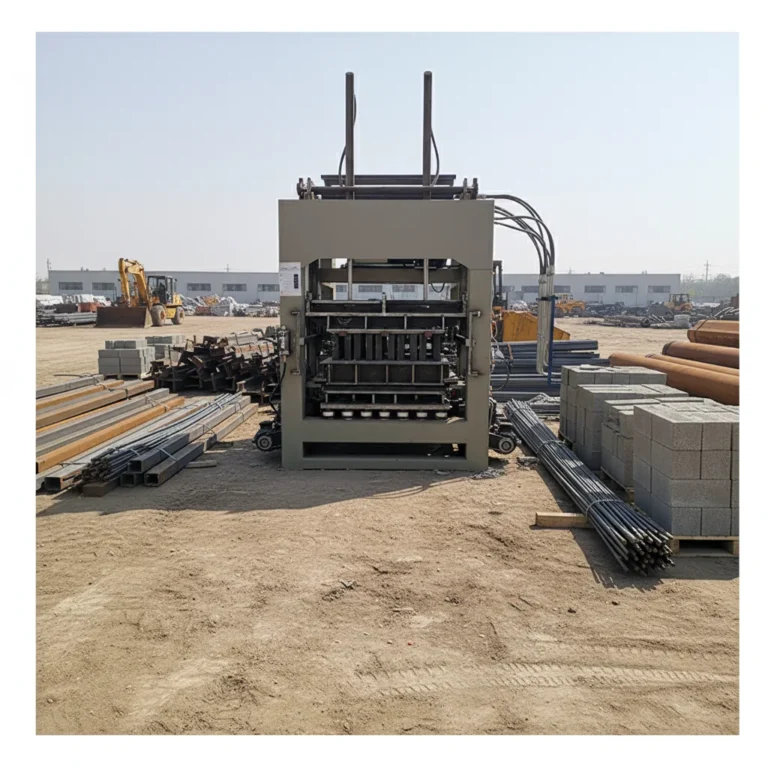
Matched System Design — the QMJ2-45 mobile block making machine is specified with its mould, vibration motor, and electrical cabinet as one coordinated unit rather than sourced from separate vendors.
Technical Specifications
| Parameter |
Value |
| Model |
QMJ2-45 |
| Product Type |
Mobile Egg-Laying Block Making Machine |
| Machine Power |
1.5 kW |
| Molding Cycle |
45 s |
| Output Capacity |
1280 pcs/8 hours (based on 300×150×100 mm, 2 pcs/mould) |
| Raw Material |
Concrete, sand, cement |
| Machine Weight |
150 kg |
| Overall Dimensions |
920 × 800 × 1258 mm |
| Vibrator Count |
2 pcs/mould |
| Voltage |
Configurable to buyer’s local supply |
| Control System |
Semi-automatic |
| Automation Level |
Semi-automatic |
| Standard Mould Format |
300 × 150 × 100 mm (2 pcs/mould) |
| Pallet Requirement |
Produces directly on ground (egg-laying type) |
Application Suitability
| Application |
Material or Output |
| On-site housing project block production |
Hollow and solid blocks from crushed stone, sand, and cement laid directly on the ground |
| First small-scale block workshop |
Standard concrete blocks with minimal fixed infrastructure investment |
| Job-site concrete product making |
Kerbstone and paving formats produced directly at the construction location |
| Market format testing by distributors |
Trial production of a new block shape before committing to a fixed plant |
Why Voltage Confirmation Comes Before the Quotation
Matching the motor and control cabinet to the buyer’s actual grid supply prevents weeks of idle time on site.
Many equipment failures on overseas job sites trace back to a single overlooked detail: the local voltage and frequency were never verified before the machine left the factory. I once had a mobile block machine arrive at a West African site where the grid ran at a different frequency than the motor was wound for — the machine could not start, and the crew waited while a replacement transformer shipped internationally. That kind of delay costs far more than a five-minute conversation about electrical specifications. With the QMJ2-45, the motor winding and control panel must be confirmed against your site’s actual supply before production begins [NEED_CITE: voltage and frequency standards by export market].

Where the QMJ2-45 Fits Across the Full Machine Range
The QMJ2-45 occupies the entry tier of SHIYUE’s mobile and egg-laying block making machine range. It is designed for buyers who need portability and minimal infrastructure rather than high-volume continuous output. Semi-automatic stationary machines with pallet systems sit one tier above, requiring a dedicated production area and curing space. Fully automatic lines with batching, stacking, and cubing occupy the top tier, suited for plants running multiple shifts with consistent format demand. Understanding this positioning helps a buyer choose the right starting point without over-investing in capacity they cannot yet fill.
Comparing Footprint and Site Requirements Across Tiers
At 920 × 800 × 1258 mm and 150 kg, the QMJ2-45 moves between production spots on a job site with basic manual effort — no forklift or fixed foundation required. Semi-automatic plants need a level concrete floor, pallet storage racks, and a covered curing area sized for daily output. Fully automatic lines add raw material silos, a mixer station, and an automatic cubing zone that together demand a building with adequate headroom and power supply [NEED_CITE: industrial power supply requirements for block plants]. The QMJ2-45 eliminates most of these requirements by laying blocks directly on the ground, which is precisely why it fits contractors working on active construction sites rather than fixed production facilities.
Reading the Specifications That Actually Matter
The 1.5 kW machine power keeps electrical demand low enough for sites with limited utility connections or temporary generator supply — a practical consideration when the nearest three-phase feed is uncertain. The 45-second molding cycle paired with a two-cavity mould yields output that must be understood against the specific 300×150×100 mm block format; quoting cycles per hour without naming the block size gives a misleading picture of real daily production. The dual-vibrator configuration on each mould ensures vibration force is distributed across both cavities rather than concentrated at one end, which matters for block density consistency when using locally sourced aggregates of varying gradation. The egg-laying design means no pallets are consumed — blocks cure in place on the ground — which removes an entire handling cost from the operation but also means the ground surface must be level and clean.
The Cost of Skipping the Range Comparison
Buyers who select a machine tier without mapping it to their actual daily demand and site conditions often face consequences that show up months after installation. A mobile egg-laying machine chosen for a project that actually needs continuous high-volume output will bottleneck the entire supply chain, forcing overtime labour to meet block quotas. Conversely, a full automatic line purchased for a short-term site contract leaves expensive automation sitting idle between projects, depreciating without earning. The mismatch between pallet-handling expectations and what the quotation actually includes is another common source of frustration — buyers discover after delivery that stacking and curing were never part of the package [NEED_CITE: common procurement gaps in block making equipment].
Why SHIYUE Approaches This Machine Differently
Block machinery is our single focus, so the QMJ2-45 arrives as a matched system — machine, mould, vibration motors, and control cabinet specified together rather than assembled from unrelated suppliers. Each machine is configured against the buyer’s actual mix design and local aggregate, not shipped with a catalogue-default setting that may not suit available raw materials. Mould design covers the specific formats the buyer’s local market demands, with custom drawings available when standard sizes do not match. Automation level is selectable within the range, so a buyer who starts with the QMJ2-45 has a clear path to semi-automatic or fully automatic tiers as production volume grows. Installation support includes on-site commissioning and operator training so the crew understands cycle timing and mould change procedure from the first day.
Documentation & Verification
- Line layout drawing showing QMJ2-45 placement within your site workflow
- Capacity calculation stating output per specific block format, not just cycles per hour
- Voltage and frequency confirmation sheet matched to your local grid before production
- Mould drawing and format list covering every block shape the machine accepts
- Factory test record demonstrating run performance before dispatch
- Operation and maintenance manual with wear parts identification list
Installation, Commissioning & Support
- Requires level, firm ground surface — no fixed foundation or concrete slab needed for the 920 × 800 mm footprint
- Single-phase or three-phase power feed confirmed to your local voltage before the 1.5 kW motor is wound
- Machine arrives assembled; mould bolts checked and vibration motors tested at the factory before packing
- On-site commissioning includes first-run cycle timing verification against your actual raw material mix
- Operator training covers mould change procedure, vibration duration adjustment, and daily maintenance checkpoints
- Wear parts list provided so replacement vibration motors and mould liners are sourced without delay
What to Share When Requesting a Proposal
To receive a configuration that matches your actual conditions, provide the block formats your market sells, the daily volume you need to sustain, and the raw materials available locally including aggregate type and gradation. Share your site’s voltage and frequency so the motor and control panel are built to match. If you already operate other block-making or handling equipment, note the pallet sizes and curing arrangements so the QMJ2-45 integrates without creating a bottleneck downstream.
Frequently Asked Questions
Q: What block formats does the QMJ2-45 produce, and what is the realistic daily output per format?
A: The standard mould produces 300×150×100 mm blocks at two pieces per cycle. With a 45-second molding cycle, output is calculated based on that specific format and assumes continuous operation over an eight-hour shift. Different block sizes or wall thicknesses change both the pieces-per-mould count and the realistic daily total, so format-specific capacity should be confirmed before ordering.
Q: How does the QMJ2-45 compare to semi-automatic and automatic tiers in investment and footprint?
A: The QMJ2-45 requires no fixed plant, no pallets, and minimal electrical supply — making it the lowest-investment entry point in the range. Semi-automatic machines add pallet systems and a fixed production area. Fully automatic lines include batching, stacking, and cubing with a correspondingly larger footprint and higher power demand. The right tier depends on your volume requirement and site permanence.
Q: What voltage and frequency options are available for my market?
A: The motor and control cabinet are configured to match your local grid supply. This must be confirmed before production begins — providing your site’s actual voltage, phase, and frequency ensures the machine starts and runs correctly on arrival rather than waiting for a replacement transformer.
Q: Can I upgrade from this mobile machine to a semi-automatic or automatic line later?
A: Yes. The QMJ2-45 sits at the entry tier of a range that extends through semi-automatic and fully automatic configurations. Buyers who start with mobile production and later need higher volume or pallet-based curing can transition to the next tier while retaining familiarity with SHIYUE machine operation and mould standards.
Q: What mould sizes and custom formats are available for the QMJ2-45?
A: Standard and custom mould designs are available based on the block formats your local market requires. Each mould is engineered to fit the QMJ2-45 vibration and compression parameters, and custom drawings can be produced from buyer specifications to match non-standard block dimensions or interlocking profiles.

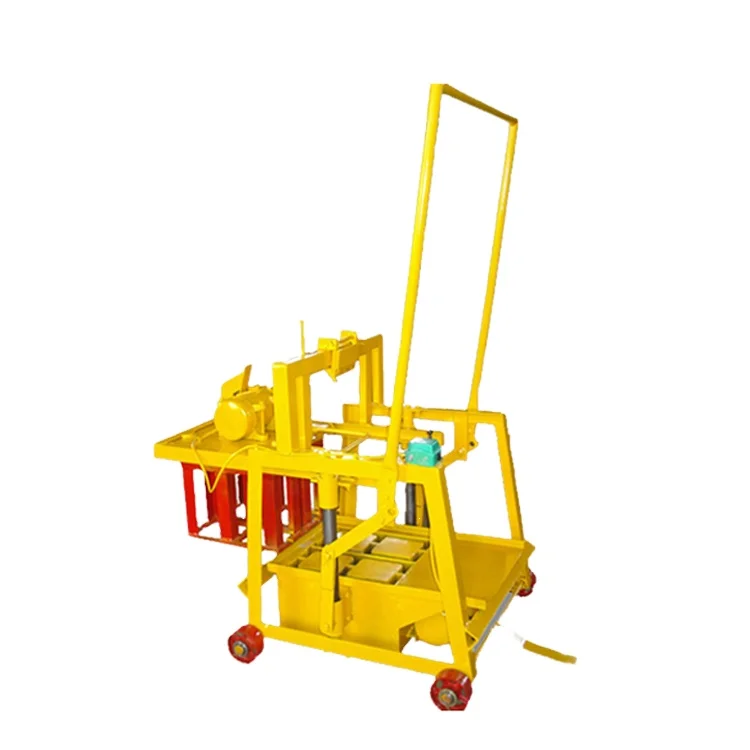
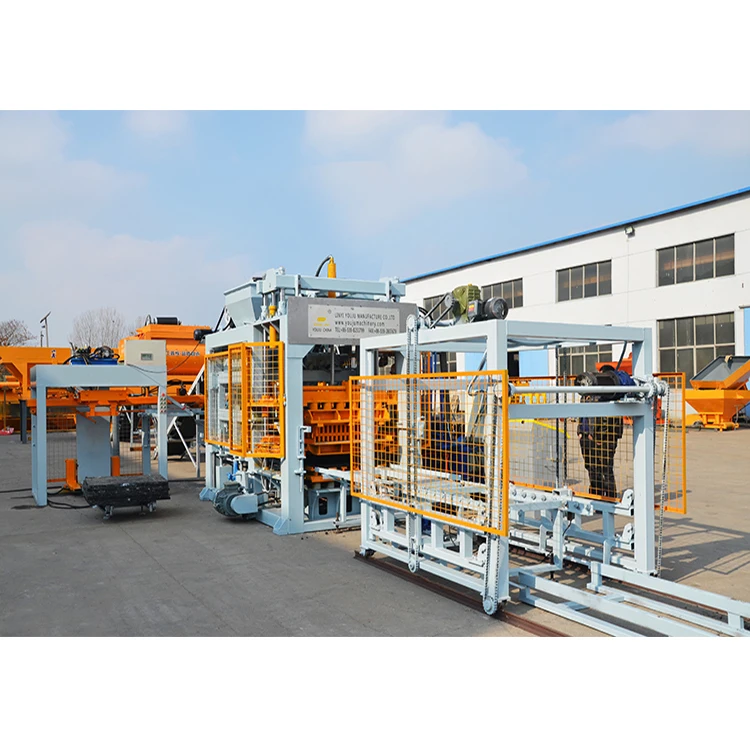 High quality block machine