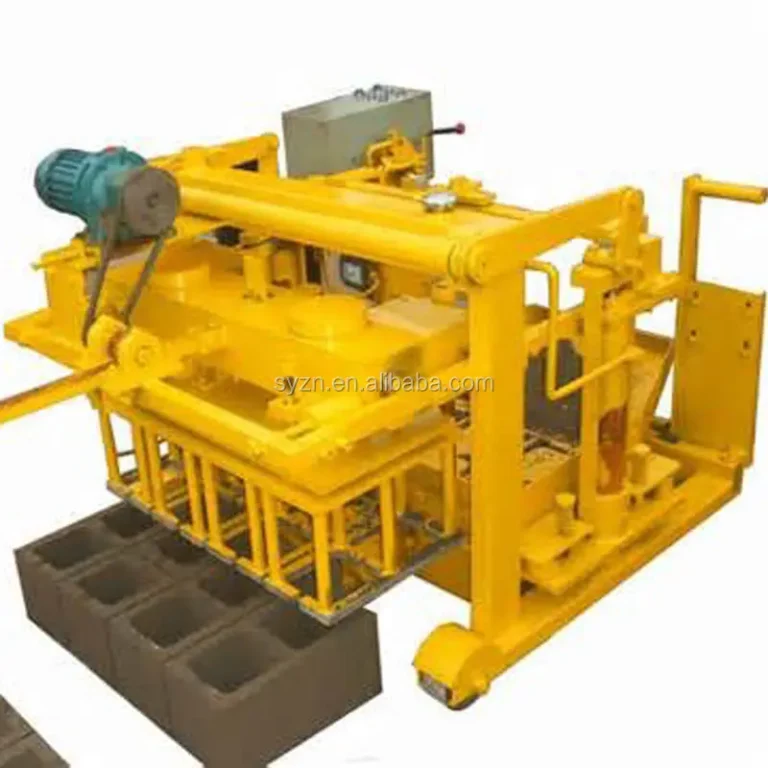
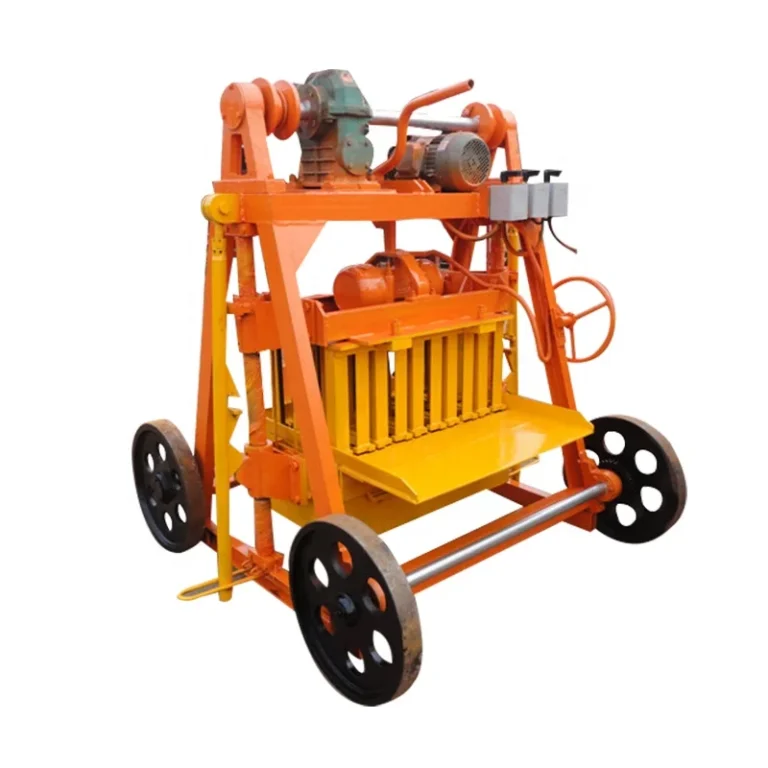
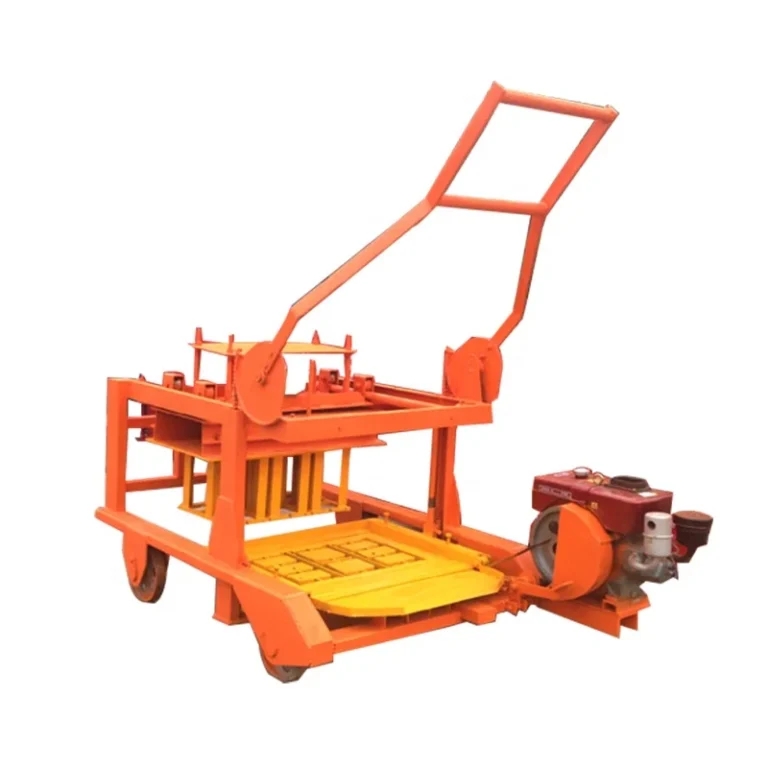
Matched System Design — Every QMJ2-45 configuration is specified around the buyer’s actual block format, local aggregate, and curing conditions rather than assembled from a catalogue default.
Technical Specifications
| Parameter |
Value |
| Model |
QMJ2-45 |
| Product Type |
Mobile Block Making Machine |
| Machine Type |
Manual mobile egg-laying block machine |
| Mould Format |
Hollow brick (multiple sizes via mould change) |
| Cycle Time |
25–30 seconds per mould |
| Output Capacity (400×200×200mm hollow brick) |
2 pcs/mould, 160 pcs/hour, 1280 pcs/8hr shift |
| Output Capacity (400×150×200mm hollow brick) |
3 pcs/mould, 240 pcs/hour (basis to be confirmed) |
| Output Capacity (400×100×200mm hollow brick) |
4 pcs/mould, 320 pcs/hour, 2560 pcs/8hr shift |
| Pallet Requirement |
None — pallet-less egg-laying design |
| Power Source |
Electric engine |
| Automation Level |
Manual operation |
| Labor Requirement |
1–3 workers |
| Mobility |
Free-moving, no fixed plant required |
| Voltage & Frequency |
Configurable to buyer’s market (confirm before order) |
| Standards |
ISO 9001:2000, CE |
Application Suitability
| Application |
Material or Output |
| On-site construction block production |
Hollow bricks laid directly on compacted ground |
| Small-scale hollow brick manufacturing |
Crushed stone, sand, cement mixes in constrained spaces |
| First block plant for entrepreneurs |
Low-investment hollow brick output without pallet inventory |
| Housing project local supply |
Hollow bricks produced adjacent to the building site |
What "160 Pieces per Hour" Leaves Out About Mobile Block Making Machines
Output figures are meaningless unless the block format behind them is stated clearly.
Too many buyers order a mobile block making machine for sale based on a single headline capacity number, only to discover on-site that the figure assumed a block size their market does not buy. When the mould is swapped to the format the buyer actually sells, cycle counts and pieces-per-mould change entirely. [NEED_CITE: capacity claims without block format assumptions in machinery listings] I have watched contractors receive equipment rated at impressive hourly numbers, then spend the first week recalculating real output once their local hollow brick dimension was loaded. The QMJ2-45 output table above lists each format separately so the daily planning conversation starts from reality, not from a brochure peak.

Where the QMJ2-45 Sits in the Mobile Range
The QMJ2-45 occupies the entry tier of the mobile block making machine for sale range, designed for buyers who need on-site hollow brick production without investing in a fixed plant or a pallet fleet. Its egg-laying principle means blocks are placed directly onto the ground surface as the machine moves forward, eliminating pallet purchase, storage, and return logistics entirely.
For a first-time block producer or a contractor running a single housing project, this removes the largest hidden cost line in a typical block plant quotation. The operator lays blocks in rows across a prepared floor area, and the machine advances to the next position once the cycle completes.
How Pallet-Less Production Changes Site Planning
Without pallets, the curing area becomes the floor itself. This means site preparation shifts from building pallet racks to ensuring a level, compacted ground surface that can accept freshly formed hollow bricks without settlement or edge damage. [NEED_CITE: ground preparation standards for egg-laying block machines]
The trade-off is flexibility: the machine can work in any direction across an open yard, adapting to available space rather than requiring a fixed production hall. For contractors moving between project sites, this mobility is the defining advantage of the egg-laying format over stationary alternatives. The QMJ2-45 is moved manually or with a small tractor, making relocation straightforward when the project footprint shifts.
Reading the Specifications That Actually Matter
Cycle time of 25–30 seconds per mould governs how many pressing cycles the operator can complete in a shift, but the pieces-per-mould count is what converts that into saleable output. A 400×200×200mm hollow brick yields 2 pieces per cycle, while a 400×100×200mm yields 4 — doubling the hourly count simply by changing the mould. Vibration force, though not published in the source data, determines whether the local sand and crushed stone mix compacts densely enough to meet the block strength the buyer’s market demands. Electric power rather than hydraulic pressure defines this machine class, keeping maintenance to motor and vibration mechanism servicing. Voltage and frequency must be confirmed before the unit enters production, because an electric motor wound for 380V/50Hz will not start on a 220V/60Hz site supply.
The Cost of Skipping Voltage Confirmation
A motor specified without checking the destination country’s grid standard sits idle on arrival while a replacement or transformer is sourced. [NEED_CITE: voltage and frequency standards by export market] I have seen machines wait three weeks for an electrical rework that a two-minute conversation before production would have prevented. The delay compounds: the installation crew is already booked, the curing compound has a shelf life, and the project contractor is paying for idle labor. Confirming voltage, frequency, and plug type at the quotation stage costs nothing and protects the entire commissioning timeline.
Why Buyers Source This Range Here
Block machinery is the sole product focus, so the QMJ2-45 is not bundled from unrelated suppliers — the machine, moulds, and supporting tools are specified as one matched set. Configuration is built around the buyer’s target block format and local aggregate rather than a default catalogue build, meaning the mould drawing reflects what the buyer’s market actually purchases. Mould design and supply covers the hollow brick sizes the buyer needs, with custom drawings available when local standards differ from common formats. The automation level is selectable within the broader range, so a buyer starting with the manual QMJ2-45 has a documented upgrade path to semi-automatic or fully automatic mobile production as volume grows. Installation support and operator training are included so that the first production run is supervised, not left to trial and error.
Documentation & Verification
- Machine specification sheet stating output per hollow brick format with cycle assumptions
- Mould drawing and format list confirming included hollow brick dimensions
- Voltage and frequency confirmation record signed before production begins
- Factory test record on buyer’s specified block format prior to dispatch
- Operation and maintenance manual covering motor, vibration mechanism, and mould change procedure
- Packing photographs and customs documentation support for export clearance
Installation, Commissioning & Support
- Level compacted ground surface required across the full curing area before first operation
- Dedicated electrical circuit matched to confirmed voltage and frequency at the site
- Machine arrives assembled; only mould mounting and electrical connection needed on-site
- First-run block strength check conducted with buyer’s local sand and cement mix
- Operator training covers cycle rhythm, mould change, and ground surface maintenance
- Wear parts list supplied with mould and vibration mechanism spares for initial stock
Starting the Specification Conversation
To size the QMJ2-45 correctly, share the hollow brick dimensions your market sells most, the daily output you need to meet, and the raw materials available locally — sand type, aggregate size, and cement grade all affect block strength and cycle consistency. Your site’s voltage, frequency, and available curing floor area determine whether this machine can start producing on arrival. If you are comparing options across the mobile block making machine for sale range, knowing these details upfront means the proposal you receive matches your actual production conditions.
Frequently Asked Questions
Q: How is the QMJ2-45 output capacity verified, and which block format does each figure assume?
A: Each output figure in the specification table is tied to a specific hollow brick dimension and the corresponding pieces-per-mould count. The 160 pieces per hour rating assumes 400×200×200mm blocks at 2 pieces per mould with a 25–30 second cycle. When the format changes, the pieces per mould change, so always check the line that matches your target block size.
Q: What voltage and frequency options are available for the QMJ2-45?
A: The electric motor is configured to match the buyer’s local grid standard before production. Voltage, frequency, and plug type must be confirmed at the quotation stage so the machine arrives ready to connect. Running a motor on the wrong supply causes immediate failure and voids warranty, so this confirmation is non-negotiable before the build starts.
Q: Where does the QMJ2-45 sit compared to semi-automatic and automatic machines in the range?
A: The QMJ2-45 is the entry-level manual mobile block making machine for sale, requiring 1–3 workers and no pallet investment. Semi-automatic models add powered pallet feeding and stacking, while fully automatic lines include cubing and curing rack handling. Buyers often start here and move up as project volume justifies the higher automation tier.
Q: What site conditions does an egg-laying machine like the QMJ2-45 require?
A: The curing area must be a level, compacted ground surface that can support freshly formed blocks without edge collapse. Access to a dedicated electrical circuit at the confirmed voltage is essential. The machine needs open space to advance in rows, so the yard must be clear of obstacles across the full production sweep area.
Q: What hollow brick mould formats can I add later, and how is a change performed?
A: The QMJ2-45 supports multiple hollow brick sizes through mould swaps, with common formats including 400×200×200mm, 400×150×200mm, and 400×100×200mm. Additional moulds can be ordered to drawings that match your local standard. A mould change is a manual process involving unbolting the current mould and securing the replacement, planned between production runs rather than mid-shift.

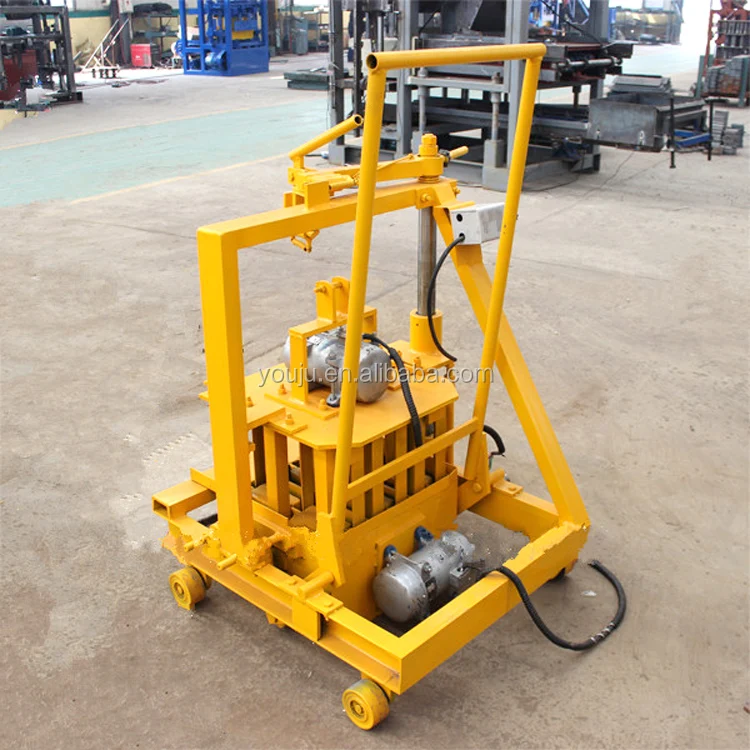
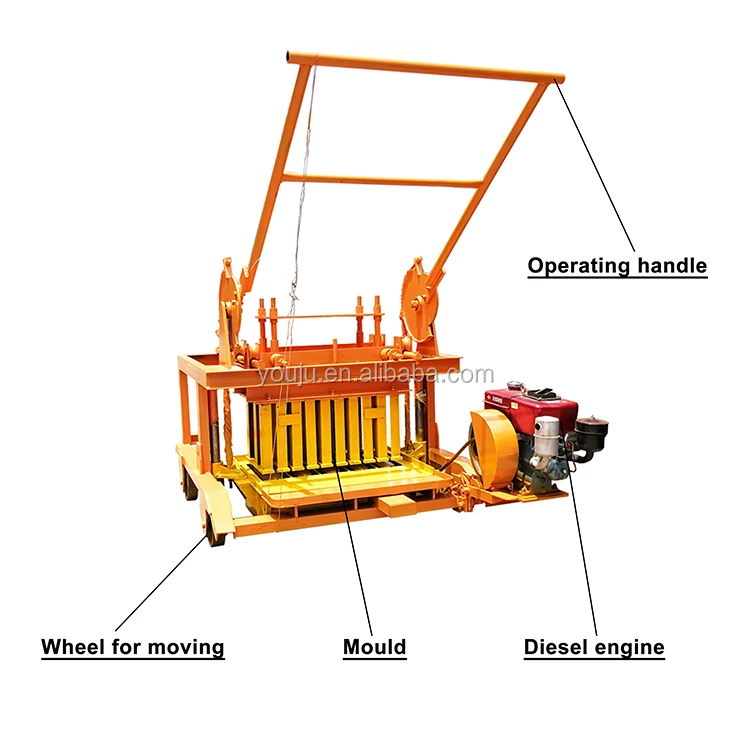 Mobile block machine