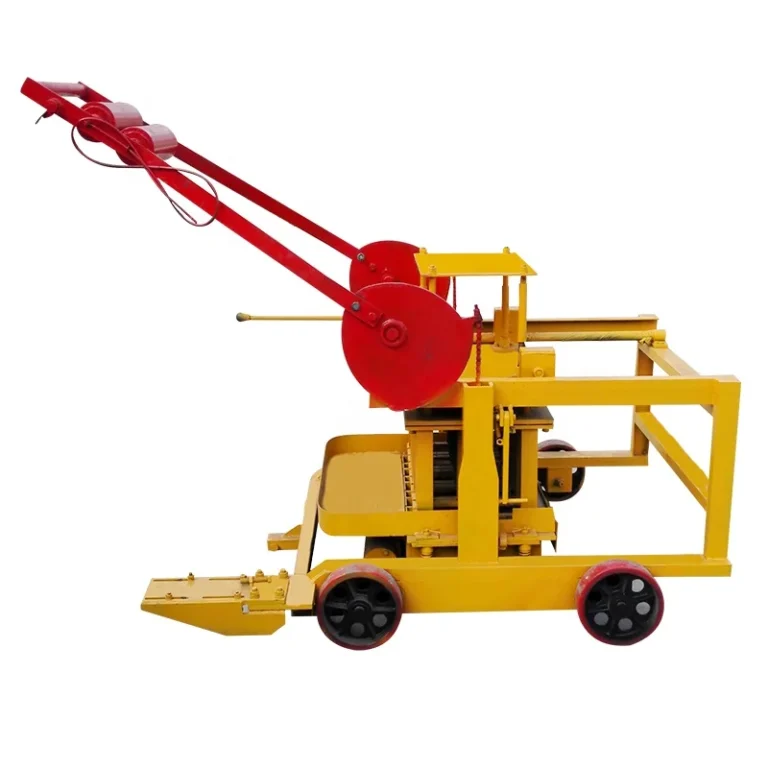
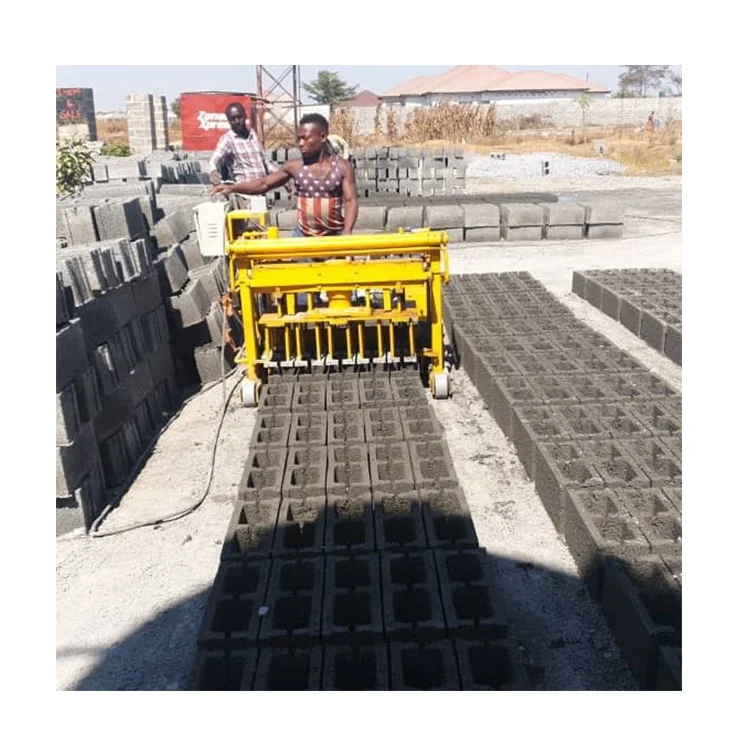
Matched System — The QMJ4-45 mobile block machine is specified alongside compatible moulds and power units as a single verified package, so buyers evaluating the full range can see exactly where this tier fits before scaling up.
Technical Specifications
| Parameter |
Value |
| Model |
QMJ4-45 |
| Product Type |
Mobile Egg-Laying Block Making Machine |
| Molding Capacity |
4 pcs/mould (based on 400×200×200mm hollow block) |
| Vibration Frequency |
2400 r/min |
| Daily Productivity |
3000 pcs/day for 400×200×200mm, 3500 pcs/day for 400×150×200mm, 4500 pcs/day for 400×120×200mm hollow blocks (8-hour shift) |
| Forming Method |
Mold vibration (twice-vibration core) |
| Demold Method |
Manual |
| Turning Method |
Manual |
| Molding Cycle |
40-45 s |
| Total Power |
6 kW |
| Power Source |
Diesel / Petrol engine |
| Pallet Requirement |
Not required (egg-laying type) |
| Automation Level |
Manual |
| Warranty |
One year for the whole machine |
| Standards |
CE |
Application Suitability
| Application |
Material or Output |
| On-site construction block production |
Hollow blocks from local aggregate and cement, laid directly on leveled ground |
| Small-scale block manufacturing |
400×200×200mm, 400×150×200mm, and 400×120×200mm hollow blocks |
| Remote housing project supply |
Engine-powered operation at sites without grid electricity |
What "Daily Output" Actually Means for Your Site
Every capacity figure here is tied to a specific block dimension and an eight-hour shift.
A mobile block machine manufacturer quoting a single number for daily output leaves out the variable that matters most: the block format you plan to sell. I have watched contractors order a machine based on a headline figure, only to find the output drops when they switch from 120mm to 200mm wall thickness. The vibration cycle lengthens, the demold takes longer, and the actual count at the end of the shift falls short of the plan. [NEED_CITE: block format impact on cycle time in egg-laying machines]

Where the QMJ4-45 Sits in the Full Range
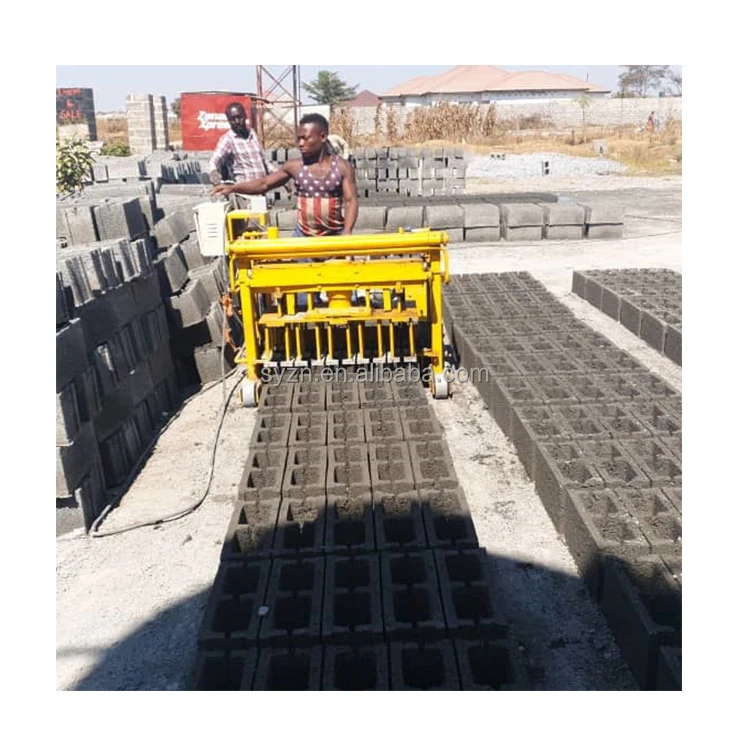
The QMJ4-45 occupies the entry-mobile tier of the complete block machine lineup. For a buyer surveying options for a first plant or a site-specific project, this model removes the two largest upfront costs of a fixed installation: the pallet inventory and the curing rack system. Blocks are laid directly onto a prepared ground surface, which means the QMJ4-45 mobile egg-laying block machine for sale requires only a flat, compacted area and a water supply for curing.
Output Tiers Across Block Formats
Daily output shifts with every change in block wall thickness. Over an eight-hour shift, the QMJ4-45 produces 3000 pieces at 400×200×200mm, 3500 pieces at 400×150×200mm, and 4500 pieces at 400×120×200mm hollow block. These figures assume the mould is matched to the format and the vibration cycle is set to the corresponding 40-45 second range. Buyers planning a mixed-format production schedule should calculate daily totals per format rather than averaging [NEED_CITE: egg-laying block machine output calculation standards].
Vibration, Engine Power, and Ground Conditions
The 2400 r/min twice-vibration core delivers compaction in two stages, which improves density consistency across the block cross-section compared to a single-vibration design. The 6 kW total power draw is supplied by either a diesel or petrol engine, removing dependence on grid electricity at remote sites. Ground flatness directly affects block quality in egg-laying operation; a deviation across the laying surface transfers into uneven block bases, making the prepared curing area as critical as the machine itself.
The Hidden Cost of Skipping the Format Check
When a buyer selects a machine without confirming which block size the quoted capacity assumes, the entire production plan shifts after delivery. The mould arrives, the cycle runs, and the daily count comes in below the project schedule. Contractors then face overtime shifts or additional equipment orders to cover the shortfall, costs that were never part of the original budget. [NEED_CITE: production planning risks from mismatched block format assumptions]
Why Source This Tier from a Single-Focus Supplier
Block machinery as a sole product focus means the QMJ4-45, its moulds, and the engine specification are matched before dispatch rather than assembled from separate vendors. The configuration is set against the buyer’s target block format and local aggregate, not a default catalogue entry. Mould design covers the specific hollow block dimensions the buyer’s market requires, with custom drawings available. Automation level remains selectable, so a buyer can start with this manual mobile tier and step up to semi-automatic when volume justifies it. Installation support and operator training are included from first commissioning.
Documentation & Verification
- Line layout and capacity calculation stating the hollow block format assumed for your order
- Mould drawing and format list confirming wall thickness and external dimensions
- Voltage, fuel type, and engine starting system confirmation before production
- Factory test record on your specified block size before dispatch
- Operation and maintenance manual in your operator’s language
- CE declaration and packing photographs for customs clearance
Installation, Commissioning & Support
- Ground must be compacted and leveled to within tight tolerance across the full egg-laying curing area
- Diesel or petrol engine verified for local fuel grade and ambient starting conditions
- Machine arrives assembled; operator training covers mould change and vibration cycle adjustment
- First production run supervised to confirm block density on your local aggregate mix
- Mould and hydraulic wear parts list supplied with recommended replacement intervals
What to Prepare Before Requesting a Quote
A mobile block machine manufacturer needs three pieces of information to size the configuration accurately: the exact hollow block dimensions your market sells, the local aggregate type and its moisture characteristics, and the fuel availability at your site. Share your daily volume target per format, and the capacity calculation will reflect your actual production plan rather than a generic assumption.
Frequently Asked Questions
Q: How is daily output calculated, and which block format does each figure assume?
A: Each output figure is calculated for an eight-hour shift using the specific mould installed. The QMJ4-45 produces 3000 pieces for 400×200×200mm, 3500 for 400×150×200mm, and 4500 for 400×120×200mm hollow blocks. These numbers are not interchangeable; switching format changes the cycle and the daily count.
Q: What site conditions does egg-laying operation require?
A: The laying surface must be flat, compacted, and free of debris. A curing area large enough for one full shift of output is needed, along with a water supply for moist curing. Uneven ground causes block base defects and slows the laying cycle.
Q: Diesel or petrol engine — which should I choose?
A: The choice depends on local fuel cost and availability. Diesel engines generally offer longer service intervals under continuous load, while petrol units may be easier to maintain in markets with limited diesel mechanic support. Confirm fuel grade and ambient temperature before ordering.
Q: When should I move up from the QMJ4-45 to a semi-automatic model?
A: The step up becomes relevant when daily volume grows beyond what a single manual shift can sustain, or when pallet-based curing is needed to free floor space. Semi-automatic models add pallet feeding and stacking, reducing manual handling while increasing output consistency.
Q: Can custom moulds be supplied for non-standard block sizes?
A: Yes. Mould design and supply cover the block formats your market actually sells, including dimensions outside the standard 400×200×200mm, 400×150×200mm, and 400×120×200mm range. Provide drawings or target dimensions for a compatibility check.

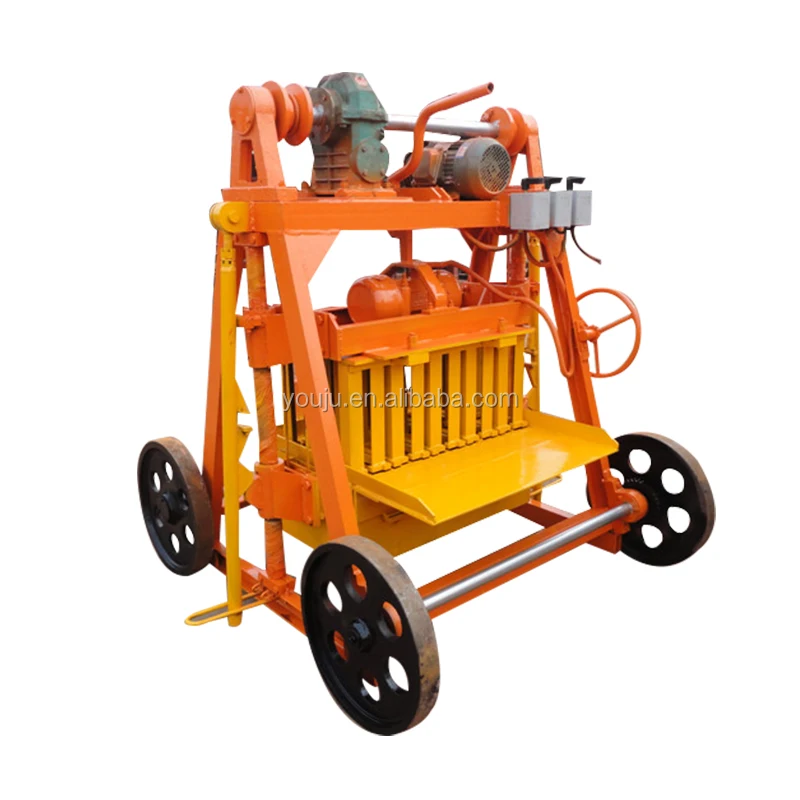
 Mobile block machine