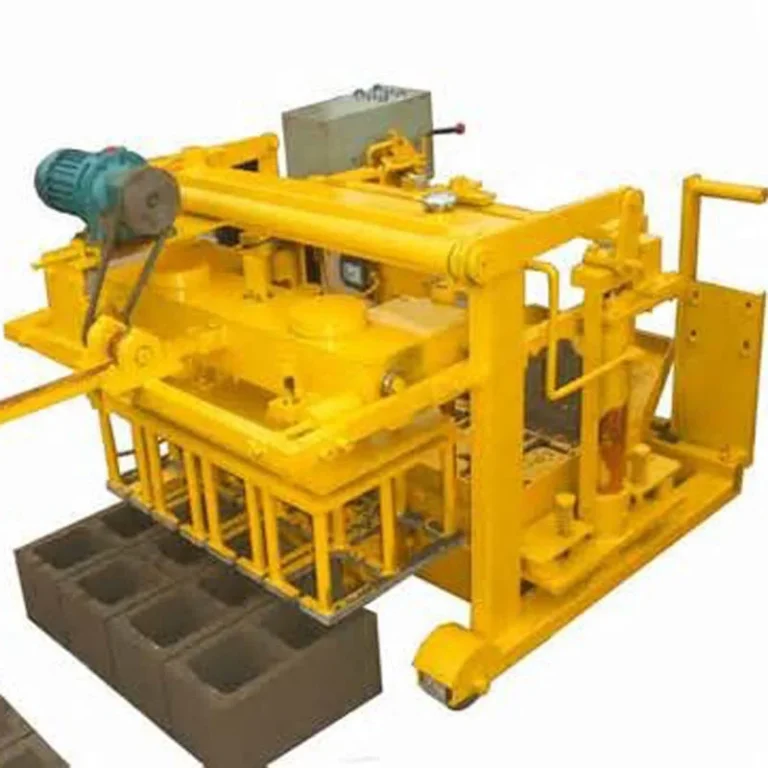
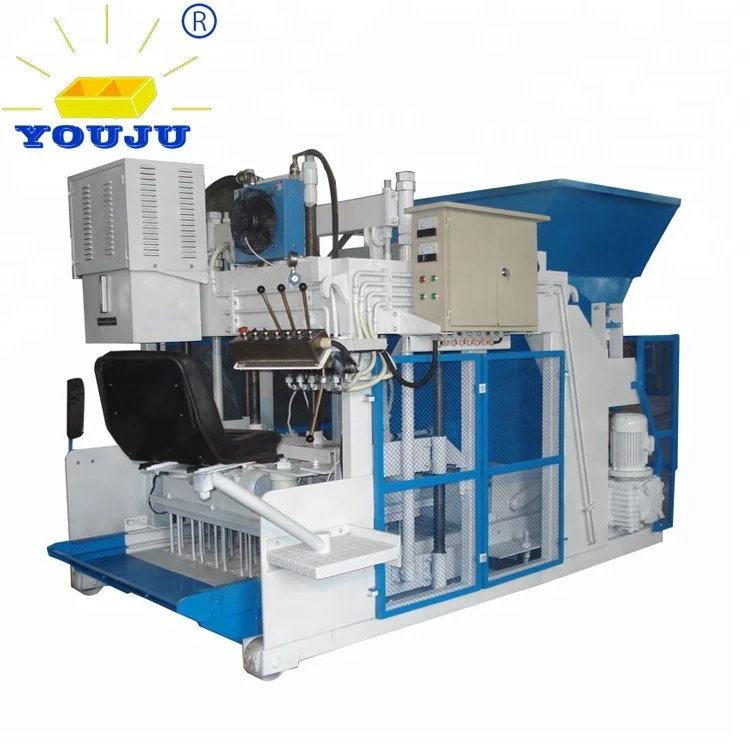
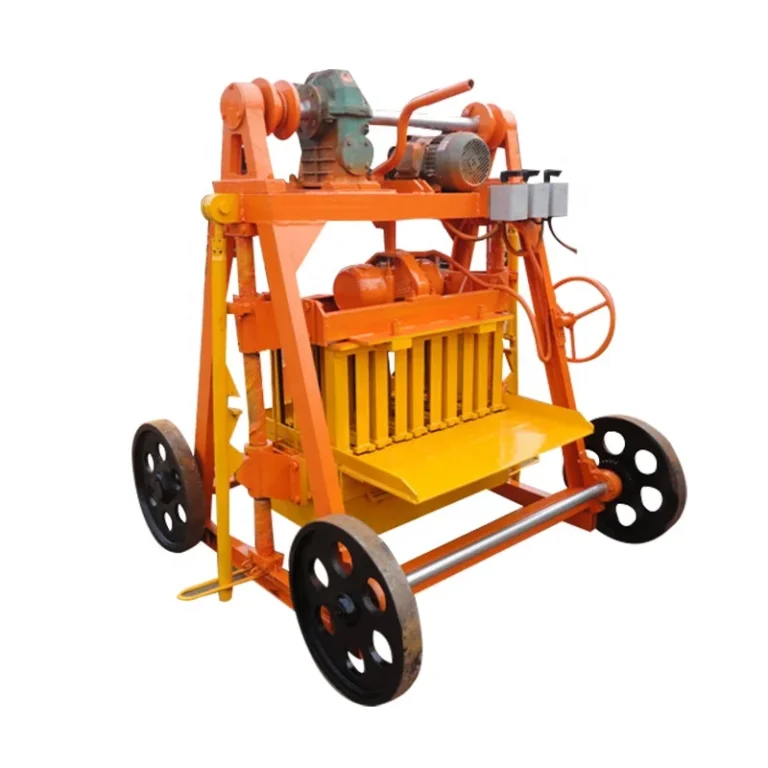
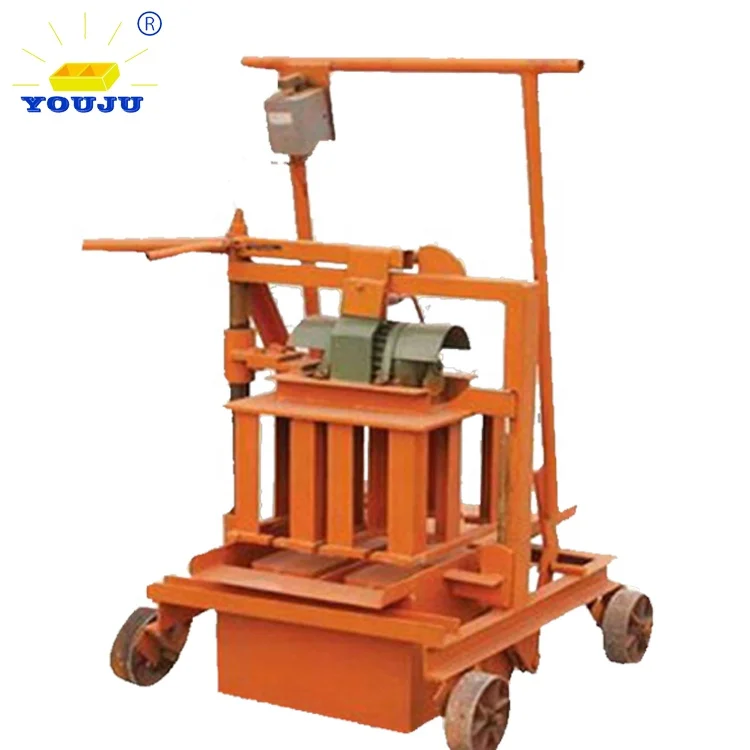
Single-focus machinery supply — the QMJ4-45 mobile egg laying block machine is specified as part of a matched system with moulds, engine, and site logistics rather than sold as a standalone press.
Technical Specifications
| Parameter |
Value |
| Model |
QMJ4-45 |
| Product Type |
Mobile Egg Laying Block Making Machine |
| Molding Capacity |
4 pcs/mould (basis: 400×200×200mm hollow block) |
| Vibration Frequency |
2400 r/min |
| Molding Cycle |
40–45 s depending on block format |
| Output — 400×200×200mm Hollow Block |
4 pcs/mould, approx. 3000 pcs per 8-hour day |
| Output — 400×150×200mm Hollow Block |
5 pcs/mould, approx. 3500 pcs per 8-hour day |
| Output — 400×120×200mm Hollow Block |
6 pcs/mould, approx. 4500 pcs per 8-hour day |
| Compaction Method |
Mould vibration (no hydraulic pressure) |
| Demould Method |
Manual |
| Turning Method |
Manual |
| Total Power |
6 kW |
| Power Source |
Diesel / Petrol engine |
| Pallet Requirement |
Not required (egg-laying on ground) |
| Control System |
Not applicable (engine-driven) |
| Key Features |
Engine-powered, pallet-free, dual-vibration core, manual operation |
Application Suitability
| Application |
Material or Output |
| On-site hollow block production for building contractors |
Crushed stone, sand, cement, water |
| Small-scale startup block plant with minimal capital |
Local aggregate blends, cement ratios adjusted to regional supply |
| Remote or off-grid construction projects |
Diesel-powered operation where grid electricity is unavailable |
| Supplementary production for existing cement yards |
Hollow blocks in 400×200×200, 400×150×200, and 400×120×200 formats |
Why "2600–4000 Pieces per Day" Can Mislead You Before the Machine Arrives
Every daily output figure only holds true when tied to a specific block format, material, and cycle time.
I once watched a buyer calculate his return based on a headline capacity number, only to find his actual output fell far short because the stone dust he sourced locally was coarser than what the test run used. The vibration frequency could not fully compact his mix in the assumed cycle, and every block needed extra seconds to hold shape after demoulding. A Mobile Egg Laying Block Making Machine manufacturer should state output per format and confirm the mix before shipping, not after [NEED_CITE: block density requirements vary by regional aggregate grading standards].
Where the QMJ4-45 Sits in the Complete Block Machine Range
The QMJ4-45 occupies the entry tier of the Shiyue block machine lineup. It is the starting point for buyers who need hollow block production capability without investing in a fixed plant, pallets, or electrical infrastructure. From here, the range extends upward through semi-automatic stationary machines and into fully automatic lines with batching, pallet circulation, and robotic stacking. Understanding where this mobile egg laying block making machine fits helps buyers avoid over-investing in automation they cannot yet justify, or under-investing in a machine that will bottleneck growth within a year.
Engine Power and Pallet-Free Operation on the Project Site
Running a block press on a diesel or petrol engine means the QMJ4-45 operates entirely independent of grid electricity. This matters for contractors working on rural housing developments, road projects, or sites where power connections have not yet been installed. The egg-laying design produces blocks directly on the ground surface, eliminating the need for pallets and the logistics of pallet storage, curing rack space, and forklift movement [NEED_CITE: site logistics cost factors for mobile block production]. Workers simply advance the machine forward after each cycle, leaving the freshly pressed blocks to cure in place.
What the Vibration and Cycle Numbers Mean for Block Quality
The 2400 r/min vibration frequency drives compaction through the mould core rather than relying on hydraulic pressure. In a mobile egg laying block making machine of this class, vibration is the sole compaction force, so the frequency must be matched to the aggregate particle size in the buyer’s mix. A finer sand will compact fully within the 40–45 second cycle, while coarser crushed stone may require a wetter mix or longer hold time to achieve consistent wall density. The 6 kW total power rating covers the vibration motor and any ancillary movement — a compact envelope that keeps the machine light enough to move across a site by hand. Manual demoulding and turning mean the operator controls the pace, which keeps the investment low but limits the ceiling on daily throughput compared to automatic machines [NEED_CITE: vibration force and aggregate sizing relationship in block compaction].

What Happens When Format and Mix Are Not Confirmed Before Order
When a buyer orders a mobile block machine based on a single headline capacity number, several problems surface after commissioning. The machine may produce blocks that crack during curing because the vibration frequency was too high for a fine-sand mix. Alternatively, blocks may slump because the cycle is too short for the coarser aggregate the buyer actually sources locally. Without a capacity calculation that names the assumed block format and material, the buyer has no baseline to troubleshoot against. These issues do not reflect machine failure — they reflect a specification gap that a proper pre-order conversation would have closed [NEED_CITE: common commissioning failures in mobile block production].
Why Buyers Start Their Search Here
Block machinery is the single focus at Shiyue, so the QMJ4-45 is specified alongside compatible moulds and handling considerations as one matched unit rather than assembled from separate suppliers. Configuration begins with the buyer’s actual mix design and target block format, not a catalogue default. Mould options cover the hollow block sizes the buyer’s local market demands, and custom mould drawings can be produced when standard sizes do not match. The automation level is selectable across the range, meaning a buyer who starts with this mobile egg laying block making machine can move to a semi-automatic stationary model later without changing suppliers or relearning a different control philosophy. Installation guidance and operator training are included so that first-time block producers are not left to troubleshoot alone.
Documentation & Verification
- Line layout noting the block format assumed for each output figure
- Machine specification sheet confirming engine type and 6 kW total power
- Mould drawing and format list for 400×200, 400×150, and 400×120 sizes
- Factory test record run on the buyer’s confirmed aggregate sample
- Operation and maintenance manual with wear parts list included at delivery
Installation, Commissioning & Support
- Level ground surface required; no fixed foundation needed for egg-laying operation
- Diesel or petrol engine means no electrical connection or voltage confirmation necessary
- Machine arrives assembled; minimal on-site setup before first production run
- Operator training covers cycle timing, mix moisture adjustment, and manual demoulding technique
- Mould wear parts list provided so first replacement order can be placed in advance
- Daily maintenance limited to vibration motor inspection and mould surface cleaning
What to Prepare Before Requesting a Quotation
To size this machine accurately, share the hollow block dimensions your market requires, the aggregate and sand types available locally, and whether your site has any access constraints for material delivery. Confirm the daily output target based on an eight-hour shift so the capacity calculation can be matched to your specific format. Let us know if you plan to expand into stationary production later, so the entry tier can be positioned within a longer equipment roadmap.
Frequently Asked Questions
Q: How is the daily output calculated, and which block format does it assume?
A: Each output figure is tied to a specific hollow block size. The QMJ4-45 produces approximately 3000 pieces of 400×200×200mm blocks, 3500 pieces of 400×150×200mm, or 4500 pieces of 400×120×200mm per eight-hour shift, based on a 40–45 second cycle. Actual output depends on your mix design and aggregate grading.
Q: What block formats and mould sizes are available?
A: Standard moulds cover three hollow block formats: 400×200×200mm at four cavities, 400×150×200mm at five cavities, and 400×120×200mm at six cavities. Custom mould designs can be produced to buyer drawings for formats outside this range.
Q: Can the QMJ4-45 run entirely without electricity?
A: Yes. The machine is powered by a diesel or petrol engine driving the vibration motor and all mechanical functions. No grid connection, voltage confirmation, or PLC interface is required, making it suitable for remote or off-grid project sites.
Q: How does this machine compare to semi-automatic models in the Shiyue range?
A: The QMJ4-45 is the entry tier — manual operation, no pallets, no fixed plant. Semi-automatic models add stationary pressing with pallets and higher throughput per format. Buyers planning future growth can transition within the same supplier ecosystem without relearning a different system.
Q: What site preparation is needed for egg-laying production?
A: A level, cleared ground area is sufficient. No concrete foundation, curing racks, or pallet storage space is required. Ensure the surface can support block curing without water pooling, and plan material stockpile placement close to the production path.

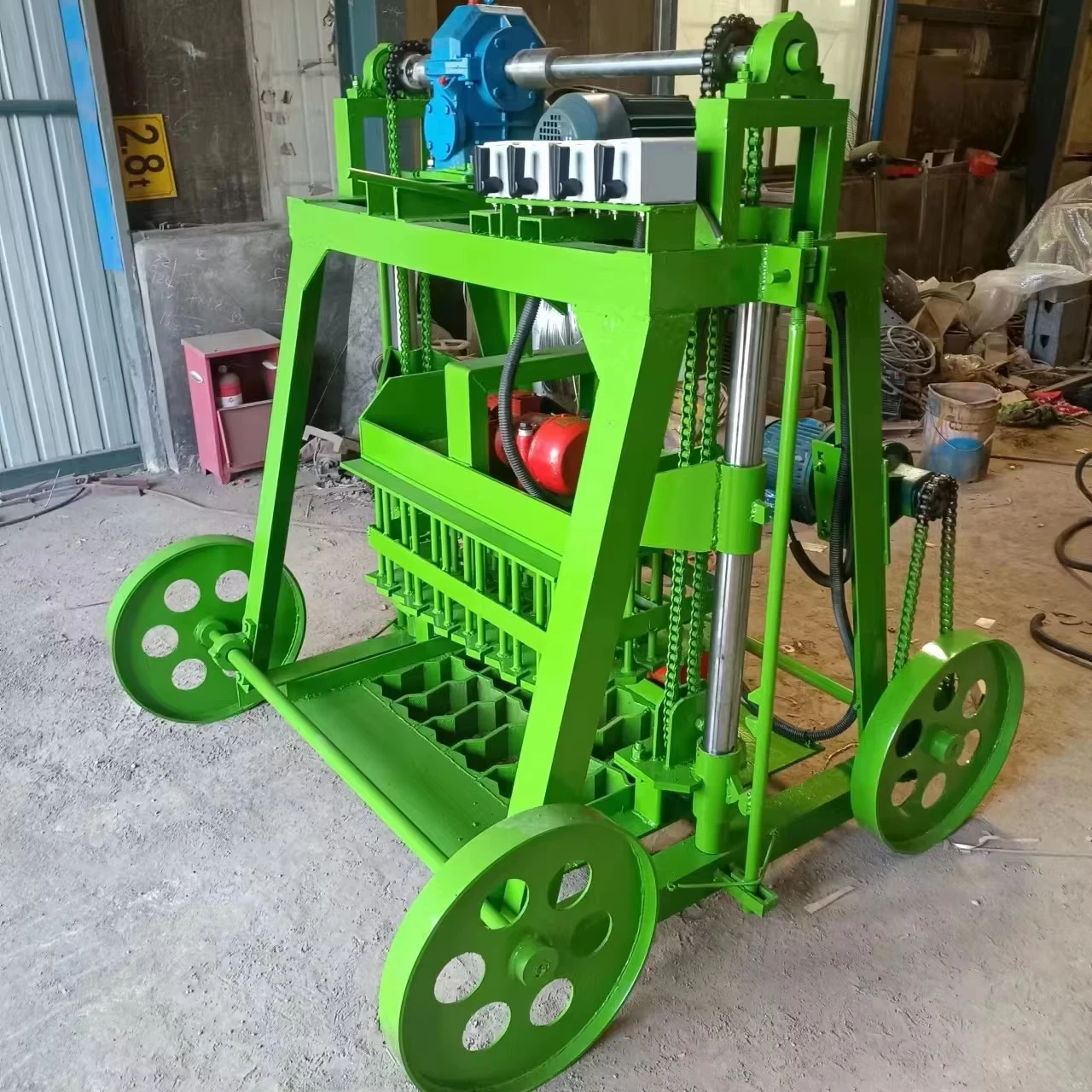
 Mobile block machine