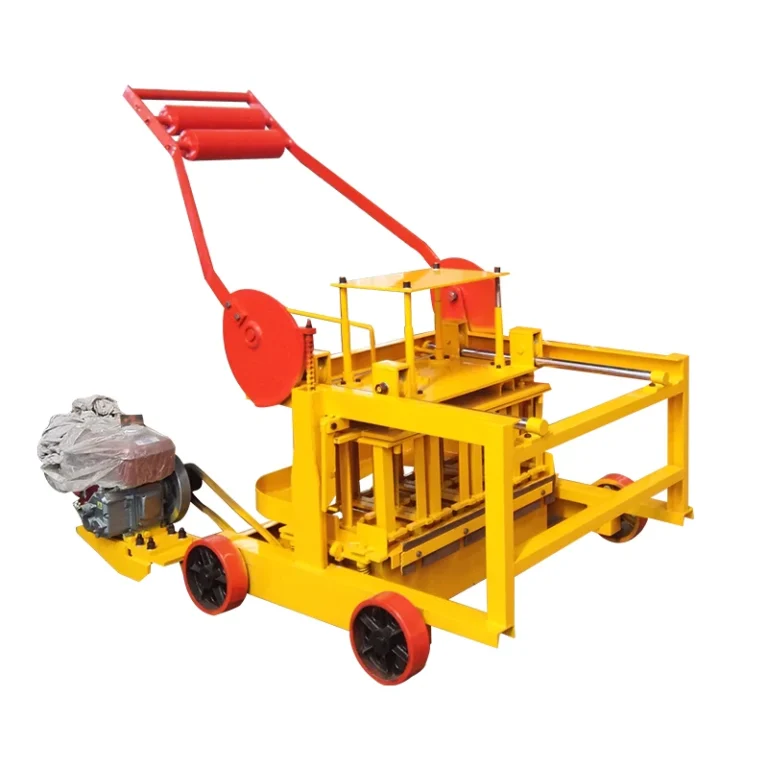
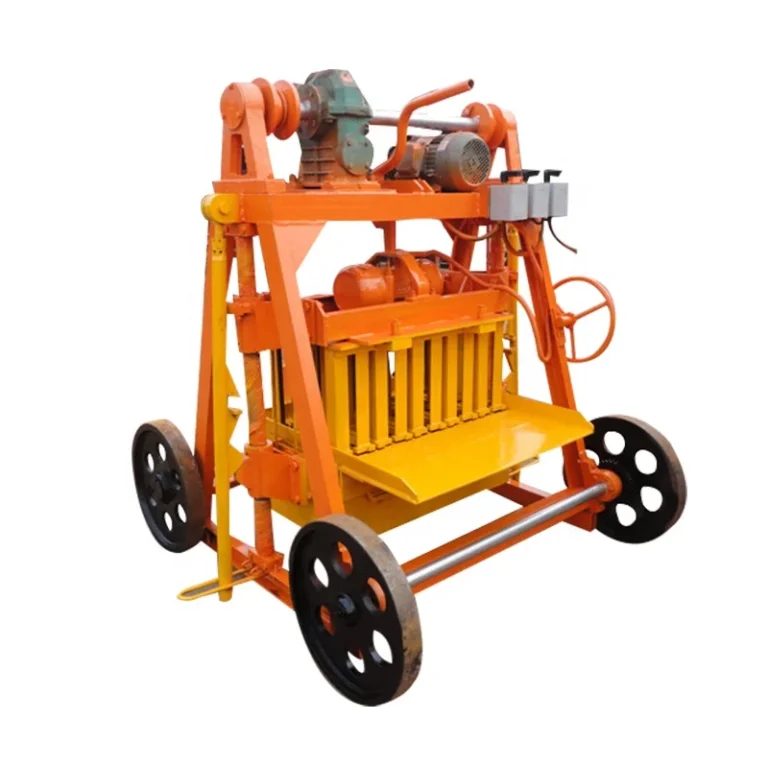
Matched System — the QMY4-30 mobile block making machine is specified alongside its moulds, power configuration and control language as one verified package, not a catalogue default.
Technical Specifications
| Parameter |
Value |
| Model |
QMY4-30 |
| Product Type |
Mobile Concrete Block Making Machine |
| Rated Power |
5 kW |
| Overall Dimensions (L×W×H) |
1200×1200×1100 mm |
| Net Weight |
950 kg |
| Molding Cycle Time |
30 seconds |
| Output Capacity (400×200×200 mm hollow block, 4 pcs/mold) |
480 pcs/hour, 3840 pcs/8h |
| Output Capacity (400×150×200 mm hollow block, 5 pcs/mold) |
600 pcs/hour, 4800 pcs/8h |
| Output Capacity (400×100×200 mm hollow block, 7 pcs/mold) |
840 pcs/hour, 6720 pcs/8h |
| Mould Format |
Hollow block and solid brick, changeable |
| Automation Level |
Manual operation, mobile egg-laying design |
| Raw Materials |
Cement, sand, crushed stones, slag |
| Voltage & Frequency |
Configurable to site supply (basis to be confirmed) |
| Assembly State |
Single unit, mobile chassis |
Application Suitability
| Application |
Material or Output |
| On-site block production without fixed plant infrastructure |
Cement, sand, and crushed stone mix for hollow and solid formats |
| Small business and first-time block plant setups |
Standard hollow blocks and solid bricks at entry-level capital outlay |
| Construction contractor project-site manufacturing |
Locally sourced aggregate and cement for standard building formats |
| Distributor evaluation of mobile range entry tier |
Hollow and solid brick formats before scaling to higher output tiers |
Why the Voltage Question Comes Before the Price for a Mobile Block Machine
A 5 kW motor wound for the wrong frequency will burn out before the first production run finishes.
I have seen this happen with a QMY4-30 mobile block making machine shipped to a site running 110V/60Hz when the motor was configured for a different standard. The commissioning team stood around for weeks waiting for a replacement. Voltage and frequency confirmation is not a paperwork detail; it determines whether the machine runs at all on the first day. For a mobile block machine destined for export, this specification must be locked before production begins [NEED_CITE: voltage and frequency standards by export market].
Positioning the QMY4-30 in the Complete Block Machine Range
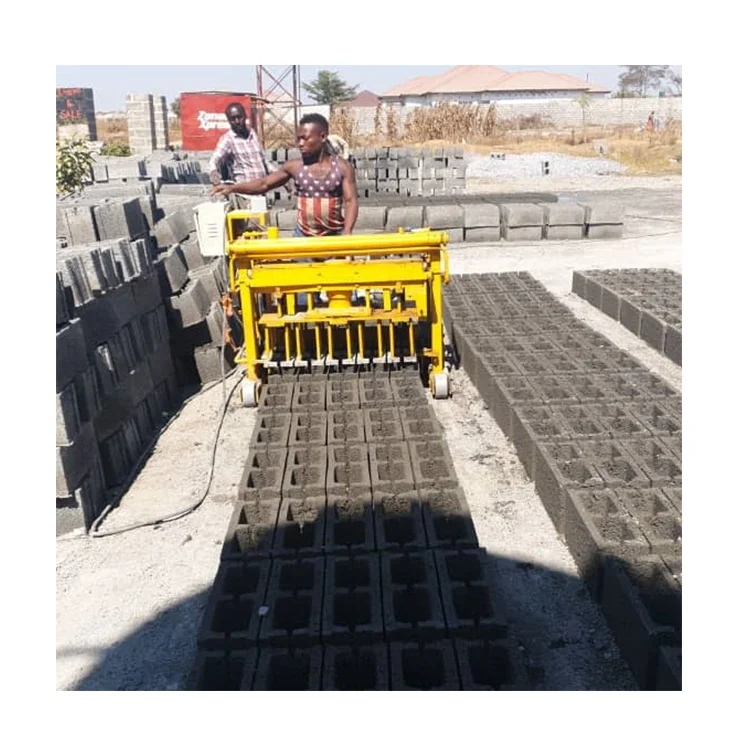
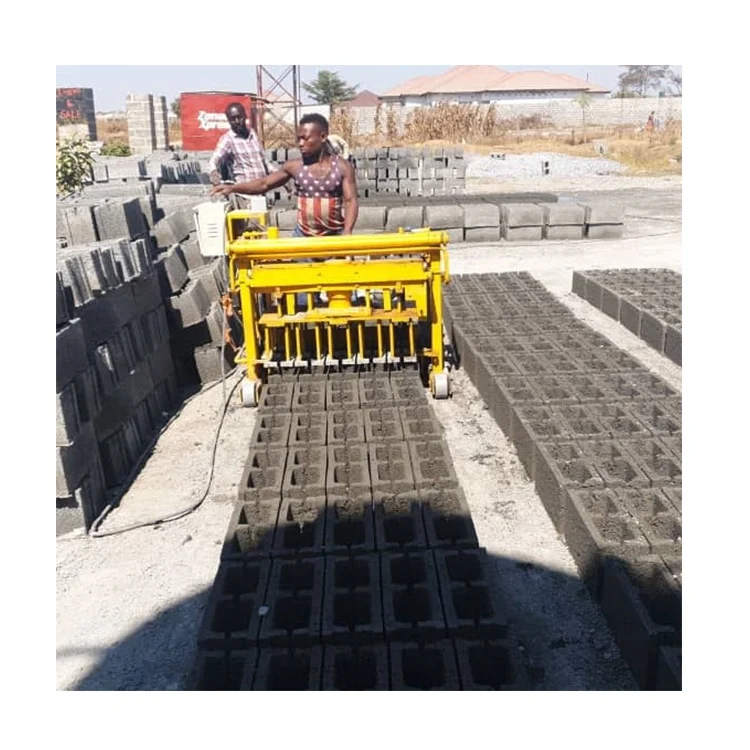
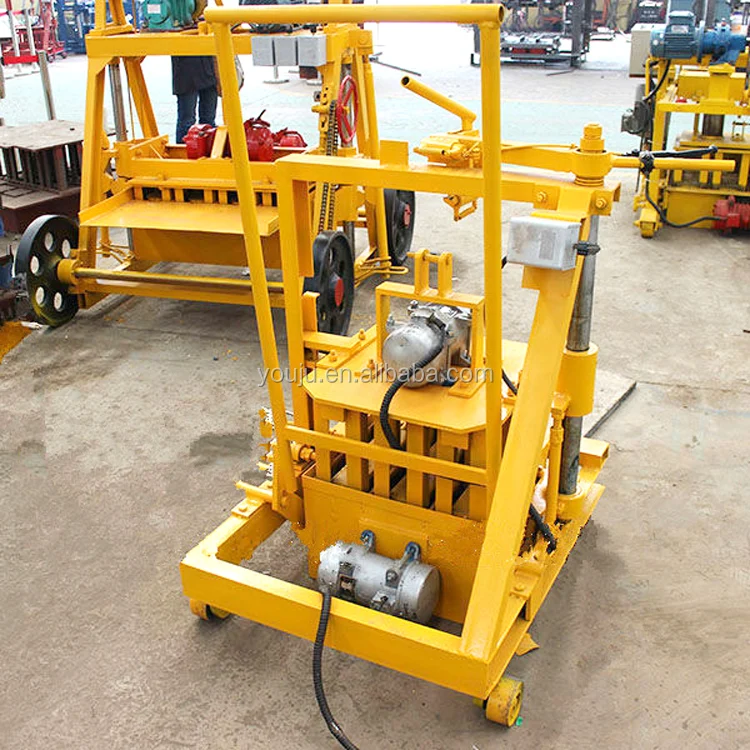
The QMY4-30 mobile block making machine occupies the entry tier of our mobile range. It is built for buyers who need block production directly on a project site or open yard without investing in a fixed pallet line, curing racks, or a dedicated factory building. The egg-laying design means the machine moves forward after each cycle, depositing blocks directly onto the ground.
This places it below semi-automatic and fully automatic lines in both capital requirement and output volume. Buyers starting here can later move into higher tiers of the range as market demand grows, but the QMY4-30 serves as a practical starting point where site logistics stay simple and investment stays contained.
Footprint and Site Logistics for Mobile Egg-Laying Operation
At 1200×1200×1100 mm and 950 kg, the QMY4-30 is compact enough to move between sites on a flatbed or small trailer. The mobile chassis eliminates the need for a fixed foundation or pallet return system. The production area needs to be a level, cured concrete surface — soft ground causes uneven block setting and dimensional inconsistency [NEED_CITE: ground preparation standards for mobile block production].
Because there is no pallet line, the curing area layout depends entirely on how the operator moves the machine. This simplifies initial setup but places the planning burden on the site foreman to organize production runs so that fresh blocks are not disturbed before initial set.
Reading the Cycle Time and Output Figures
The 30-second molding cycle drives every output figure on the specification sheet. For the 400×200×200 mm hollow block at 4 pieces per mold, that cycle translates to 480 pieces per hour or 3,840 pieces across an 8-hour shift. Shift the mould to a 400×150×200 mm hollow block at 5 pieces per mold, and the same cycle yields 600 pieces per hour. Drop further to a 400×100×200 mm format at 7 pieces per mold, and output reaches 840 pieces per hour.
The 5 kW rated power keeps energy demand within reach of standard site generators. The raw material range — cement, sand, crushed stones, slag — covers most locally available aggregates without requiring specialty supply chains. What matters here is that every output number is tied to a specific block size and mold cavity count, so buyers can calculate real daily production against the format their market actually purchases.

The Cost of Skipping Configuration Confirmation
When a mobile block machine arrives with an unconfirmed voltage or an incorrect control language on its panel, the machine sits idle while parts are sourced overseas. Commissioning delays compound into missed project deadlines and idle crews. Moulds specified without checking the buyer’s target block format mean the machine produces inventory that does not match local demand, forcing a second mould purchase before the first production run is even sold [NEED_CITE: common causes of commissioning delay in exported block machinery].
These are not theoretical risks. They show up repeatedly when configuration is treated as an afterthought rather than a prerequisite to production.
Why Source the QMY4-30 Through This Range
Block machinery is our single focus, so the QMY4-30 is specified as a matched system — machine, mould, and power configuration verified together rather than assembled from separate suppliers. Configuration is set against the buyer’s actual mix design, local aggregate, and target block format, not pulled from a generic catalogue default.
Mould design covers the formats the buyer’s market sells, with custom drawings available for non-standard sizes. The automation level is selectable across the range, so a buyer can start with the manual mobile QMY4-30 and move into semi-automatic or automatic tiers as volume demands increase. Installation and commissioning support includes operator training so the crew can run the machine independently from day one.
Documentation & Verification
- Machine specification sheet covering power, dimensions, cycle time, and raw material compatibility for the QMY4-30
- Line layout and capacity calculation stating the exact block format behind each output figure
- Mould drawing and format list confirming which hollow and solid block sizes the quoted moulds produce
- Voltage and frequency confirmation document signed off before the QMY4-30 enters production
- Factory test record on the buyer’s specified block format before dispatch
Installation, Commissioning & Support
- Level concrete surface required across the production area to support the 950 kg chassis and ensure even block setting
- Dedicated power circuit matching the confirmed voltage and frequency for the 5 kW motor supply
- Single-unit mobile chassis arrives assembled, requiring only mould fitting and electrical connection on site
- First-run parameter setting and cycle timing verified against the buyer’s target block format and mix design
- Operator training covering mould change procedure, cycle initiation, and basic fault identification on the QMY4-30
- Wear parts list identifying mould liners and vibration components with replacement intervals
What We Need to Size Your Line
To match the right mobile block machine tier to your project, share your target block format and the daily volume you need to hit. Tell us the raw materials available locally and the voltage and frequency at your site. If you already have curing space or handling equipment in place, describe the layout so we can confirm whether the egg-laying footprint fits your operation.
Frequently Asked Questions
Q: How is the daily output of the QMY4-30 calculated and which block format is it based on?
A: Every output figure is tied to a specific block size and mold cavity count. The 3,840 pieces per 8-hour shift applies to the 400×200×200 mm hollow block at 4 pieces per mold with a 30-second cycle. Switching to a smaller format changes both the pieces-per-mold count and the resulting daily total, which is why we state each figure individually rather than quoting a single blanket capacity number.
Q: Where does the QMY4-30 sit in the full mobile and semi-automatic machine range, and what is the upgrade path?
A: The QMY4-30 is the entry tier of the mobile range, built for buyers who need on-site production without a fixed plant. As demand grows, the range includes semi-automatic machines with pallet-based lines and fully automatic systems with stacking and cubing. Starting here keeps initial investment contained while leaving a clear path to higher tiers when production volume justifies the move.
Q: What voltage, frequency, and control language options are available for my target market?
A: Voltage and frequency are configured to match the buyer’s site supply before the machine enters production. Control language on the operating panel is confirmed at the same stage. These details are locked in writing before manufacturing begins so that the machine arrives ready to run on the local electrical grid without waiting for motor or panel replacements.
Q: Which block formats can the standard moulds produce, and can custom moulds be added later?
A: The standard mould range covers hollow blocks and solid bricks in common building sizes, and moulds are changeable on the same chassis. Custom moulds can be designed to buyer drawings for non-standard formats. The mould drawing and format list are provided before production so the buyer can verify that every quoted mould matches their market requirements.
Q: What are the site and ground conditions required for mobile egg-laying operation without a fixed plant?
A: The production area needs a level, cured concrete surface to support the mobile chassis and ensure blocks set evenly after each cycle. Soft or uneven ground causes dimensional inconsistency. No fixed foundation or pallet return system is required, but the curing area must be organized so that freshly laid blocks are not disturbed before initial set.

 Mobile block machine