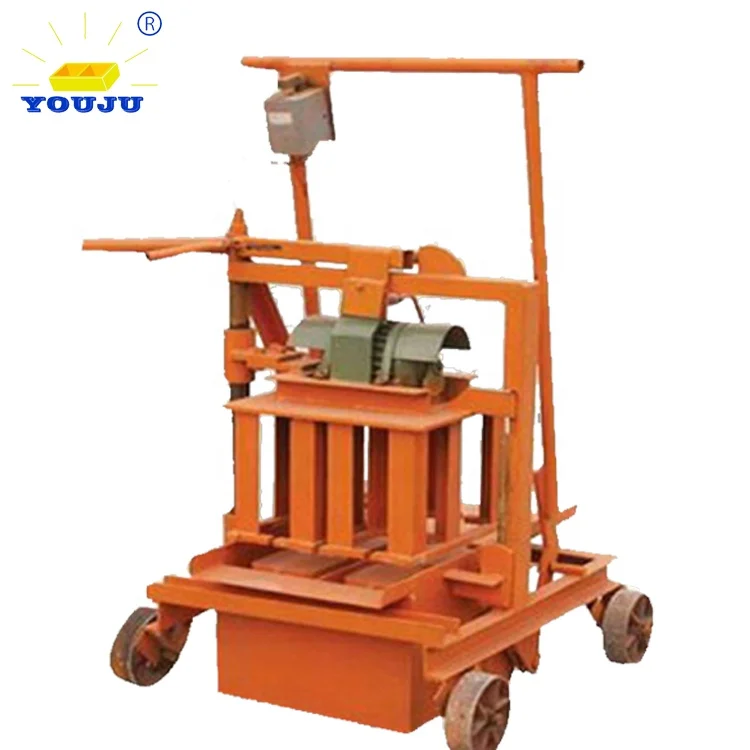
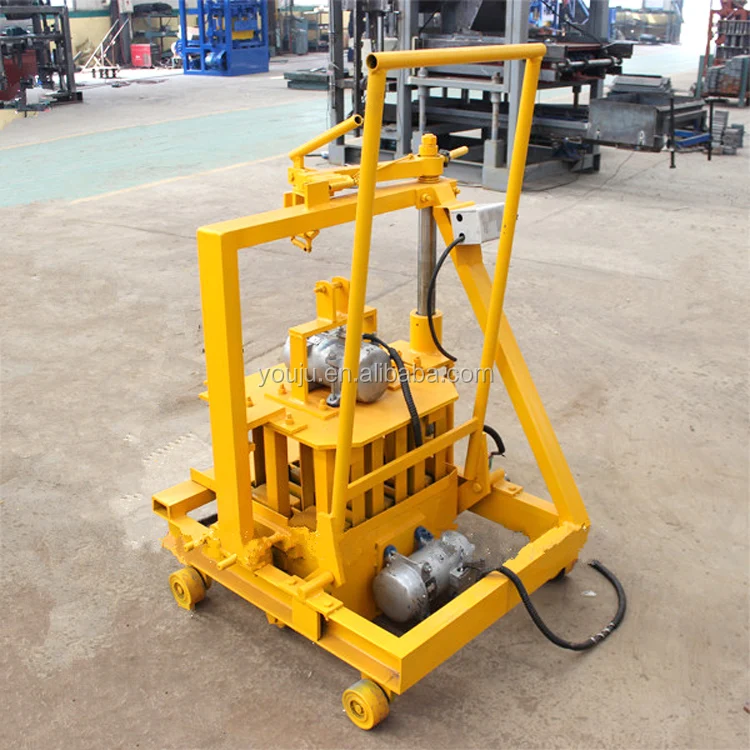
Entry-Tier Mobility — the QMY4-30 mobile block machine manufacturer range positions buyers who need on-site production without a fixed plant footprint, offering a clear stepping stone toward higher automation tiers as demand scales.
Technical Specifications
| Parameter |
Value |
| Model |
QMY4-30 |
| Product Type |
Mobile Egg-Laying Block Making Machine |
| Rated Power |
5 kW |
| Overall Dimensions (L×W×H) |
1200×1200×1100 mm |
| Net Weight |
950 kg |
| Moulding Cycle Time |
30 seconds |
| Output Capacity |
480 pcs/h (basis: 400×200×200 mm hollow block, 4 pcs/mould) |
| Output Capacity |
600 pcs/h (basis: 400×150×200 mm hollow block, 5 pcs/mould) |
| Output Capacity |
840 pcs/h (basis: 400×100×200 mm hollow block, 7 pcs/mould) |
| Daily Output (8h) |
3840 pcs (basis: 400×200×200 mm hollow block) |
| Daily Output (8h) |
4800 pcs (basis: 400×150×200 mm hollow block) |
| Daily Output (8h) |
6720 pcs (basis: 400×100×200 mm hollow block) |
| Mould Format |
Hollow block and solid brick, standard sizes (custom drawings accepted for confirmation) |
| Raw Materials |
Cement, sand, crushed stones, slag |
| Hydraulic Pressure |
Not applicable — mechanical egg-laying type |
| Pallet Requirement |
Not applicable — lays blocks directly on ground |
| Automation Level |
Semi-automatic with manual mould change |
| Voltage & Frequency |
To be confirmed with buyer before production |
| Control System |
To be confirmed with buyer (PLC or relay logic) |
| Assembly State |
Integrated single-unit mobile machine |
| Certification |
To be confirmed before quoting |
Application Suitability
| Application |
Material or Output |
| Remote construction project sites |
Hollow blocks from local crushed stone and cement |
| First-time block plant entrepreneurs |
Solid bricks and hollow blocks on bare ground |
| Rural housing development jobsites |
Standard masonry units without fixed batching line |
| Contractor on-site production |
Multiple block formats from a single cement-sand-aggregate mix |
What the Quoted Cycle Time Leaves Out About Daily Output
Hourly capacity figures only hold true when tied to a specific block format and mould cavity count.
Many buyers receive a single output number — say, 840 pieces per hour — without being told that figure assumes a small 400×100×200 mm hollow block with seven cavities per mould. When the same machine switches to the larger 400×200×200 mm format with four cavities, the hourly rate drops to 480 pieces. I have watched contractors plan their entire site schedule around the higher number, only to find their daily production falls noticeably short once they run the format their market actually buys. A mobile block machine manufacturer should always break down output by every format the buyer intends to run, not just the one that produces the most impressive headline figure [NEED_CITE: block format and mould cavity impact on real output].

Where the Egg-Layer Tier Sits in the Full Machine Range
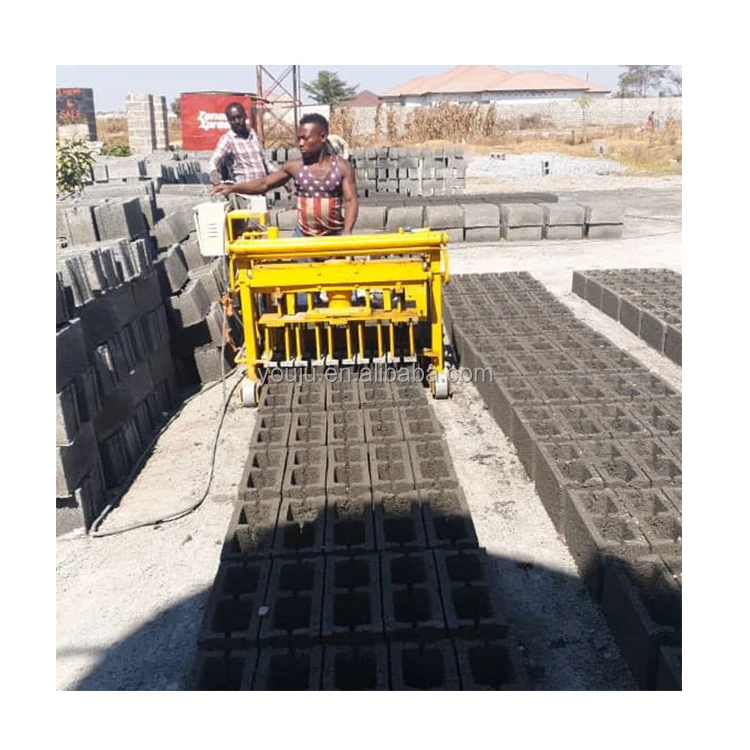
The QMY4-30 occupies the entry position in the complete block machine lineup, sitting below semi-automatic stationary presses and fully automatic lines with pallet handling and stacking systems. Buyers who choose this tier accept manual mould changes and ground-level curing in exchange for minimal capital outlay and zero infrastructure requirements. The machine produces blocks by laying them directly on a flat concrete floor, eliminating the need for pallets, curing racks, or a forklift fleet.
The Upgrade Path Beyond the First Machine
When daily demand grows beyond what a single mobile unit can sustain, the logical next step is a semi-automatic stationary press with pallet feeding and a basic stacking station. The mobile block machine manufacturer range is structured so that buyers familiar with egg-laying production can transition to pallet-based systems without relearning the entire process. Mould formats and block dimensions carry over, and the raw material mix design established during the mobile phase remains applicable to the larger machine.
How Vibration and Mechanical Pressure Shape Block Density
The QMY4-30 relies on mechanical vibration rather than hydraulic pressure to compact the concrete mix into the mould cavity. The 30-second moulding cycle gives the vibration motor enough time to settle the aggregate and cement matrix, but the resulting block density depends heavily on the mix proportions and the moisture content of the raw materials. Crushed stone with a well-graded particle size distribution produces denser blocks than fine sand alone. The 5 kW rated power drives the vibration system and the mould lifting mechanism simultaneously, meaning any increase in mix stiffness demands careful attention to avoid overloading the motor during the compaction phase [NEED_CITE: mechanical vibration compaction principles in egg-laying block machines].
The Hidden Cost of Skipping the Material Test Before Arrival
I once spent a full week re-tuning an egg-laying machine on an Eastern European site because the test material at the factory was standard graded sand, while the customer’s actual supply was high-clay river sand. The blocks cracked during curing because the clay content altered the water demand and weakened the cement bond. That experience cemented my rule: never start commissioning until the buyer’s actual raw material is on site and a test batch has been run. Voltage mismatches cause similar delays — a machine built for 380V/50Hz will not run correctly on a 440V/60Hz supply, and rewinding the motor on site is rarely practical [NEED_CITE: voltage and frequency mismatch consequences for industrial motors].
Why Procurement Through a Focused Range Matters
This mobile block machine sits within a single-focus product family where every machine, mould, pallet, and handling station is specified as a matched system rather than assembled from separate suppliers. The mould drawings are prepared against the buyer’s local block format requirements, including custom sizes when the standard catalogue does not match the market. Voltage, frequency, and control language are confirmed before production begins, preventing commissioning delays. Factory test records are generated using the buyer’s chosen block format, so the cycle time demonstrated at the factory matches what the buyer will see on site. The documentation package travels with the machine, covering hydraulic and electrical schematics, operation manuals, and a wear parts list specific to this model.
Documentation & Verification
- Line layout showing the QMY4-30 footprint and required ground preparation area
- Capacity calculation sheet stating output per block format and mould cavity count
- Mould drawing and format list matched to the buyer’s local market dimensions
- Factory test record demonstrating the 30-second cycle on the buyer’s chosen format
- Voltage, frequency, and control language confirmation document signed before production
Installation, Commissioning & Support
- Flat concrete ground surface required across the production and curing area, no pallets needed
- Dedicated power circuit sized for the 5 kW rated power plus starting surge allowance
- Machine arrives as a single integrated unit at 950 kg, positioned by forklift or crane
- First-day commissioning includes test runs with the buyer’s actual raw material mix
- Operator training covers manual mould change procedure between hollow and solid formats
- Wear parts list and mould maintenance schedule provided at handover
What to Prepare Before Sending an Inquiry
To receive an accurate configuration proposal, share the block formats your local market sells, the daily output you need for each format, and the raw materials available at your site — including the type and grading of aggregate. Confirm your local voltage and frequency supply, the control language your operators read, and whether your site has a flat concrete area large enough for both production and ground-level curing. These details allow the proposal to state realistic output per format rather than a single headline number.
Frequently Asked Questions
Q: How is the hourly output calculated, and which block format is it based on?
A: Each output figure is tied to a specific block size and mould cavity count. The QMY4-30 produces 480 pieces per hour based on a 400×200×200 mm hollow block with four cavities, 600 pieces per hour based on a 400×150×200 mm block with five cavities, and 840 pieces per hour based on a 400×100×200 mm block with seven cavities, all at a 30-second moulding cycle.
Q: Where does the mobile egg-layer tier sit compared to semi-automatic and automatic machines?
A: It is the entry tier, requiring no pallets, curing racks, or fixed plant infrastructure. Semi-automatic tiers add pallet feeding and basic stacking, while automatic tiers include full pallet circulation, automatic stacking, and cubing. The mobile tier suits buyers with minimal capital or temporary sites.
Q: What voltage, frequency, and control language are confirmed before the machine is built?
A: These values are not preset defaults. The buyer must confirm the local supply voltage and frequency, and the desired control display language, before production begins. This prevents commissioning delays caused by motor rewinding or operator confusion at the control panel.
Q: What is the site footprint and ground preparation needed for this machine?
A: The machine itself measures 1200×1200×1100 mm and weighs 950 kg, but the total area must include space for block laying and ground-level curing. A flat, level concrete surface is required across the entire production and curing zone, with no pallets or racks involved.
Q: What is the upgrade path if daily demand later justifies a larger line?
A: The range includes semi-automatic and fully automatic tiers that use the same block format logic and compatible mould designs. Buyers transition from ground-level egg-laying to pallet-based production, retaining the mix design and block dimensions established during the mobile phase.

![QMR4-45 Mobile Concrete Block Machine for Hollow Block – Manufacturer8 + 3 + 0 + 9 + 0 = 20 → 20 % 6 = 2 → 句式: [品类词] [机型号或规格] | [站点修饰词] 目标站 shiyueblockmachine.com → 全品类目录类角色 → 池: Manufacturer / Factory Supply / Full Range 20 % 3 = 2 → Full Range Mobile Concrete Block Machine QMR4-45 | Full Range](https://shiyueblockmachine.com/wp-content/uploads/2026/04/H49cf628879e04843a82320591d4387a5Z-768x768.webp) Mobile block machine
Mobile block machine