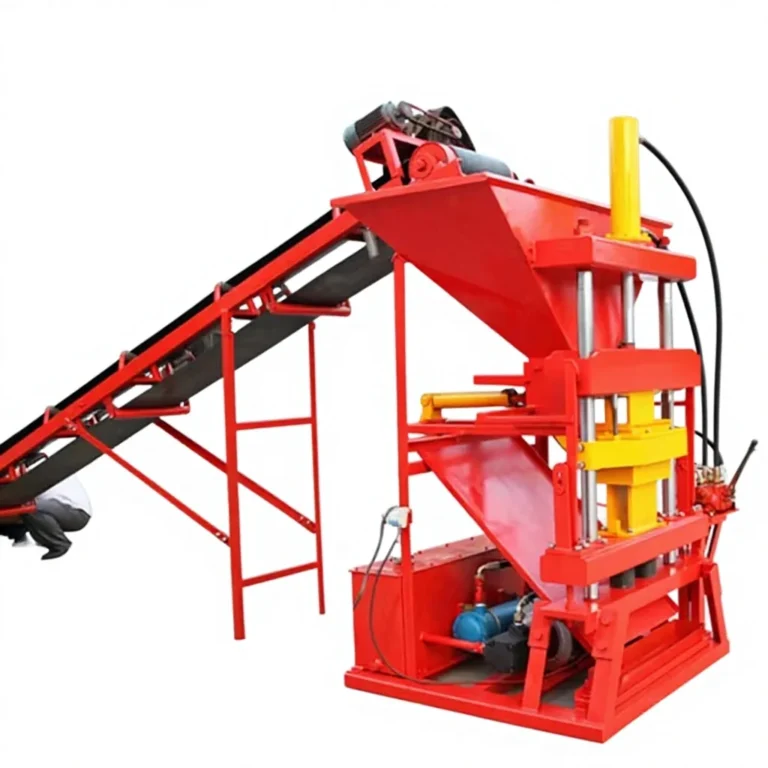
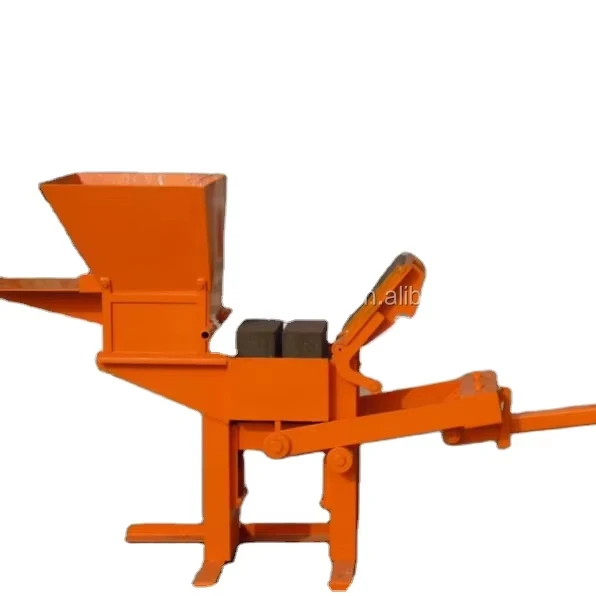
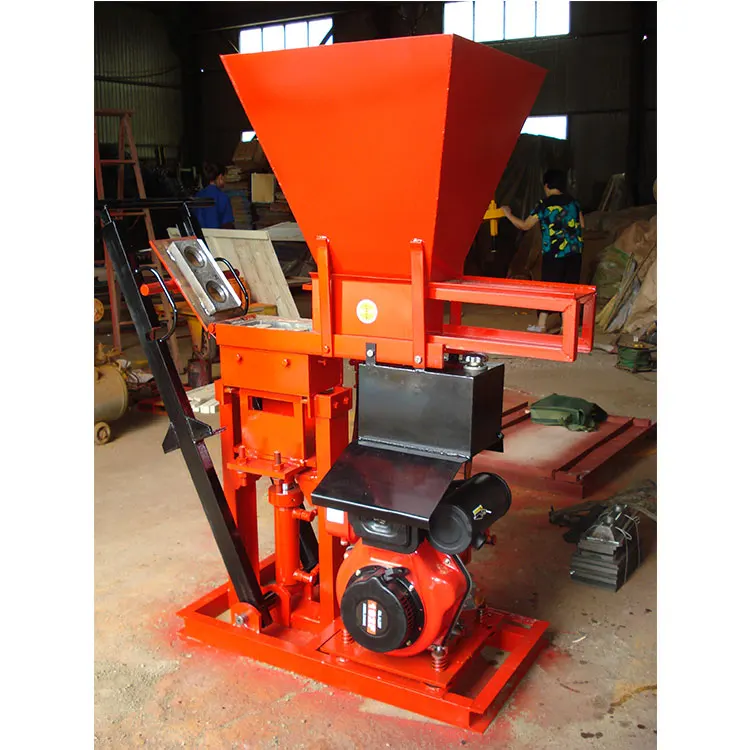
Matched System Specification — the LY5-10 Hydraulic Interlocking Clay Brick Making Machine is positioned within a full equipment spectrum so buyers can compare output tiers and automation levels before committing to a single configuration.
Technical Specifications
| Parameter |
Value |
| Model |
LY5-10 |
| Product Type |
Hydraulic Interlocking Clay Brick Making Machine |
| Overall Dimensions (L×W×H) |
2260×1500×2380 mm |
| Net Weight |
2200 kg |
| Rated Power |
15 kW |
| Molding Cycle |
10 s |
| Output Capacity |
14400 pcs/day (basis not stated in source — confirm block format / material / thickness) |
| Control System |
PLC controlled |
| Hydraulic System |
Hydraulic pressure for brick density and strength |
| Mould Format |
Interlocking clay brick; height adjustable via screws; mould changeable |
| Automation Level |
Automatic (single-operator PLC operation) |
| Raw Materials |
Clay, soil, cement, construction dregs |
| Assembly State |
Assembled on-site per wiring diagram |
Application Suitability
| Application |
Material or Output |
| Interlocking clay brick production for housing projects |
Clay and soil mixed with cement |
| Small-plant brick manufacturing for local distribution |
Soil and construction dregs with binder |
| On-site brick making for remote construction sites |
Locally sourced clay with variable moisture |
| Pilot production for format testing before scaling |
Interlocking profiles with adjustable height |
Why "Pieces per Day" Means Nothing Without the Block Format Attached
A capacity figure detached from the brick format it assumes is not a capacity figure at all — it is a marketing placeholder.
I once watched a Fully Automatic Interlocking Clay Brick Making Machine manufacturer quote a buyer in West Africa based on a standard solid block cycle, while the buyer’s market demanded a deeper interlocking profile that nearly doubled the molding time per piece. The machine arrived, the operator ran the local format, and daily output landed at roughly half the quoted number. The machine was not underperforming; the quotation was. [NEED_CITE: common discrepancy between quoted and actual block machine output in export markets]
This is why the 14400 pcs/day figure attached to the LY5-10 must be verified against the specific interlocking brick profile you intend to produce. A taller or more complex interlock adds seconds to every cycle, and those seconds compound across a shift. Before any order is confirmed, we calculate capacity against your exact block drawing — not a catalogue default.

Where the LY5-10 Sits Across the Output Spectrum
Buyers evaluating a first interlocking brick plant typically survey three tiers: mobile egg-laying machines that produce directly on the ground without pallets, semi-automatic stationary presses that require manual pallet handling, and fully automatic lines like the LY5-10 with PLC-controlled cycling and single-operator capability. Each tier demands a different plant footprint, labor allocation, and capital commitment. The LY5-10 occupies the entry point of fixed-plant automatic production, meaning it is suited to buyers who have outgrown mobile units and need consistent output with reduced manual intervention. Comparing tiers honestly requires stating the block format at each level, because a mobile machine running a simple solid block and an automatic press running a complex interlocking profile are not comparable on cycle time alone.
Matching the Press to the Rest of the Line
A press does not operate in isolation. The LY5-10 is typically paired with a JQ500 concrete mixer, a soil crusher, a soil screening machine, and conveyors of specified lengths to move material from preparation through to output. The cycle time of the press must align with the mixing batch time and the conveyor transfer speed so the press is never left waiting for material and the mixer is never overproducing into a bottleneck. When these stations are specified separately by different suppliers, timing mismatches emerge during commissioning — the press sits idle or the mixer overflows. Specifying the press and its supporting equipment as one matched set removes that risk before the line is built. [NEED_CITE: block production line synchronization requirements for stationary presses]
Reading the Specification Sheet Beyond the Headline Numbers
The 15 kW rated power on the LY5-10 covers both the hydraulic pump and the PLC control system. In hydraulic interlocking clay brick production, pressure is what compresses the clay-soil-cement mix into a dense, load-bearing unit. The actual pressure rating of the hydraulic system determines whether the machine can handle stiff, low-moisture mixes that produce stronger bricks, or whether it is limited to wetter mixes that cure slower and may require longer drying times before handling. The adjustable brick height via screw mechanism means a single mould set can produce interlocking bricks of varying thickness, which matters when a buyer supplies multiple construction projects with different wall specifications. The 10-second molding cycle applies to the standard interlocking profile; heavier or deeper interlock geometries will extend this cycle. Buyers should also confirm voltage, frequency, and PLC display language before production begins, because a machine wired for 380V/50Hz arriving at a site with 440V/60Hz supply will not commission without transformer or drive replacement. [NEED_CITE: voltage and frequency standards by export market]
What Happens When the Wrong Tier Gets Chosen
A buyer who selects a mobile egg-laying machine when their market demands the consistency and output of a fixed automatic press ends up with bricks of uneven density that crack during transport, losing contracts to competitors with stable production. Conversely, a buyer who invests in a high-capacity automatic line before securing reliable clay supply and curing space ends up with a machine that cannot run at capacity because raw material arrives intermittently. The cost of choosing the wrong tier is not the price difference between machines — it is the months of lost production, the contracts turned away, and the capital tied up in equipment that cannot deliver what the market requires. [NEED_CITE: capital equipment mismatch consequences in small-scale building material production]
Why Buyers Source the LY5-10 Through This Range
The LY5-10 is specified against the buyer’s actual clay composition and local aggregate, not a generic soil assumption — a soil sample test confirms whether the hydraulic pressure and molding cycle will produce the target block strength. The full machine range is presented with format-specific capacity calculations so buyers can compare tiers on equal footing before narrowing down. Mould design covers the interlocking profiles the buyer’s local market actually purchases, including custom drawings when standard formats do not match regional building codes. Supporting equipment — mixer, crusher, screening machine, conveyors — is quoted as a matched set so cycle times align from raw material to finished output. Automation level is selectable, meaning a buyer can begin with the LY5-10’s single-operator PLC setup and plan an upgrade path as production volume grows.
Documentation & Verification
- Line layout showing LY5-10 position within the full machine range and station spacing
- Capacity calculation stating the interlocking brick format assumed for the output figure
- Machine specification sheet with voltage, frequency, and PLC language confirmed pre-production
- Mould drawing and format list showing all available interlocking profiles for the LY5-10
- Factory test record using buyer’s clay sample before dispatch approval
- Packing photographs documenting dismantling state for container loading verification
Installation, Commissioning & Support
- Foundation pad sized to the LY5-10’s 2260×1500 mm footprint with level tolerance for hydraulic alignment
- Dedicated power circuit matching confirmed voltage and frequency before the machine is energized
- On-site assembly per wiring diagram, as the LY5-10 ships dismantled for container transport
- First-run commissioning with buyer’s raw material to verify molding cycle and block density
- PLC operation training covering cycle adjustment, mould change procedure, and fault code response
- Hydraulic seal and screw mechanism wear parts list supplied with recommended reorder intervals
What to Include in Your Inquiry
Send us the specific interlocking brick profile you need to produce, including dimensions and interlock geometry, along with your target daily output. We also need your local clay or soil type, the cement ratio you plan to use, and the voltage and frequency available at your site. If you have existing equipment — a mixer, conveyors, or curing racks — share their specifications so the LY5-10 can be configured to integrate rather than duplicate.
Frequently Asked Questions
Q: How is the 14400 pcs/day output verified, and which interlocking brick format does it assume?
A: That figure is tied to a specific brick format and molding cycle that must be confirmed against your actual product drawing. We calculate real daily output based on your interlocking profile dimensions, the 10-second base cycle, and expected shift length. No capacity claim is finalized until your block format and raw material have been tested.
Q: Where does the LY5-10 sit on the range from semi-automatic to fully automatic lines?
A: The LY5-10 is a stationary automatic press with PLC control and single-operator capability, positioned above mobile and semi-automatic tiers in output consistency and below high-capacity multi-press lines in throughput. It suits buyers who need fixed-plant reliability without the footprint and investment of a fully automated stacking and cubing system.
Q: What voltage, frequency, and PLC language options are confirmed before dispatch?
A: Voltage, frequency, and PLC display language are confirmed during the quotation stage and locked into the production order. The LY5-10 ships with electrical components matched to your site supply and the control interface set to your operator’s language. Mismatches caught after arrival cause commissioning delays we aim to prevent upfront.
Q: Can the LY5-10 be upgraded to a higher automation tier later?
A: The PLC-controlled architecture allows for future additions such as automatic pallet feeding or stacking systems, depending on the base configuration chosen at purchase. We discuss upgrade paths during the initial specification so the machine frame, hydraulic capacity, and control system leave room for expansion without a full replacement.
Q: What is the delivery lead time and how are machines packed for container shipment?
A: Lead time depends on current production scheduling and whether the requested mould format is in stock or requires custom fabrication. The LY5-10 is dismantled for container loading, and packing photographs are shared before dispatch so you can verify protection and component completeness before the container is sealed.

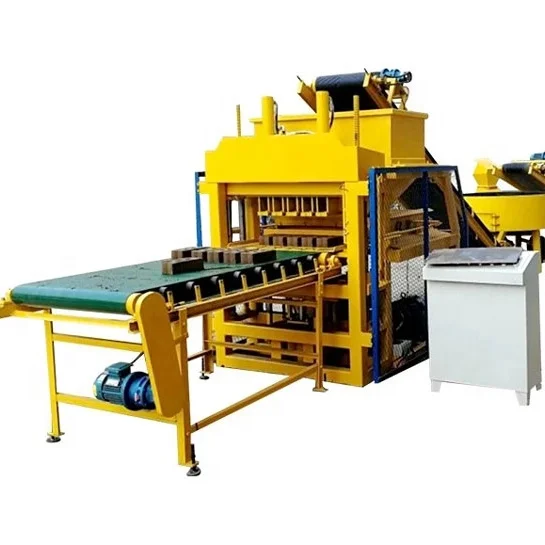
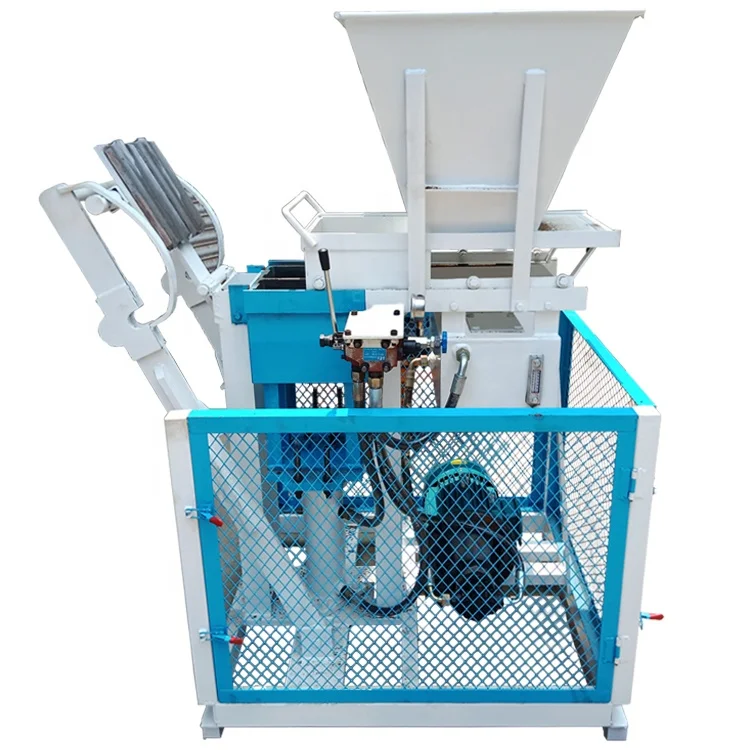 Clay interlocking brick