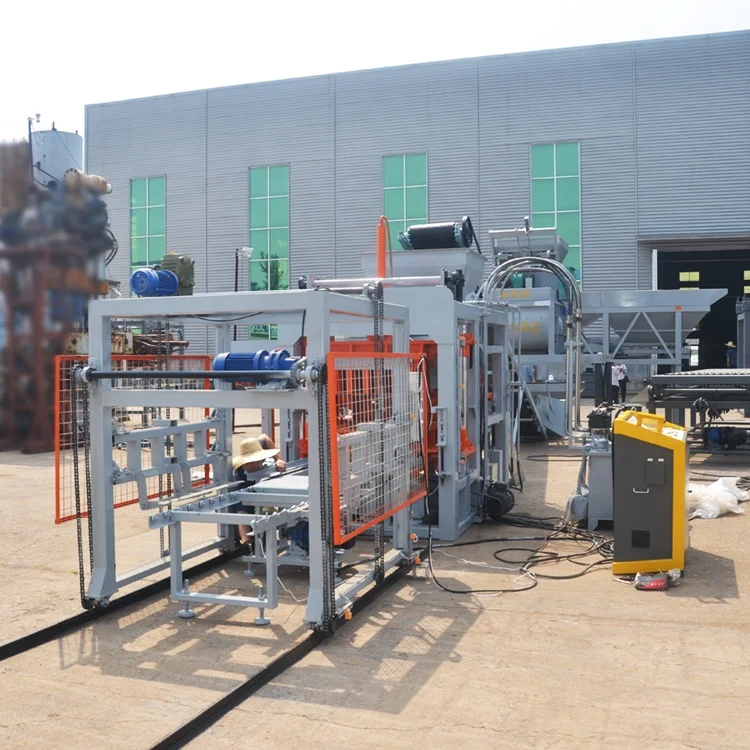
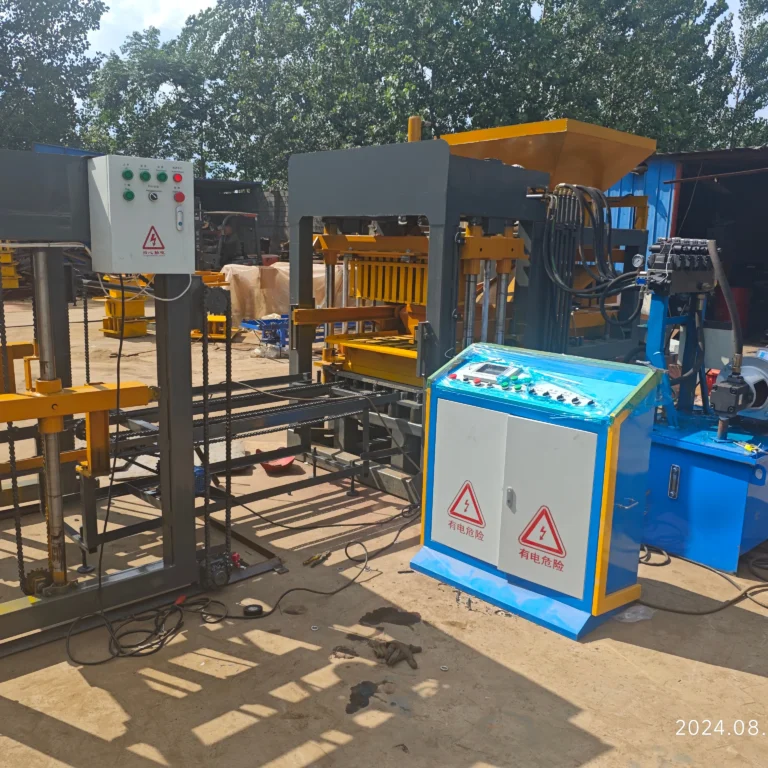
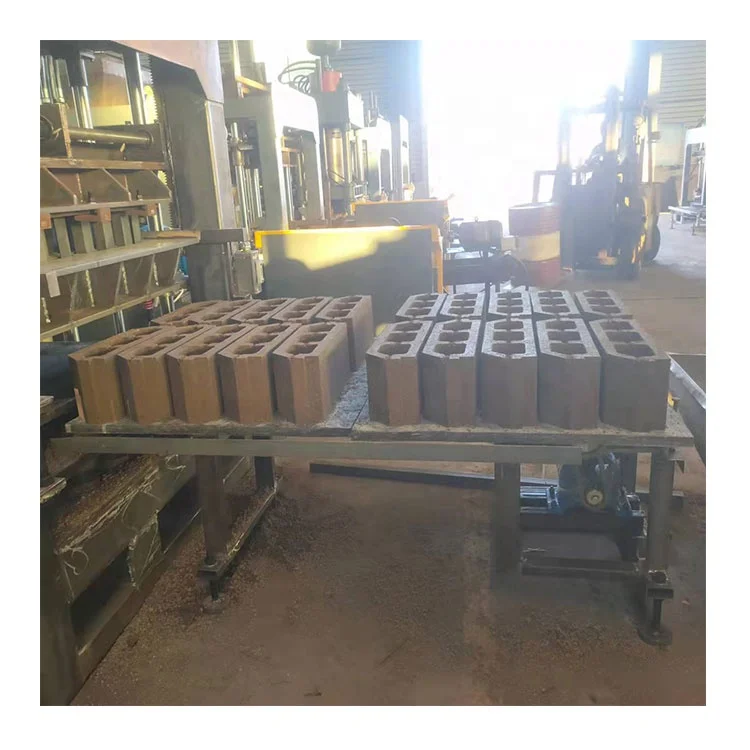
Single-Focus Block Machinery System — we match the machine, mould, pallet and handling to your interlocking format instead of assembling components from separate suppliers.
Technical Specifications
| Parameter |
Value |
| Model |
M7MI |
| Product Type |
Hydraulic Interlocking Clay Brick Machine |
| Engine |
Diesel Engine |
| Hydraulic Pressure |
16 MPa |
| Molding Cycle |
15–20 seconds |
| Block Size (example mould) |
300×150×100 mm |
| Qty/Mould |
1 pc |
| Output Capacity (per format) |
1600 pcs/8hr (based on 300×150×100mm interlocking block, 20s cycle, 1 pc/mould) |
| Material Compatibility |
Clay, soil, concrete |
| Mould Change |
Yes (multiple interlocking profiles) |
| Power Source |
Diesel (off-grid operation) |
| Automation Level |
Manual / Semi-automatic |
| Assembly State |
Mobile / standalone unit |
| Overall Dimensions (L×W×H) |
3200×1100×1500 mm |
| Net Weight |
1100 kg |
Application Suitability
| Application |
Material or Output |
| On-site housing projects in off-grid regions |
Local clay or soil with stabilizer |
| Small-scale interlocking brick yards |
Concrete mix with available aggregate |
| Development contractors in East and Southern Africa |
Site-excavated soil or imported clay |
| First-time brick production entrepreneurs |
Low-investment entry with diesel power |
Why "Daily Capacity" Means Nothing Without the Block Format
A hydraulic interlocking clay brick machine manufacturer that quotes 2,200 pieces per day without naming the block size, mould cavity count and cycle time is handing you a number built on air. Real output only exists when tied to a specific format. When I first started installing block machines across rural job sites, I watched crews stand idle because the press could not keep pace with what the sales brochure implied. The M7MI output is stated per format — 300×150×100 mm interlocking block, 20-second cycle, one piece per mould — so the daily plan you hand to your foreman actually holds up after commissioning. [NEED_CITE: common discrepancies between quoted and actual block machine output in off-grid markets]
Matching the Machine Tier to Your Project Footprint
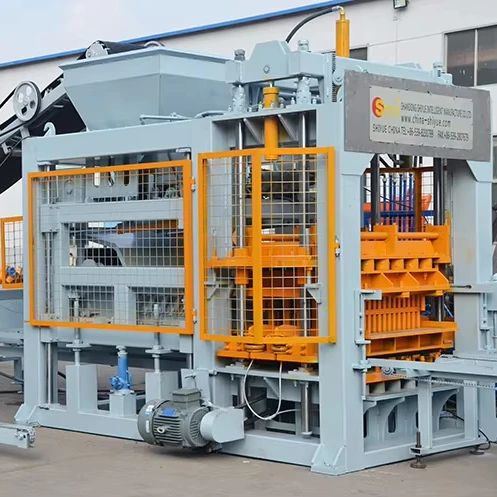
The M7MI sits at the entry-level mobile tier of our range, built for buyers who need interlocking brick production without investing in a fixed plant or three-phase electricity. A diesel engine drives the hydraulic system at 16 MPa, which gives you enough compaction force for stabilised clay and soil mixes while keeping the unit self-contained on a single chassis. The 1100 kg net weight allows relocation between job sites with a standard flatbed, so contractors moving between housing developments can keep the same press in continuous use.
Where This Interlocking Press Fits Before You Move Up
Once daily demand exceeds what a single-cavity mobile unit can deliver, buyers typically step to a semi-automatic stationary press with pallet feeding and stacking. The M7MI serves as the starting point in that progression — you learn your local mix behaviour, cure schedule and market demand on a manageable footprint before committing to a higher-tier line. Every hydraulic interlocking clay brick machine manufacturer should explain where a model sits on that ladder rather than presenting it as a standalone solution.
Reading the Specifications Beyond the Headline Numbers
The 15–20 second moulding cycle reflects the time from hydraulic ram descent to block ejection, and that window changes depending on how wet your clay mix is — drier blends compact faster but require higher pressure to achieve the same interlock strength. The 16 MPa hydraulic pressure is the working value at the ram face; it must be matched to your soil’s plasticity index or the interlocking tabs will crack during demoulding. [NEED_CITE: relationship between hydraulic pressure setting and clay brick compressive strength] Mould change on the M7MI involves unbolting the current cassette and sliding in the replacement profile, a task that takes one operator a portion of a shift rather than minutes — plan your production schedule around batch runs of a single format rather than frequent swaps.

The Cost of Getting the Mould and Mix Wrong
I once commissioned an interlocking press in a region where the local red soil carried a sand content far above the standard test blend. The factory trial had passed cleanly, but on site the bricks crumbled at the interlock tabs and the contractor refused delivery. The fix required re-tuning vibration and pressure against the actual soil sample, not the catalogue default. When a hydraulic interlocking clay brick machine manufacturer ships without testing your specific clay, the entire first production run becomes scrap, and your curing area fills with unsaleable stock. [NEED_CITE: impact of local aggregate variation on interlocking brick structural integrity]
What We Do Differently From Catalogue Sellers
Block machinery is our single focus, so the M7MI is specified as a matched system — press, mould profile, pallet dimensions and handling are sized together, not sourced from unrelated vendors. We configure the hydraulic pressure against your local clay sample and target block format, not a generic setting sheet. Moulds are designed for the interlocking profiles your market actually buys, with custom drawings available for regional formats. Automation is selectable, so you can begin on the M7MI and step to a semi-automatic tier when volume demands it. Installation includes on-site commissioning with operator training covering mix adjustment and mould maintenance.
Documentation & Verification
- Capacity calculation sheet stating the 300×150×100 mm format assumption
- Mould drawing and interlocking profile list for included and optional cassettes
- Diesel engine specification sheet with service intervals
- Factory test record using client-supplied soil sample before dispatch
- Operation and maintenance manual with hydraulic circuit diagram
- Wear parts list covering hydraulic seals and mould liner plates
Installation, Commissioning & Support
- Level compacted ground required; no fixed foundation needed for the 1100 kg mobile chassis
- Diesel fuel supply and daily fluid checks replace electrical infrastructure requirements
- Arrives as a single mobile unit — no multi-section reassembly on arrival
- First-run commissioning includes hydraulic pressure tuning to your clay sample
- Operator training covers mould change procedure and interlock tab inspection
- Spare hydraulic seals and mould wear liners listed for initial stocking
Before You Request a Quote
Tell us the interlocking brick profile your local market demands, the daily volume you plan to sustain, and whether your site has any grid power available for auxiliary equipment. Share a soil or clay sample description so we can confirm whether the 16 MPa working pressure will produce the tab strength your building code requires. If you already own curing racks or pallets, send their dimensions so we match the M7MI ejection height to your existing handling flow.
Frequently Asked Questions
Q: How is the daily output of the M7MI calculated and which block format does it assume?
A: The 1,600 pieces per eight-hour shift figure is based on a 300×150×100 mm interlocking block produced at a 20-second cycle with one piece per mould. This accounts for continuous pressing only and does not include mould changeovers, material feeding pauses, or curing-area transport time. Any capacity discussion should always start with the exact block format you intend to sell.
Q: What interlocking mould formats are available and how long does a change take?
A: Standard profiles include common interlocking wall block shapes used across East and Southern African housing markets, with custom mould design available to buyer drawings. A mould change involves unbolting the cassette and fitting the replacement, which one trained operator can complete within a portion of a working shift. Plan batch production to minimise swaps.
Q: Can the M7MI be configured for my local clay or soil mix?
A: Yes. Before dispatch we request a representative soil sample and run a trial at the target hydraulic pressure to confirm the interlock tabs and compressive strength meet your requirement. If the sand or clay fraction falls outside the workable range, we adjust the pressure setting and advise on any stabiliser proportion needed.
Q: What is included beyond the press itself?
A: The quotation covers the M7MI unit with diesel engine, the selected interlocking mould cassette, and documentation. Pallets, curing racks, stacking labour and material mixing equipment are scoped separately based on your site layout. We confirm these line items during the configuration stage so nothing arrives as a surprise on commissioning day.
Q: Where does the M7MI sit compared to semi-automatic and automatic tiers?
A: The M7MI is the mobile entry point for off-grid interlocking brick production with no fixed plant requirement. Semi-automatic tiers add stationary pressing with pallet feeding and higher cavity counts, while automatic lines introduce stacking and cubing. Buyers often start here and move up once daily volume and market demand justify the investment.

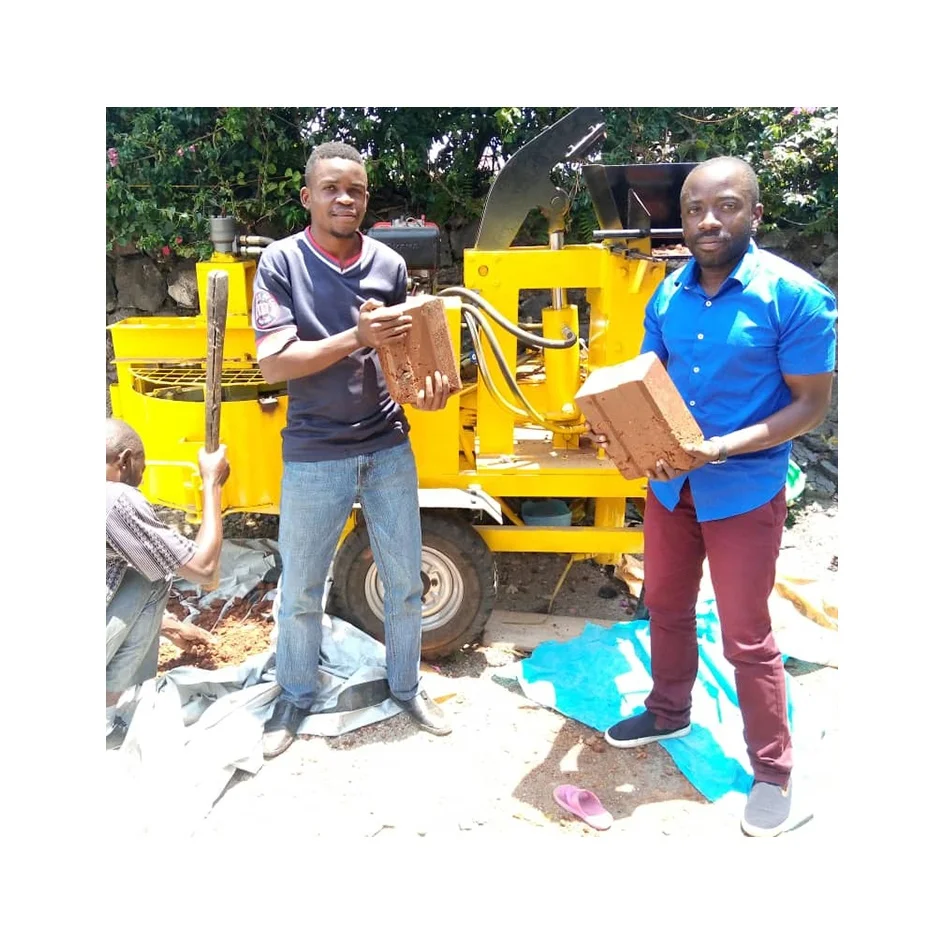
 High quality block machine