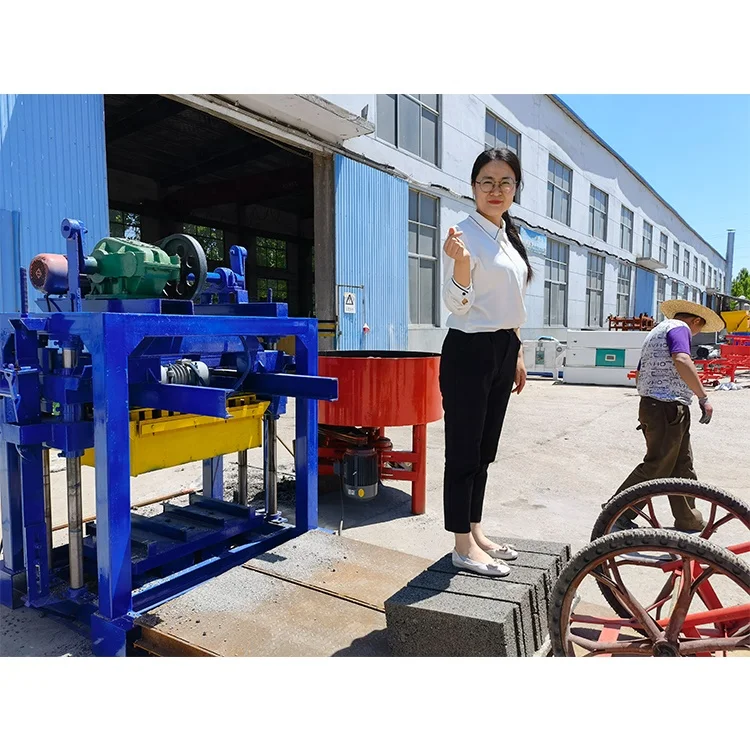
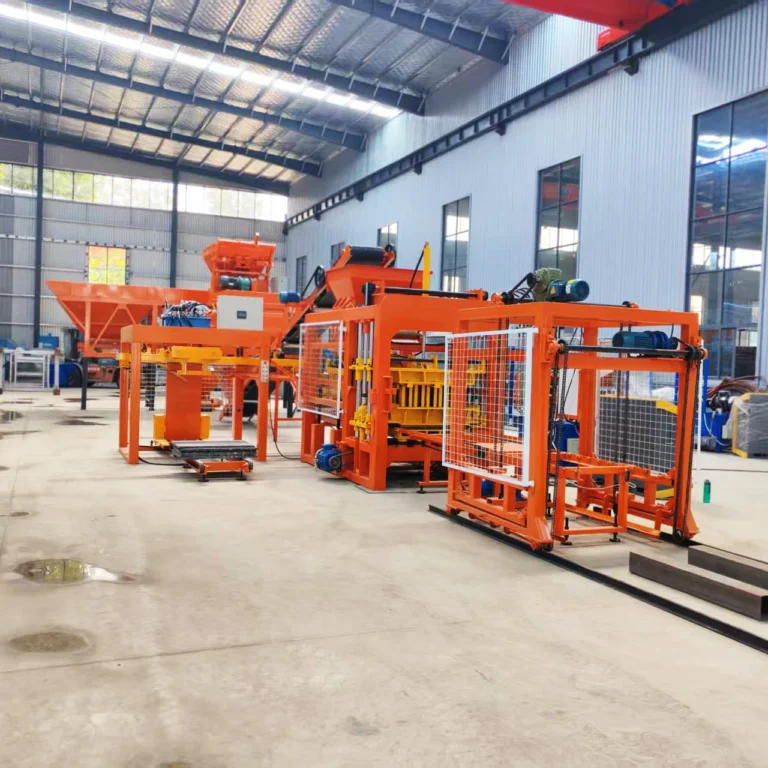
Matched System Sizing — the QT4-18 is specified against your actual block format, local aggregate, and site footprint rather than a catalogue default, so machine, mould, pallet, and handling arrive as one coherent line.
Technical Specifications
| Parameter |
Value |
| Model |
QT4-18 |
| Product Type |
Semi-Automatic Concrete Block Making Machine |
| Overall Dimensions (L×W×H) |
3900×1600×2300 mm |
| Total Weight |
3 T |
| Rated Power |
24 kW |
| Vibration Force (Exciting Power) |
40–50 KN |
| Molding Cycle |
15–25 s |
| Mixer Model |
JQ350 |
| Pallet Size |
850×550×25 mm |
| Applied Products |
Paver, solid block, hollow block, curbstone |
| Raw Materials |
Crushed stones, sand, cement, dust, fly ash |
| Output Capacity |
9,600–13,440 pcs/8hr (basis: 400×200×200mm hollow block) |
| Output Capacity |
14,400–19,200 pcs/8hr (basis: 400×150×200mm hollow block) |
| Output Capacity |
16,200–19,440 pcs/8hr (basis: 240×115×53mm solid brick) |
| Automation Level |
Semi-automatic |
| Hydraulic Station |
Equipped |
| Assembly State |
Nude packing in 20GP container |
Application Suitability
| Application |
Material or Output |
| Hollow block production for small to medium block plants |
Crushed stones, sand, cement, fly ash — output at 9,600–13,440 pcs/8hr on 400×200×200mm format |
| Paver and curbstone manufacturing |
Cement-bound aggregate mixes; single host machine with mould change |
| Solid brick runs for building material distributors |
Sand, dust, cement — 16,200–19,440 pcs/8hr on 240×115×53mm format |
| On-site production by construction contractors |
Locally sourced crushed stone and fly ash; compact footprint suits project sites |
| First block plant setup by entrepreneurs |
Semi-automatic operation with moderate daily output and lean initial investment |
What "13,440 Blocks per Shift" Actually Means
Every output figure on this page states the exact block format and mould behind it — no orphan capacity numbers.
Capacity quotes that omit the assumed block format are the single most common reason buyers feel misled after commissioning. A QT4-18 semi-automatic block machine manufacturer will show one headline number, yet that figure may assume a small solid brick while the buyer intends to run large hollow blocks, cutting real daily output nearly in half. I have seen this mismatch surface only after the machine arrives, the mould is loaded, and the cycle timer tells a different story from the brochure [NEED_CITE: block format assumptions in capacity quotations]. Stating output per format — 9,600–13,440 pieces per 8-hour shift based on a 400×200×200mm hollow block — removes the guesswork before the purchase order is signed.

Where the QT4-18 Sits in the Full Range
The QT4-18 occupies the mid-tier semi-automatic position within the Shiyue block machine line. Below it, mobile egg-laying machines handle on-site work without fixed pallets but sacrifice output consistency. Above it, fully automatic lines add pallet feeding, stacking, and cubing stations for continuous high-volume runs. This QT4-18 semi-automatic block machine manufacturer offering gives buyers a dependable entry point with room to grow; the host press accepts the same mould family as the automatic models, so format expansion later does not require a new machine.
Semi-Automatic Means Operator-Managed Pallet Handling
At the semi-automatic level, the press cycles automatically while pallets are loaded and removed by the operator. This keeps the initial investment moderate and the skill threshold manageable for a first plant. Mould changes are manual but straightforward — the QT4-18 covers hollow block, solid brick, paver, and curbstone formats on one host, so a distributor adding a new product line switches formats without ordering a second press. The trade-off is that labour cost per block is slightly higher than on a fully automatic line, a factor worth modelling against your local wage structure [NEED_CITE: labour cost comparison in semi-automatic block production].
Vibration, Pressure, and the Density Question
Block strength is governed by the combined effect of vibration force and hydraulic pressure, not by either parameter alone. The QT4-18 delivers 40–50 KN of exciting power through a hydraulic station that maintains steady pressure across the molding cycle. On a 400×200×200mm hollow block, this pairing produces consistent wall density and edge definition — provided the mix design matches the vibration profile. A high-clay aggregate common in some markets absorbs vibration energy differently from clean crushed stone, so the cycle time and pressure dwell may need adjustment at commissioning. The 850×550×25 mm pallet size is fixed, meaning your curing area and forklift must accommodate that dimension from day one. Planning pallet flow and rack spacing around this size avoids bottlenecks that have nothing to do with the press itself.
The Hidden Cost of Skipping Voltage Confirmation
Voltage, frequency, and control language are often treated as afterthoughts, yet mismatches here can stall commissioning for weeks. A 24 kW rated power draw demands a dedicated circuit with appropriate breaker sizing; arriving on-site to find only a shared supply leads to tripped breakers and motor damage. I have watched a machine sit idle while a step-down transformer was sourced locally — a cost and delay that a five-minute conversation during order confirmation would have prevented [NEED_CITE: electrical supply requirements for imported industrial machinery]. Confirming these details before production locks in a smooth start-up.
Why Source This Machine Here
Block machinery is the sole focus of this operation, so the QT4-18 is specified as a matched system — press, mould, pallet, and handling — rather than assembled from unrelated suppliers. Configuration is set against the buyer’s actual mix design and local aggregate, not a catalogue default that may not suit regional raw materials. Mould design covers the formats the buyer’s market actually sells, including custom drawings when standard formats fall short. The semi-automatic starting point carries a clear upgrade path; automation stations can be added as volume grows without replacing the host press. Factory testing runs the exact mould and cycle parameters specified for the order, not a generic run-off.
Documentation & Verification
- Line layout and capacity calculation stating the block format assumed for each output figure
- Machine specification sheet confirming vibration force, hydraulic pressure, and pallet dimensions
- Mould drawing and format list covering every block type the QT4-18 can produce
- Voltage, frequency, and control language confirmation sheet signed before production begins
- Factory test record showing cycle times and block samples from the buyer’s specified mix
Installation, Commissioning & Support
- Foundation must support the 3 T total weight across the 3900×1600 mm footprint with level tolerance
- Dedicated 24 kW circuit required; confirm voltage and frequency before electrical rough-in
- Machine ships nude-packed in a 20GP container; on-site reassembly of frame and hydraulic station needed
- Commissioning includes vibration force calibration and cycle time tuning for the buyer’s mix design
- Operator training covers mould change procedure, pallet handling rhythm, and daily maintenance checklist
- Wear parts list with hydraulic seals and vibration motor components identified for first reorder
Before You Request a Quote
To size the QT4-18 accurately, share your target block format, daily output goal, and the raw materials available locally — including aggregate gradation and any fly ash or dust you plan to use. Confirm your site’s voltage, frequency, and the language you need on the control panel. If you already have pallets, a curing area, or a forklift in place, provide those dimensions so pallet flow and rack layout can be matched from the start.
Frequently Asked Questions
Q: How is the output capacity calculated, and which block format does each figure assume?
A: Each capacity figure on this page states its basis format explicitly. The QT4-18 produces 9,600–13,440 pieces per 8-hour shift based on a 400×200×200mm hollow block, 14,400–19,200 on a 400×150×200mm hollow block, and 16,200–19,440 on a 240×115×53mm solid brick. Cycle time ranges from 15 to 25 seconds depending on the mould and mix.
Q: Where does the QT4-18 sit compared to fully automatic and mobile machines?
A: It occupies the mid-tier semi-automatic position. Mobile machines suit on-site work with lower output consistency, while fully automatic lines add pallet feeding, stacking, and cubing for high-volume continuous runs. The QT4-18 offers dependable output with lean investment and an upgrade path to full automation.
Q: What voltage and frequency configurations are available for my market?
A: The QT4-18 is configured to match the buyer’s local supply before production begins. Voltage, frequency, and control panel language are confirmed during the order process so that commissioning proceeds without electrical delays upon arrival at the site.
Q: Can I start with semi-automatic and upgrade to full automation later?
A: Yes. The host press accepts the same mould family used on fully automatic lines. Automatic pallet feeding, stacking, and cubing stations can be added as your volume grows, allowing you to scale automation without replacing the core machine.
Q: What mould formats are included, and how long does a mould change take?
A: The QT4-18 covers hollow block, solid brick, paver, and curbstone formats on one host machine. Mould changes are manual at the semi-automatic level; the exact changeover time depends on operator familiarity and the complexity of the target format, typically completing within a single shift.

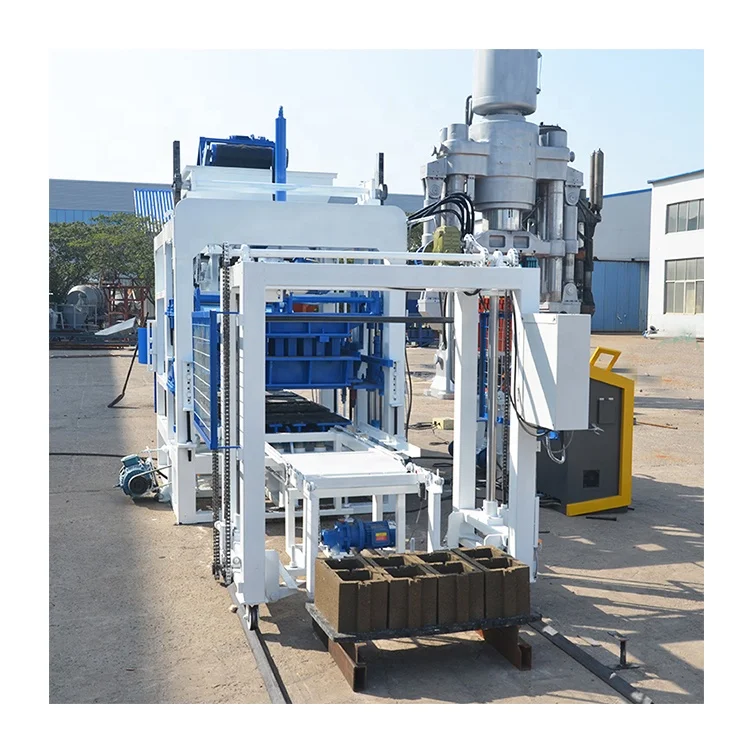
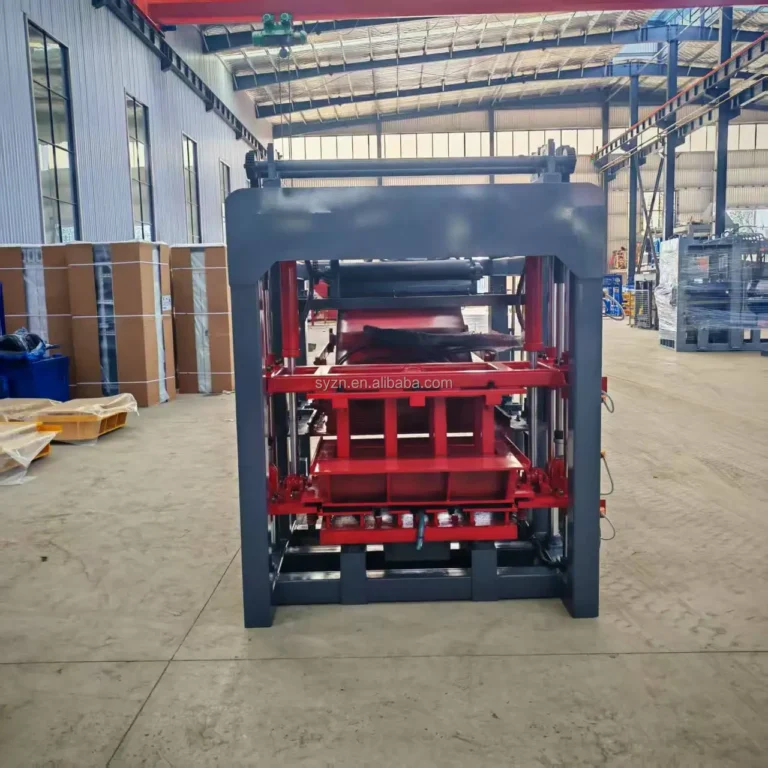 High quality block machine