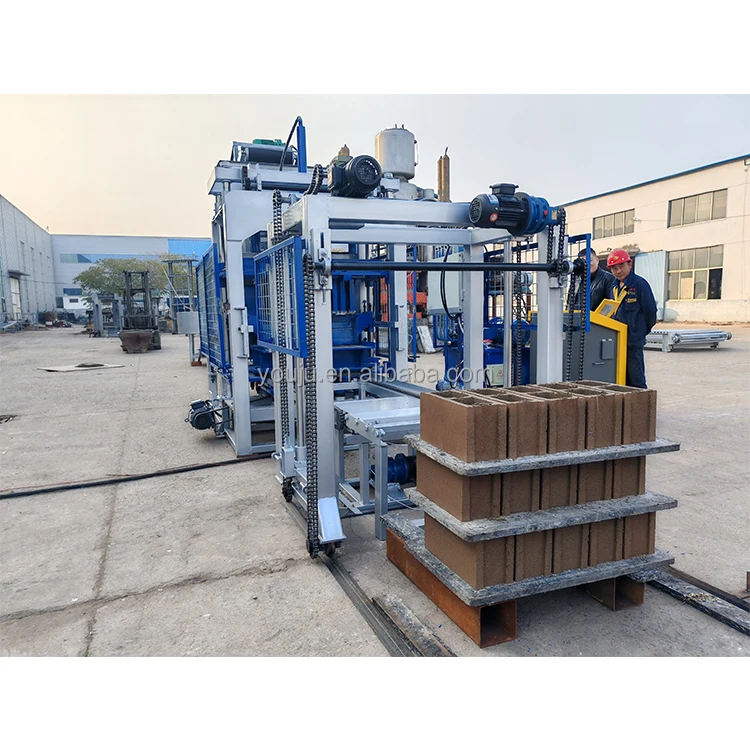
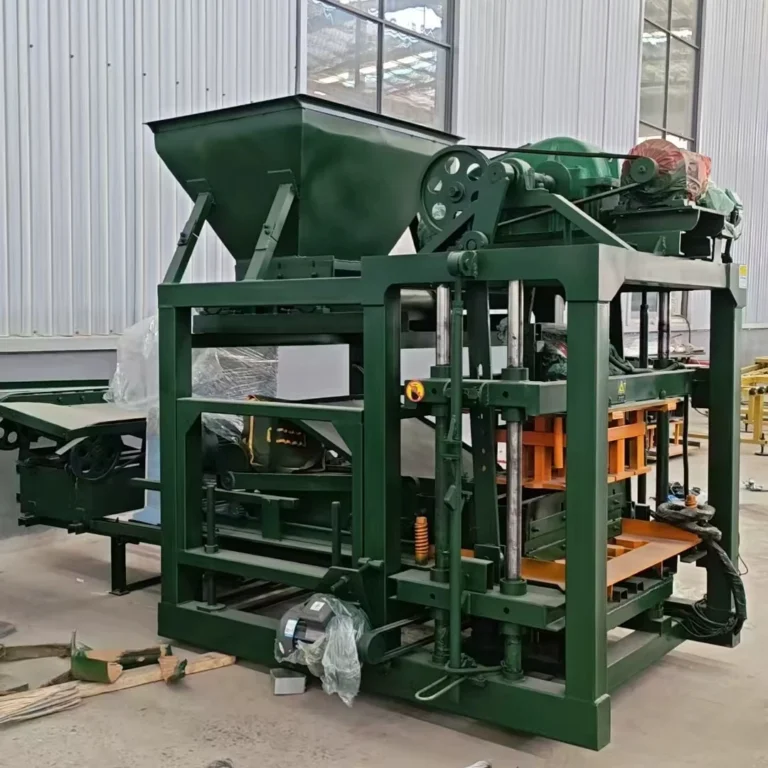
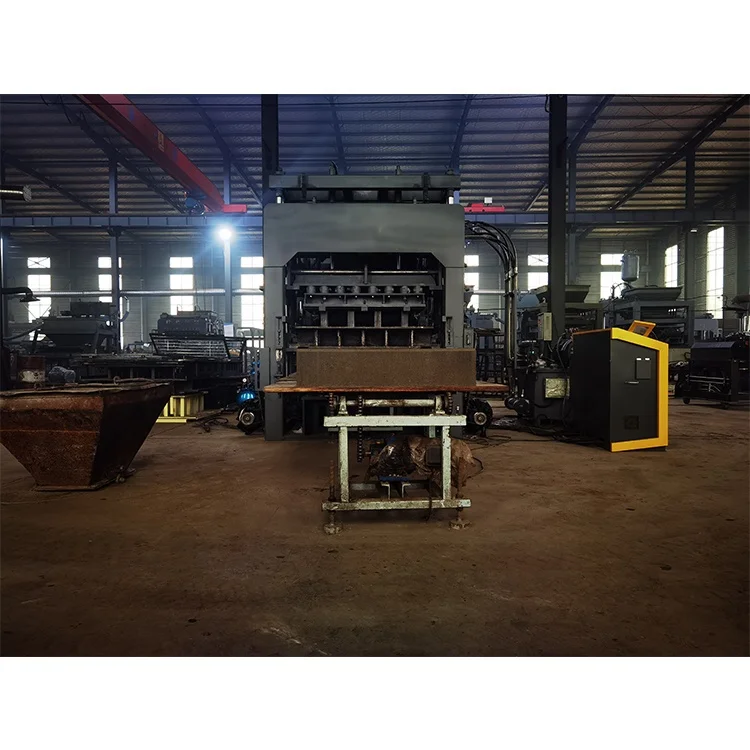
Integrated System Approach — Every QT18-25 is specified as a complete block production line where the press, moulds, pallets, and stacking system are matched as one unit rather than assembled from separate suppliers.
Technical Specifications
| Parameter |
Value |
| Model |
QT18-25 |
| Product Type |
Fully Automatic Hydraulic Pallet-free Block Making Machine |
| Brick Height Range |
50-300mm |
| Stacking Height |
0-1200mm |
| Main Vibration Form |
Platform Vibration |
| Vibration Frequency |
2800~4500 r/min |
| Molding Cycle |
15-25 s (basis not stated in source — confirm block format / material / thickness) |
| Vibration Power |
60 kW |
| Hydraulic System Power |
59 kW |
| Driving Method |
Hydraulic |
| Demolding Method |
Vibration and Hydraulic |
| General Water Consumption |
8 T/Day |
| Factory Area Required |
2000 m² |
| Control System |
PLC with person-machine conversation interface |
| Automation Level |
Fully Automatic (pallet-free stacking) |
| Applied Products |
Concrete blocks, hollow/solid blocks, pavers, interlocking blocks, curbstone, colored pavers |
| Raw Materials |
Crushed stone, sand, cement, dust, fly ash, gravel, slag |
| Warranty |
1 year (excluding quick-wear parts) |
Application Suitability
| Application |
Material or Output |
| Hollow Block Production |
Crushed stone, sand, cement, fly ash mixes for load-bearing and partition walls |
| Solid Block Manufacturing |
Dense aggregate blends for foundation and structural masonry |
| Paver Production |
Fine sand and cement mixes for pedestrian and vehicular paving surfaces |
| Interlocking Brick Formation |
Colored or natural concrete mixes for dry-laid retaining walls |
| Curbstone Fabrication |
High-strength concrete mixes for road edge and drainage channel forming |
What a Cycle Time Range Actually Tells You
When a block machine quote says 15–25 seconds per cycle, the missing variable is which block format that number assumes — and that gap is where buyer expectations derail. The QT18-25 fully automatic block machine manufacturer quote you receive should state the cycle time against a named block size, wall thickness, and mix composition so your real daily output can be calculated before money changes hands.
A 15-second cycle on a thin paver is a different reality from a 25-second cycle on a 200mm hollow block. Buyers who skip this clarification often find their actual throughput falls noticeably short of what they budgeted for, especially when format changes add further downtime. [NEED_CITE: block cycle time varies by format and wall thickness]

Where the QT18-25 Sits Across the Output Tiers
The QT18-25 occupies the high-capacity end of the fully automatic stationary range. For buyers evaluating their first block plant, it represents a significant step up from semi-automatic tiers in both investment level and plant footprint — requiring approximately 2000 m² of factory area. Smaller automatic models serve workshops with tighter space constraints, while the QT18-25 is configured for production plants targeting regional supply volumes. Understanding this positioning helps buyers match machine selection to their actual market demand rather than over- or under-investing from the start.
Pallet-Free Stacking and What It Removes From the Line
A defining feature of the QT18-25 is its pallet-free automatic stacking system, capable of stacking blocks up to 1200 mm high directly after moulding. This eliminates the need to purchase, store, rotate, and handle thousands of pallets — a logistics burden that many buyers underestimate until they are running daily production. The absence of pallets also means curing area layout becomes simpler, as stacked cubes can be moved directly to the yard without pallet racking infrastructure. For project contractors setting up on-site production, this simplification often decides the viability of the entire temporary plant. [NEED_CITE: pallet logistics in block production facilities]
Reading the Vibration and Hydraulic Numbers Together
The platform vibration system operating between 2800 and 4500 r/min works in concert with the 59 kW hydraulic system to determine block density and strength. Vibration frequency alone does not guarantee quality — the hydraulic pressure must be matched to the buyer’s specific mix design and local aggregate characteristics. A mix with higher fly ash content may require a different vibration profile compared to one based primarily on crushed stone. The 60 kW vibration power combined with hydraulic demolding is designed to produce consistent compaction across formats ranging from thin pavers to 300mm tall hollow blocks. Getting this balance right during commissioning is what separates uniform block strength from batch-to-batch variation.
The Hidden Cost of Skipping Voltage Confirmation
Voltage and frequency mismatches remain among the most costly oversights in international block machine procurement. I have seen machines arrive at overseas sites only to find the local three-phase supply does not match the motor specification, leaving commissioning engineers stranded for weeks while transformers are sourced locally. Every contract should list voltage, frequency, and PLC display language as confirmed technical agreement items before production begins — not assumptions made during quotation. The QT18-25 fully automatic block machine manufacturer documentation should include a signed voltage confirmation sheet as standard. [NEED_CITE: electrical compatibility for exported industrial machinery]
Why Source This Machine Here
Block machinery is the single production focus, meaning the QT18-25 press, its moulds, and handling equipment are specified as one coordinated system. Each machine is configured against the buyer’s actual mix design and target block format rather than shipped as a catalogue default. Mould design covers the formats the buyer’s market demands, including custom drawings to buyer specifications. Automation level is selectable — a buyer can begin with semi-automatic operation and plan a future upgrade path. Installation support includes on-site commissioning with operator training, typically completed within a week.
Documentation & Verification
- Line layout showing the QT18-25 footprint within the 2000 m² plant area
- Capacity calculation sheet naming the block format behind each cycle time figure
- Machine specification sheet confirming voltage, frequency, and PLC language
- Mould drawing and format list covering hollow, solid, paver, and curbstone types
- Factory test record with photographs before container loading
- Hydraulic and electrical schematic for on-site maintenance reference
Installation, Commissioning & Support
- 2000 m² factory area required with level concrete floor for the QT18-25 platform
- Dedicated three-phase circuit sized for combined 119 kW vibration and hydraulic loads
- Voltage and frequency confirmed in writing before electrical panel assembly begins
- PLC person-machine interface language set to buyer preference before dispatch
- On-site engineer installation and operator training completed in approximately one week
- Wear parts list and mould maintenance schedule provided at commissioning
Before You Request a Quote
To receive a meaningful configuration proposal for the QT18-25 fully automatic block machine manufacturer line, share your target block formats with dimensions, your daily output requirement per format, and the local raw materials available including aggregate type. Confirm your site’s voltage and frequency supply, the PLC display language your operators need, and the curing yard area you can allocate. These details allow the quotation to reflect a real production setup rather than a generic catalogue price.
Frequently Asked Questions
Q: How is daily output calculated for the QT18-25 across different block formats?
A: The molding cycle ranges from 15 to 25 seconds, but the specific figure depends on the block format, material thickness, and mix composition. A proper capacity calculation states the assumed block dimensions so real daily output can be derived honestly. Request this breakdown before comparing machines.
Q: How does the QT18-25 compare to smaller automatic models in investment and space?
A: The QT18-25 sits at the high-capacity end of the range and requires approximately 2000 m² of factory area. Smaller automatic tiers serve tighter spaces and lower output targets. The right choice depends on your daily volume requirement and available site dimensions.
Q: What electrical and control details must be confirmed before production?
A: Voltage, frequency, and PLC display language are confirmed in writing and included in the technical agreement. This prevents on-site commissioning delays caused by supply mismatches. Every export contract should carry a signed electrical specification sheet.
Q: Can the QT18-25 produce custom block formats beyond standard hollow and solid blocks?
A: Yes, mould design covers pavers, interlocking bricks, curbstones, and colored pavers. Custom moulds can also be designed to buyer drawings. A complete format list with mould specifications is provided in the documentation package.
Q: What is the upgrade path from semi-automatic to the QT18-25 fully automatic line?
A: The automation level is selectable, allowing buyers to start semi-automatic and plan an upgrade. The pallet-free stacking system and full PLC control can be phased in as production volume grows and operators gain experience with the equipment.

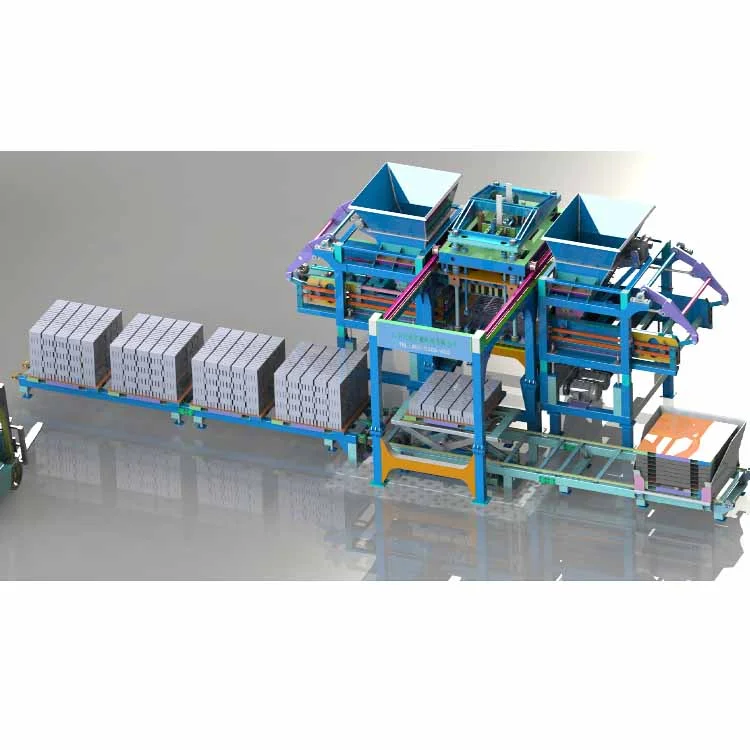
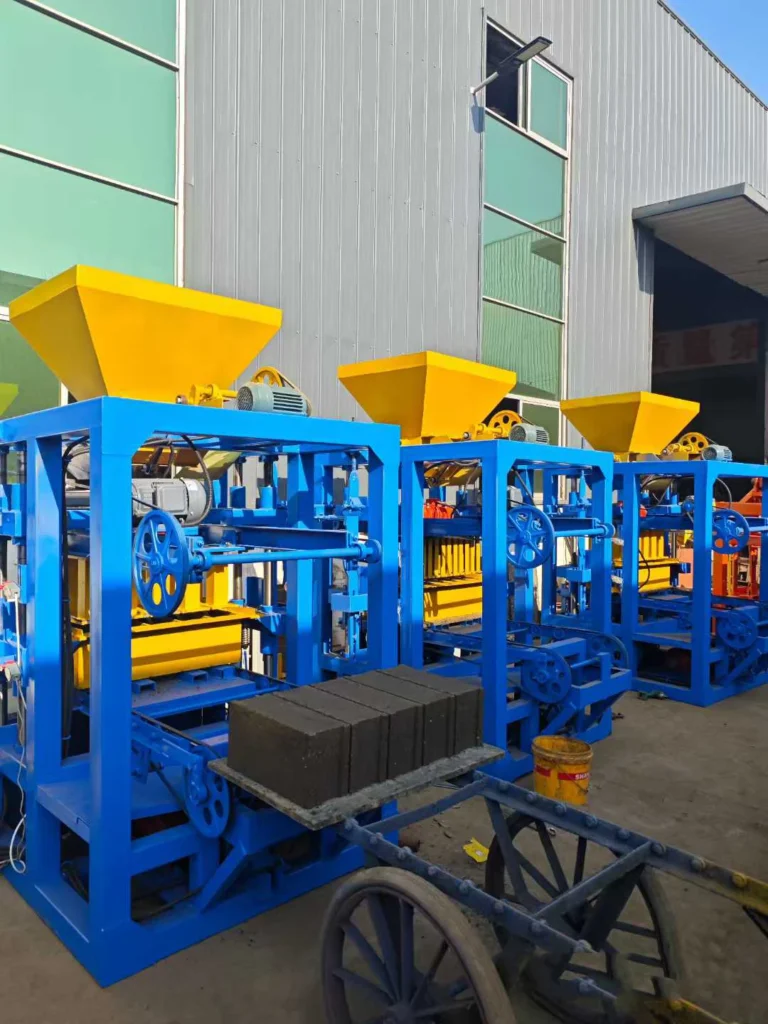 Stationary block machine