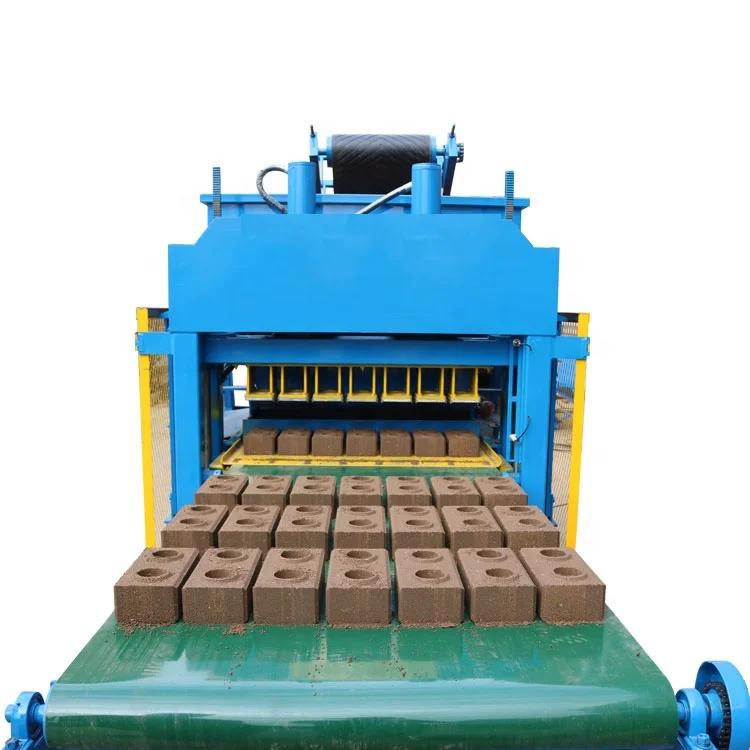
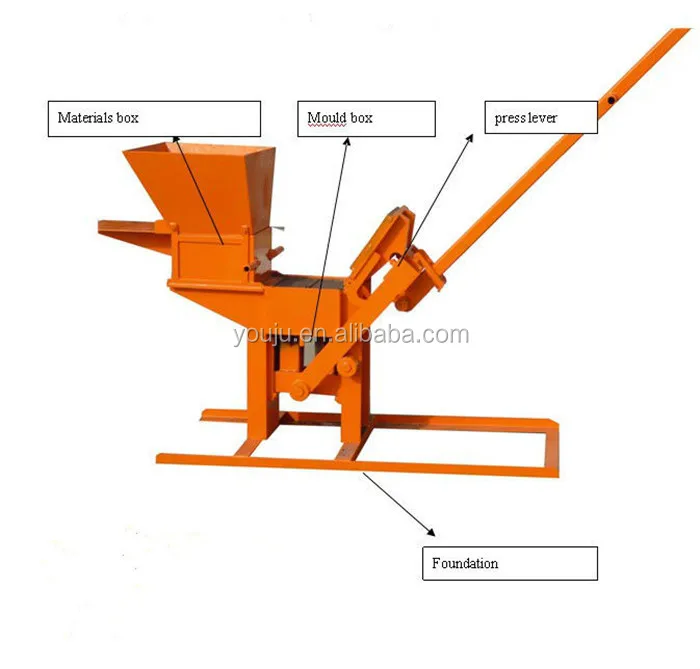
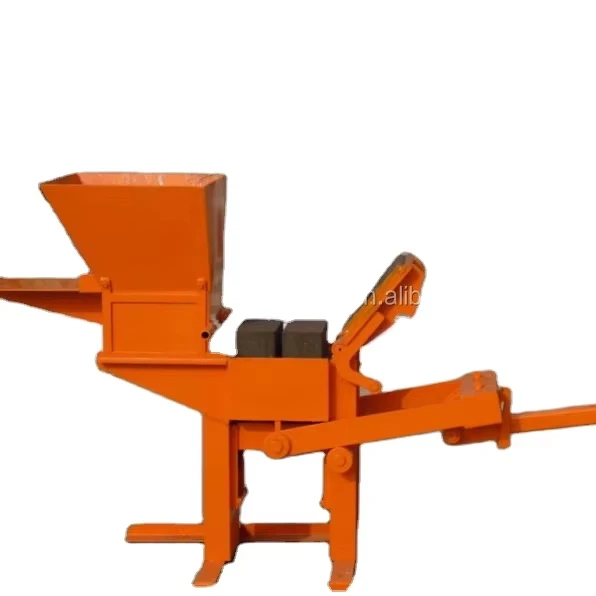
Complete Range Positioning — Every interlocking brick machine we configure is matched to your actual soil composition, target block format, and site power conditions before a quotation is issued.
Technical Specifications
| Parameter |
Value |
| Product Type |
Hydraulic Interlocking Brick Making Machine |
| Dimension |
1200 × 800 × 1750 mm |
| Total Mass |
500 kg |
| Engine Option |
Electric or Diesel |
| Molding Cycle |
15–20 s |
| Capacity |
1,600 pcs/day (basis not stated in source — confirm block format, material, and thickness) |
| Press Type |
Hydraulic press with manual operation |
| Block Compressive Strength |
More than 16 MPa |
| Basic Production Line |
Soil crusher, soil screen, 6 m conveyor belt, JQ350 mixer |
| Mould Change System |
Manual mould change for different brick formats |
| Automation Level |
Manual operation with hydraulic assist |
Application Suitability
| Application |
Material or Output |
| Interlocking brick production for building walls |
Cement, sand, soil, fly ash, and lime mixtures |
| On-site block making for housing projects |
Local soil blended with cement stabilizer |
| Paver and solid brick production |
Crushed stone, sand, and cement blends |
| Lego-style interlocking brick for low-cost construction |
Clay-rich soil with cement addition |
What "1,600 Pieces per Day" Actually Means for Your Site
Capacity figures on interlocking brick machines are meaningless unless the block format, soil type, and moulding pressure are stated alongside them.
I recently worked with a buyer in West Africa who ordered a Clay Interlocking Brick Making Machine based on a brochure capacity number. The soil at his site had high sand content, and without adjusting the hydraulic pressure and mix ratio, the bricks crumbled after curing. Daily usable output dropped to roughly half the quoted figure before we re-tested with his actual soil sample. The lesson applies to every manual-hydraulic press in this tier: the number on the spec sheet assumes ideal conditions that rarely match a real job site [NEED_CITE: soil stabilisation requirements for compressed earth blocks].

Where the ECO BRAVA Tier Sits in the Range
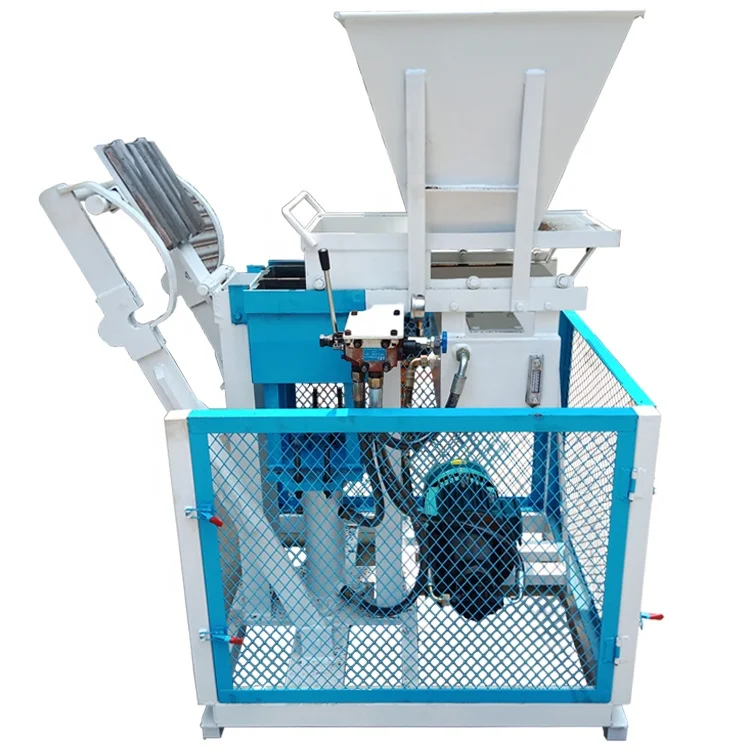
The ECO BRAVA occupies the entry point of the interlocking brick machine range. It is a manual-hydraulic press designed for entrepreneurs and small contractors who need brick production without the capital outlay of a semi-automatic or fully automatic line. The compact footprint — roughly one metre square — means it fits inside a standard workshop or operates directly on a construction site.
For buyers comparing tiers, semi-automatic lines add pallet feeding and basic stacking, raising output and labour cost together. Fully automatic lines introduce PLC control, automatic cubing, and curing rack handling, demanding a dedicated plant building and three-phase power. The ECO BRAVA skips all of that, keeping the investment floor low while still delivering hydraulic pressure sufficient for structural-grade interlocking bricks.
Diesel or Electric — Choosing Before You Ship
Engine selection is one of the first decisions that affects commissioning. Sites with stable three-phase grid power typically choose the electric motor, which runs quieter and requires less daily maintenance. Remote project sites, rural housing developments, and regions with frequent load-shedding favour the diesel engine option, which makes the Clay Interlocking Brick Making Machine manufacturer selection less about the press itself and more about the power infrastructure around it [NEED_CITE: voltage and frequency standards by export market].
Confirming voltage, frequency, and phase with your supplier before production begins avoids a situation where the machine arrives and sits idle while a transformer or generator is sourced locally.
Reading the Spec Sheet Against Your Mix Design
Hydraulic pressure and vibration force work together to determine brick density and compressive strength. On the ECO BRAVA, the hydraulic press achieves a rated block compressive strength exceeding 16 MPa, which covers most single-storey and double-storey load-bearing wall requirements. However, that figure assumes a mix design with adequate clay content and cement proportion.
The 15–20 second moulding cycle controls how many bricks one operator can press in a shift. Shorter cycles are possible with experienced teams, but rushing the cycle reduces compaction and weakens the brick. The manual mould change system allows format switching — from standard interlocking to paver profiles — though each change requires the operator to unbolt and reseat the mould, which takes time away from production. Buyers planning multiple formats should factor in that changeover when calculating realistic daily output.
The basic line configuration — soil crusher, soil screen, 6 m conveyor, and JQ350 mixer — handles raw material preparation up to the point where the mixed material is fed into the press hopper. Pallet handling and stacking remain manual at this tier.
The Hidden Cost of Skipping a Soil Test
Ordering a machine without sending a soil sample is one of the most common mistakes at this investment level. A press configured for high-clay soil will underperform in sandy or laterite conditions, producing bricks that fail compression tests and break during transport. The cost of re-commissioning — new moulds, adjusted hydraulic settings, replacement wear parts — usually exceeds what a simple soil analysis would have added to the project timeline [NEED_CITE: compressive strength testing standards for earth blocks].
Why Source This Tier Here
Block machinery is the single product focus, so the press, mould, pallet specification, and line equipment are matched as one system rather than assembled from unrelated suppliers. Configuration is set against your actual mix design and local aggregate, not pulled from a catalogue default. Mould design covers the interlocking profiles your market sells, with custom drawings available. The automation level is selectable — a buyer can start with the ECO BRAVA and move to a semi-automatic line later without replacing the entire material preparation setup. Installation support includes operator training on the specific soil and mix conditions at your site.
Documentation & Verification
- Machine specification sheet confirming voltage, frequency, and engine type before production
- Mould drawing and format list showing every interlocking profile available for your market
- Factory test record documenting cycle time and block strength on your confirmed mix design
- Line layout with capacity calculation stating the exact block format used for output figures
- Operation and maintenance manual with wear part replacement intervals
Installation, Commissioning & Support
- Compact 1200 × 800 mm footprint requires only a level concrete pad, no special foundation
- Diesel engine option eliminates the need for a dedicated electrical circuit on remote sites
- Machine ships assembled with mould installed, reducing on-site setup to connection and calibration
- First-run commissioning includes pressure and cycle adjustment to match your soil sample results
- Operator training covers mould change procedure and daily hydraulic system checks
- Wear parts list with reorder references for hydraulic seals and mould liners
Before You Request a Quotation
Share your soil type, the interlocking brick format your market demands, and whether your site has reliable grid power or needs the diesel option. Include your target daily output and the curing space you have available. The more detail on raw materials and site conditions, the more accurate the configuration and capacity calculation will be.
Frequently Asked Questions
Q: Which interlocking brick format is the 1,600 pieces per day figure based on?
A: The published capacity assumes specific block dimensions and material conditions that must be confirmed before ordering. Different interlocking profiles — varying in thickness, lock geometry, and overall size — change the moulding cycle and material volume per press. We calculate realistic daily output once your target format and mix design are confirmed.
Q: How do I choose between the electric motor and diesel engine?
A: The decision depends entirely on your site power supply. If stable three-phase electricity is available, the electric motor offers lower noise and reduced daily maintenance. For remote construction sites or areas with unreliable grid power, the diesel engine keeps production running independently. Confirm your local voltage and frequency before the machine enters production.
Q: Where does this manual-hydraulic tier sit compared to semi-automatic and automatic lines?
A: The ECO BRAVA is the entry tier, offering the lowest capital investment and smallest plant footprint. Semi-automatic lines add pallet feeding and stacking, increasing both output and operating cost. Fully automatic lines introduce PLC control and cubing systems for high-volume plants. Buyers often start at this tier and upgrade as demand grows.
Q: What plant footprint and curing area do I need for this machine?
A: The press itself occupies roughly one metre square, and the basic production line — crusher, screen, conveyor, mixer — fits within a small workshop bay. Curing area requirements depend on your daily output and the stacking method you choose. Interlocking bricks typically cure for several days before reaching full strength, so plan a shaded, level area proportional to your production volume.
Q: Can the ECO BRAVA be upgraded to semi-automatic pallet handling later?
A: The manual-hydraulic design is a standalone unit, and upgrading to semi-automatic operation typically means moving to a different machine tier rather than retrofitting the existing press. However, the material preparation equipment — crusher, screen, conveyor, and mixer — can often carry over to a larger line, protecting your initial investment in the upstream setup.

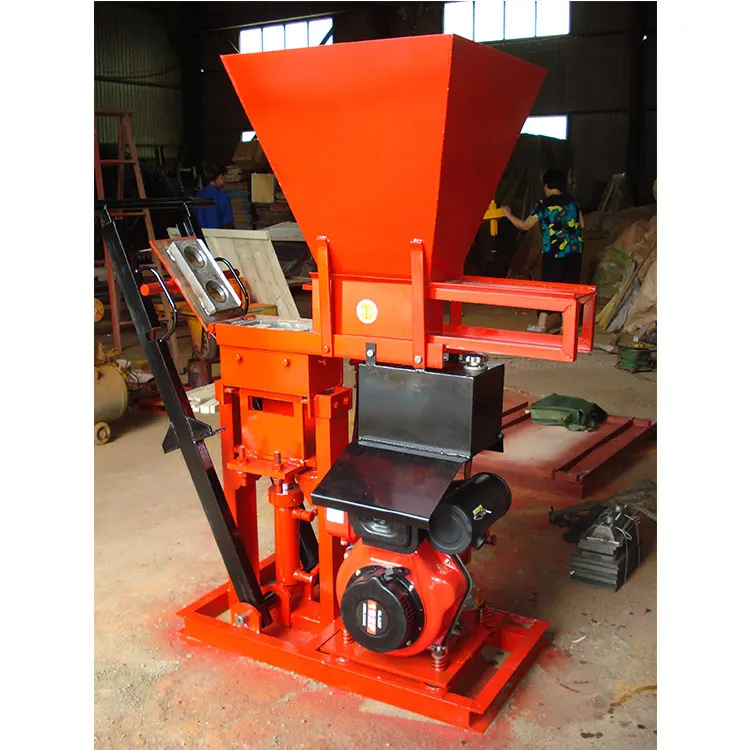
 Clay interlocking brick