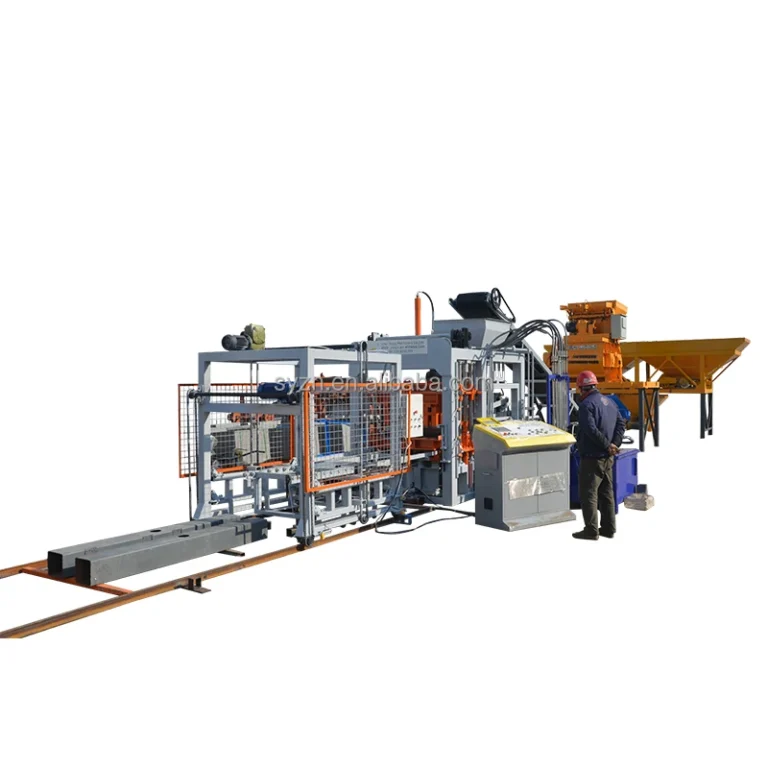
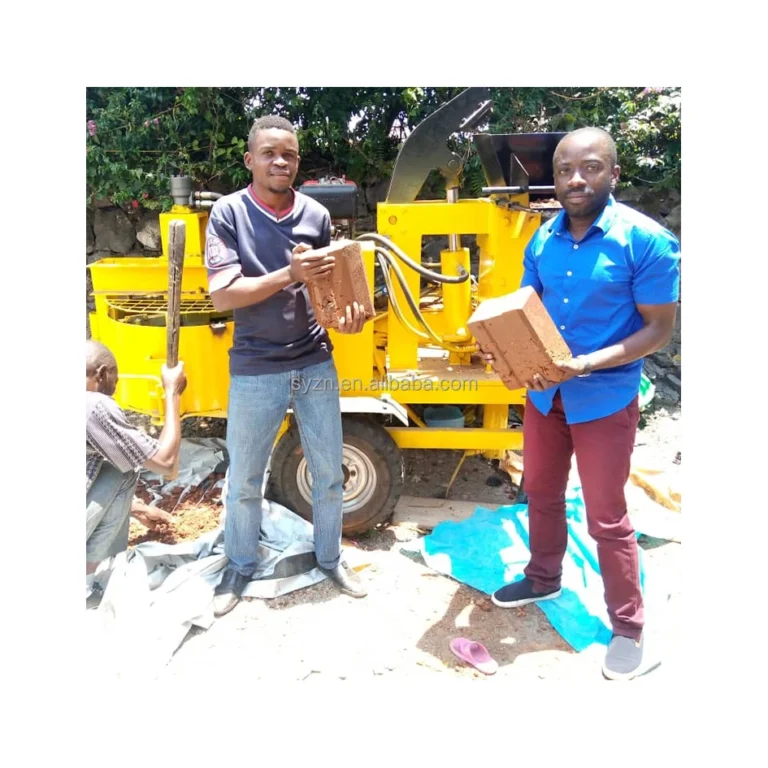
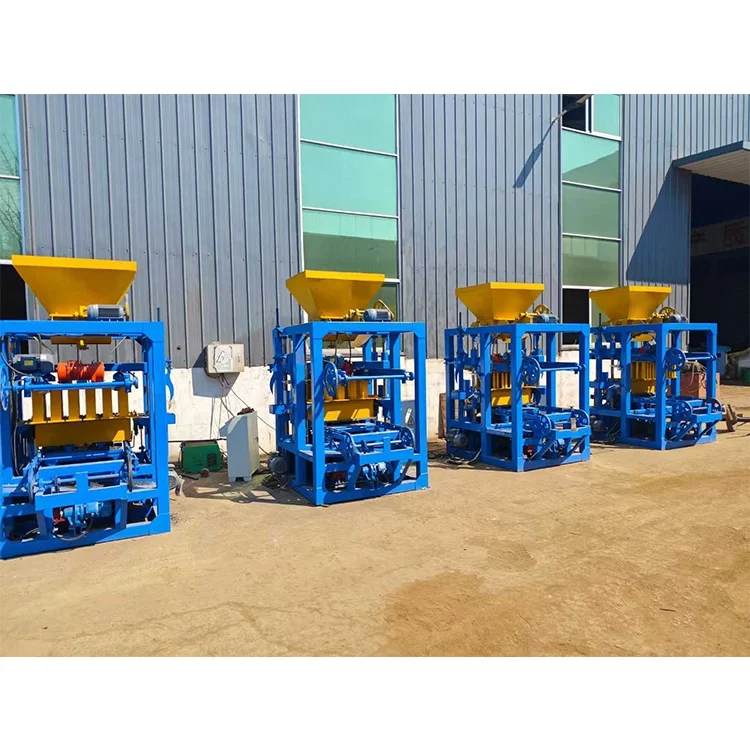
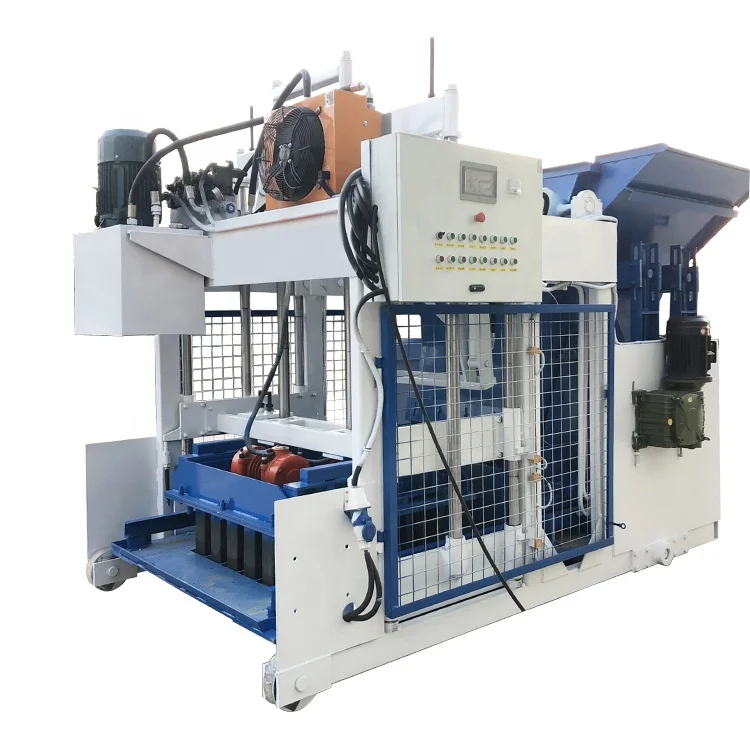
Matched System Design — the QT8-15 is configured as one coordinated line rather than a press bolted to unrelated peripherals, ensuring vibration, hydraulics, and pallet handling work to the same cycle.
Technical Specifications
| Parameter |
Value |
| Model |
QT8-15 |
| Product Type |
Automatic Hydraulic Concrete Block Making Machine |
| Overall Dimensions (L×W×H) |
8300 × 1860 × 3000 mm |
| Molding Cycle |
15–20 s (basis not stated in source — confirm block format / material / thickness) |
| Vibration Force |
55 kN |
| Total Power |
37.2 kW |
| Mixer Model |
JS750 |
| Pallet Size |
1020 × 900 mm |
| Total Weight |
8 T |
| Control System |
PLC control system |
| Hydraulic Station |
Included |
| Automation Level |
Automatic |
| Included Equipment |
Block making machine, hydraulic station, PLC control unit, pallet feeder, block mould, material feeder, block conveyor, block sweeper, spare parts and tools |
| Voltage & Frequency |
Configurable (to be confirmed before shipment) |
| PLC Display Language |
Configurable (to be confirmed before shipment) |
Application Suitability
| Application |
Material or Output |
| Hollow block production for commercial and residential masonry |
Crushed stones, sand, cement, fly ash, dust |
| Paver production for walkways, driveways, and plazas |
Aggregates and cement with pigment for colored finishes |
| Solid block manufacturing for load-bearing walls |
Dense aggregate mixes requiring high compaction |
| Curbstone and kerb production for road infrastructure |
Heavy-duty mixes shaped in single or multi-cavity moulds |
Why "Blocks per Hour" Means Nothing Without a Format
Capacity only matters when tied to the exact block dimension your market buys.
When suppliers quote an automatic concrete block making machine manufacturer output in cycles per hour, the figure almost always assumes a standard hollow block. Switch to a thinner paver or a tall curbstone and the cycle extends, the mould cavity count drops, and the real shift output can fall well below expectation [NEED_CITE: block format assumptions in capacity quoting]. I have seen plants in East Africa arrive on site with a daily target based on hollow block numbers, only to discover that their actual paver order book required a completely different calculation. The QT8-15 molding cycle is listed at 15–20 seconds, but that range must be mapped to the specific format, mix design, and thickness you intend to run before any meaningful daily output figure can be stated.

Where the QT8-15 Sits in the Shiyue Range
The QT8-15 occupies the high-capacity automatic tier, positioned above semi-automatic and mobile machines that serve smaller workshops or on-site contractors. Its 1020 × 900 mm pallet and 37.2 kW total power place it in a bracket suited to dedicated block and paver production plants with steady, multi-format demand. Buyers stepping up from a smaller automatic line or consolidating two semi-automatic presses into one machine will find the footprint and output class aligned. For project-based contractors who need blocks on a single job site and then plan to move, a mobile egg-laying machine is usually the more practical choice.
Automation That Removes Operator Variables
The full automatic configuration includes PLC control, pallet feeder, material feeder, block conveyor, and sweeper delivered as one integrated package. This matters because the consistency of each block depends not only on the press but on how reliably the pallet arrives, how evenly the material feeds, and whether the mould fills uniformly every cycle [NEED_CITE: PLC automation impact on batch consistency in concrete block production]. When these stations are sourced from separate suppliers, cycle timing mismatches leave the press waiting or the conveyor bottlenecked. The QT8-15 line is specified so that each station’s cycle matches the press, keeping the automatic concrete block making machine manufacturer output steady across shifts without manual pacing.
Reading the Specs That Actually Shape Your Output
The 55 kN vibration force works in combination with hydraulic pressure to compact the mix into the mould. If the vibration is strong but the hydraulic hold is weak, the block lifts with soft edges; if the reverse, the block is dense but the cycle drags. The 1020 × 900 mm pallet size determines how many cavities fit per mould — a larger pallet means more blocks per cycle but also requires a curing area and forklift that can handle the loaded pallet weight. The JS750 mixer must be matched to the press throughput so that fresh material arrives before the hopper empties, preventing dry runs that damage the mould. Total power of 37.2 kW means the electrical supply must be sized with starting current in mind, especially in regions where grid stability is a known issue [NEED_CITE: voltage drop effects on hydraulic block machine motors].
The Cost of Skipping Configuration Details
A pallet size chosen without checking the buyer’s existing curing racks leads to pallets that do not fit, forcing a costly rack rebuild before the first block is sold. A PLC display in a language the operators cannot read means every fault code requires a phone call, extending downtime from minutes to hours. When the mix design is set to a catalogue default instead of the buyer’s local aggregate, the vibration force that works for river sand may underperform with crushed stone, producing blocks that fail compressive strength tests. These are not theoretical — they appear on commissioning day when the line is supposed to start earning [NEED_CITE: common commissioning delays in block plant installations].
Why Source the QT8-15 Through Shiyue
The QT8-15 is specified against the buyer’s actual mix design and local aggregate, not a catalogue default, because a machine configured for the wrong sand will underperform no matter how strong the press. Mould design covers the formats the buyer’s market actually sells, with custom drawings available when standard sizes do not match local construction norms. The automation level is selectable, allowing a buyer to start with semi-automatic pallet handling and upgrade later without replacing the press. Installation support includes operator training so that the crew running the line on day one understands mould change procedure and daily maintenance. Every piece of supporting equipment — feeder, conveyor, sweeper — is matched to the press cycle, eliminating the integration gaps that appear when components arrive from different origins.
Documentation & Verification
- Line layout and capacity calculation stating which block format each output figure assumes
- Machine specification sheet with confirmed voltage, frequency, and PLC display language
- Mould drawing and format list showing covered block dimensions and change procedure
- Factory test record on the buyer’s target format before dispatch
- Packing photographs and customs documentation support for smooth clearance
Installation, Commissioning & Support
- Foundation must support the 8 T machine weight and 8300 mm length with level tolerance
- Power supply sized for 37.2 kW total load with dedicated circuit for hydraulic station
- Machine shipped in dismantled state with reassembly guided by installation team on site
- PLC parameters set to buyer’s confirmed voltage and frequency during commissioning
- Operator training covers mould change, daily greasing points, and PLC fault reading
- Wear parts list provided with first replacement intervals for hydraulic seals and mould liners
What to Include With Your Inquiry
To size the QT8-15 accurately to your plant, provide the block formats you sell most, the local aggregate type available, and the daily volume each format must deliver. Confirm the site voltage and frequency, the PLC language your operators need, and whether your existing curing area and forklift are matched to the 1020 × 900 mm pallet. If you are replacing an older press, note its current mould sizes so that continuity with your market is maintained.
Frequently Asked Questions
Q: What daily output can I expect from the QT8-15 for each block format I need?
A: Output depends on the block format, wall thickness, and mix design. The 15–20 second molding cycle is a general range; a paver and a hollow block of different heights will produce different quantities per shift. We calculate daily output per format once your block drawings and mix details are confirmed, so the figure you plan against reflects the product you actually sell.
Q: Where does the QT8-15 sit compared to semi-automatic and smaller automatic tiers?
A: The QT8-15 is in Shiyue’s high-capacity automatic range, suited to dedicated plants with multi-format demand. Semi-automatic and smaller automatic machines serve lower output or project-based sites. Choosing between them depends on your shift pattern, format variety, and whether you need pallet feeding and stacking handled automatically.
Q: What voltage, frequency, and PLC language options are available?
A: Voltage and frequency are configurable to match your local grid, and the PLC display language is set before production. These details must be confirmed during the ordering stage so that the machine arrives ready to connect without transformer additions or language barriers delaying commissioning.
Q: How is the machine configured to match my local aggregate and mix design?
A: We request a sample of your local sand or crushed stone and run test blocks to verify that the 55 kN vibration force and hydraulic pressure produce the density your market requires. The JS750 mixer and material feeder are then set to deliver that mix consistently, avoiding the strength variation that appears when a default catalogue setting meets unfamiliar aggregate.
Q: What supporting equipment is included, and what do I need to source separately?
A: The QT8-15 package includes the hydraulic station, PLC unit, pallet feeder, material feeder, block conveyor, sweeper, one mould, and spare parts. Items typically sourced by the buyer include the curing racks, forklift for pallet handling, and the raw material silos, depending on how your existing plant is laid out.

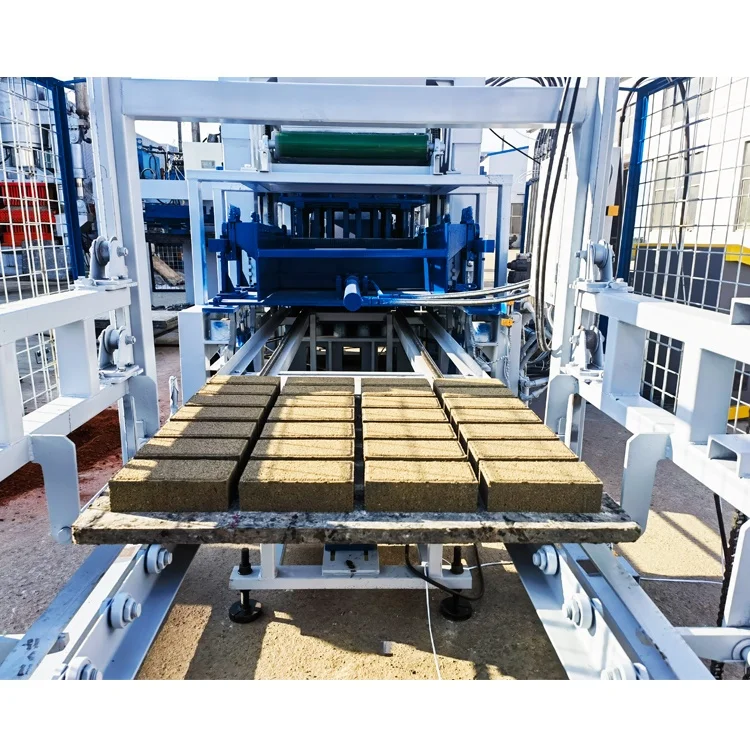
 High quality block machine