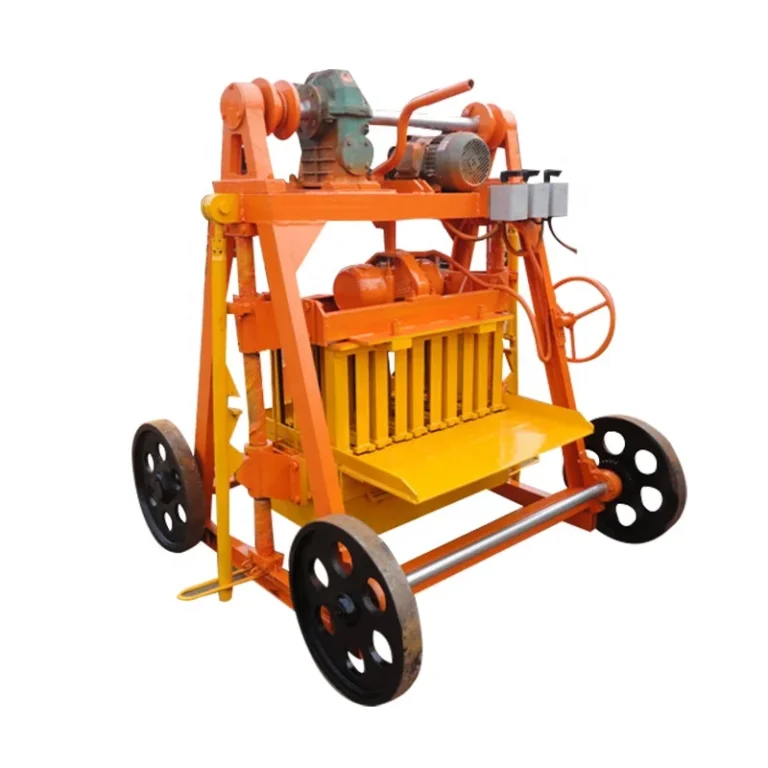
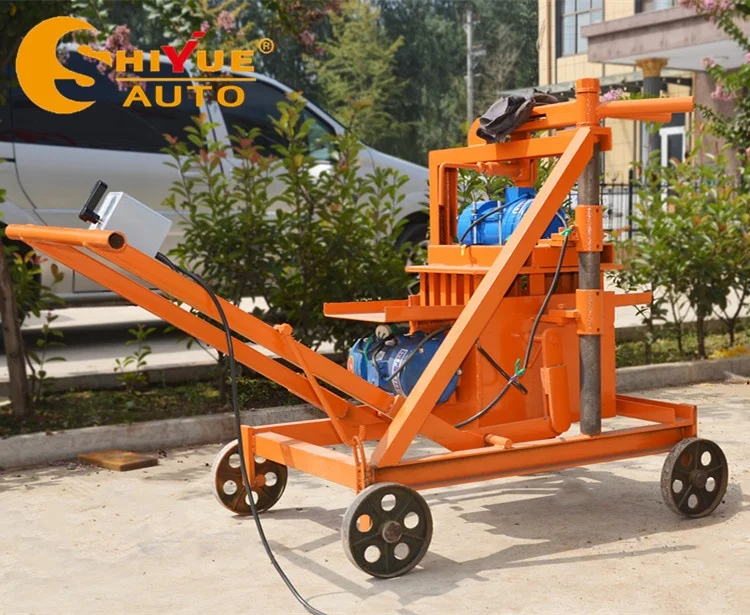
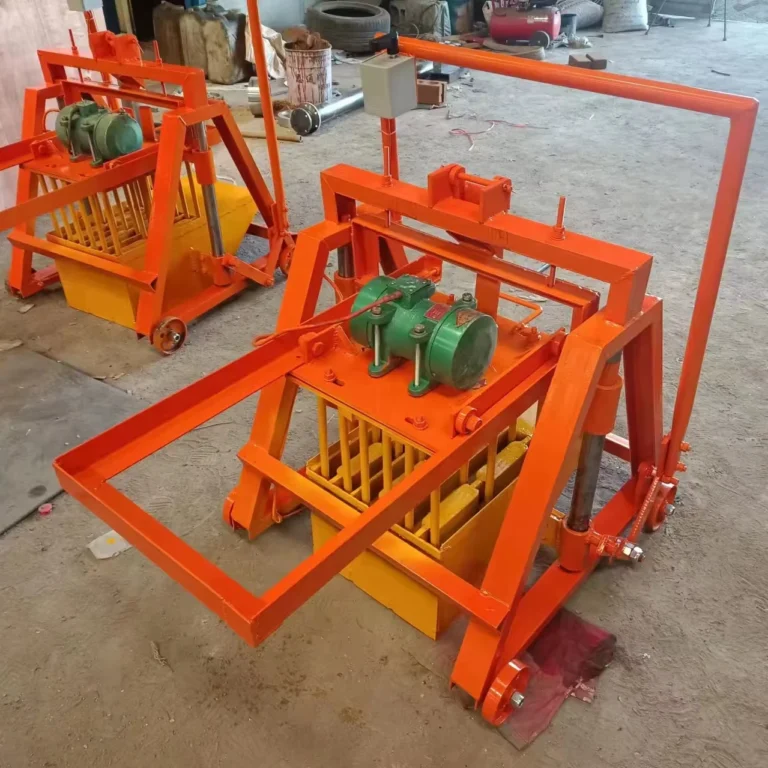
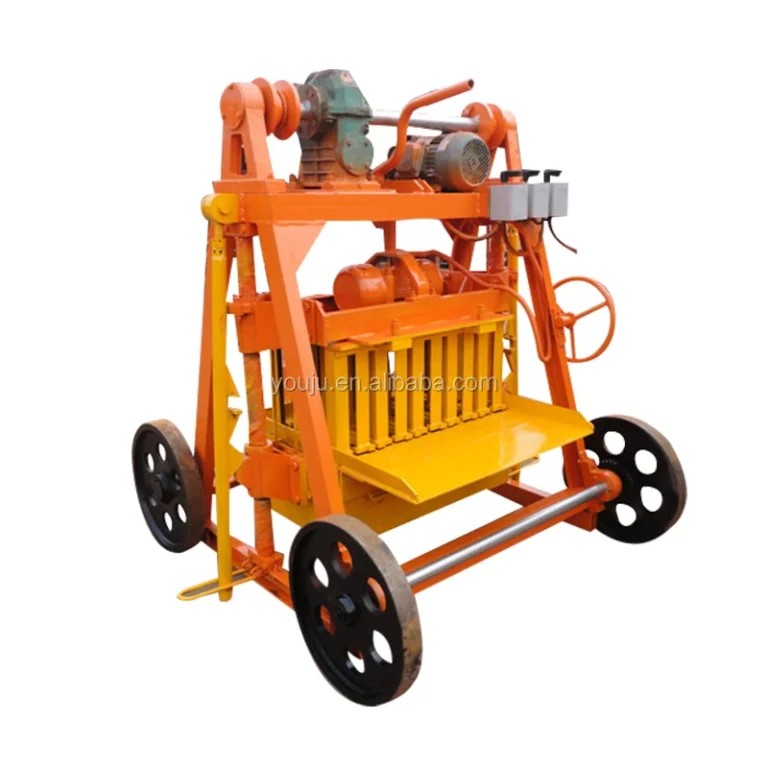
Single-focus machinery scope — we specify the QMR4-45 egg-laying block machine together with its matching mould, ground conditions and output format so the capacity figure you see is the one you actually get on site.
Technical Specifications
| Parameter |
Value |
| Model |
QMR4-45 |
| Product Type |
Mobile Egg Laying Block Making Machine |
| Power Source |
Diesel Engine |
| Machine Type |
Mobile / Egg-laying (no fixed plant required) |
| Automation Level |
Manual / Portable |
| Mould Format |
Interchangeable (basis not stated in source — confirm block format, material and thickness) |
| Output Capacity |
Basis to be confirmed (depends on block format and mix design) |
| Cycle Time |
Basis to be confirmed (varies with block format) |
| Vibration Force |
Basis to be confirmed (verify against manufacturer catalog) |
| Hydraulic Pressure |
Not applicable (mechanical vibration system) |
| Pallet Size |
Not applicable (blocks laid directly on ground) |
| Mould Change Time |
Basis to be confirmed (verify against manufacturer catalog) |
| Control System |
Manual operation |
| Overall Dimensions |
Basis to be confirmed (verify against manufacturer catalog) |
| Net Weight |
Basis to be confirmed (verify against manufacturer catalog) |
| Voltage & Frequency |
Not applicable (diesel-powered) |
| Certification |
CE, ISO 9001 |
Application Suitability
| Application |
Material or Output |
| On-site hollow block production |
Crushed stone, river sand and cement mix |
| Solid brick production at building sites |
Local aggregate blended with Portland cement |
| Paving block manufacturing for remote projects |
Sand, gravel and cement with pigment additive |
| Low-investment block supply for rural housing |
Basalt dust or laterite combined with cement binder |
| Temporary production for development contractors |
Available local granular material with cement |
What a "Daily Output" Figure Hides Until You Ask About Block Format
A capacity number without a stated block format is a guess, not a quotation.
Many mobile egg laying block making machine for sale quotations list a single daily output figure. That number usually assumes a small solid brick. Switch to a 200mm hollow block and the same machine produces considerably fewer pieces per shift because the mould cavity is larger and the vibration cycle runs longer. I have watched contractors arrive on site expecting one number and finding themselves chasing another, simply because the format behind the figure was never stated [NEED_CITE: capacity calculation standards for concrete block production equipment]. The QMR4-45 output must therefore always be read alongside the specific block format, mix design and ground condition it was calculated on.

Where This Model Sits in the Range
The QMR4-45 occupies the entry tier of the mobile block machine lineup. It is designed for buyers who need block production without a stationary plant — contractors working on a building site, entrepreneurs testing market demand before committing to a full line, or project teams operating in areas where grid electricity is unreliable. The diesel engine removes the dependency on site power, which matters when your project is a road extension or a housing development two hours from the nearest substation.
What Egg-Laying Operation Removes From the Setup
An egg-laying machine lays each block directly on the ground as it moves forward. There are no pallets to buy, no pallet return system to maintain and no curing racks to build. That simplifies the production loop to a single operator, a flat surface and a supply of mixed concrete. The trade-off is that the ground surface becomes part of your production equipment — a cracked or uneven floor produces blocks with irregular bases [NEED_CITE: surface preparation requirements for egg-laying block machines]. This model is therefore best matched to buyers who can prepare a level concrete slab or who work on compacted hardstanding.
Vibration, Diesel Power and Mould Interchangeability
The mechanical vibration system on the QMR4-45 compacts the concrete mix inside the mould box before the block is released onto the ground. Vibration force and cycle duration must be matched to the aggregate you use; a fine river sand compacts differently from crushed basalt dust, and running the same settings on both will give inconsistent block density. The diesel engine is rated to deliver continuous power through an eight-hour shift without thermal derating, which matters when ambient temperatures are high. Mould interchangeability lets one machine produce hollow blocks, solid blocks and pavers in sequence, but every format change requires the operator to stop production, unbolt the current mould, fit the new one and run a test cycle before resuming [NEED_CITE: mould change procedure for mobile egg-laying block machines]. The time that takes should be confirmed before you commit to a multi-format production plan.
When the Wrong Aggregate Specification Follows the Machine to Site
Years ago a buyer ordered a mobile egg-laying machine rated for standard river sand. Their site only had crushed basalt dust. The vibration could not compact it properly, blocks crumbled on demoulding, and the mould clearance and pressure settings had to be re-engineered on the ground. The lesson is straightforward: confirm your local aggregate type, particle size distribution and moisture behaviour before the machine is configured, not after it arrives. A QMR4-45 set up for one material and fed another will produce blocks that fail a compression test, and no amount of cement addition compensates for poor compaction [NEED_CITE: aggregate gradation and concrete block compressive strength correlation].
Why Sourcing Here Differs from Catalogue Ordering
Block machinery is our single focus, which means the QMR4-45 is specified as part of a matched set — machine, mould and ground preparation guidance together rather than as separate line items. We set the configuration against your actual mix design and local aggregate, not a catalogue default. Mould options are chosen for the block formats your market actually sells, and custom drawings are available when your specification falls outside standard formats. You can start with this manual diesel model and move to a semi-automatic stationary line later, keeping the same production logic. Installation support includes operator training so your crew understands mould change, vibration adjustment and daily maintenance before the first production run.
Documentation & Verification
- Capacity calculation stating the block format and mix design behind every output figure
- Machine specification sheet with diesel engine rated power and overall dimensions confirmed
- Mould drawing and format list covering every block type producible on the QMR4-45
- Factory test record showing vibration performance and block output before dispatch
- CE declaration and ISO 9001 documentation included with shipment
- Operation and maintenance manual covering diesel engine service intervals
Installation, Commissioning & Support
- Level concrete slab or compacted hardstanding required as the production surface for egg-laying operation
- Diesel fuel supply and engine oil specification confirmed before first start-up of the QMR4-45
- Machine arrives assembled with mould mounted; first test run conducted on your aggregate
- Mould change procedure and bolt torque settings demonstrated during on-site operator training
- Vibration adjustment walk-through for your specific mix design and block format
- Wear parts list with reorder references for mould liners and vibration springs
Before You Send an Inquiry
Tell us the block formats your market sells, the daily volume you need for each, and the aggregate available at your site. Share the ground conditions where you plan to produce — whether that is a prepared concrete slab or compacted earth. If your project has a deadline, state it so we can confirm lead time against your schedule.
Frequently Asked Questions
Q: How is daily output calculated and which block format is it based on?
A: Every output figure we quote for the QMR4-45 is stated alongside the specific block format, mould cavity count and mix design it assumes. A hollow block takes longer to compact and produces fewer pieces per shift than a solid brick on the same machine. We provide a capacity calculation document so you can see the format behind the number before placing an order.
Q: What block formats and mould options are available for the QMR4-45?
A: The QMR4-45 accepts interchangeable moulds for hollow blocks, solid bricks, paving blocks and other standard formats. Custom mould design is available if your market requires a non-standard shape or dimension. Confirm the formats you need before quotation so the mould list and cycle times are included in your proposal.
Q: What ground surface conditions are required for egg-laying block production?
A: Egg-laying machines release blocks directly onto the ground, so the surface must be flat, firm and level. A poured concrete slab gives the most consistent block base. Compacted hardstanding can work for temporary sites. Uneven or soft ground causes irregular block bases and increases breakage during the curing period.
Q: How does this mobile machine compare to semi-automatic stationary models in the range?
A: The QMR4-45 offers portability and zero pallet cost, suited to on-site and low-investment production. Stationary semi-automatic models deliver higher output and more consistent block geometry through fixed pallet systems and controlled curing. The choice depends on whether your priority is mobility and simplicity or volume and dimensional precision.
Q: What is the mould change process and how long does it take on site?
A: Mould change on the QMR4-45 involves stopping the machine, unbolting the current mould box, fitting the replacement mould and running a test cycle to verify alignment and compaction. The exact duration depends on operator familiarity and the mould design. We demonstrate the procedure during commissioning so your crew can perform changes independently.

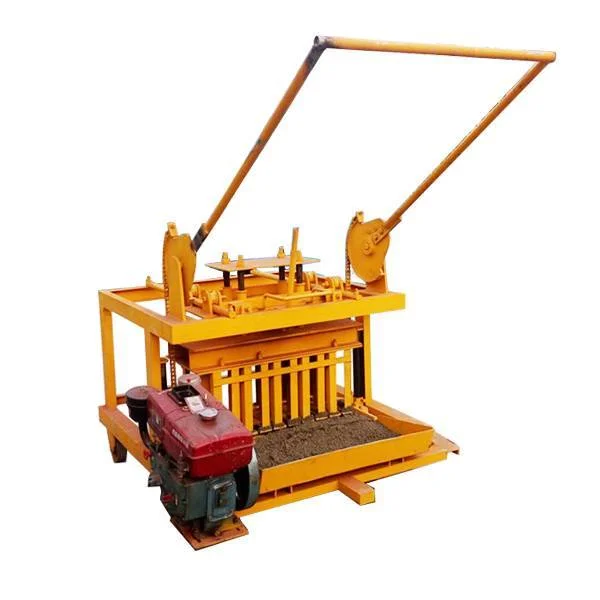
 Mobile block machine