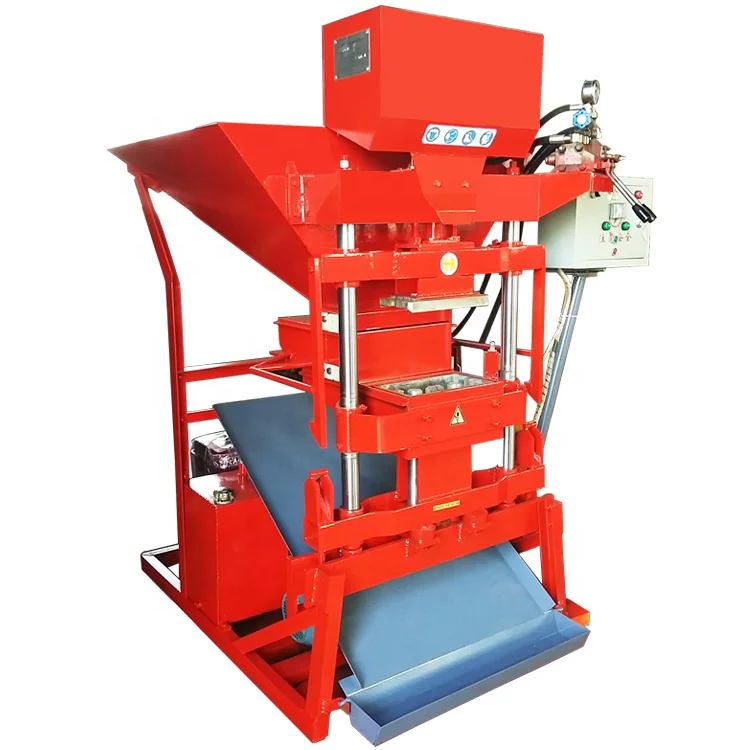
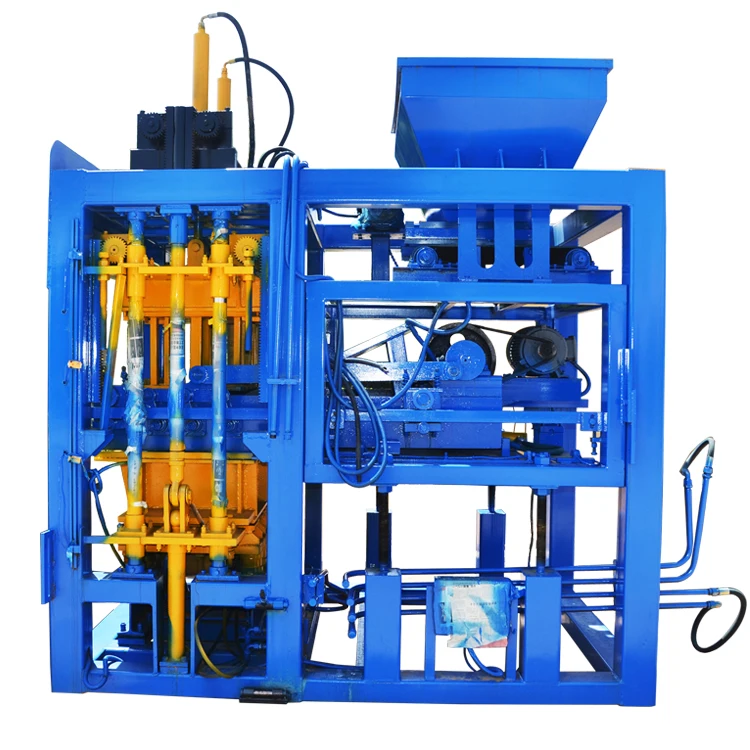
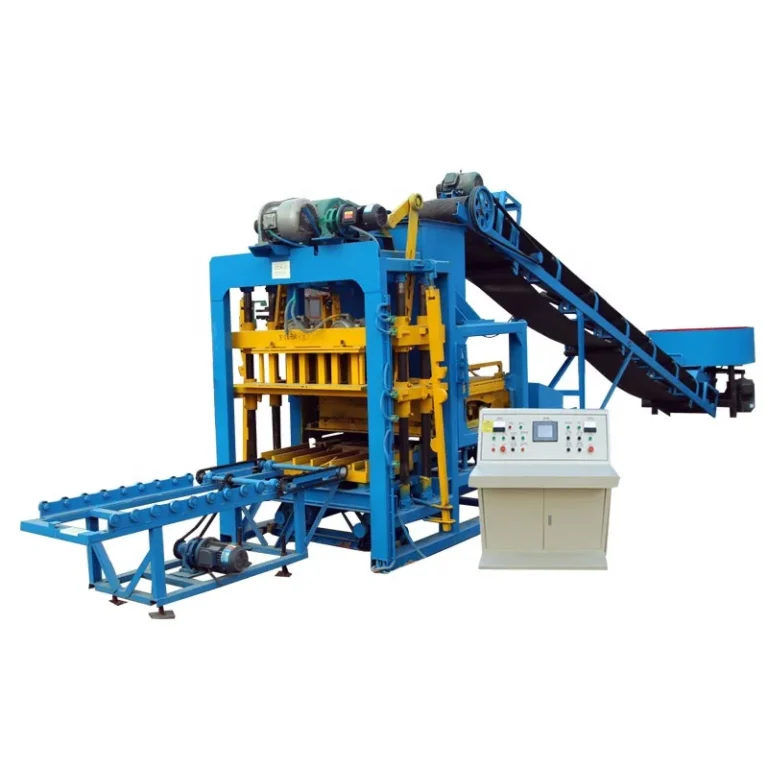
Integrated System Design — machine, mould, pallet and handling specified as one matched platform so the press is never starved or bottlenecked by peripheral equipment.
Technical Specifications
| Parameter |
Value |
| Model |
QT10-15 |
| Product Type |
Automatic Hydraulic Block Making Machine |
| Automation Level |
Automatic |
| Control System |
PLC control cabinet |
| Vibration Mode |
Vertical station mode resonance with automatic FM-AM |
| Hydraulic System |
Independent integrated hydraulic station |
| Mould Change |
Simple replacement for multi-format production |
| Components |
Pallet feed machine, block making machine, storage hopper, conveyor, hydraulic unit, PLC control cabinet |
| Output — Hollow Block 400×200×200 mm |
1800–2400 pcs/hour (14400–19200 pcs/8 hr), 15–20 s cycle, 10 pcs/mould |
| Output — Hollow Block 400×150×200 mm |
2160–2880 pcs/hour (17280–23040 pcs/8 hr), 15–20 s cycle, 12 pcs/mould |
| Output — Solid Brick 240×115×53 mm |
8928–11160 pcs/hour (71424–89280 pcs/8 hr), 15–20 s cycle, 62 pcs/mould |
| Output — Paving Block 200×100×60 mm |
5184–6480 pcs/hour (41472–51840 pcs/8 hr), 20–25 s cycle, 27 pcs/mould |
| Output — Paving Block 225×112.5×60 mm |
4032–5040 pcs/hour (32256–40320 pcs/8 hr), 20–25 s cycle, 24 pcs/mould |
| Rated Power |
(basis to be confirmed) |
| Voltage & Frequency |
(basis to be confirmed) |
| Overall Dimensions (L×W×H) |
(basis to be confirmed) |
| Net Weight |
(basis to be confirmed) |
| Hydraulic Pressure |
(basis to be confirmed) |
| Vibration Force |
(basis to be confirmed) |
| Pallet Size |
(basis to be confirmed) |
| Mould Change Time |
(basis to be confirmed) |
| Warranty |
1 year (excluding spare parts) |
| Payment Terms |
30% deposit by T/T, 70% balance before delivery |
| Standards |
CE declaration where applicable |
Application Suitability
| Application |
Material or Output |
| Hollow block production |
Crushed stone, cement, sand, fly ash aggregates |
| Solid brick production |
Fine aggregate and cement blends for load-bearing walls |
| Paving block production |
High-density concrete mixes for interlocking and rectangular pavers |
| Multi-cellular brick production |
Lightweight aggregate or foamed concrete for partition units |
| Large-scale block production lines |
Continuous three-shift operation across multiple format changes |
What "15–20 Seconds" Really Means for Your Daily Run
Cycle time is only honest when the block format and mould cavity count sit beside it.
An automatic block machine manufacturer quoting a single cycle time across every format is hiding half the story. The QT10-15 runs a 15–20 second moulding cycle on hollow blocks at 10 or 12 cavities, but that same cycle stretches to 20–25 seconds on paving blocks where density requirements demand longer vibration. On a Middle East housing project I worked on, the contractor planned daily targets around the fastest cycle number and ended up short by a wide margin once they switched to paver production mid-shift [NEED_CITE: block cycle time variation by format]. Without format-specific capacity calculation, your plant throughput projection is a guess.

Where the QT10-15 Sits in the Full Machine Range
The QT10-15 occupies the top output tier in our automatic block machine range. Below it, smaller automatic models serve plants that need format flexibility but cannot justify the footprint and pallet volume this machine demands. Semi-automatic tiers handle lower investment levels and shorter runs where manual pallet handling is acceptable. Mobile and egg-laying machines sit at the other end entirely, producing on-site without fixed pallets or curing racks.
Choosing the right tier starts with your daily volume target per format, not with catalogue headlines. A building material distributor adding the QT10-15 is committing to a curing area, forklift fleet, and pallet inventory that match its output. Smaller plants that cannot support that infrastructure are better served by a mid-tier automatic model.
Matching the Line Around the Press
The press itself is only one station. Raw material feeding, mixing, pallet feeding, automatic stacking, and curing rack handling must all keep pace or the QT10-15 sits idle waiting for the next pallet. On high-cycle lines, a bottleneck at the mixer or pallet return conveyor erodes the output advantage you paid for [NEED_CITE: block production line bottleneck analysis].
This is why the complete line configuration matters more than the press specification in isolation. Pallet size, pallet material, stacking height, and curing rack dimensions are set during the proposal stage so every station connects without dead time. The result is a matched system where cycle times align across feeding, pressing, and handling.
Reading the Specs That Actually Shape Your Output
Hydraulic pressure and vibration force together determine whether your blocks reach target strength or crumble at demoulding. The QT10-15 uses an independent integrated hydraulic station that isolates vibration and dust from the hydraulic circuit, which matters on lines running three shifts where contamination accelerates valve wear. Vertical station mode resonance with automatic frequency modulation adjusts vibration delivery to the mix, so a fly-ash-heavy blend and a crushed-stone blend each receive the energy profile they need rather than a single fixed pulse.
The PLC control cabinet governs the entire sequence — pallet feed, material charge, vibration, pressing, and block ejection. Control language and display configuration are confirmed before production so operators can read fault codes on day one instead of waiting for a translator. Pallet size, still to be confirmed per project, must match the curing rack spacing and the forklift tine width already in your yard.
The Cost of Specifying the Press Without the Peripherals
Buyers who focus on the press and treat pallets, stacking, and curing as afterthoughts end up with blocks stacked by hand on the factory floor. Output that should flow to the curing area instead piles up around the machine, blocking pallet return and forcing the press to stop. On a large-format machine like the QT10-15, manual handling of that volume is not just slow — it creates safety hazards and breakage losses that erase the output gain [NEED_CITE: manual pallet handling risks in block plants].
Another common gap is voltage and frequency left unconfirmed until the machine arrives. Commissioning stalls while transformers are sourced or panels are rewired, and the project schedule slips by weeks. These are not equipment defects; they are specification omissions that a complete line proposal prevents.
Why Source This Machine Through a Matched System
Every configuration starts with the buyer’s target block format, local aggregate, and daily output requirement — not a catalogue default. Capacity calculations state the exact format and cycle time assumed, so the number you plan against is the number the machine delivers.
Mould design covers the formats your market actually sells, including custom drawings for non-standard sizes. Automation level is selectable: a buyer can begin with semi-automatic pallet handling and upgrade to full stacking and cubing as volume grows. Installation includes on-site commissioning with operator training, and wear parts lists are provided so the first replacement order is planned before the machine ships [NEED_CITE: block machine wear parts scheduling].
Factory testing runs the QT10-15 against the buyer’s mix design and target block format, producing a test record that documents cycle time and block quality before the machine leaves the factory. This removes the risk of discovering a mix incompatibility after the line is installed.
Documentation & Verification
- Line layout and capacity calculation stating the block format assumed for each QT10-15 output figure
- Machine specification sheet confirming voltage, frequency, and PLC display language for your site
- Mould drawing and format list covering every block type the machine will produce
- Hydraulic and electrical schematic for local maintenance teams and spare part sourcing
- Factory test record demonstrating cycle time and block density on your mix design before dispatch
- Packing photographs and customs documentation support for smooth port clearance
Installation, Commissioning & Support
- Foundation plan specifying load points and curing area dimensions matched to QT10-15 pallet output volume
- Electrical supply requirements confirmed against the PLC control cabinet voltage and frequency rating before shipment
- Machine dismantling for container loading with reassembly guidance on your production floor
- First-run commissioning with vibration and hydraulic pressure set against your local aggregate test report
- Operator training covering PLC fault codes, mould change procedure, and daily maintenance checkpoints
- Wear parts and mould list provided at delivery so replacement sourcing is scheduled from day one
What We Need to Size Your Line
To build an accurate line proposal around the QT10-15, we need your target block formats with daily volume per format, the local aggregate type and any available lab test reports, and the dimensions of your planned curing area. Confirm your site voltage, frequency, and the PLC display language your operators require. If you have existing pallets, forklifts, or upstream mixers, share their specifications so the peripheral stations are configured to match.
Frequently Asked Questions
Q: How do I verify the real daily output for my specific block format?
A: Every capacity calculation we provide states the exact block format, mould cavity count, and cycle time assumed. For example, the QT10-15 produces 1800–2400 hollow blocks per hour based on a 400×200×200 mm format at 10 cavities and a 15–20 second cycle. You match this against your target product to confirm realistic daily throughput before committing.
Q: Where does the QT10-15 sit compared to smaller automatic tiers?
A: It is the highest output tier in the automatic range, designed for large-scale plants running continuous shifts with dedicated curing infrastructure. Smaller automatic models suit plants with lower daily targets or limited curing space. The right tier depends on your volume requirement per format and the supporting equipment your site can accommodate.
Q: What plant footprint does a complete QT10-15 line require?
A: The line includes the press, pallet feed machine, storage hopper, conveyor, hydraulic unit, and stacking equipment. Total footprint depends on pallet size, curing rack layout, and block stacking height — all confirmed during the proposal stage. We provide a line layout drawing showing every station so you can plan floor space before ordering.
Q: Can voltage, frequency, and PLC language be confirmed before production?
A: Yes. These are locked in during the configuration stage before the machine enters production. The PLC control cabinet is built to your site voltage and frequency, and the display language is set to match your operators. This prevents commissioning delays that occur when electrical specifications are left open until the machine arrives.
Q: What mould formats are available and how does mould change work?
A: The QT10-15 supports hollow blocks, solid bricks, paving blocks, and multi-cellular bricks through simple mould replacement. Mould designs are available for standard formats, and custom moulds can be produced to your drawings. Mould change time depends on the format and tooling configuration, and is confirmed in your specification sheet.

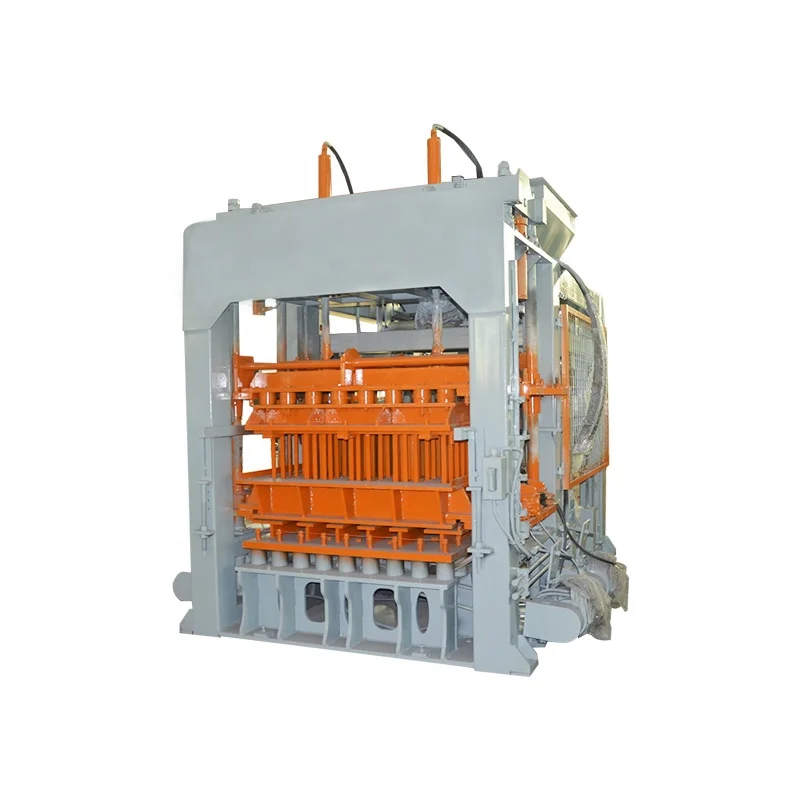
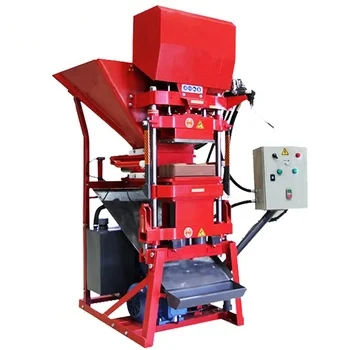 Automatic block machine