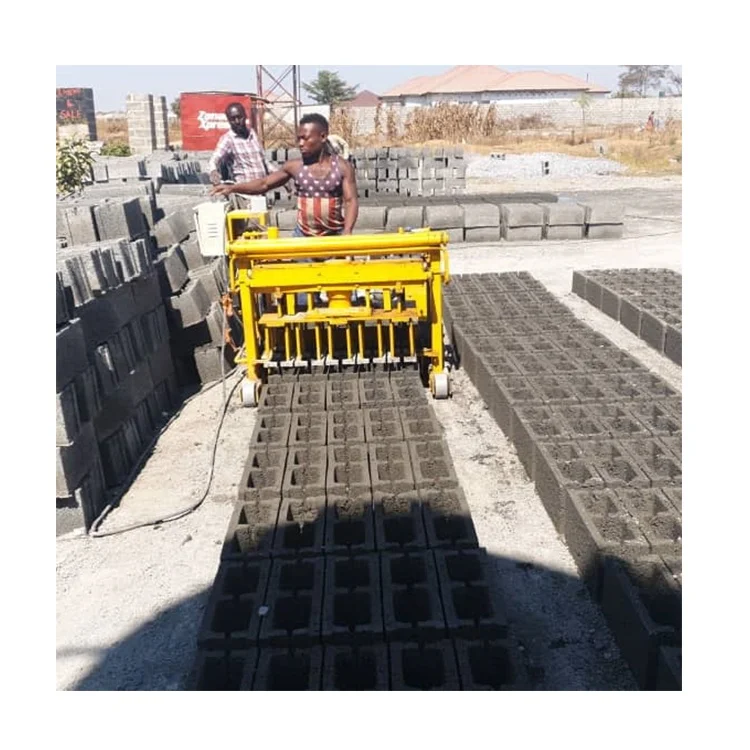
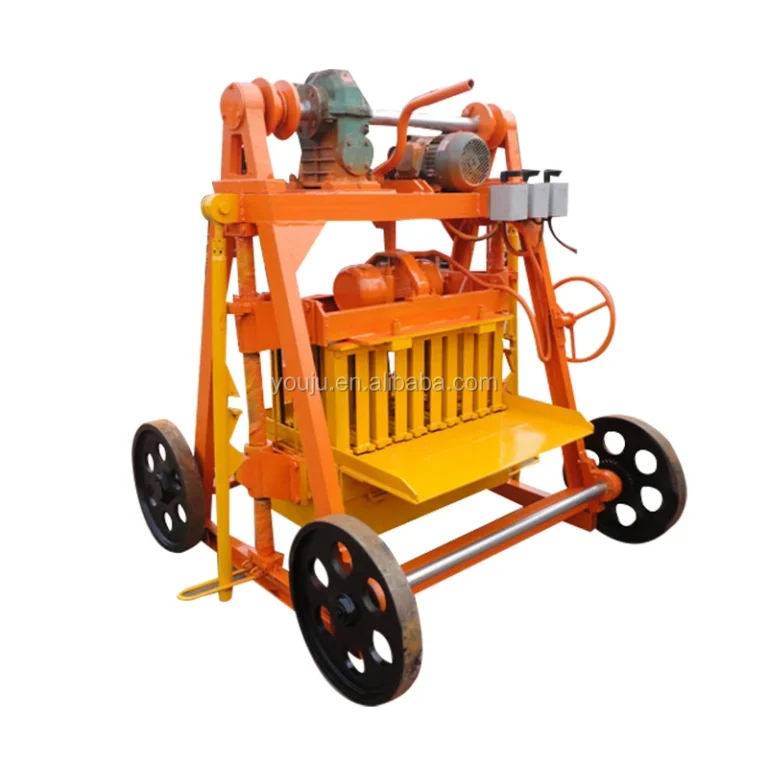
Matched system output — machine, mould, pallet and handling are specified together, not assembled from unrelated suppliers.
Technical Specifications
| Parameter |
Value |
| Product Type |
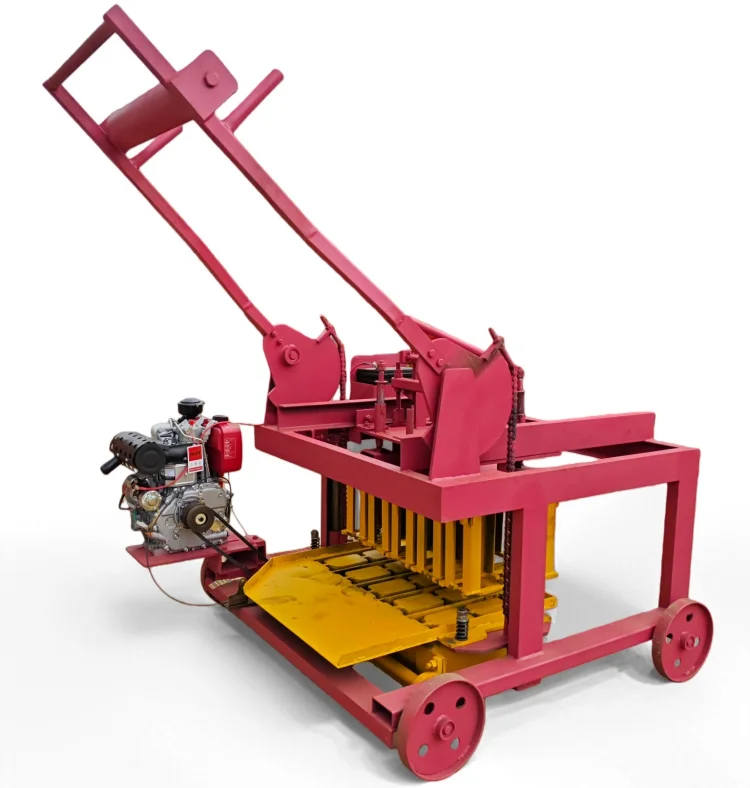
Egg Laying Block Making Machine |
| Model |
QMJ4-45 |
| Molding Capacity |
4 pcs/mold (400×200×200mm hollow block) |
| Molding Cycle |
45 seconds |
| Vibration Frequency |
2400 r/min |
| Vibration System |
Twice-vibration (replaces single-vibration design) |
| Hydraulic Method |
Mold vibration |
| Demold Method |
Manual |
| Turning Method |
Manual |
| Power Source |
Diesel / petrol engine |
| Total Power |
6 kW |
| Automation Level |
Manual / egg-laying (mobile, no fixed plant required) |
| Pallet Requirement |
Not stated in source (reduced consumption claimed) |
| Daily Output – 400×200×200mm |
3,000 pcs/day (8-hour shift, 4 pcs/mold) |
| Daily Output – 400×150×200mm |
3,500 pcs/day (8-hour shift, 5 pcs/mold) |
| Daily Output – 400×120×200mm |
4,500 pcs/day (8-hour shift, 6 pcs/mold) |
| Control System |
Not stated in source |
| Voltage & Frequency |
Not stated in source |
| Overall Dimensions |
Not stated in source |
| Net Weight |
Not stated in source |
| Warranty |
One year for the whole machine |
Application Suitability
| Application |
Material or Output |
| On-site hollow block production for building contractors |
Cement, crushed stone, sand, gravel, fly ash |
| First block plant setup by entrepreneurs |
Local aggregate with cement binder |
| Housing project block supply in off-grid areas |
Diesel or petrol powered, no fixed plant required |
| Small-scale paver and solid block runs |
Interchangeable moulds for multiple formats |
| Rural and peri-urban construction material supply |
Blocks laid directly on prepared cement ground |
What "3,000 Blocks per Day" Actually Means When the Format Changes
Every daily output figure on this page assumes a specific block size, an 8-hour shift, and a fixed mould count — change any one of them and the number shifts.
An egg laying block making machine for sale is often marketed with a single headline output number that hides the block format behind it. On the QMJ4-45, you get 3,000 hollow blocks per day at 400×200×200mm, but switch to a thinner 400×120×200mm wall and the same shift yields 4,500 pieces. The cycle stays at 45 seconds; the difference is simply how many cavities the mould holds. Buyers who skip this step end up planning a project around a daily tonnage the machine was never set up to deliver [NEED_CITE: capacity assumptions in mobile block machine quotations].
I used to review equipment quotes on the purchasing side and watched suppliers quote peak-cycle output without stating the reference block. The result was always the same: a site manager standing in the yard at the end of the week wondering why the truck was only half full.
Mould Count and the Formats Your Market Actually Buys
This egg laying block making machine for sale ships with moulds sized to common hollow block dimensions, and each format change means a different cavity count per cycle. Four cavities for the 200mm-wide block, five for the 150mm, six for the 120mm. If your local hardware distributors move mostly 150mm partition blocks, your realistic output sits closer to 3,500 pieces per shift — not the 3,000 figure quoted against the larger format. Confirming which mould ships in the crate before you sign the purchase order removes the mismatch.
Diesel or Petrol Power Where Grid Supply Is Unreliable
The QMJ4-45 is specified with a diesel or petrol engine rather than a mains-fed electric motor as the primary drive. That matters on greenfield housing sites, rural infrastructure projects, or any location where three-phase power is either unavailable or too expensive to pull in for a temporary block yard. Engine power also means the machine can follow the build as it moves across a large site, laying blocks closer to where walls go up and cutting internal transport distance [NEED_CITE: off-grid block production requirements in developing construction markets].
Twice-Vibration Density and What It Means for Block Strength
Older egg-laying designs relied on a single vibration pulse, which often left the bottom of the block less compacted than the top. The twice-vibration system on this model fires the vibration table twice within the 45-second cycle, driving aggregate particles into a tighter arrangement before the mould lifts. The practical result is a more uniform density through the block height and fewer rejects when a buyer’s local aggregate contains a higher fines fraction. Mould wear is also spread more evenly because the concrete mass is not shifting unpredictably during demolding.

Ground Preparation and Curing Area You Cannot Ignore
Egg-laying operation sounds simple — the machine walks forward and leaves blocks on the ground — but the ground itself becomes part of the production system. The surface must be level, hard-finished concrete or compacted and sealed asphalt; soft earth or rough gravel will damage fresh blocks as the machine’s wheels pass over them. You also need enough linear curing space so that blocks laid in the morning are clear of the machine’s return path by afternoon. Plan the yard layout before the crate arrives, not after.
The Cost of Skipping the Voltage and Language Question
Even on a machine driven primarily by an engine, auxiliary systems such as the vibration motor or any future control add-on still require electrical supply. Leaving voltage and frequency unspecified in the purchase order means the unit may arrive with a motor wound for a standard that does not match your site transformer. On my purchasing desk, a voltage mismatch once delayed commissioning by several weeks while a replacement motor was sourced locally — a problem that a two-line confirmation in the contract would have prevented [NEED_CITE: voltage and frequency standards by export market]. Always lock this detail before the machine enters final assembly.
What Happens When the Mould Is Wrong for Your Aggregate
A mould cavity is designed around a specific mix slump and aggregate grading. Feed a high-fines, locally crushed limestone into a mould cut for clean river sand, and the concrete sticks to the cavity walls, slowing demolding and leaving surface tears on the block face. The fix is not operator skill — it is a mould drawing that accounts for the draft angle and surface finish suited to the buyer’s actual material. Requesting the mould drawing and format list before shipment lets you confirm cavity geometry matches the aggregate you can source within trucking distance of your yard.
Why Sourcing Here Reduces the Specification Gap
Block machinery is the single product focus of the supplier behind this page, which means the QMJ4-45 arrives as a matched set of machine, mould, pallet spec (where applicable), and handling arrangement — not a press from one factory bolted to a feeder from another. Configuration is set against the buyer’s target block format and local aggregate rather than a catalogue default line. Mould design for the formats the buyer’s market actually sells, including custom drawings, is handled in-house. Automation level is selectable so an operator can start fully manual and add mechanical assists later. Installation support covers first start-up and operator familiarisation on the buyer’s own ground.
Documentation & Verification
- Line layout stating assumed block format for each output figure
- Machine specification sheet with engine and vibration ratings confirmed
- Mould drawing and format list matched to buyer’s local block sizes
- Voltage and auxiliary electrical specification locked before build
- Factory test record on buyer’s reference block format before dispatch
- Packing photographs and customs documentation support
Installation, Commissioning & Support
- Level, hard-finished concrete yard required before QMJ4-45 delivery
- Diesel or petrol fuel supply arranged on-site for engine start-up
- Machine arrives assembled; wheels and mould frame checked on arrival
- First-run mould alignment and vibration timing set during commissioning
- Operator trained on 45-second cycle rhythm and safe demolding sequence
- Wear parts and mould cavity liner list provided for first reorder
What to Include in Your First Enquiry
Send the block format your market moves in the highest volume, the daily output you need to keep a build supplied, and a description of the aggregate available within hauling distance of your yard. Confirm whether the site has any grid connection for auxiliary equipment or whether engine-only operation is the only viable option. With those details, a matched mould and output calculation can be drafted before any commercial discussion begins.
Frequently Asked Questions
Q: Which block format is each daily output figure based on?
A: Every figure on this page states the block size, mould cavity count, and an 8-hour shift assumption. The 3,000-piece number applies to 400×200×200mm hollow blocks at 4 cavities per mould; the 3,500 and 4,500 figures apply to 150mm and 120mm wall widths respectively. If your working day is shorter, scale proportionally.
Q: Can the QMJ4-45 run on my local voltage and frequency?
A: The primary drive is a diesel or petrol engine, so the moulding cycle does not depend on grid power. Any auxiliary electrical components must still match your site supply, and voltage and frequency should be confirmed in writing before the machine enters final assembly to avoid commissioning delays.
Q: What mix design does the vibration force assume?
A: The twice-vibration system is set to compact a standard cement-aggregate mix, but block strength depends on your local stone grading, fines content, and cement ratio. Share a sample or lab report of your aggregate so the mould draft angle and vibration timing can be verified against your actual material.
Q: What ground surface do I need for egg-laying operation?
A: The yard must be level, hard-finished concrete or sealed asphalt — soft or uneven ground will damage freshly laid blocks. You also need enough linear curing space so that blocks produced in the morning are clear of the machine’s return path by the afternoon of the same shift.
Q: Which moulds and wear parts ship with the machine?
A: The quotation should list every mould cavity included, matched to the block formats you confirmed in the enquiry. A separate wear parts list covers liners, vibration table springs, and wheel bearings so you can order replacements before the first set reaches end of life.

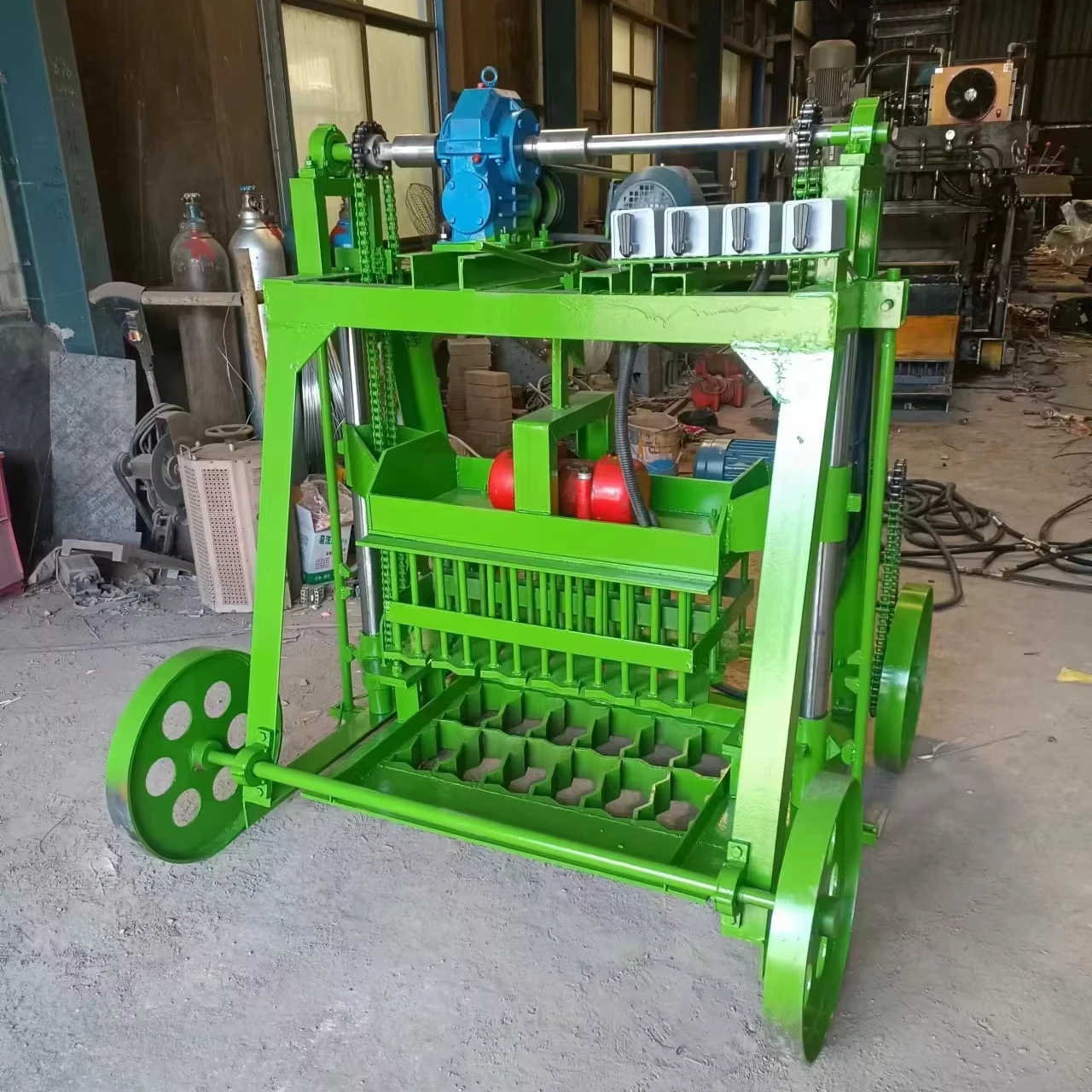
 Mobile block machine