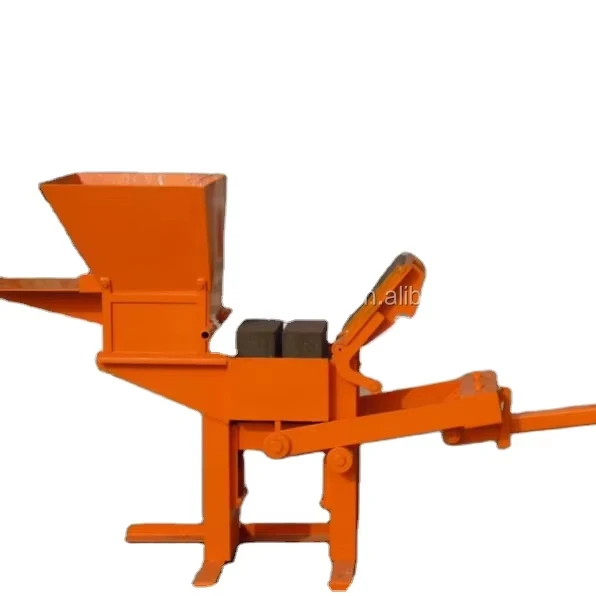
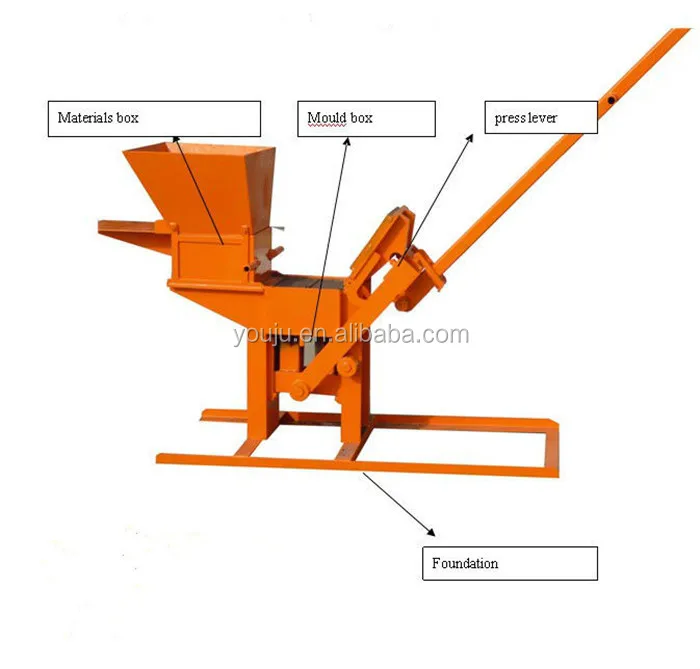
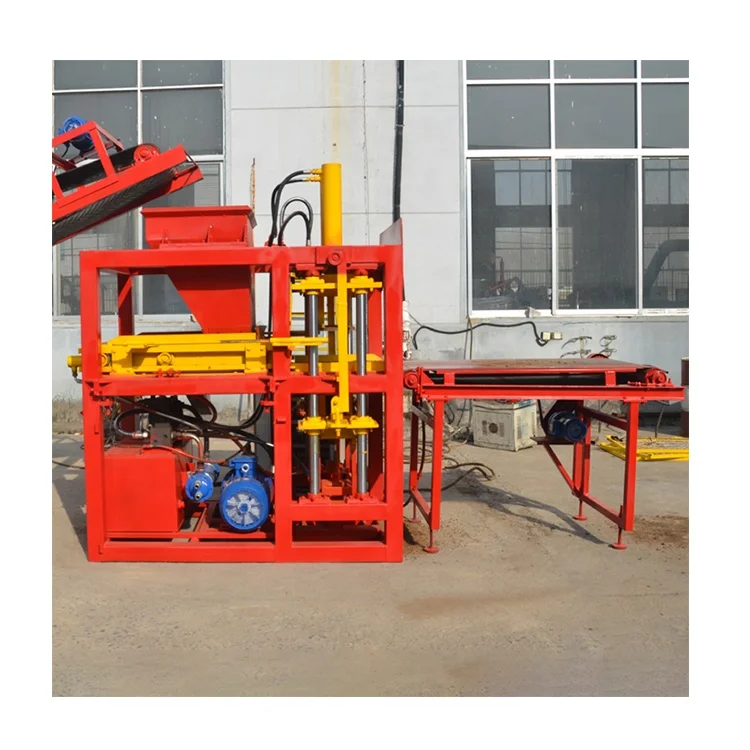
Matched System Specified for Local Clay — Every ECO 2700 configuration is validated against the buyer’s soil sample before build, ensuring hydraulic pressure and cycle time suit the actual interlocking format rather than a catalogue default.
Technical Specifications
| Parameter |
Value |
| Model |
ECO 2700 |
| Product Type |
Hydraulic Clay Interlocking Brick Making Machine |
| Rated Power |
7.5 kW electric motor or 12 hp diesel engine |
| Hydraulic Pressure |
16 MPa |
| Cycle Time |
10 s |
| Production Rate |
350 pcs/hour based on 300×150×100 mm or 250×125×75 mm interlocking block |
| Output Capacity |
2800 pcs/8 hours based on 300×150×100 mm or 250×125×75 mm interlocking block, 1 pc/mould |
| Control System |
Automatic material feeding, mold pressing, and mold lifting |
| Mould Format |
Interlocking brick, interchangeable (300×150×100 mm and 250×125×75 mm) |
| Raw Materials |
Clay, soil, earth, mud, concrete, sand, cement, fly ash |
| Overall Dimensions (L×W×H) |
1600×1300×2330 mm |
| Net Weight |
900 kg |
| Workers Required |
3–4 |
| Workshop Area |
150 m² |
| Water Consumption |
4 T/day |
| Power Source Option |
Electric motor or diesel engine |
| Automation Level |
Semi-automatic |
| Standards |
CE |
Application Suitability
| Application |
Material or Output |
| Rural housing projects |
Locally sourced red soil and cement interlocking bricks |
| On-site contractor production |
Clay and sand mixes formed into interlocking blocks using diesel power |
| Small building material plants |
Earth and fly ash interlocking bricks for regional distribution |
| Community development builds |
Mud and cement stabilised interlocking bricks for low-cost housing |
What the Capacity Figure Actually Means for Your Site
The 2800 pcs/8 hours rating applies only when pressing 300×150×100 mm or 250×125×75 mm interlocking blocks at one per cycle.
Capacity claims that omit the block format create unrealistic output expectations once the machine arrives. A clay interlocking brick machine manufacturer quoting cycles per hour without stating the assumed format leaves the buyer guessing whether daily targets are reachable. On a project site in East Africa, I watched a crew struggle to hit quoted numbers because their local clay required a longer pressing phase than the default setting allowed. [NEED_CITE: realistic output expectations for interlocking brick production]

Where the ECO 2700 Sits in the Machine Range
The ECO 2700 occupies the entry tier for buyers evaluating a first clay interlocking brick machine or replacing manual production with semi-automatic output. Its 150 m² workshop footprint and 900 kg weight allow installation in tight sites where a full automatic line cannot fit. For entrepreneurs starting small or contractors producing on a housing project, this tier keeps investment contained while still delivering consistent hydraulic compaction.
Choosing Between Electric and Diesel on Unstable Grids
Sites without reliable three-phase supply can specify the 12 hp diesel engine instead of the 7.5 kW electric motor, keeping production running during outages. This dual power source option matters for remote project sites across sub-Saharan Africa and Southeast Asia where grid voltage fluctuates daily. Selecting the correct power source before production prevents commissioning delays and protects the hydraulic pump from damage caused by voltage drops. [NEED_CITE: voltage and frequency standards by export market]
Reading the Pressure and Cycle Specs
The 16 MPa hydraulic pressure drives compaction of clay and soil mixes into dense interlocking bricks that hold their shape during curing. A 10-second cycle time governs how quickly the mould fills, presses, and lifts, setting the upper boundary for the stated 350 pcs/hour rate. The two interchangeable mould sizes — 300×150×100 mm and 250×125×75 mm — let a single machine serve different wall thickness requirements without buying a second press. Because interlocking bricks rely on geometric fit rather than mortar joints, dimensional accuracy from consistent pressure directly affects wall assembly speed on site.
The Cost of Skipping the Soil Test
Sending a machine configured for a standard sand-cement mix to a site running high-plasticity local clay leads to cracks in the interlocking brick edges and inconsistent block weight. The hydraulic pump strains against material it was not set up to compress, shortening seal and hose life. Buyers who skip the soil sample step often discover the problem only after the first production run, when replacement moulds and pump parts are already weeks away. [NEED_CITE: clay soil plasticity and compaction requirements]
Why Buyers Source This Tier Here
Block machinery remains the single focus, so the ECO 2700 press, mould, and pallet requirements are specified as one matched set rather than assembled from unrelated suppliers. Configuration is built around the buyer’s actual soil sample and target interlocking format, not a generic setting. Mould design covers the profiles the buyer’s local market sells, with custom drawings available for non-standard interlocking geometries. Automation is selectable — a buyer can begin with the semi-automatic ECO 2700 and move to a higher-output automatic line as demand grows. Installation support includes on-site commissioning and operator training so the crew understands moisture control and cycle adjustment from day one.
Documentation & Verification
- Line layout with capacity calculation tied to your chosen interlocking block format
- Mould drawing and profile list confirming the interlocking geometry your market requires
- Voltage, frequency, and power source confirmation sheet before production starts
- Factory test record showing cycle time and output against the stated block size
- Operation manual covering moisture adjustment and hydraulic pressure settings for local clay
Installation, Commissioning & Support
- 150 m² workshop area with level concrete floor to support the 900 kg machine frame
- Dedicated circuit matching the 7.5 kW motor or diesel fuel supply for off-grid sites
- Machine arrives assembled; hydraulic lines filled and pressure tested on site
- Commissioning includes adjusting hydraulic pressure to match your local soil sample
- Operator training covers mould change procedure between the two interlocking formats
- Wear parts list with seal and hose reorder intervals for the first year of operation
Before You Send an Inquiry
Share your target interlocking brick dimensions, the local clay or soil type, and whether grid electricity is available at the site. Include your daily output target and the curing area you have planned so pallet and stacking requirements can be matched. A soil sample report allows the pressure curve and cycle time to be set before the machine is built.
Frequently Asked Questions
Q: How is the 2800 pcs/8 hours capacity calculated and for which block format?
A: The figure is based on producing either 300×150×100 mm or 250×125×75 mm interlocking blocks at one piece per mould with a 10-second cycle. Different block sizes or mix designs alter the achievable rate, so the capacity calculation in the proposal always states the exact format assumed.
Q: Where does the ECO 2700 sit in the full machine range compared to higher-output automatic lines?
A: It occupies the entry tier for semi-automatic clay interlocking brick production. Buyers who need higher daily volumes or fully automatic stacking typically move to the next tier, which adds pallet feeding and cubing systems around a larger press.
Q: Can the machine run on diesel power for sites without reliable electricity?
A: Yes. The 12 hp diesel engine option replaces the 7.5 kW electric motor for off-grid or unstable-grid sites. The power source must be confirmed before production so the correct mounting and coupling are installed at the factory.
Q: What mould formats are available and can custom interlocking profiles be supplied?
A: Standard interchangeable moulds cover 300×150×100 mm and 250×125×75 mm interlocking bricks. Custom interlocking profiles can be designed and manufactured to buyer drawings, with sample bricks produced during the factory test to confirm dimensional accuracy.
Q: What is the required workshop area and how many workers are needed per shift?
A: The ECO 2700 requires approximately 150 m² including space for raw material storage, the press, and freshly pressed brick staging. Each shift operates with 3–4 workers handling material feeding, brick removal, and pallet management under semi-automatic operation.

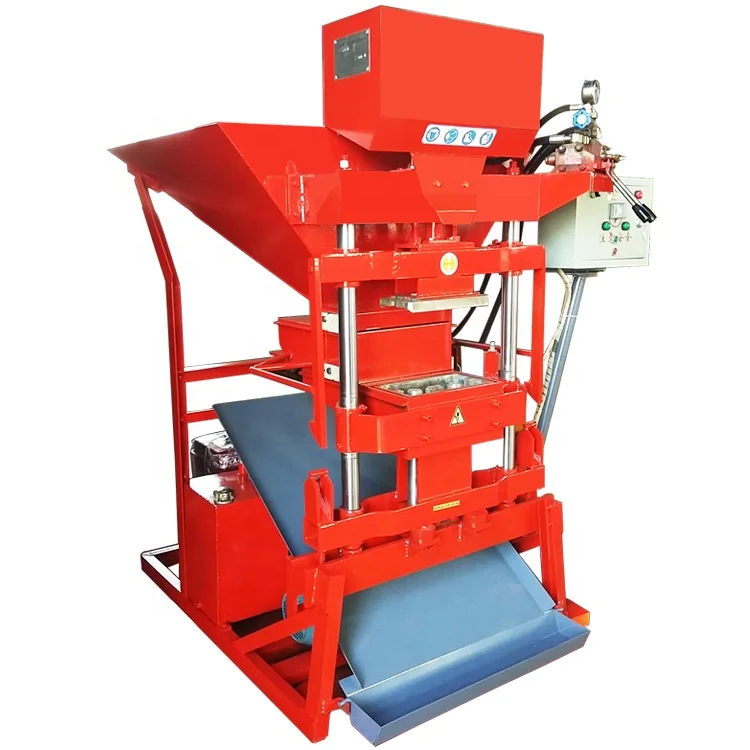 Clay interlocking brick