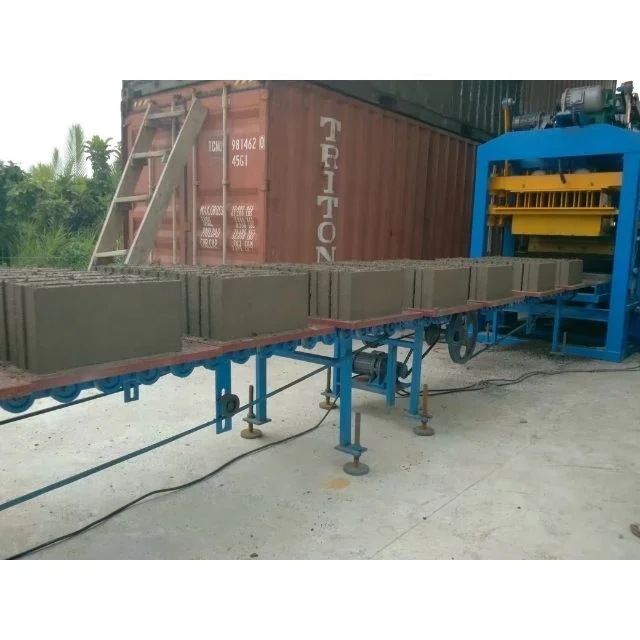
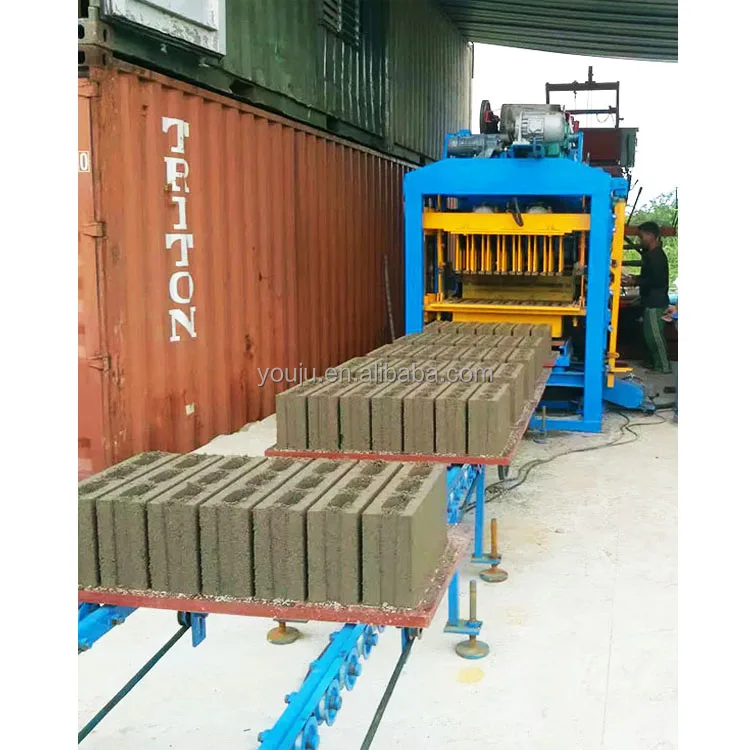
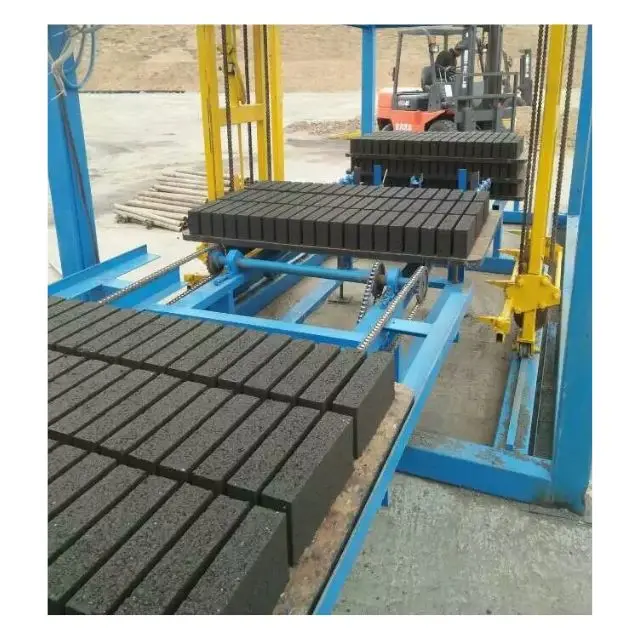
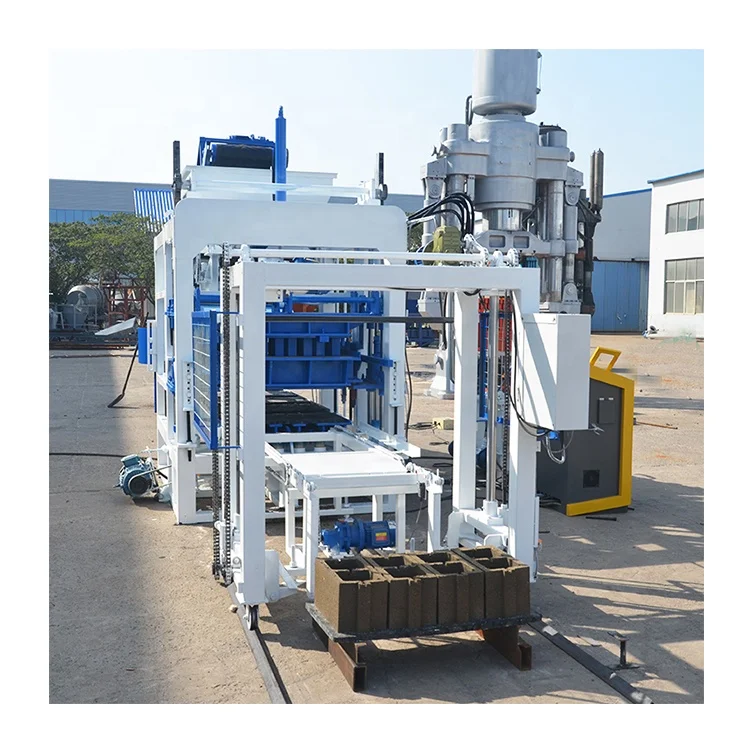
Configuration set against the buyer’s actual mix design, local aggregate and target block format — The QT4-18 is positioned within the automatic block machine range with pallet feeding and block conveying automated, specified around your production format rather than a generic catalogue default.
Technical Specifications
| Parameter |
Value |
| Model |
QT4-18 |
| Product Type |
Automatic Concrete Block Making Machine |
| Overall Dimensions |
2500 x 1750 x 2200 mm |
| Rated Pressure |
16 MPa |
| Vibration Form |
Platform Vibration |
| Pallet Size |
950 x 550 mm |
| Molding Cycle |
18–25 s (basis to be confirmed by block format) |
| Overall Power |
27.5 kW |
| Control System |
PLC control with frequency converter |
| Electrical Components |
Schneider brand |
| Mold Lifting Mechanism |
Double-sided synchronous gears (flagship version) |
| Material Feeding System |
Hopper, feeding box, feeding platform, conveyor with distribution belt hopper |
| Block Receiver |
Frame, conveyor system, idler wheels with motor and reducer |
| Automation Level |
Automatic (pallet feeding and block conveying) |
| Supporting Equipment Options |
JQ500 concrete pan mixer, 8 m / 6 m belt conveyor, stacker, block clamper, extra molds, trolley, cement silo, batching plant |
| Output Capacity |
(basis not stated in source — confirm block format / material / thickness) |
| Voltage & Frequency |
(source value — verify against manufacturer catalog) |
| Net Weight |
(source value — verify against manufacturer catalog) |
Application Suitability
| Application |
Material or Output |
| Concrete hollow block production |
Crushed stone, sand, cement, fly ash aggregates |
| Solid block production |
Dense aggregate mixes with standard cement ratios |
| Cement brick manufacturing |
Fine sand and cement blends for masonry units |
| Construction material production plants |
Multi-format output with automated pallet handling |
| Block production facilities |
Hollow and solid formats on 950 x 550 mm pallets |
What "Molding Cycle 18–25 Seconds" Actually Means for Your Daily Output
Cycle time only translates to real daily output when the block format, mix design, and pallet size are all stated together.
Many automatic block machine manufacturer quotations list a single cycle figure without naming the block size it was measured on. A 400 x 200 x 200 mm hollow block and a 200 x 100 x 60 mm interlocking paver demand different vibration durations and feed sequences, so the same press produces them at noticeably different rates. Buyers who skip this clarification often find their actual shift output falling well short of the number on the proforma invoice [NEED_CITE: block format impact on cycle time in hydraulic vibration presses].

Placing the QT4-18 Within the Full Automatic Range
The QT4-18 occupies the mid-tier position in the automatic block machine range, suited to buyers moving past semi-automatic operation but not yet requiring high-capacity lines. Its 950 x 550 mm pallet and 27.5 kW total power define the footprint and electrical infrastructure needed on site. When an automatic block machine manufacturer sizes a line, this tier typically serves plants targeting moderate daily volumes across two or three block formats.
How the Supporting Equipment Completes the Press
A press does not produce blocks alone — the mixer, belt conveyor, pallet feeder, and block receiver must cycle in sequence so the host machine is never left waiting. The JQ500 pan mixer and 8 m or 6 m belt conveyor options are matched to the QT4-18 feed rate, preventing the hopper from running dry mid-cycle. Choosing an automatic block machine manufacturer that specifies these stations as one system avoids the bottleneck that appears when individual components are sourced separately [NEED_CITE: line synchronization requirements for block production plants].
Reading the Specs That Determine Block Quality
The 16 MPa rated pressure and platform vibration form work together: hydraulic pressure compresses the mix from above while vibration settles aggregate particles from below, and the balance between the two determines block density and surface finish. The double-sided synchronous gear mold lifting mechanism keeps the mold level during extraction, reducing edge chipping on taller hollow blocks. Pallet size at 950 x 550 mm must match the curing rack spacing and forklift tine width already in your yard — a mismatch means rebuilding curing infrastructure after the machine arrives. The Schneider electrical components and PLC with frequency converter give the operator precise control over vibration duration per format.
The Cost of Skipping Format and Voltage Confirmation
Buyers who confirm price before confirming block format often discover after arrival that the mold cavity layout does not match their market’s standard dimensions, requiring a complete mold reorder and weeks of delayed production. Voltage and frequency left unconfirmed cause a different problem: the PLC display language defaults to a setting the local operator cannot read, and the frequency converter may not match the site supply, stalling commissioning until an electrician reconfigures the panel [NEED_CITE: voltage and frequency standards by export market].
Why Buyers Source This Automatic Tier Here
Block machinery is the single focus of this operation, so the QT4-18 press, mold, pallet, and handling equipment are specified as one matched system. Configuration is set against the buyer’s actual mix design and local aggregate rather than a catalogue default. Mold design covers the formats the buyer’s market sells, with custom drawings available. Automation level is selectable — a buyer can start with the automatic pallet feeding and block conveying of this tier and add stacking automation later. Installation support includes operator training on the PLC interface and mold change procedure.
Documentation & Verification
- Line layout showing mixer, conveyor, press, and curing area connections for the QT4-18 footprint
- Capacity calculation sheet stating the block format and cycle time assumed per output figure
- Mold drawing and format list with cavity dimensions for each block type ordered
- Voltage, frequency, and PLC display language confirmation signed before production
- Factory test record on the buyer’s specified block format before dispatch
Installation, Commissioning & Support
- Foundation must accommodate 2500 x 1750 mm footprint and 27.5 kW power draw with a dedicated circuit
- Voltage and frequency verified against site supply before the PLC and frequency converter are energized
- Double-sided synchronous gears inspected and aligned during first mold change on site
- Operator training covers PLC cycle timing adjustment across the 18–25 s range per block format
- Schneider electrical component list provided for local spare sourcing and panel maintenance
- Mold wear parts and pallet replacement schedule documented at commissioning
What We Need to Size Your Line Correctly
Share the exact block formats your market sells, including dimensions and target compressive strength. Confirm your local aggregate type and the mix ratio you plan to run. Provide your site voltage, frequency, and the PLC display language your operators require so the control panel is configured before the machine leaves the factory.
Frequently Asked Questions
Q: What block format does the stated cycle time assume?
A: The 18–25 second molding cycle is a range that varies by block format, mix design, and target density. A hollow block and a solid paver of different dimensions will sit at different points within that range. We provide a capacity calculation sheet naming the exact format and cycle time behind each output figure before you confirm the order.
Q: Can I start semi-automatic and upgrade to this system later?
A: Yes. The QT4-18 tier automates pallet feeding and block conveying while leaving stacking manual. When you are ready, automatic stacking and cubing modules can be added to the existing line without replacing the host press, provided the pallet size and conveyor height were planned for that upgrade path.
Q: What voltage and PLC language options are available?
A: Voltage and frequency are configured to match your site supply, and the PLC display language is set before dispatch. Confirming these values at the quotation stage prevents commissioning delays that occur when the control panel arrives with default settings that do not match local electrical standards or operator language.
Q: Which supporting equipment completes the production line?
A: A full line includes the JQ500 pan mixer, an 8 m or 6 m belt conveyor, the host press, a block receiver with motor-driven idler wheels, and optional stacker or block clamper. We specify each station’s cycle rate against the QT4-18 feed rate so no single point bottlenecks the line.

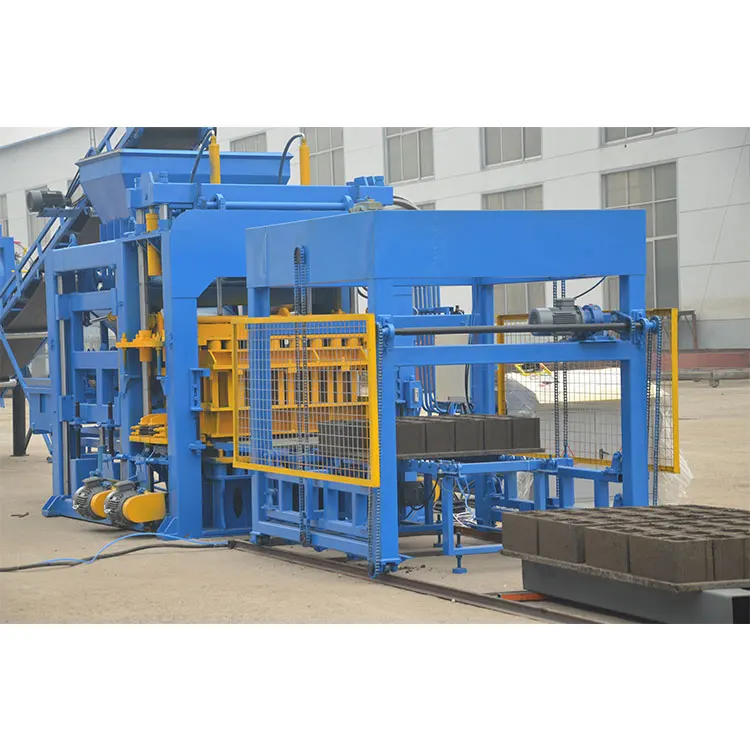 Automatic block machine