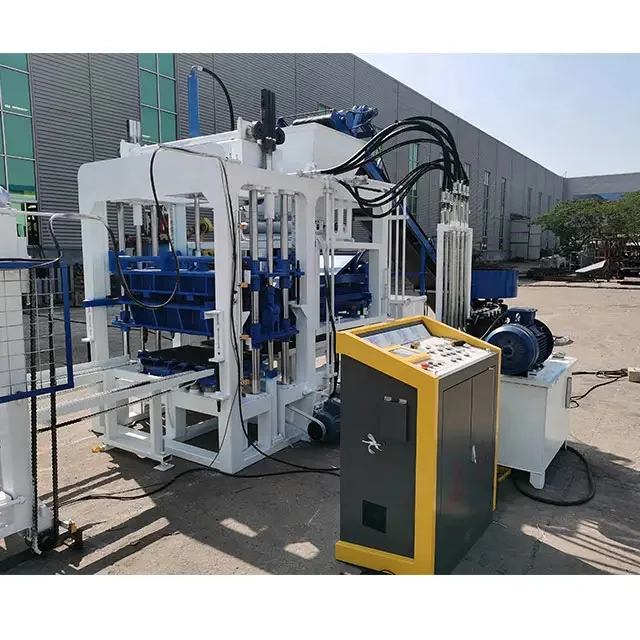
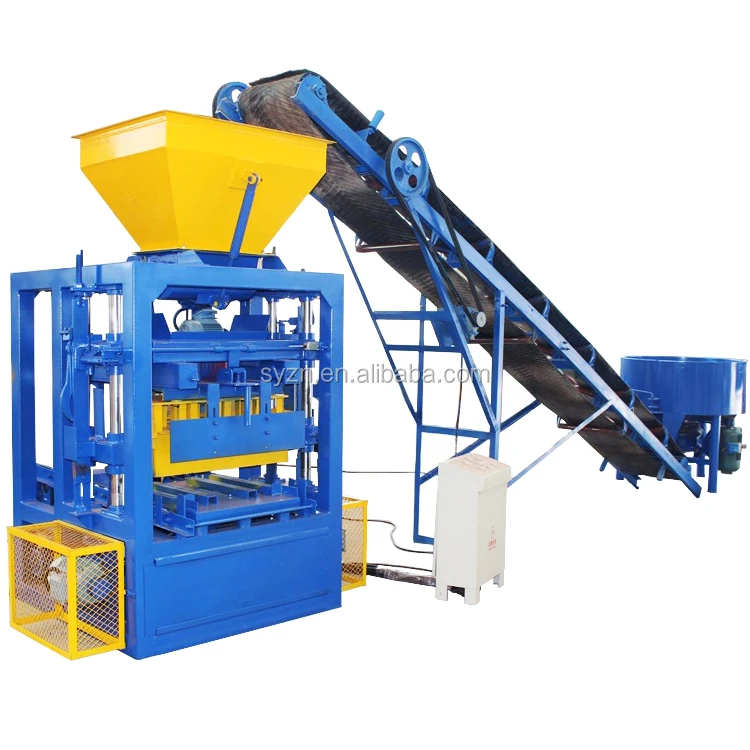
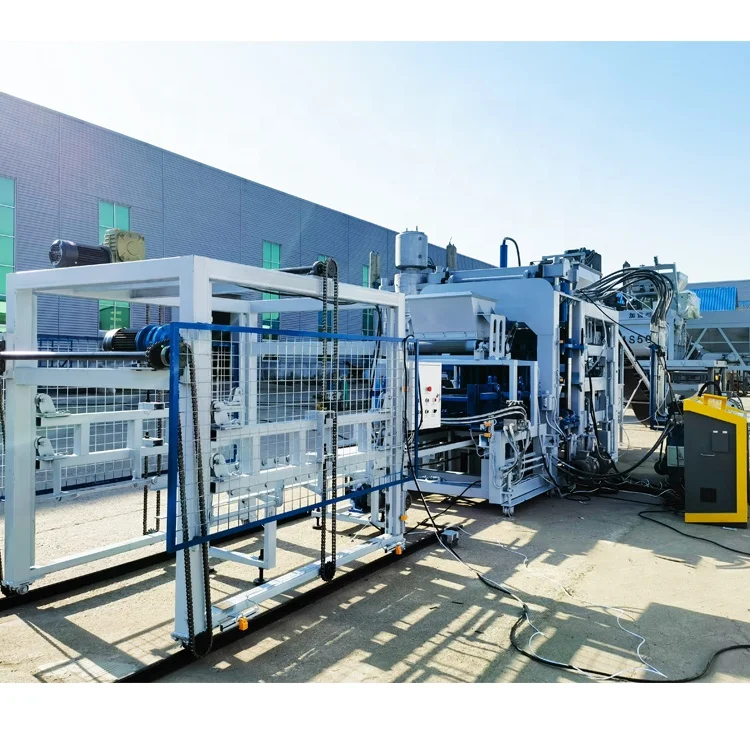
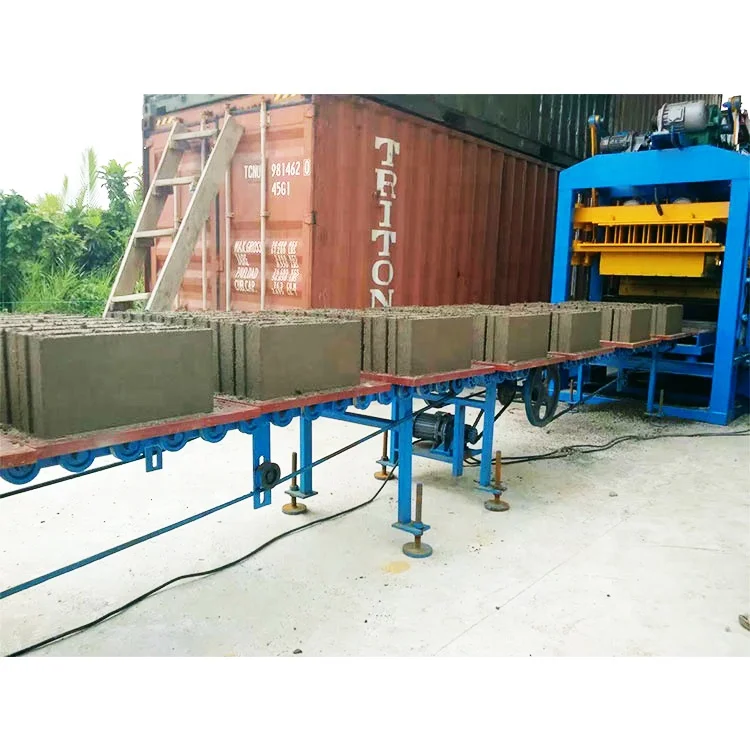
Complete system integration — QT4-18 block machine, pallet, and handling equipment are specified as one matched line rather than sourced from separate vendors.
Technical Specifications
| Parameter |
Value |
| Model |
QT4-18 |
| Product Type |
Automatic Concrete Block Making Machine |
| Overall Dimensions |
2500×1750×2200 mm |
| Rated Pressure |
16 MPa |
| Vibration Form |
Platform Vibration |
| Pallet Size |
950×550 mm |
| Molding Cycle |
18-25 s |
| Overall Power |
27.5 kW |
| Control System |
PLC control with frequency converter |
| Electrical Components |
Schneider brand components |
| Mold Lifting Mechanism |
Double-sided synchronous gears |
| Material Feeder System |
Hopper, feeding box, feeding platform and conveyor system |
| Block Receiver |
Frame, convey system and idler wheels with motor, reducer and triangle belt |
| Raw Material Mixing |
Distribution belt hopper for full material mixing |
| Standards |
CE |
Application Suitability
| Application |
Material or Output |
| Hollow block production |
Crushed stone, sand, cement, fly ash |
| Solid block manufacturing |
Dense aggregate and cement blends |
| Paving block production |
High-strength concrete mixes for interlocking formats |
| On-site construction supply |
Local aggregate and cement available at project locations |
| Block plant expansion |
Multiple formats added to existing product range |
What "18-25 Seconds Per Cycle" Actually Means for Your Daily Output
Cycle time only translates to daily volume when the block format, mix design, and pallet handling are all confirmed.
Many quotations list a cycle window without naming which block size it applies to. A hollow block with large cores compacts and releases differently than a solid paving block, so the molding cycle shifts across that range. If the pallet size and curing rack spacing are not matched to the machine’s output, the press sits idle waiting for empty pallets to return. Before we quote the QT4-18, we confirm the exact block format you plan to run most hours of the day and calculate capacity against that specific product, not a catalogue average. [NEED_CITE: typical block format impact on molding cycle duration]

Matching the Press to Your Block Format
The QT4-18 sits in the mid-tier of our automatic block making machine manufacturer range. Its 950×550 mm pallet accommodates multiple block formats per cycle, but the actual number depends on the mould layout we design for your market. We start with the formats your customers buy most, then arrange the mould cavities so the 18-25 second cycle delivers consistent density across every position on the pallet.
Platform Vibration Paired with Hydraulic Pressure
Platform vibration works through the pallet into the mix, while the 16 MPa hydraulic system applies downward pressure from above. Both forces must be tuned to your local aggregate — heavier crushed stone needs different vibration amplitude than lighter volcanic pumice or expanded clay. When we visited a site in Colombia, the local lightweight aggregate caused blocks to crack during demoulding until we adjusted the vibration frequency and hold time to match. That adjustment is part of our factory test before any QT4-18 leaves our facility. [NEED_CITE: aggregate density influence on vibration and pressure settings]
Reading the Specs That Matter for Production
The 27.5 kW overall power covers the hydraulic pump, vibration motor, feeder conveyor, and block receiver — all running within one control loop. The PLC with frequency converter lets operators adjust vibration frequency and cycle timing without stopping the press, which matters when you switch from hollow blocks in the morning to pavers after lunch. Double-sided synchronous gears lift the mould evenly on both sides, reducing uneven wear that would otherwise cause blocks to drag on one edge during release. The Schneider electrical components are specified for the voltage and frequency at your site, confirmed before production begins so there are no surprises during commissioning.
When Pallet Handling Becomes the Real Bottleneck
A press that cycles every 18-25 seconds needs an empty pallet delivered and a full pallet cleared at the same pace. If the block receiver conveyor runs slower than the press output, pallets queue up and the operator manually pulls them off — negating the automation you paid for. The pallet size also determines your curing area layout: 950×550 mm pallets require rack spacing and forklift capacity planned around that exact dimension. We size the conveyor speed and pallet return system to match the QT4-18 cycle so the press never waits. [NEED_CITE: pallet handling synchronization with block press cycle time]
Why Configuration Comes Before the Quotation
Every QT4-18 we build starts with a line layout showing the block format assumed for the capacity calculation. The machine, mould, pallet, and handling equipment are specified together because a mismatch at any station slows the entire line. Moulds are designed to your drawings or our standard format library, and the PLC display language is confirmed in your language before the control panel is wired. Factory testing runs your specified mix through the complete cycle, and the test record ships with the machine. We also provide hydraulic and electrical schematics so your maintenance team has a reference from day one. [NEED_CITE: factory acceptance testing standards for block making machinery]
Documentation & Verification
- Line layout and capacity calculation stating the block format assumed for QT4-18 cycle time
- Machine specification sheet with voltage, frequency, and PLC language confirmation
- Mould drawing and format list showing cavity count per block type
- Factory test record on your mix design and target block format before dispatch
- Hydraulic and electrical schematic for on-site maintenance reference
- Packing photographs and customs documentation support for shipment
Installation, Commissioning & Support
- Foundation plan sized to the 2500×1750 mm footprint with anchor bolt positions
- Power supply verified for 27.5 kW total load and confirmed voltage before energizing
- Machine delivered in dismantled sections with labeled assembly points for reconnection
- PLC parameters set on-site to match your mix and target block format during commissioning
- Operator training on mould change procedure using the double-sided synchronous gear system
- Wear parts and mould list included for first replacement planning
Starting the Conversation with the Right Details
To size the QT4-18 correctly for your plant, we need the block formats you plan to produce, your local aggregate type and source, and the curing area dimensions you have available. If you already have forklifts or pallet racks on site, share the specifications so we can confirm pallet compatibility. For electrical requirements, confirm your local voltage, frequency, and preferred PLC display language so the control panel arrives ready to run.
Frequently Asked Questions
Q: How do I verify QT4-18 daily output for my specific block format?
A: We provide a capacity calculation that names the exact block format and mould cavity count used for the estimate. The 18-25 second molding cycle is measured with your mix design on the 950×550 mm pallet. You receive this calculation before placing the order, so the output figure is tied to your product, not a generic catalogue number.
Q: Should I start semi-automatic and add stacking later?
A: The QT4-18 control system supports both configurations. Starting with manual pallet handling keeps initial investment lower, and the PLC architecture allows adding automatic stacking and cubing as a later upgrade without replacing the main control panel. We discuss your production volume and labor availability to recommend the right starting point.
Q: How is the 950×550 mm pallet size chosen for my curing area?
A: We review your curing rack dimensions and forklift capacity before finalizing pallet size. The 950×550 mm pallet must fit your existing rack spacing and be liftable when loaded with wet blocks. If your setup requires a different dimension, we adjust the pallet size and matching mould layout accordingly.
Q: Which supporting equipment must match the QT4-18 cycle time?
A: The material feeder, block receiver conveyor, and pallet return system all need to operate within the 18-25 second molding window. If any station runs slower, the press waits and daily output drops. We specify each station’s speed to match the press cycle as one integrated line.

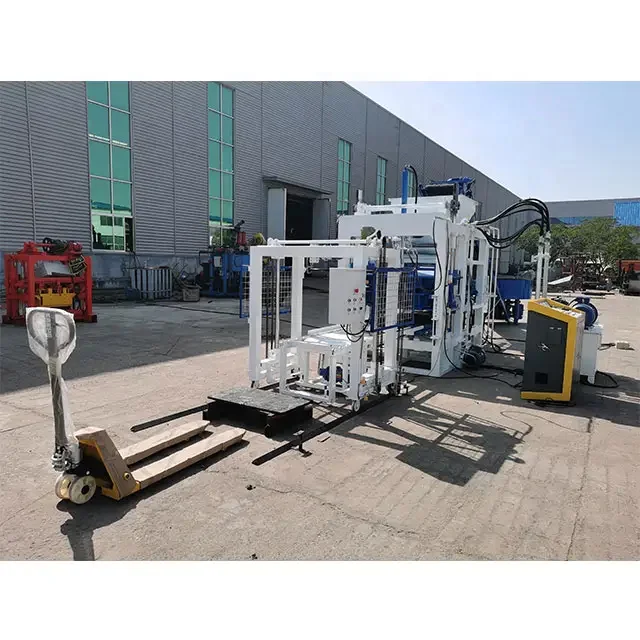
 Automatic block machine