

Fully Automatic Block Machine Warranty & After-Sales Guide for Sale
Most warranty claims are rejected not because of manufacturing defects, but because of operational mismatches.
A standard fully automatic block machine warranty primarily covers structural integrity and core component failures arising from material or assembly flaws, while explicitly excluding damage caused by unstable local power grids, improper maintenance, or the natural wear of consumable parts like molds and hydraulic seals. Understanding this distinction is critical for plant investors to avoid costly downtime and disputes in cross-border transactions.
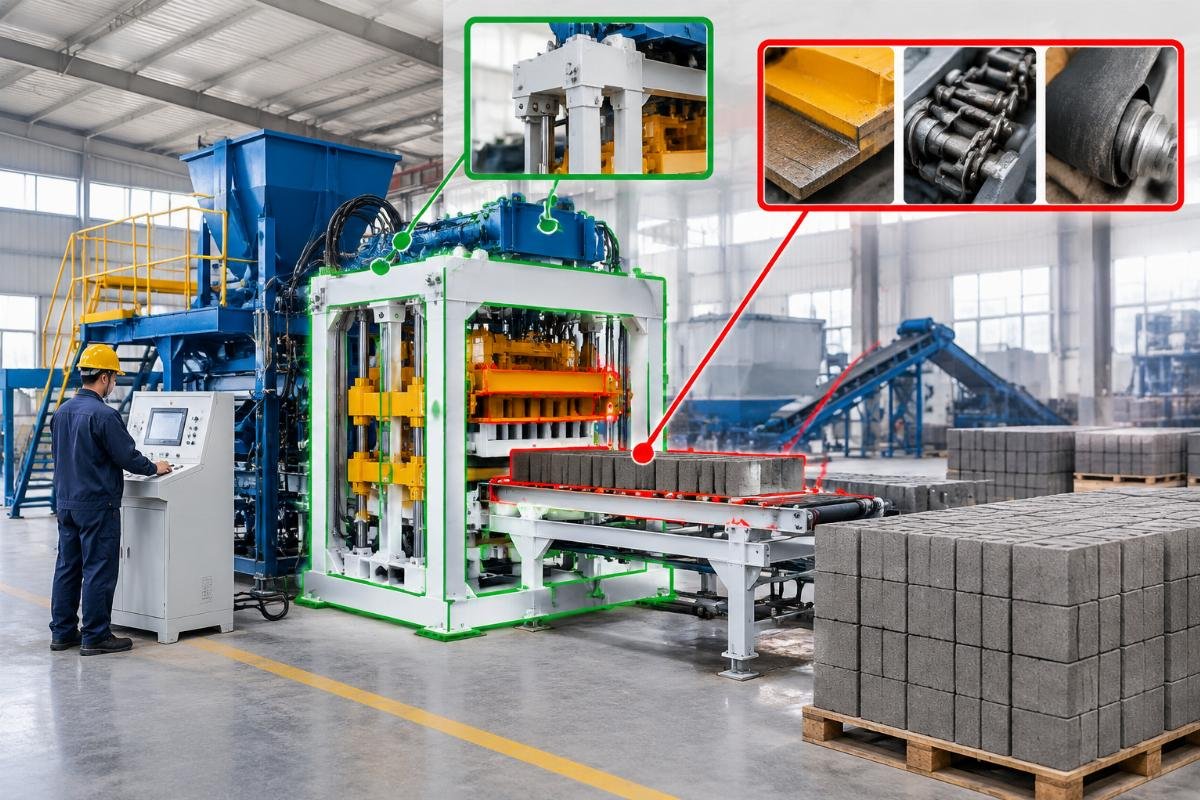
Having spent months on installation sites in West Africa before moving to sales, I learned that the most expensive lesson for any buyer is assuming "warranty" means "free repair for everything." The reality is far more nuanced. A clear warranty defines the boundary between what the manufacturer controls and what the operator must manage. This guide breaks down those boundaries, offering a practical framework for securing your investment in concrete production equipment. [NEED_CITE: standard warranty exclusions in international machinery trade]
What Does a Standard Block Machine Warranty Actually Cover?
The core of any warranty is the distinction between permanent structural components and consumable wear parts.
Many buyers mistakenly believe that if a part breaks within the first year, it is automatically covered. However, industry standards separate equipment into two distinct categories: those guaranteed for structural integrity and those subject to normal wear and tear. For a fully automatic block machine warranty, this division is non-negotiable.
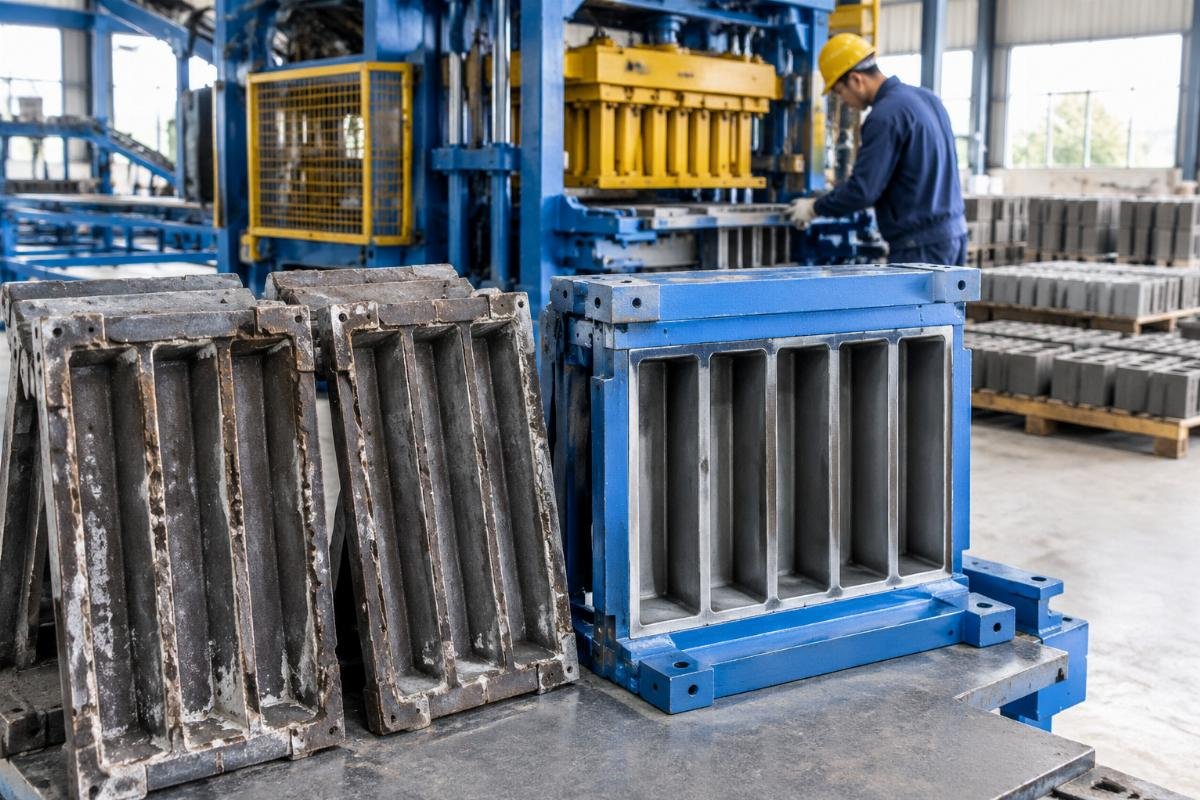
Structural components typically include the main frame, vibration table base, and major electrical cabinets. These are built to last for years and are covered against manufacturing defects such as welding fractures or casting flaws. In contrast, wear parts include mold liners, vibration motors, hydraulic seals, and conveyor belts. These components degrade with every cycle of operation. Their lifespan depends heavily on the raw material mix, operating frequency, and maintenance quality. [NEED_CITE: ISO standards for construction machinery wear part classification]
| Component Category | Coverage Status | Typical Lifespan Indicator |
|---|---|---|
| Main Frame & Structure | Covered (Defects only) | Decades |
| PLC & Control System | Covered (Defects only) | Years |
| Hydraulic Cylinders | Covered (Seals excluded) | Years |
| Mold Liners & Shoes | Excluded (Wear part) | Cycle-dependent |
| Vibration Motor Bearings | Excluded (Wear part) | Hours of operation |
| Conveyor Belts | Excluded (Wear part) | Months |
A common dispute arises when a mold wears out faster than expected. A buyer in Nigeria once claimed his mold was defective because it showed significant abrasion after three months. However, upon reviewing the production logs, it was clear that the aggregate mix contained higher-than-recommended silica content, which accelerates abrasion. The mold performed exactly as designed for that specific material; the issue was operational, not manufacturing. This highlights why understanding the fully automatic block machine warranty terms is vital before signing the contract.
Why Do Most Warranty Claims Get Rejected?
Voltage instability and lack of maintenance logs are the primary reasons for claim rejection.
It is a frequent misconception that a machine failure is always the manufacturer’s responsibility. In reality, a significant portion of breakdowns in emerging markets stems from external factors that void standard coverage. The most prevalent culprit is power quality. [NEED_CITE: impact of voltage fluctuation on industrial PLC systems]
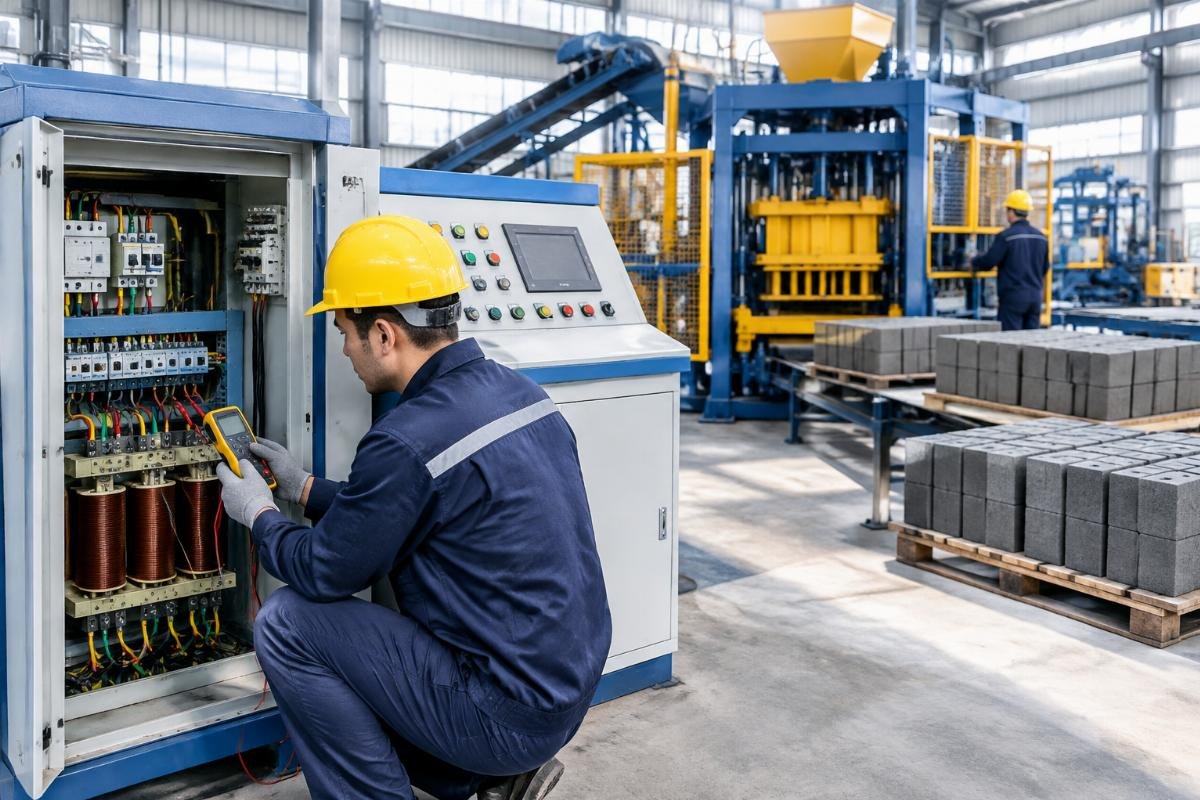
During an installation in Lagos, I encountered a client whose PLC system failed repeatedly within weeks. The local grid experienced frequent spikes and drops that exceeded the tolerance of the sensitive electronic components. Although the machine was brand new, the damage was classified as "external cause" rather than a defect. Had the buyer installed a dedicated voltage stabilizer as recommended in the pre-installation checklist, the issue would have been prevented. Instead, the repair costs fell entirely on the buyer.
Another major reason for rejection is the absence of maintenance records. Manufacturers require proof that routine checks were performed. If a hydraulic pump fails due to contaminated oil, and the buyer cannot produce logs showing regular filter changes and oil analysis, the claim is likely to be denied. This is not about avoiding responsibility; it is about verifying that the equipment was operated within its designed parameters.
To protect your fully automatic block machine warranty, ensure you have:
- A stable power supply with appropriate stabilization equipment.
- A documented maintenance schedule followed rigorously.
- Training records for operators to prove competent handling.
How to Maximize Uptime with Remote Support?
Eighty percent of PLC issues can be resolved remotely without waiting for an onsite visit.
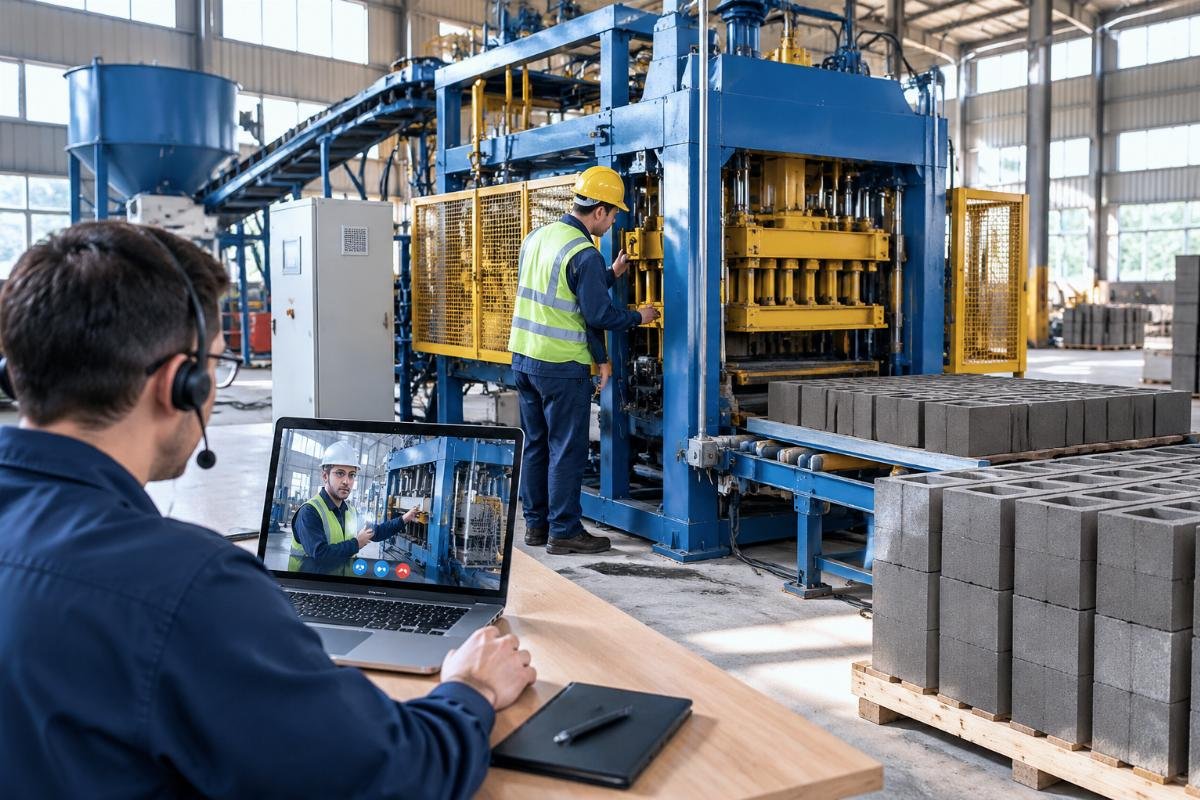
Many buyers assume that technical support requires flying an engineer to their site, which can take weeks and incur high travel costs. Modern fully automatic block machine warranty agreements increasingly include remote diagnostic capabilities, which can resolve most software and sensor-related issues quickly.
The process relies on digital connectivity. When an error code appears on the HMI screen, the first step is to capture the exact code and the state of the machine. Using secure remote access tools, technicians can view the PLC logic in real-time, check sensor inputs, and adjust parameters without physical presence. This method was successfully used for a buyer in Southeast Asia who faced a hydraulic synchronization issue. Within hours, a video call combined with screen sharing allowed the engineer to identify a misconfigured timer setting, fixing the problem immediately.
To leverage this effectively:
- Ensure your facility has a stable internet connection near the control cabinet.
- Train your local staff to take clear photos and videos of the issue.
- Keep error logs accessible for quick sharing.
This approach minimizes downtime significantly compared to traditional onsite repairs. It also allows for continuous optimization of the production line, as engineers can tweak vibration frequencies or pressing times based on real-time performance data. [NEED_CITE: efficiency of remote diagnostics in industrial automation]
What Should Be in Your After-Sales Service Agreement?
A robust agreement clarifies spare parts pricing, delivery timelines, and technical training scope.
Beyond the initial warranty period, the long-term viability of your plant depends on the after-sales service structure. A vague agreement leads to delays and unexpected costs. When negotiating, focus on three key areas: spare parts availability, response time metrics, and ongoing training.
Spare parts should not be an afterthought. Standardizing common wear parts reduces long-term costs noticeably. Ask for a detailed list of recommended spares for the first two years of operation. Clarify whether these parts are stocked locally or shipped from the manufacturer. For a fully automatic block machine warranty, knowing the lead time for critical components like PLC modules or hydraulic valves is essential for planning maintenance windows.
Technical training is another critical component. Initial training during installation is standard, but what about refresher courses for new staff? A good agreement includes access to updated operational manuals and video tutorials. Some manufacturers offer periodic online check-ins to review machine performance and suggest optimizations.
Finally, define the response time for support requests. Is it 24 hours? 48 hours? Clear metrics ensure accountability. This level of detail transforms the warranty from a simple legal document into a strategic tool for operational stability.

Conclusion
A warranty is a framework for partnership, not just a repair policy.
Understanding the specifics of a fully automatic block machine warranty empowers buyers to operate their plants more efficiently and avoid unnecessary disputes. By distinguishing between defects and wear, maintaining rigorous logs, and leveraging remote support, you can maximize the lifespan and productivity of your equipment. The goal is not just to fix problems when they arise, but to prevent them through informed operation and clear communication with your supplier.

Industry expert sharing insights about concrete machinery, block making technology and turnkey production solutions.
View all posts →
Leave a Reply