

Buy Fully Automatic Block Machine QT4-15 to QT12-15 at Factory-Direct Cost
The biggest machine is rarely the most profitable one.
True factory-direct savings come from selecting the right capacity for your local market demand, not just buying the largest model. Optimizing mold changeover frequency and labor efficiency reduces comprehensive costs more than initial equipment price.
I remember standing in a humid warehouse on the outskirts of Jakarta, watching a newly installed production line sit idle while the owner paced nervously. He had purchased a massive unit, convinced that maximum theoretical output would guarantee success. Instead, he faced high fixed costs and frequent downtime because his raw material supply chain and local sales volume could not sustain such high-speed operation. Switching to a mid-range model later allowed him to match production with actual daily orders, significantly improving cash flow. This mismatch between capacity and market reality is a common pitfall for new investors seeking a fully automatic block machine factory direct. [NEED_CITE: impact of capacity mismatch on operational efficiency in emerging markets]
Understanding the technical nuances behind these machines helps avoid costly mistakes. The following guide breaks down how to select the correct model, decode pricing structures, and calculate real returns based on field experience rather than brochure promises.
Why "Biggest" Isn’t Always Best: Matching Machine Model to Market Demand
Selecting a machine based on ambition rather than sales volume leads to idle time and inflated overheads.
Many buyers assume that a QT12-15 model is superior to a QT6-15 simply because it produces more blocks per hour. However, if your local construction projects only require a moderate daily supply, the larger machine will operate below capacity, leading to inefficient energy use and higher maintenance costs per unit. The key is to align the machine cycle time with your daily demand. [NEED_CITE: relationship between machine cycle time and daily demand in concrete production]
Consider the differences in operational requirements between models. A larger machine demands a more robust batching plant, a larger fleet of pallets, and more extensive curing space. If these supporting systems are not scaled accordingly, the main unit becomes a bottleneck rather than an asset.
| Feature | QT4-15 / QT6-15 Entry Level | QT8-15 / QT10-15 Mid Range | QT12-15 High Output |
|---|---|---|---|
| Target Market Size | Small to Medium Local Projects | Regional Supply & Housing Projects | Large Infrastructure & Export |
| Labor Requirement | Moderate | High | Very High |
| Maintenance Complexity | Standard | Advanced | Complex |
| Initial Investment | Lower | Moderate | Significant |
| Operational Flexibility | High | Moderate | Low |
A private investor in East Africa initially aimed for a high-output setup but found that the local market for standard hollow blocks was saturated. By downsizing to a mid-range model, he reduced his initial capital outlay and focused on producing specialized interlocking pavers, which commanded higher margins. This strategic shift was only possible because the smaller machine allowed for quicker mold changes and lower batch minimums. When sourcing a fully automatic block machine factory direct, prioritize flexibility over raw power if your market is still developing. [NEED_CITE: case studies of block plant profitability in East Africa]
Decoding Factory-Direct Pricing: What’s Included in a Turnkey Solution?
The sticker price of the machine is only a fraction of the total investment required for a functional plant.
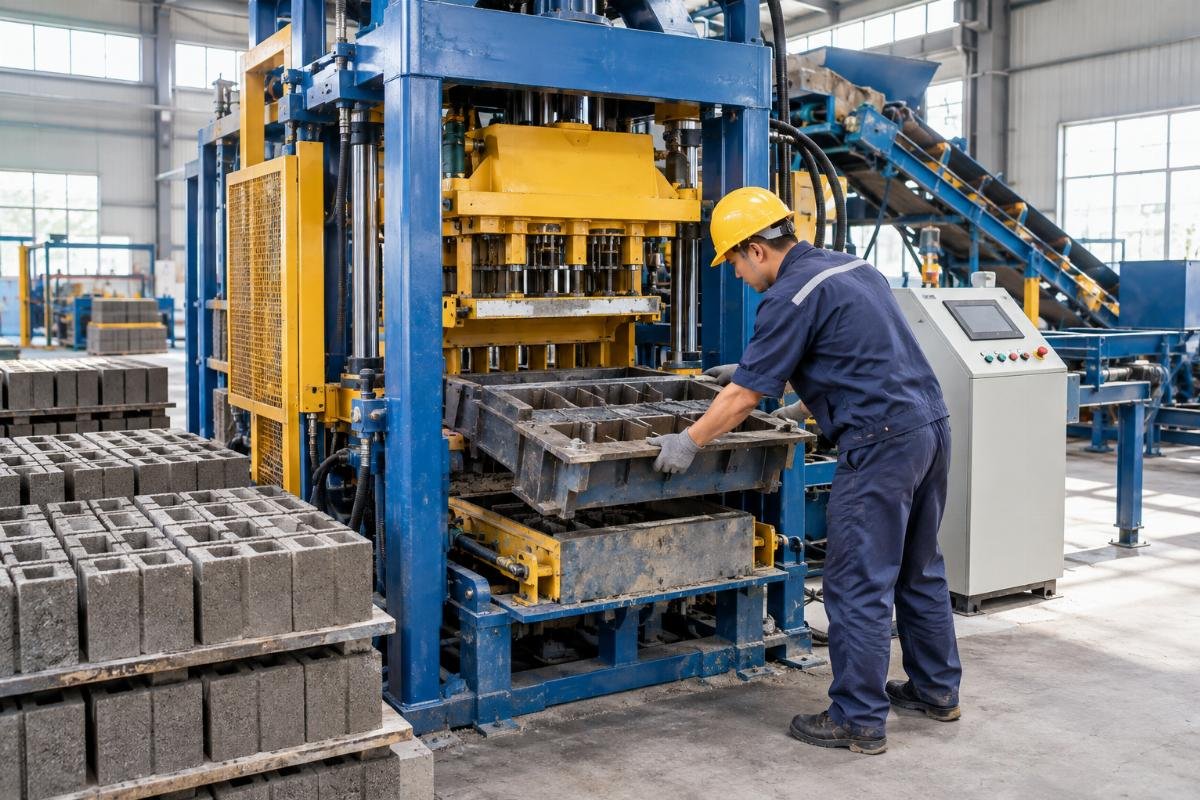
When manufacturers quote a fully automatic block machine factory direct price, it often covers only the main unit. A true turnkey solution includes the batching system, mixer, conveyor belts, stacker, and sometimes even the steel pallets and molds. Failing to account for these auxiliary components can lead to budget overruns that stall project completion. [NEED_CITE: components included in standard turnkey block production line packages]
A typical breakdown of costs should include equipment, shipping, installation, and operator training. Shipping heavy machinery requires careful planning, especially for full production lines that may span multiple containers. Installation is not just about assembling parts; it involves calibrating the hydraulic systems and programming the PLC controls to ensure smooth operation. Training is equally critical, as poorly trained operators can cause significant wear and tear on expensive components.
In Latin America, a startup buyer opted for an entry-level package that included comprehensive training and basic molds. This approach preserved cash flow for raw material inventory, which proved vital during the first few months of operation when sales were still ramping up. The supplier’s ability to provide remote diagnostic assistance also helped resolve minor technical issues without costly site visits. This holistic view of procurement ensures that the fully automatic block machine factory direct purchase translates into a working business, not just a collection of metal parts. [NEED_CITE: importance of operator training in reducing equipment downtime]
Hidden Costs of Automation: Maintenance, Molds, and Spare Parts
PLC automation reduces labor costs but introduces a strict requirement for preventive maintenance and quality spare parts.
Automated systems rely on sensors, hydraulic valves, and electronic controllers that are sensitive to dust, vibration, and poor-quality power supplies. While these systems minimize human error in block forming, they demand a disciplined maintenance schedule. Neglecting regular checks on hydraulic oil quality or electrical connections can lead to unexpected breakdowns that halt production for days. [NEED_CITE: maintenance requirements for PLC-controlled concrete block machines]
Mold durability is another critical factor. High-wear areas in the mold need to be made from hardened steel to withstand the abrasive nature of concrete mixtures. Cheaper molds may save money upfront but will need replacement far more frequently, increasing long-term operational costs. Additionally, the availability of spare parts is crucial. A machine that sits idle waiting for a specific sensor or valve from overseas is losing money every hour.
A housing project in East Africa utilized a robust PLC automation system that maintained high uptime even during the peak rainy season. The success was attributed not just to the machine’s build quality but to the proactive replacement of wear parts before they failed. This experience highlights that when buying a fully automatic block machine factory direct, you must evaluate the supplier’s support network and spare parts logistics, not just the hardware specs. [NEED_CITE: role of spare parts availability in maintaining production uptime]
Calculating Real ROI: From Installation to First Profitable Month
Payback period depends more on local brick prices and labor costs than on the machine’s maximum theoretical output.
To calculate a realistic return on investment, you must consider the total cost of ownership, which includes equipment, installation, training, and maintenance. A larger machine may have a higher hourly output, but if it runs at half capacity due to low demand, its ROI will be slower than a smaller machine running at full capacity. [NEED_CITE: methodology for calculating ROI in concrete block manufacturing]
Key variables in this calculation include the cost of raw materials, local labor rates, and the selling price of finished blocks. In markets with low labor costs, the advantage of full automation may take longer to realize compared to regions where labor is expensive. Conversely, in areas with high demand for consistent quality, automated machines can command a premium price, accelerating the payback period.
A contractor in Southeast Asia switched from a manual setup to a semi-automatic line and saw a noticeable improvement in product consistency. This allowed him to secure contracts with larger developers who required certified quality standards. The increased sales volume and higher price point shortened his payback period significantly, proving that market positioning is as important as mechanical efficiency. When evaluating a fully automatic block machine factory direct, run these numbers based on your local conditions, not generic industry averages. [NEED_CITE: factors influencing ROI for block making machines in Southeast Asia]
How to Verify Supplier Credibility Before Payment
Certifications and reference sites provide tangible proof of a supplier’s capability and reliability.
Before committing to a purchase, verify that the manufacturer holds relevant international certifications such as CE and SGS. These marks indicate that the equipment meets specific safety and quality standards, which is essential for importing machinery into many countries. Additionally, ask for tender documentation and references from previous clients in your region. [NEED_CITE: importance of CE and SGS certification for construction machinery exports]
Visiting reference sites or speaking directly with existing customers can reveal insights that brochures do not share. Ask about after-sales support, response times for technical issues, and the actual performance of the machines under local conditions. A reputable supplier will be transparent about their capabilities and willing to connect you with past buyers.
In the global market, many suppliers claim to offer fully automatic block machine factory direct prices, but few deliver on the promise of comprehensive support. By focusing on verified credentials and real-world feedback, you can distinguish between genuine manufacturers and trading companies that lack technical expertise. This due diligence minimizes the risk of procurement errors and ensures a smoother path to operational success. [NEED_CITE: best practices for verifying international machinery suppliers]
Conclusion
Right-sizing your equipment is the most effective strategy for maximizing profit in block manufacturing.
Avoid the temptation to buy the largest model available. Instead, focus on matching capacity to demand, ensuring robust support for maintenance, and verifying supplier credibility through certifications and references. This approach ensures that your investment in a fully automatic block machine factory direct delivers sustainable value and long-term operational stability.

Industry expert sharing insights about concrete machinery, block making technology and turnkey production solutions.
View all posts →
Leave a Reply