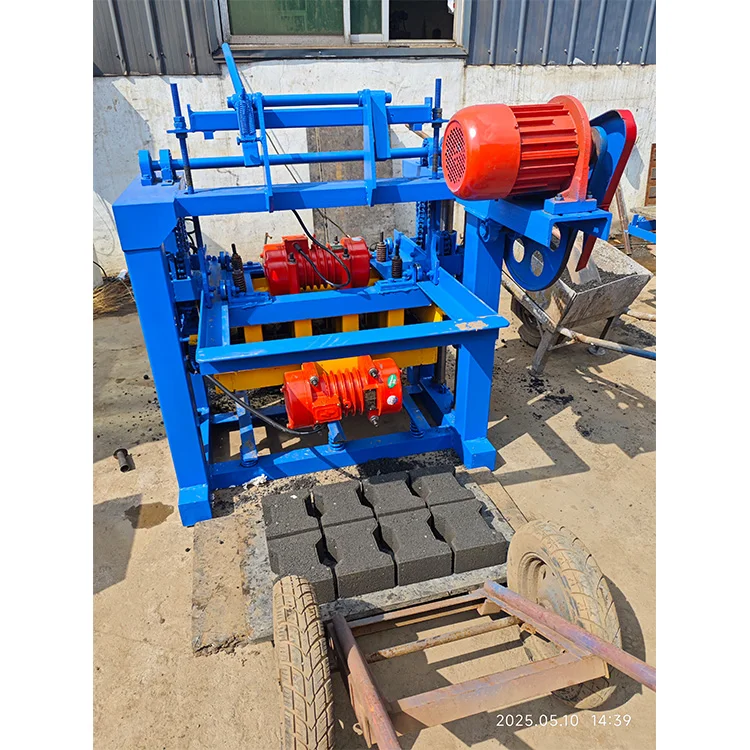
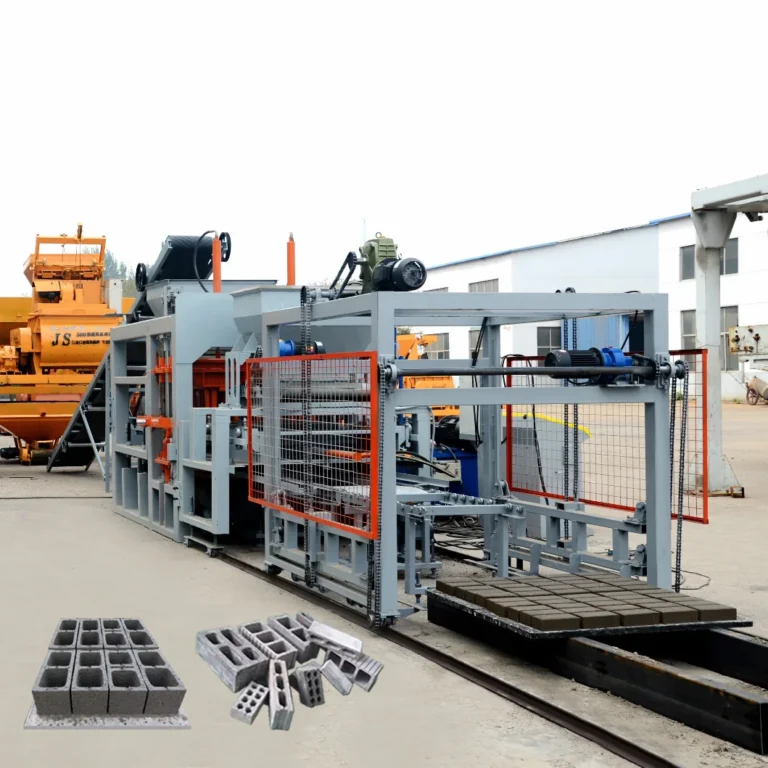
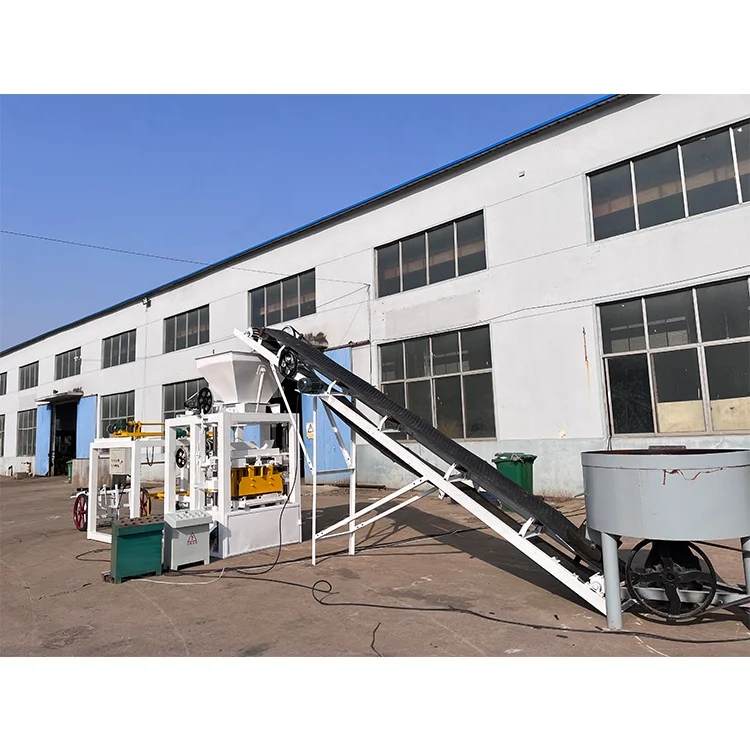
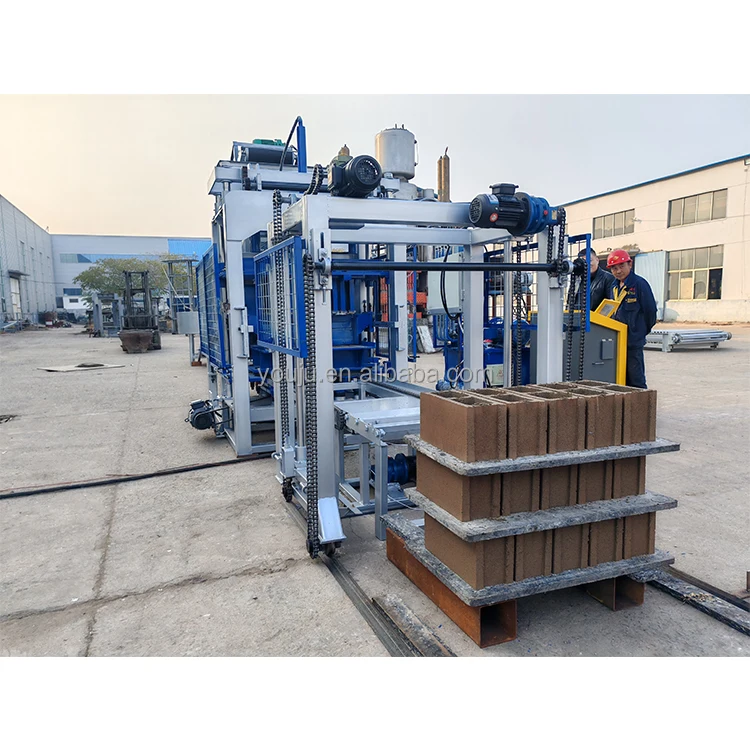
Mid-Tier Versatility — The QT5-15 bridges entry-level workshop setups and high-volume automatic plants, letting you scale automation as your block output grows.
Technical Specifications
| Parameter |
Value |
| Model |
QT5-15 |
| Product Type |
Stationary Concrete Block Making Machine |
| Overall Dimensions (L×W×H) |
7400 × 1950 × 2800 mm |
| Rated Pressure |
21 MPa |
| Main Vibration Form |
Hydraulic platform vibration |
| Vibrating Frequency |
2800–4500 rolls/minute |
| Cycle Time |
15–20 seconds |
| Motors Power |
26.5 kW |
| Pallet Size |
1100 × 550 mm |
| Weight |
6T |
| Control System |
PLC with fault diagnosis and remote control capability |
| Automation Level |
Full automatic |
| Voltage |
Configured to buyer requirements (basis to be confirmed) |
| Output (240×115×90 mm solid brick) |
16 pcs/mould, 2880–3600 pcs/h, 23040–28800 pcs/8h |
| Output (400×115×53 mm face brick) |
32 pcs/mould, 7680–8800 pcs/h, 61440–70400 pcs/8h |
| Output (400×200×200 mm hollow block) |
5 pcs/mould, 900–1200 pcs/h, 7200–9600 pcs/8h |
| Material Feeding System |
Storage and distribution system for feeding accuracy |
Application Suitability
| Application |
Material or Output |
| Hollow block production |
Crushed stone, cement, and sand mixes for load-bearing and partition walls |
| Solid brick manufacturing |
Dense aggregate blends for structural and facing brick formats |
| Paving brick production |
High-strength concrete mixes for interlocking and rectangular pavers |
| Multi-cellular brick output |
Lightweight aggregate or aerated concrete for thermal insulation blocks |
What "900 Hollow Blocks per Hour" Actually Means on Site
Every capacity figure here states the exact block format and mould count behind it — no single unqualified number.
A stationary block machine manufacturer who quotes cycles per hour without naming the assumed format is handing you a number that will not survive the first week of production. I have watched plant owners in West Africa calculate shift targets from a brochure headline, then stand at the discharge end counting output that fell well short. The QT5-15 produces 900–1200 hollow blocks per hour only when the mould is set for 400×200×200 mm units at 5 cavities; switch to a smaller solid brick and the hourly count shifts entirely. [NEED_CITE: block format assumptions in capacity quotations]

Placing the QT5-15 Within the Full Machine Range
This model occupies the mid-tier of our stationary block machine range. Below it, semi-automatic units serve smaller plants where manual pallet handling keeps capital outlay low. Above it, high-capacity lines add automatic stacking and cubing for continuous three-shift operation. The QT5-15 gives buyers a press capable of full automatic cycling while leaving room to start with simpler upstream and downstream configurations.
How the Range Scales with Your Investment
Buyers comparing entry-level and mid-tier options need to see where each tier sits in plant footprint and auxiliary equipment demand. The QT5-15 requires a curing area sized for 1100 × 550 mm pallets and a mixer that can keep pace with a 15–20 second cycle. Moving up to a larger automatic line later means adding pallet return conveyors and automatic cubing — not replacing the press itself. [NEED_CITE: block plant layout planning for scalable automation]
Reading the Specs That Decide Your Daily Output
Hydraulic platform vibration at 2800–4500 rolls/minute is adjustable across the range, which matters when your local aggregate is coarser or finer than the default mix. The 21 MPa rated pressure works with that vibration to compact the concrete into the mould cavity; too little pressure on a stiff mix yields weak edges, while excessive pressure on a wet mix squeezes out cement paste. The 1100 × 550 mm pallet size must match the curing racks and forklift tines you already have on site — a mismatch here means building new racks or buying a different forklift before the first block cures. The PLC fault diagnosis system displays warning signals in a language confirmed before production, so operators are not guessing at error codes during commissioning.
When the Wrong Configuration Costs You a Shift
Choosing a pallet size without checking your curing rack spacing means blocks sit on the floor until you fabricate new racks. Specifying a voltage that does not match the local grid delays commissioning until a transformer arrives — a problem I have seen idle a brand-new press for weeks. [NEED_CITE: electrical supply verification before machinery installation] Skipping the mould format list before order confirmation leaves you with cavities for a block your market does not buy, forcing a costly mould swap before revenue starts.
Why Source This Tier From a Single-Focus Supplier
Block machinery is our only product line, so the QT5-15 press, moulds, pallets, and handling equipment are specified as one matched system rather than assembled from separate vendors. Configuration is set against your actual mix design and local aggregate, not a catalogue default. Mould design covers the formats your market sells, with custom drawings available for non-standard shapes. Automation level is selectable — you can run the QT5-15 semi-automatic on day one and add automatic stacking later. Installation support includes operator training on the specific PLC interface your machine ships with. [NEED_CITE: single-supplier block line coordination]
Documentation & Verification
- Line layout with capacity calculation stating block format assumed for each output figure
- Machine specification sheet confirming voltage, frequency, and PLC display language
- Mould drawing and format list covering every block type in your product range
- Pallet specification matched to your existing curing rack and forklift dimensions
- Factory test record on your target block format before dispatch
Installation, Commissioning & Support
- Foundation plan sized for the 7400 × 1950 mm footprint and 6T operating weight
- Dedicated power circuit rated for 26.5 kW motor load at confirmed voltage and frequency
- Assembly sequence for press, hydraulic station, and PLC cabinet on prepared slab
- First-run parameter tuning of vibration frequency and hydraulic pressure to your mix
- Operator training on PLC fault diagnosis screens and mould change procedure
- Wear parts and mould cavity list with reorder part numbers
What to Include in Your Inquiry
Send your target block formats with dimensions, the daily volume you need per format, and a description of your local aggregate source — including moisture and clay content if known. Confirm your site voltage, frequency, and preferred PLC display language so the electrical package is built correctly before shipping.
Frequently Asked Questions
Q: How do I verify the real daily output for my specific block format?
A: Request a capacity calculation document that states the assumed block dimensions and mould cavity count for every output figure. The QT5-15 cycle time of 15–20 seconds varies with mix workability and block height, so the document should reflect your actual product, not a generic test block.
Q: Where does the QT5-15 sit compared to smaller and larger models?
A: It occupies the mid-tier, offering full automatic cycling with a smaller footprint than high-capacity lines. Semi-automatic models below it reduce upfront cost but require manual pallet handling. Larger models above it add automatic stacking and cubing for three-shift throughput.
Q: What plant footprint and auxiliary equipment does this model require?
A: Plan for the 7400 × 1950 mm machine envelope plus pallet circulation space and a curing area fitted for 1100 × 550 mm pallets. A mixer capable of feeding one mould every 15–20 seconds and a forklift matched to the pallet dimensions are essential.
Q: Can I start semi-automatic and upgrade later?
A: The QT5-15 PLC and hydraulic platform are designed to accept automatic pallet feeding, stacking, and cubing modules added after initial installation. Starting semi-automatic lets you establish production and revenue before investing in full line automation.
Q: Which block formats and mould options are available?
A: Standard moulds cover hollow blocks, solid bricks, face bricks, and paving formats. Custom moulds can be designed from your drawings for interlocking or non-standard shapes. Confirm your market’s top-selling formats before the order so the mould set matches demand.

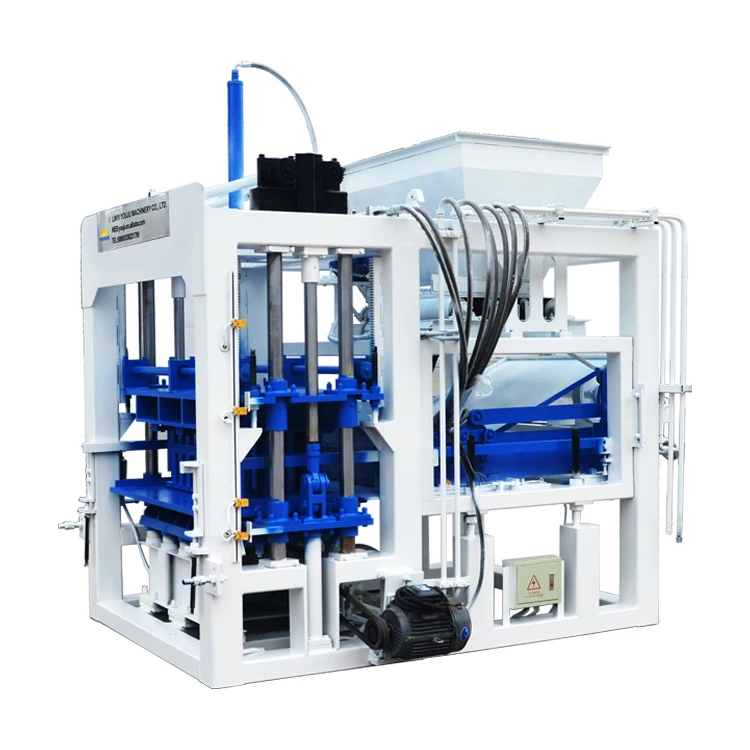
 Stationary block machine