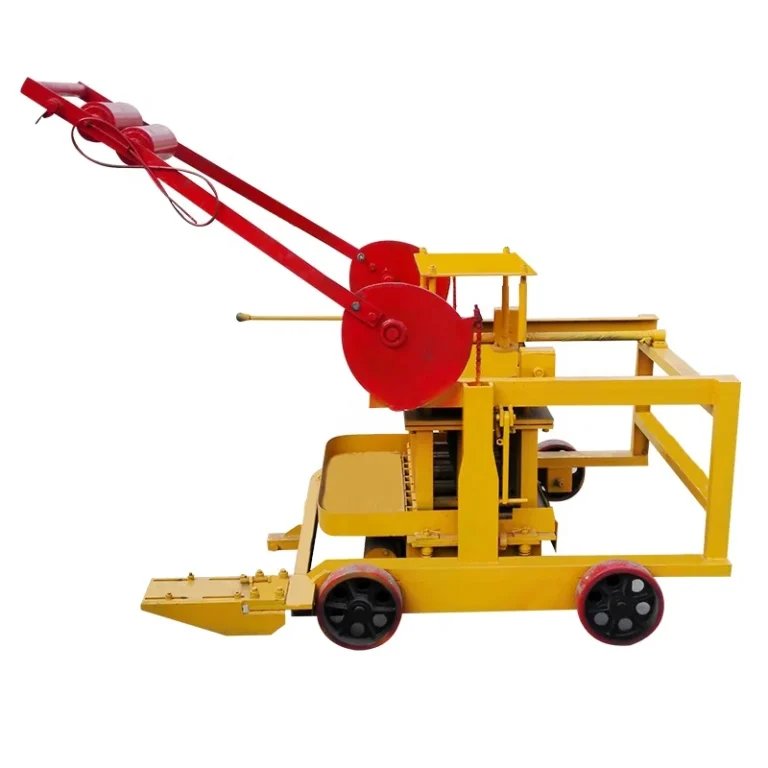
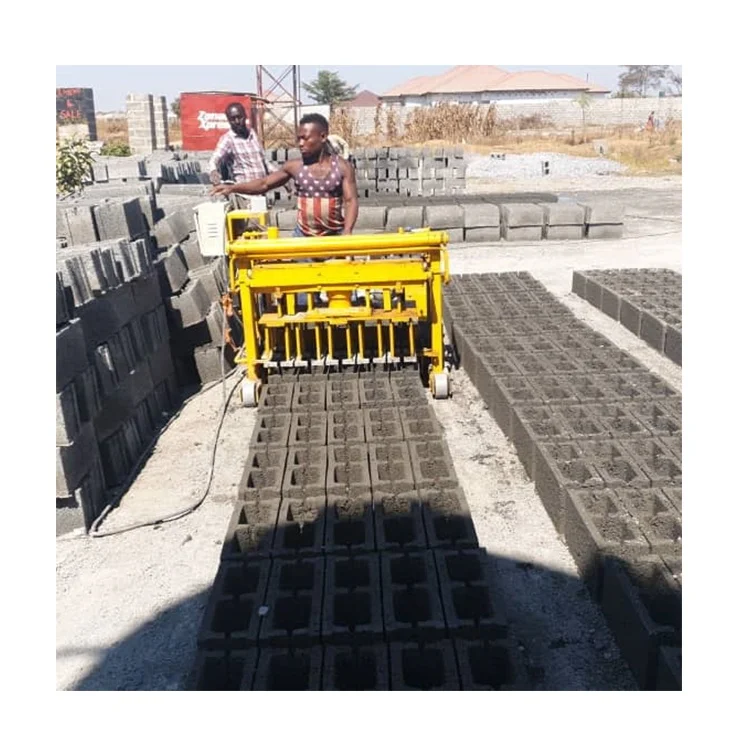
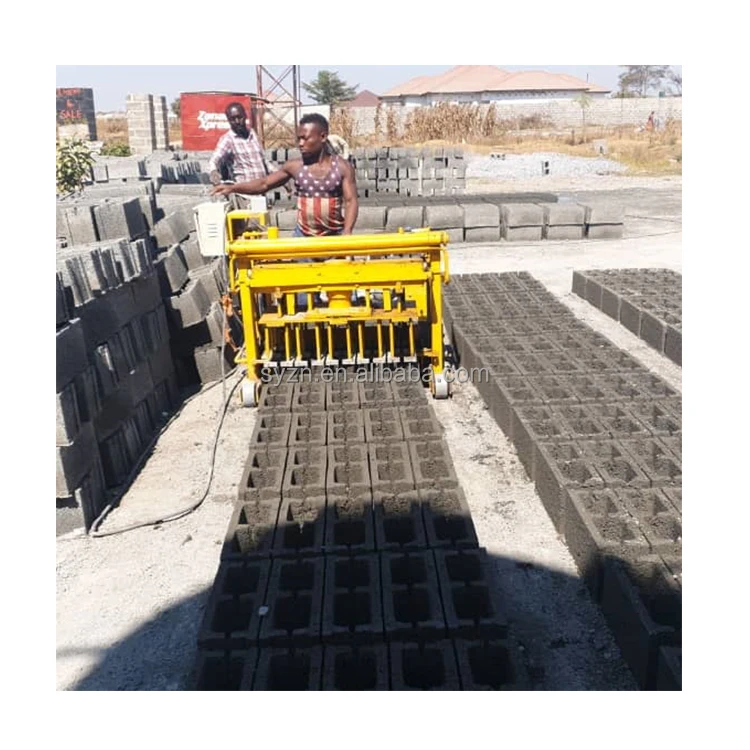
Configuration matched to your material — The QMJ2-45 is set up around the buyer’s actual aggregate and target block format, not a default catalogue setting, so capacity figures reflect what you will actually produce on site.
Technical Specifications
| Parameter |
Value |
| Model |
QMJ2-45 |
| Product Type |
Mobile Block Making Machine |
| Automation Level |
Manual |
| Machine Type |
Mobile (egg-laying), pallet-less operation |
| Mould Format |
Hollow brick (multiple size options) |
| Mould Change System |
Manual mould exchange |
| Cycle Time |
25–30 s (basis not stated in source — confirm block format and material) |
| Output Capacity |
160 pcs/h for 400×200×200 mm hollow block (2 pcs/mould); 240 pcs/h for 400×150×200 mm (3 pcs/mould); 320 pcs/h for 400×100×200 mm (4 pcs/mould) |
| Daily Output (8 hr) |
1,280 pcs for 400×200×200 mm; 4,800 pcs for 400×150×200 mm (source value — verify against manufacturer catalog); 2,560 pcs for 400×100×200 mm |
| Power Source |
Electric |
| Labor Requirement |
1–3 workers |
| Operating Footprint |
Small space suitable |
| Standards |
ISO 9001:2000, CE |
Application Suitability
| Application |
Material or Output |
| On-site hollow block production |
Small-scale block plants using local sand, gravel, and cement |
| Housing and infrastructure contractors |
Hollow blocks produced directly at project sites without a fixed plant |
| Entrepreneurs and first-time plant owners |
Entry-level block production with minimal investment and no pallet system |
| Remote or space-constrained sites |
Block making in areas without fixed infrastructure or curing racks |
What "1,280 Pieces per Day" Actually Means for Your Site
Every capacity figure on the QMJ2-45 is tied to a specific mould size, and the cycle time assumes a consistent mix design with standard aggregate.
When a buyer quotes daily output without stating which block format that figure assumes, the real production on site often falls well short of expectation. The QMJ2-45 Mobile Block Making Machine lists 1,280 pieces per eight-hour shift for 400×200×200 mm hollow blocks, but that same machine with a 400×150×200 mm mould is rated differently. If the local sand carries high clay content or the cement ratio is adjusted, the cycle time and block strength will shift accordingly [NEED_CITE: aggregate grading standards for concrete block production]. I have seen mobile block machines of this class arrive on site and underperform simply because the capacity calculation was never matched to the buyer’s actual material.

Where the QMJ2-45 Sits in the Full Machine Range
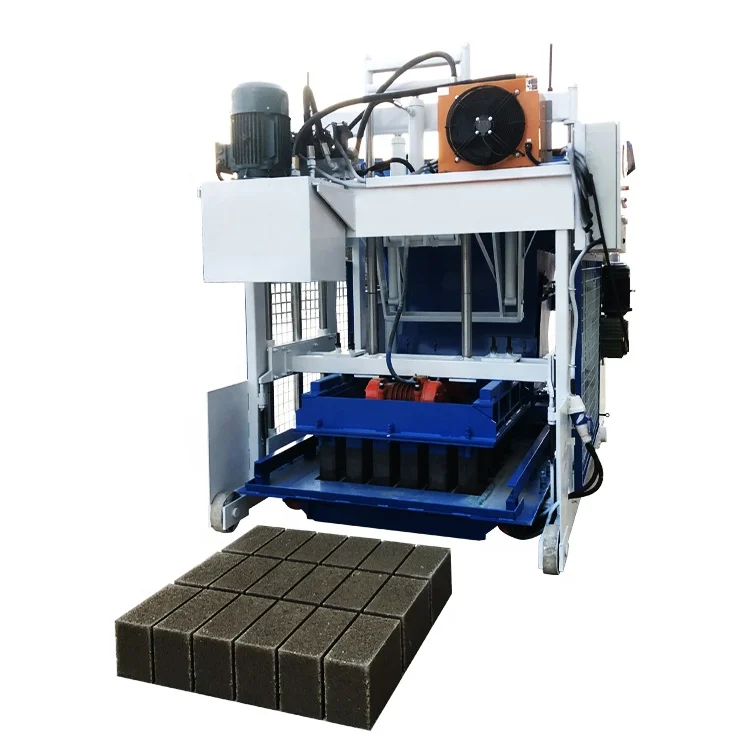
The QMJ2-45 occupies the entry tier of the mobile block machine range. It is a manual, pallet-free egg-laying unit, meaning the machine moves across the production floor and lays blocks directly on the ground. There is no pallet feeding system, no curing rack, and no forklift dependency. This positions it for buyers who need on-site block production without the capital outlay of a fixed plant. If your project demands higher daily volume or multiple block formats in a single shift, the semi-automatic and automatic tiers above this model introduce pallet systems and PLC control that the QMJ2-45 does not include.
How Pallet-Free Operation Changes Your Site Layout
With a pallet-based block line, the quotation must account for pallet feeding, stacking, and curing rack handling — stations that add cost and floor space. The QMJ2-45 eliminates that entire subsystem. Blocks are laid on a prepared concrete floor and left to cure in place. This means the production area must be level, clean, and large enough to hold a full day’s output before the blocks are moved [NEED_CITE: floor curing requirements for mobile egg-laying block machines]. For contractors working on a housing development or a remote infrastructure project, this removes the need to ship and store hundreds of pallets alongside the machine itself.
Reading the Specifications Against Your Actual Mix
The cycle time of 25–30 seconds is stated without a confirmed block format or material baseline. In practice, this figure depends on the vibration force reaching the mould evenly and the mix design releasing cleanly from the mould walls. The QMJ2-45 is electric-powered, so voltage and frequency must match the site supply before commissioning — a 50 Hz machine on a 60 Hz grid will run the motor at a different speed, altering vibration frequency and block density. The manual mould exchange system means a format change requires physical removal and replacement of the mould box, which is straightforward but takes operator time that should be factored into a multi-format production day. Labor is listed at 1–3 workers, which covers feeding the hopper, guiding the machine, and finishing the laid blocks.
The Cost of Skipping the Material Conversation
When a Mobile Block Making Machine is configured for a standard quartz sand mix but the buyer’s local supply is river sand with high silt content, the blocks may not reach target strength. The machine cycles normally, but the output crumbles during curing or fails a compression test. I have seen this happen with mobile units where the buyer ordered based on catalogue capacity without providing a material sample first. The result is a machine that runs but produces unsellable blocks, and the buyer attributes the problem to the equipment rather than the mismatch between the vibration setting and the aggregate [NEED_CITE: effect of silt content on concrete block compressive strength]. Confirming the mix design before the machine is built avoids this entirely.
Why Sourcing From a Single-Focus Manufacturer Matters
Block machinery is the sole product line here, so the QMJ2-45 machine, its moulds, and any supporting handling are specified as one matched system. The configuration is set against the buyer’s actual mix design, local aggregate, and target block format rather than a catalogue default. Mould design covers the formats the buyer’s market actually sells, with custom mould drawings available when a project demands a non-standard size. The automation level is selectable across the broader range, so a buyer starting with the manual QMJ2-45 can move to a semi-automatic line later with a clear understanding of what carries over. Installation support includes operator training on site, and wear parts and mould availability are confirmed before the first production run.
Documentation & Verification
- Line layout drawing showing production area and curing zone sized for your target block format
- Capacity calculation sheet stating the exact mould size and cycle time assumed for each output figure
- Mould drawing and format list supplied before production, including custom designs to buyer specifications
- Voltage, frequency, and control language confirmation documented before shipment
- Factory test record on your specified block format and mix before dispatch
- Wear parts and mould replacement list provided with the shipment
Installation, Commissioning & Support
- Level concrete floor required for egg-laying operation, sized to hold the daily output of the chosen block format
- Electric power supply matching confirmed voltage and frequency, with a dedicated circuit for the QMJ2-45 motor
- Machine arrives assembled; mould exchange components and manual controls checked on site during commissioning
- Operator training covers mix loading, machine guidance, mould change procedure, and block finishing
- Wear parts list provided so the first mould and component replacement is planned before production begins
- Daily maintenance schedule covers vibration mechanism inspection and mould cleaning between format changes
What to Include in Your Inquiry
To size the QMJ2-45 correctly for your site, provide the target block format and daily output you need, the local aggregate type and source, and the available voltage and frequency at your location. If you are producing on a construction project site rather than a fixed plant, describe the floor area and curing space available. This information allows the configuration to be set before production rather than adjusted after arrival.
Frequently Asked Questions
Q: How is daily output calculated for the QMJ2-45, and which block format does each figure assume?
A: Each output figure is tied to a specific mould size. The QMJ2-45 is rated at 160 pieces per hour for 400×200×200 mm hollow blocks, 240 pieces per hour for 400×150×200 mm, and 320 pieces per hour for 400×100×200 mm. These figures assume a 25–30 second cycle time, which should be confirmed against your specific material and mix design before the order is finalized.
Q: What voltage and frequency options are available, and is the machine independent of diesel generators?
A: The QMJ2-45 is electric-powered, and voltage and frequency must be confirmed to match your site supply before shipment. The machine does not depend on a diesel generator if grid power is available, but a generator of adequate rating can be used on remote sites. Confirming this early prevents commissioning delays when the machine arrives.
Q: How long does a mould change take on the QMJ2-45, and does it require specialist labor?
A: Mould exchange on this manual mobile unit involves physical removal and replacement of the mould box. It does not require specialist tools or external technicians, but it does take operator time that should be planned into a production day where multiple block formats are needed. The exact changeover time depends on operator familiarity and should be confirmed during training.
Q: Can I start with the QMJ2-45 and move to a semi-automatic or automatic line later?
A: The QMJ2-45 sits at the entry point of the mobile block machine range. When you are ready to increase volume or add pallet-based automation, the semi-automatic and automatic tiers introduce pallet feeding, stacking, and PLC control. The mould format knowledge and mix design work from the QMJ2-45 carry over, but the pallet system and automation components are new additions.
Q: Where does the QMJ2-45 sit compared to other mobile block machines in the range?
A: The QMJ2-45 is the manual, pallet-free entry tier designed for small-scale and on-site production. Higher tiers in the mobile range introduce pallet systems, increased automation, and higher output capacities. The right tier depends on your daily volume target, available site space, and whether you need multiple block formats in a single shift.

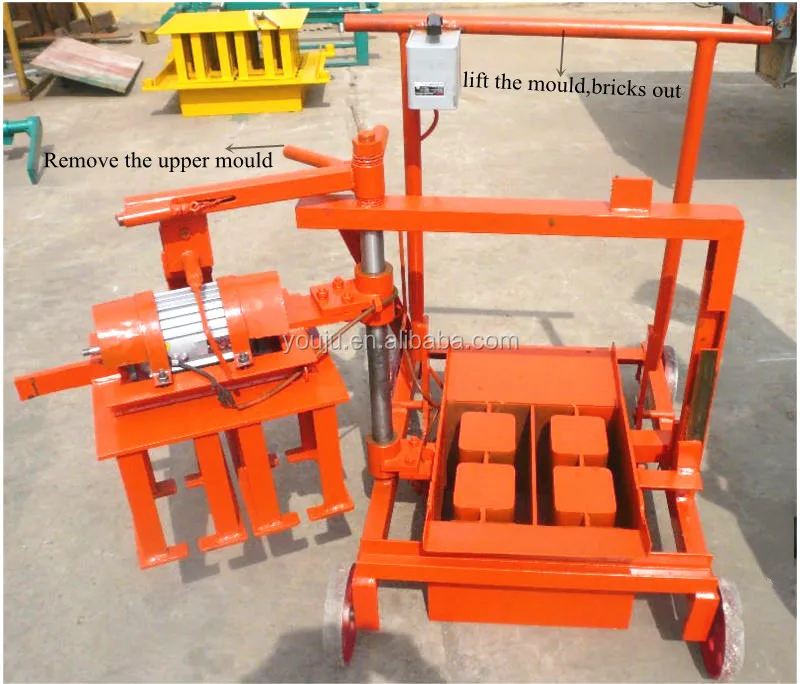
 Mobile block machine