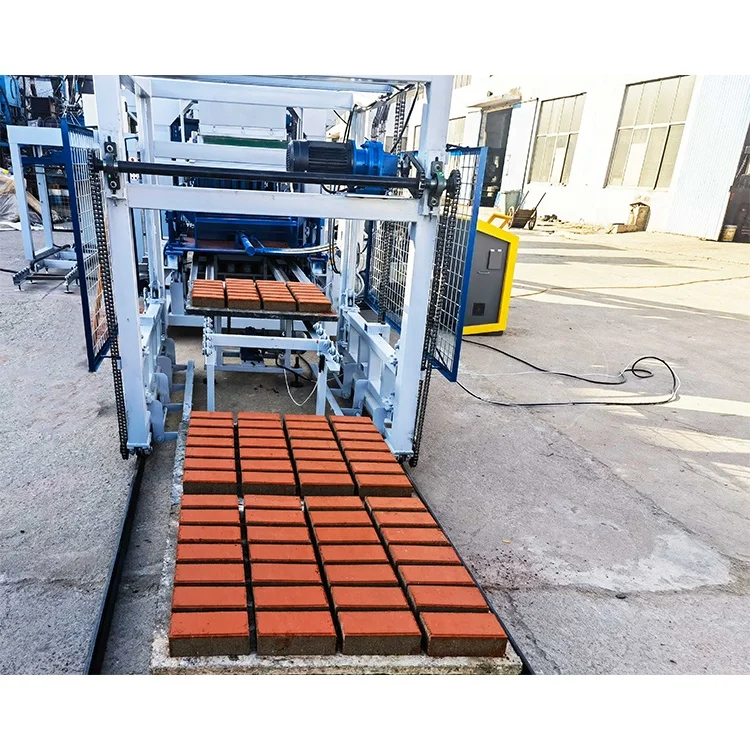
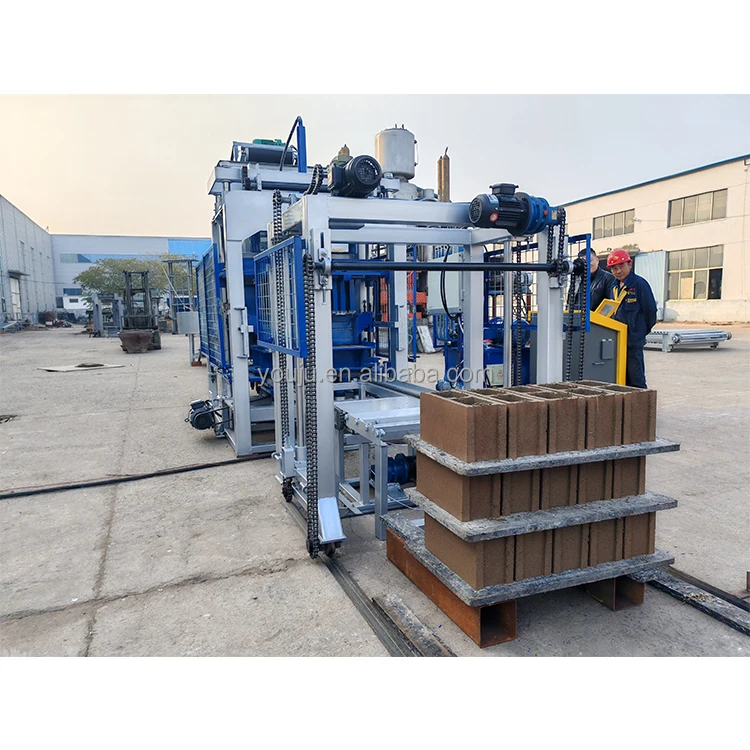
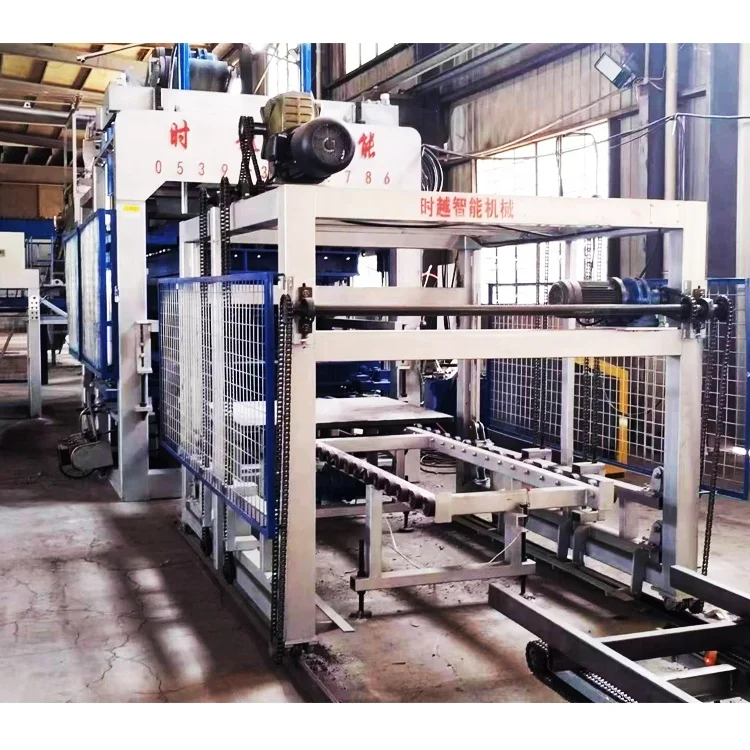
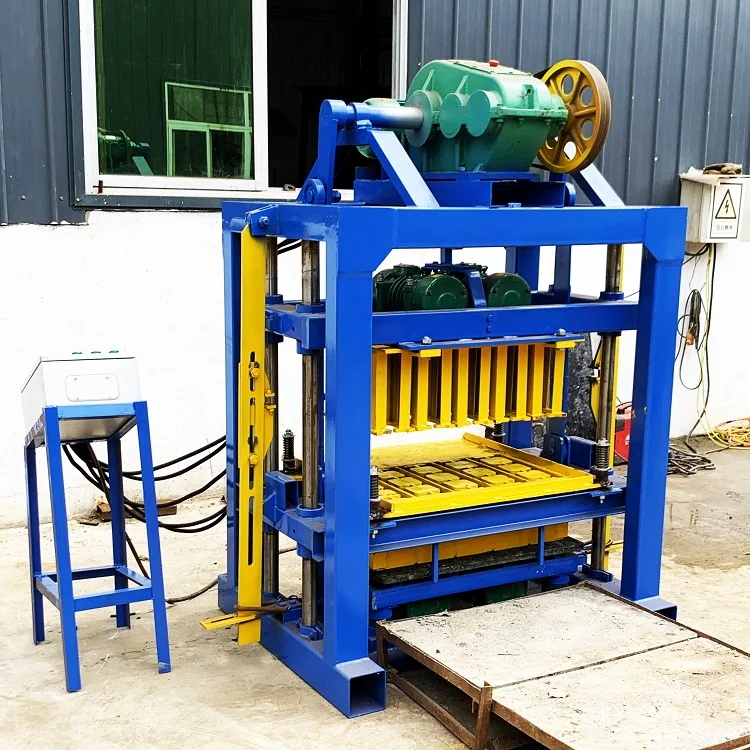
Matched Machine-Mould-Pallet System — The QTJ4-40 is specified as one integrated set with its mixer, mould, and pallet dimensions aligned to your curing area, rather than assembled from unrelated catalogue items.
Technical Specifications
| Parameter |
Value |
| Model |
QTJ4-40 |
| Product Type |
Manual Concrete Block Making Machine |
| Machine Type |
Stationary, mechanical-electric combination |
| Rated Power |
10.4 kW |
| Overall Dimensions (L×W×H) |
1350 × 1460 × 1800 mm |
| Total Mass |
1200 kg |
| Molding Cycle |
40 s |
| Pallet Size |
850 × 450 × 20 mm |
| Vibration Frequency |
2800 r/min |
| Vibration System |
Table vibration feeding + fluctuation vibration molding, upper and lower vibrators |
| Output Capacity |
2400 pcs/hour based on 400×200×200mm hollow block at 5 pcs/mould (basis to be confirmed for other formats) |
| Automation Level |
Manual operation with electric control |
| Mould Lifting |
Mechanical lifting system |
| Standard Configuration |
Host machine 1 set, block mould 1 set, JQ350 mixer |
| Voltage & Frequency |
Configurable per destination market (basis to be confirmed) |
| Control System |
Electric control components |
| Hydraulic Pressure |
Not applicable (mechanical vibration type) |
| Certification |
Basis not stated in source — confirm CE or other applicable standard |
Application Suitability
| Application |
Material or Output |
| Small-scale hollow block production for workshops |
Cement, sand, and crushed stone aggregate in standard hollow block formats |
| On-site block manufacturing for local building projects |
Locally sourced cement and river sand or quarry dust mixes |
| First-time block plant setup with limited investment |
Standard concrete mixes producing hollow blocks and solid blocks |
| Building material distributor adding a small-format line |
Concrete mixes producing paving blocks and solid bricks with appropriate mould change |
Why "Cycles per Hour" Tells You Almost Nothing
A manual block making machine manufacturer quoting only cycle speed leaves the buyer guessing real output. Daily revenue depends on block format, not cycle count.
On installation sites across Africa and South Asia, I have watched contractors arrive with high expectations from a single headline number. The QTJ4-40 completes a molding cycle in 40 seconds, but the actual pieces per hour depend entirely on how many cavities the chosen mould holds for the specific format being produced. A five-cavity 400×200×200mm hollow block mould yields a different hourly figure than a ten-cavity solid brick mould. [NEED_CITE: block format and mould cavity relationship to daily output]

Where the QTJ4-40 Fits Across the Range
This machine occupies the entry tier of a broader stationary block machine range. Buyers starting with limited capital or producing for a single local project can begin here with manual pallet handling and electric control, keeping initial investment contained. The same pallet size and mould interface philosophy carries through to semi-automatic and automatic tiers, so the jump to higher automation later does not require replacing the entire handling and curing infrastructure.
Positioning Before You Narrow Down
Understanding where each tier sits helps buyers avoid over-investing in automation they cannot yet staff, or under-investing in a machine that cannot meet market demand within the first production season. The manual block making machine manufacturer range is structured so output tiers, plant footprint, and capital requirements are visible side by side. A contractor producing blocks on a single housing project may never need automatic stacking, while a commercial plant selling to distributors will outgrow manual pallet handling within months. [NEED_CITE: stationary block machine tier comparison by investment and footprint]
Reading the Specifications That Actually Matter
Vibration frequency at 2800 r/min drives the compaction energy into the concrete mix through the mould table. On this mechanical-electric design, upper and lower vibrators work together — table vibration feeds material into the mould cavity, then fluctuation vibration compacts it during the 40-second cycle. The result is block density and strength tied directly to how well vibration force matches the buyer’s specific mix design and local aggregate characteristics.
Pallet size at 850 × 450 × 20 mm is not arbitrary. This dimension determines how many wet blocks travel to the curing area per cycle, how pallets stack on standard curing racks, and whether the buyer’s existing forklift can handle loaded pallets without modification. Choosing pallet dimensions that align with the curing space already on site prevents the common problem of wet blocks sitting in the production area because there is nowhere to move them.
The 10.4 kW rated power reflects a machine that runs on standard three-phase industrial supply common across most export markets. Voltage and frequency remain configurable before production starts, which matters because arriving with the wrong electrical specification delays commissioning by weeks while transformers or replacement motors are sourced locally.
The Cost of Skipping the Aggregate Conversation
High clay content in local sand is one of the most frequent causes of block failure on first production runs. I recall a small contractor whose blocks crumbled off the pallet on the very first day because the sand source had not been tested before machine configuration. Vibration timing and pressure settings had to be reworked entirely on site. When buyers select a manual block making machine manufacturer without discussing their actual raw materials, the risk is producing blocks that fail compressive strength tests or break during handling — wasting cement, labour, and market reputation simultaneously. [NEED_CITE: effect of aggregate clay content on concrete block compressive strength]
Why Source the Full System Here
Block machinery is the single focus, meaning the host machine, JQ350 mixer, mould, and pallets are specified as one matched set rather than assembled from separate suppliers who do not communicate. Configuration is set against the buyer’s actual mix design and local aggregate, not pulled from a catalogue default that assumes materials unavailable in the destination market.
Mould design covers the formats the buyer’s local market actually purchases, with custom drawings available when standard formats do not match regional building codes. The automation level is selectable — a buyer can begin with manual operation and add semi-automatic pallet feeding later without replacing the press. Installation and commissioning support includes operator training so the crew understands vibration timing adjustments when aggregate sources change. [NEED_CITE: importance of matched block production line components]
Documentation & Verification
- Line layout and capacity calculation stating the block format assumed for each output figure
- Machine specification sheet confirming vibration frequency, pallet size, and mould format list
- Mould drawing and format list supplied before production for buyer approval
- Voltage, frequency, and control language confirmation document signed before manufacturing
- Factory test record on buyer’s target block format before dispatch
- Wear parts and mould catalogue for first replacement order planning
Installation, Commissioning & Support
- Foundation pad sized to the 1350 × 1460 mm footprint with level tolerance for stable vibration transfer
- Dedicated three-phase circuit rated for 10.4 kW continuous draw with correct voltage confirmed pre-shipment
- Machine arrives as one assembled unit with mould and JQ350 mixer, reducing on-site setup to positioning and electrical connection
- First production run supervised to set vibration timing against the buyer’s actual aggregate and cement source
- Operator training covers mould change procedure, pallet loading sequence, and daily lubrication points
- Wear parts list provided so replacement vibration pads and mould liners can be ordered before stock runs out
What to Share Before Requesting a Quote
Provide the block format your local market sells most — dimensions, wall thickness for hollow blocks, and whether interlocking or paving formats are planned. Share your primary aggregate source and any available sieve analysis or clay content data. Confirm the three-phase voltage and frequency at your site, along with the control display language your operators will need. Note the curing area dimensions and forklift capacity already available so pallet specification can be matched before the quotation stage.
Frequently Asked Questions
Q: How do I verify real daily output for the block format my market actually sells?
A: The 2400 pieces per hour figure applies specifically to 400×200×200mm hollow blocks at five pieces per mould. Request a capacity calculation document that recalculates output for your exact target format, accounting for cavity count and cycle time. This is provided as part of the line layout before quotation.
Q: Where does the QTJ4-40 sit in the full range, and when should I step up?
A: This model is the entry tier for stationary production with manual pallet handling. Consider stepping to a semi-automatic tier when daily output demands exceed what manual loading can sustain, or when labour costs in your market make automatic pallet feeding and stacking a faster payback than hiring additional operators.
Q: What pallet size and material should match my existing curing area?
A: The standard 850 × 450 × 20 mm pallet is selected to align with common curing rack spacing and forklift tine dimensions. Share your curing area layout and handling equipment specifications so pallet material — timber, bamboo, or composite — can be matched to your climate and rack system.
Q: What voltage and control language options are available for my market?
A: Voltage and frequency are confirmed before production to match destination electrical standards. Control display language is specified at the same stage. Confirming these details during the quotation prevents commissioning delays caused by incompatible electrical supply or unreadable operator interfaces on arrival.
Q: What mould formats beyond hollow block can this machine run?
A: The QTJ4-40 accepts moulds for solid blocks, paving blocks, and other formats within the pallet size envelope. Mould change involves mechanical lifting and manual alignment. Request the format list and changeover procedure document to assess whether the time required fits your production schedule for multiple formats per shift.

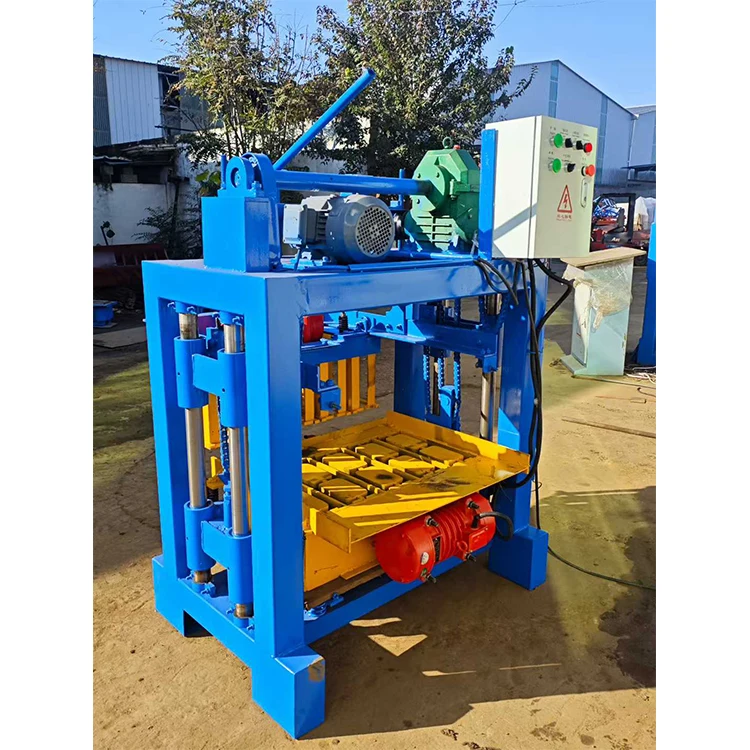
 Stationary block machine