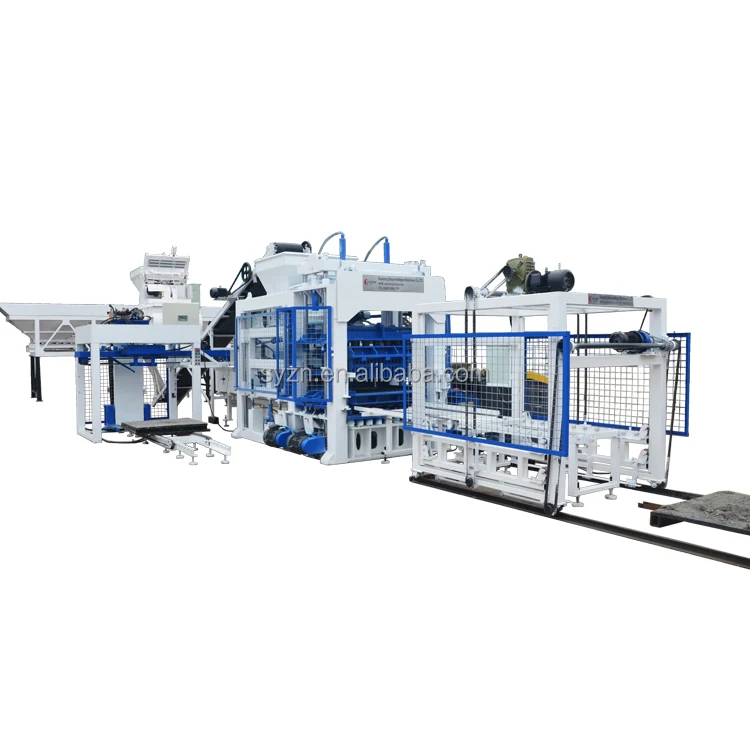
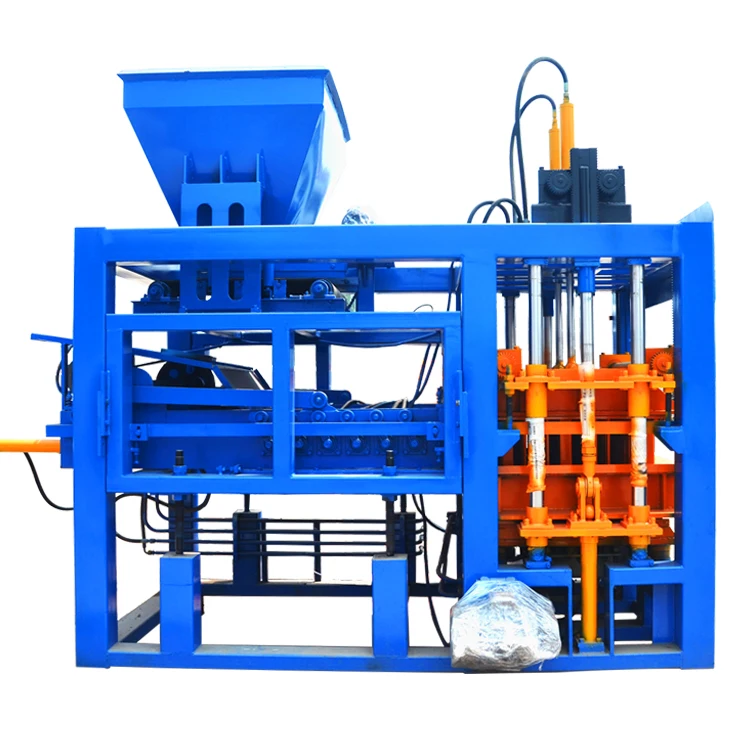
Single-Focus Machinery Line — the QTJ4-40 block press, moulds, pallets and handling are specified as one matched system rather than assembled from separate suppliers, so semi-automatic tier buyers avoid integration gaps at startup.
Technical Specifications
| Parameter |
Value |
| Model |
QTJ4-40 |
| Product Type |
Semi-Automatic Concrete Block Making Machine |
| Rated Power |
10.4 kW |
| Voltage & Frequency |
Configurable to buyer’s local standard (to be confirmed before production) |
| Control System |
Semi-automatic operation with manual pallet handling |
| Overall Dimensions (L×W×H) |
1350 × 1460 × 1800 mm |
| Net Weight |
1.2 T |
| Mould Cycle Time |
40 s |
| Output Capacity |
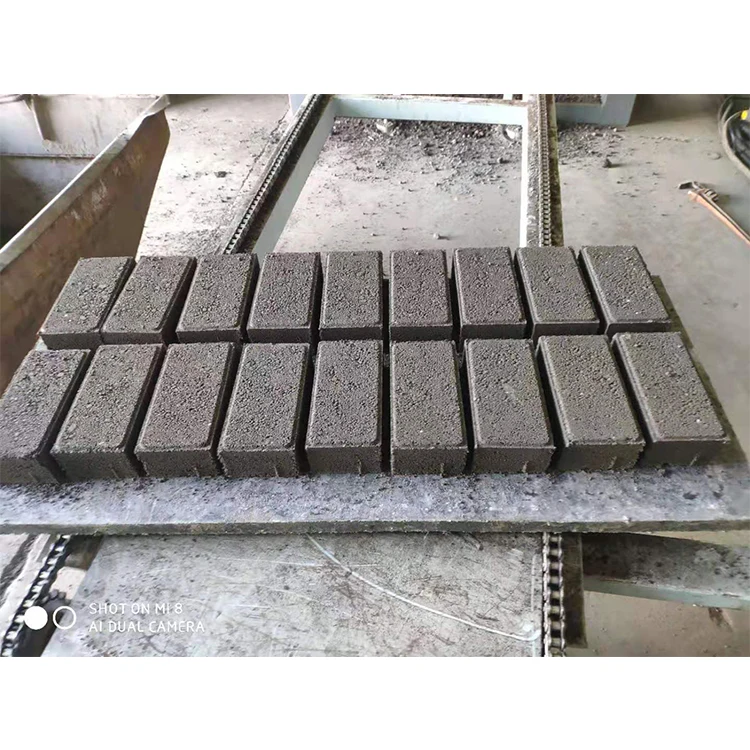
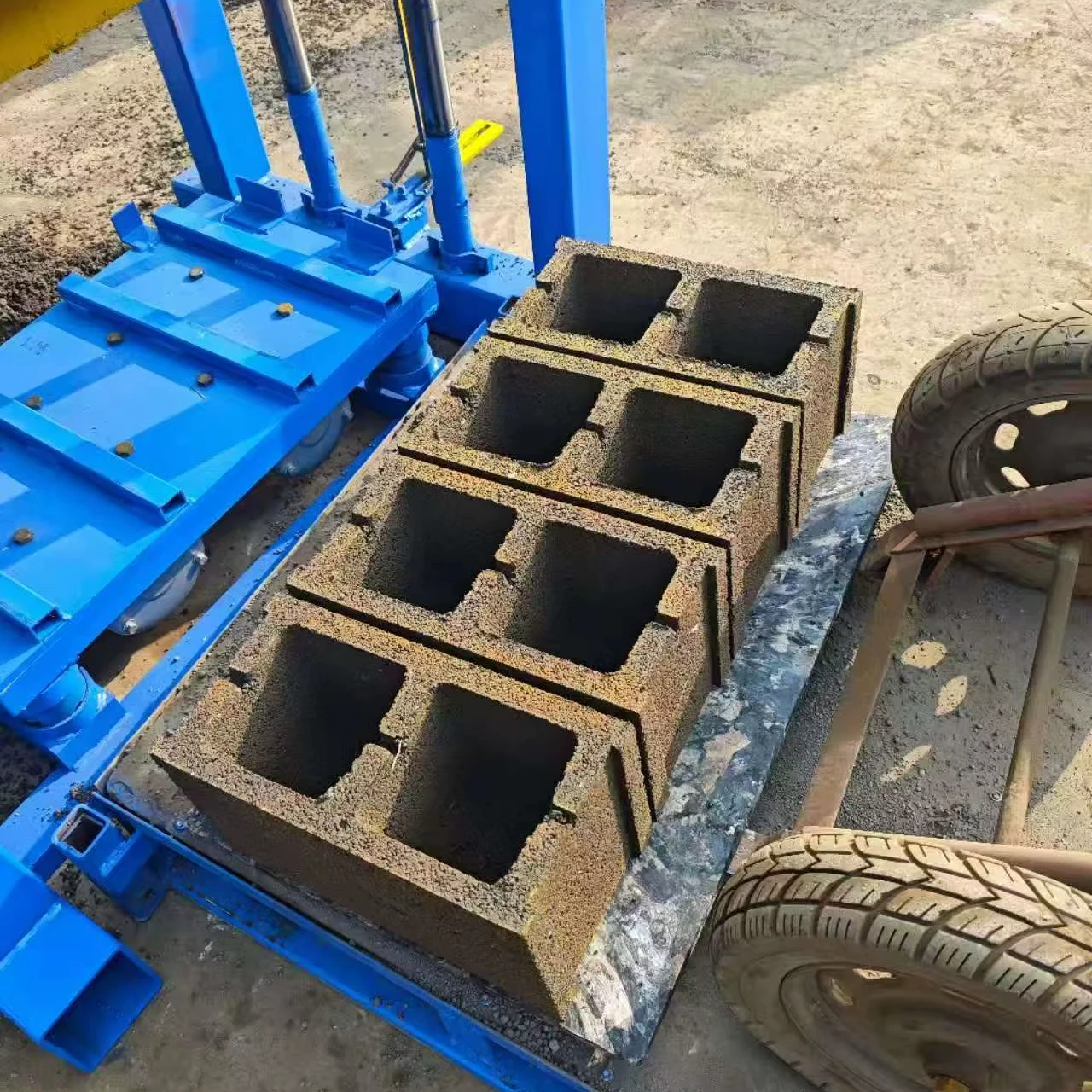
360 pcs/h for 400×200×200 mm hollow block (4 pcs/mould); 450 pcs/h for 400×150×200 mm (5 pcs/mould); 800 pcs/h for 225×112.5×60 mm paver (9 pcs/mould) |
| Pallet Size |
850 × 450 × 20 mm |
| Pallet Material |
Fiberglass (optional); wooden pallets acceptable if locally sourced |
| Mould Format |
Hollow, solid, paver — common 4 / 5 / 6 / 8 inch; custom sizes available |
| Raw Materials |
Concrete, sand, cement, fly ash, lime, gypsum |
| Assembly State |
Shipped as host machine; mixer and pallets quoted separately |
| Key Features |
Compact stationary footprint, manual pallet transfer, external mixer required |
Application Suitability
| Application |
Material or Output |
| Small hollow block plant for residential construction |
Crushed stone, sand and cement producing 4–8 inch hollow blocks |
| On-site contractor block production |
Local aggregate and cement mixed on the construction site |
| Paver and kerbstone output for landscaping projects |
Fine aggregate with cement for interlocking and solid paving formats |
| First-plant entrepreneur startup |
Fly ash, sand or gypsum blended with cement across multiple block formats |
| Distributor adding block formats to existing building material range |
Hollow and solid blocks in standard regional sizes alongside current inventory |
Why "Pieces per Hour" Means Nothing Without the Block Format
Capacity figures only matter when tied to the exact block size your market buys. The semi-automatic block machine QTJ4-40 lists different hourly rates depending on the mould loaded — and quoting a single number without that context is how buyers end up disappointed.
I have watched buyers receive a machine that promised high output, only to discover the figure assumed a small paver they never intended to make. The actual hollow block they sell daily runs at a fraction of that headline number. A 40-second cycle produces four hollow blocks per mould but nine pavers per mould, so the daily throughput shifts dramatically between formats [NEED_CITE: realistic block output calculation methods for semi-automatic plants]. Always ask the supplier to state capacity per specific block format before comparing machines.

Where the Semi-Automatic Tier Sits in the Range
The QTJ4-40 occupies the entry stationary tier between mobile egg-laying machines and fully automatic lines. Buyers who need fixed-position production with consistent block density but are not ready for a full automatic stacking and cubing system start here. The compact dimensions mean the machine fits into a small workshop without demanding a dedicated factory building.
Semi-automatic operation means the press handles mould vibration and hydraulic forming, while pallet transfer remains manual. This keeps the initial investment contained and lets a first-plant owner learn the production rhythm before committing to higher automation. The semi-automatic block machine QTJ4-40 gives buyers a defined starting point on the range with a clear path upward as volume grows.
Footprint and Plant Layout for a First Setup
A stationary semi-automatic plant built around the QTJ4-40 requires the host machine, an external mixer, a pallet supply and a curing area. The 1350 × 1460 mm machine footprint leaves room in a standard bay for raw material staging on one side and wet block curing on the other. The 850 × 450 mm pallet size should be matched to the forklift and rack system already on site or planned for the new layout.
Buyers who overlook the curing area end up with pallets piled on the ground, slowing turnover and forcing extra pallet purchases. The line flows from mixer to press to curing, and each station must keep pace so the 40-second cycle is not interrupted by missing pallets or unmixed material [NEED_CITE: block plant layout planning for semi-automatic configurations]. Planning the full footprint before ordering prevents bottlenecks that have nothing to do with the press itself.
Reading the Specs That Actually Shape Daily Output
The 10.4 kW rated power covers the vibration motor and hydraulic pump running together during the forming cycle. Adequate vibration force combined with hydraulic pressure determines block density, and underspecifying either one leads to weak blocks that crack during curing or transport. The 40-second cycle time is the press portion only — total turnaround includes pallet removal and fresh pallet insertion, which depends on operator speed in the semi-automatic setup.
Pallet dimensions at 850 × 450 × 20 mm dictate how many blocks fit on each board and how the boards stack in the curing zone. Choosing pallets without checking the buyer’s existing forklift fork width or rack spacing creates handling problems the machine itself cannot solve. Mould format coverage across 4, 5, 6 and 8 inch sizes means one press can serve multiple product lines, but each swap requires the operator to stop production and physically change the mould box.
What Happens When Voltage and Frequency Are Skipped at Order Stage
Confirming local voltage and frequency should happen before the machine enters production, not after it arrives at the port. I recall a QTJ4-40 unit shipped to a site where the three-phase frequency did not match the control cabinet setting — the system locked on startup and the line sat idle for weeks while a frequency conversion module was sent overseas. The cost of that delay far exceeded the price of a simple pre-production confirmation.
Mismatched electrical standards also affect motor winding life and vibration motor performance. A 50 Hz motor running on 60 Hz supply spins faster than designed, accelerating bearing wear and shifting the vibration frequency away from the optimum for the buyer’s mix. These are avoidable failures that show up only after the machine is bolted to the floor [NEED_CITE: voltage and frequency standards by export market]. Every electrical detail belongs in the order confirmation, signed off before fabrication begins.
What a Block Machinery Specialist Brings to a Semi-Automatic Purchase
Block machinery as a single focus means the QTJ4-40 press, its moulds, pallets and any supporting handling equipment are specified together rather than sourced from separate vendors and hoped to fit. Configuration is set against the buyer’s actual mix design and local aggregate, not a catalogue default that assumes materials unavailable at the job site.
Mould design covers the formats the buyer’s market actually sells, with custom drawings available when standard sizes do not match regional demand. The automation level is selectable, so a buyer starting with manual pallet handling can add automatic pallet feeding or stacking later without replacing the press. Installation support includes operator training at the site, covering mould changes, cycle timing and daily maintenance routines specific to this tier of equipment.
Documentation & Verification
- Line layout drawing showing QTJ4-40 placement, mixer position and curing area dimensions
- Capacity calculation sheet stating output per block format, not a single headline figure
- Mould drawing and format list confirming every block size included in the shipment
- Voltage, frequency and control language confirmation signed before production starts
- Pallet specification matched to buyer’s curing rack spacing and forklift fork width
- Factory test record documenting cycle time and block sample quality before dispatch
Installation, Commissioning & Support
- Foundation pad leveled to the 1350 × 1460 mm footprint with anchor bolt provisions
- Dedicated electrical circuit matching confirmed voltage and frequency for the 10.4 kW load
- Host machine shipped assembled; mixer and pallets arrive as separate line items
- First-run commissioning covers cycle timing, vibration adjustment and block density checks
- Operator training on manual pallet transfer sequence and mould change procedure
- Wear parts list with hydraulic seal and vibration motor bearing replacement intervals
What to Share When Requesting a Configuration
Provide the block formats your market sells, including exact dimensions and wall thickness for hollow blocks. State your available raw materials — local aggregate type, cement grade and any fly ash or sand sources — so the mix can be matched to the machine’s vibration and pressure settings. Confirm your site’s voltage, frequency and phase, along with the pallet size that fits your existing curing racks and forklift.
Frequently Asked Questions
Q: How do I verify the real daily output against the block format I actually sell?
A: Request a capacity calculation that states hourly and daily output for each specific block dimension you plan to produce. The QTJ4-40 cycle is 40 seconds, but pallet handling time and mould configuration affect total throughput. A supplier who quotes a single number without naming the block format is leaving out the information you need to plan production realistically.
Q: What is the difference in plant footprint and investment between semi-automatic and fully automatic tiers?
A: A semi-automatic setup around the QTJ4-40 requires a smaller footprint and lower initial capital because pallet feeding and stacking remain manual. Fully automatic lines add pallet feeders, stackers and cubing systems that increase both the floor space and the equipment cost. The semi-automatic tier suits buyers starting with limited space and budget who plan to add automation as volume grows.
Q: Can I start with the QTJ4-40 and upgrade to higher automation later?
A: The semi-automatic block machine QTJ4-40 is positioned on a range that allows buyers to add automatic pallet feeding, stacking or cubing equipment in later phases. The press itself can remain in service while supporting stations are upgraded, protecting the initial investment. Discuss the upgrade path with the supplier during the first order so future compatibility is built into the line layout.
Q: What voltage, frequency and control language options are available for my market?
A: The QTJ4-40 electrical system is configured to the buyer’s local standard, but voltage, frequency and phase must be confirmed before production begins. Control panel labeling and display language are set at the same stage. Providing these details during the inquiry avoids commissioning delays caused by mismatched motors or unreadable operator interfaces on arrival.
Q: Which supporting equipment do I need to source and what can the supplier provide?
A: The QTJ4-40 ships as the host machine. An external mixer is required and can be supplied by the manufacturer or sourced locally. Pallets in the 850 × 450 mm size are available as fiberglass or can be made from wood locally. Moulds for every block format in the order are included, and custom mould drawings are prepared based on the buyer’s specifications.

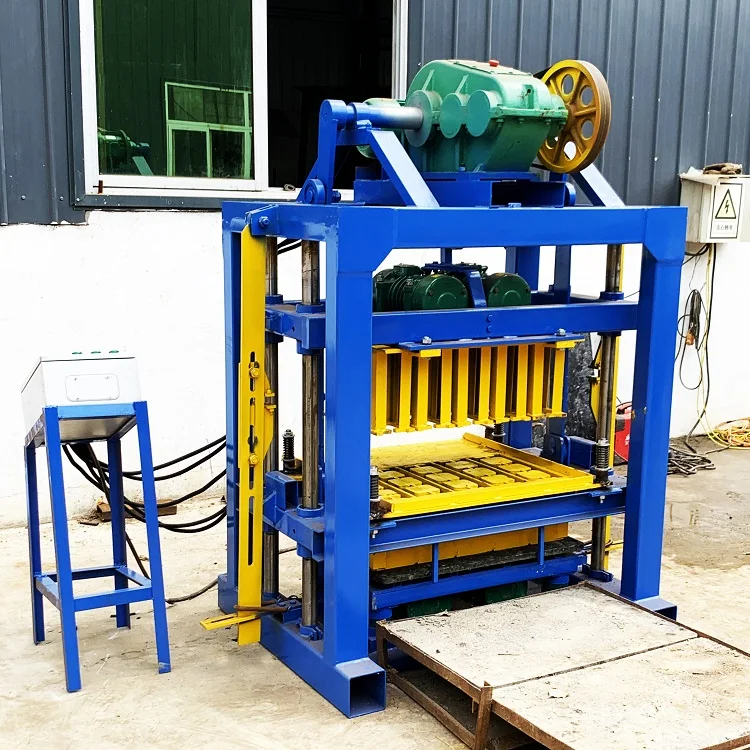 Stationary block machine