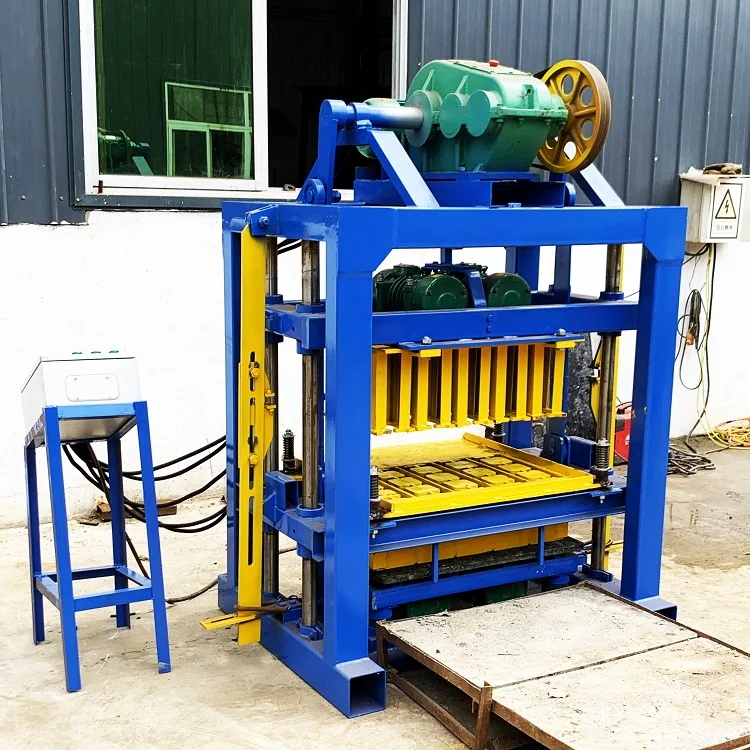
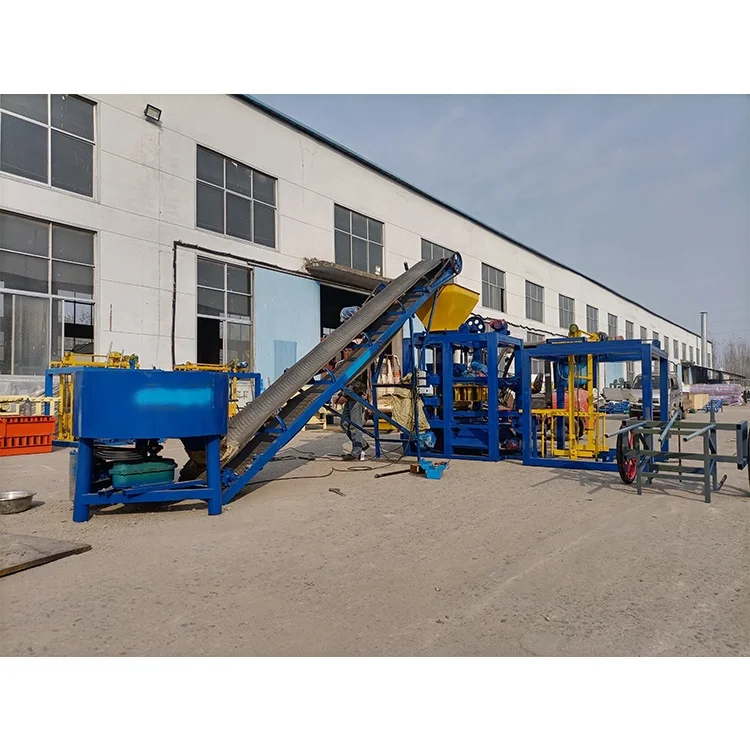
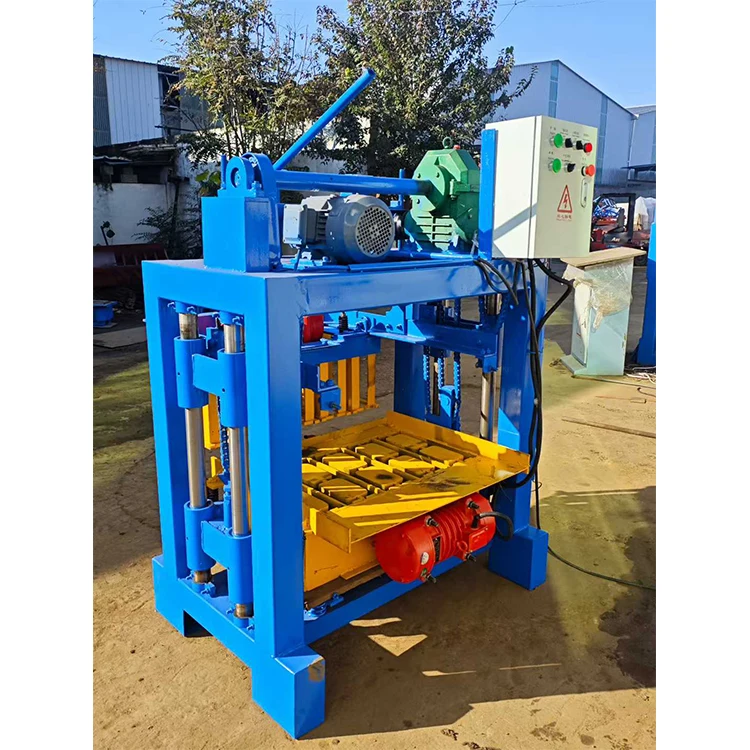
Matched System Approach — The QTJ4-40 block machine is specified alongside its mould, pallet and handling requirements as one integrated unit rather than a standalone press, so capacity figures reflect your actual block format.
Technical Specifications
| Parameter |
Value |
| Model |
QTJ4-40 |
| Product Type |
Hydraulic Concrete Block Making Machine |
| Main Vibration Form |
Platform Vibration |
| Vibration Frequency |
2800 r/min |
| Pallet Size |
850 × 450 mm |
| Overall Dimensions (L × W × H) |
1350 × 1460 × 1800 mm |
| Machine Weight |
1 T |
| Factory Area |
200 m² |
| Top Die Mechanism |
Push and pull with automatic scraper |
| Automation Level |
Semi-automatic (manual pallet handling) |
| Worker Requirement |
1–3 people |
| Raw Materials |
Concrete, cement, fly ash, crushed stone, sand, dust, gravel, slag |
| Material Ratio (approx.) |
Cement 8–10%, sand 30–40%, stone 50–60% |
| Production Capacity (400×200×200 mm hollow block) |
4 pcs/mould, 360 pcs/h, 2880 pcs/day |
| Production Capacity (400×150×200 mm block) |
5 pcs/mould, 500 pcs/h, 4000 pcs/day |
| Production Capacity (225×112.5×60 mm paver) |
9 pcs/mould, 900 pcs/h, 7200 pcs/day |
Application Suitability
| Application |
Material or Output |
| Hollow block production for residential walls |
Crushed stone, cement and sand at 1:4:5 ratio |
| Solid block manufacturing for load-bearing structures |
Concrete with fly ash or gravel aggregate |
| Paving block and colored paver runs |
Fine sand, cement and pigment on 225×112.5×60 mm mould |
| Interlocking block and curbstone production |
Coarse aggregate with cement binder |
| On-site block production for housing projects |
Locally sourced sand, dust and slag |
What "2880 Pieces per Day" Actually Means for the QTJ4-40 Block Machine Manufacturer
Output numbers only hold when the block format, mix design and curing conditions are stated upfront.
I have watched buyers sign off on a QTJ4-40 block machine manufacturer quotation showing 2880 pieces per day, then arrive on site to find that figure assumed a 400×200×200 mm hollow block with clean graded aggregate. When local sand carries high clay content, the same machine produces noticeably fewer saleable blocks per shift because the vibration frequency and hydraulic pressure were never matched to that mix. The gap between catalogue capacity and real daily output is where most first-plant disputes begin [NEED_CITE: common causes of block machine capacity disputes in export markets].

Where the QTJ4-40 Sits in the Stationary Range
The QTJ4-40 occupies the entry-to-mid tier of our stationary block machine lineup. For buyers surveying options for a first plant or replacing a small workshop press, this model provides a clear reference point before stepping up to higher-output automatic lines. Its semi-automatic configuration with manual pallet handling keeps the initial investment contained while still delivering platform vibration at 2800 r/min for consistent block density. A buyer comparing this QTJ4-40 block machine manufacturer offering against larger tiers can see exactly where output, footprint and labour requirements diverge.
Footprint and Labour at This Tier
At 1350 × 1460 × 1800 mm overall dimensions and roughly 200 m² of factory area, the QTJ4-40 fits sites that cannot accommodate a full automatic line. One to three operators handle material feeding, pallet transfer and block stacking, which suits contractors producing blocks on a limited project site. The compact footprint also means the curing rack area can be arranged close to the press, reducing pallet travel distance and the risk of fresh blocks being damaged in transit [NEED_CITE: typical stationary block plant layout considerations].
Reading the Specs That Matter on the Ground
Platform vibration at 2800 r/min works together with the push-and-pull top die mechanism to compact concrete evenly across the mould cavity. Without sufficient top pressure, hollow blocks with thin walls tend to crack at the web during stripping. The 850 × 450 mm pallet size must be checked against the curing racks and forklifts already on site — a mismatch here forces a buyer to replace handling equipment or accept awkward manual stacking. The approximate material ratio of cement 8–10%, sand 30–40% and stone 50–60% gives a starting point, but local aggregate grading and moisture content will shift the workable mix, so a trial run with the buyer’s actual material is always part of our factory test before dispatch.
The Cost of Skipping the Pallet and Mould Conversation
Buyers who focus only on the press often discover that pallet handling, stacking and curing were never included in the quotation, leaving freshly pressed blocks to be moved by hand. Pallets chosen without regard to the curing area dimensions or the forklift capacity already available create bottlenecks that cancel out the cycle time the press was selected for. Similarly, a mould change that takes most of a shift removes the format flexibility the buyer paid for, turning a multi-product plant into a single-format operation [NEED_CITE: pallet handling impact on block plant throughput].
Why Source the QTJ4-40 Block Machine Manufacturer Here
Block machinery is our single focus, so the QTJ4-40 is never quoted as a bare press — pallet specification, mould drawing and handling equipment are confirmed as one matched system. Machine configuration is set against the buyer’s actual mix design and local aggregate rather than a catalogue default, which keeps capacity figures honest. Mould design covers the formats the buyer’s market actually sells, and custom drawings are available when a local format falls outside the standard range. The automation level is selectable, so a buyer can start semi-automatic with the QTJ4-40 and plan a later upgrade path without replacing the entire press. Installation and commissioning support includes operator training on the specific mould set delivered with the machine.
Documentation & Verification
- Line layout showing QTJ4-40 capacity calculated per your chosen block format
- Mould drawing and format list matched to your local market demand
- Pallet specification aligned with your curing rack and forklift setup
- Voltage, frequency and control language confirmation before production starts
- Factory test record on your material mix before dispatch
Installation, Commissioning & Support
- Foundation pad sized to the QTJ4-40 footprint of 1350 × 1460 mm with vibration isolation
- Dedicated power circuit confirmed for the machine’s voltage and frequency before arrival
- Machine shipped partially dismantled with reassembly guided by our on-site technician
- First-run parameter setting for vibration frequency and top die timing on your aggregate
- Operator training covering mould change procedure and daily lubrication points
- Wear parts and mould list provided so first replacements can be ordered early
Before You Request a Quote
To size the QTJ4-40 correctly within our range, share your target block formats, expected daily output per format, and the local aggregate you plan to use. Confirm the voltage and frequency available at your site, along with the pallet size that fits your existing curing racks and forklift. This information lets us return a configuration proposal with capacity stated per format rather than a single headline number.
Frequently Asked Questions
Q: How is QTJ4-40 capacity calculated, and which block format is assumed?
A: Each capacity figure in our specification sheet is tied to a specific block format. For example, 2880 pieces per day assumes a 400×200×200 mm hollow block at four pieces per mould, while 7200 pieces per day assumes a 225×112.5×60 mm paver at nine pieces per mould. We confirm your actual format before quoting so daily numbers reflect your product mix.
Q: Where does the QTJ4-40 sit compared to higher-tier automatic machines?
A: The QTJ4-40 is an entry-to-mid tier semi-automatic press with manual pallet handling, suited to first plants or project-site production. Higher tiers add automatic pallet feeding, stacking and cubing, increasing output and reducing labour while requiring a larger factory footprint and higher investment.
Q: What plant footprint and worker count does this tier require?
A: The QTJ4-40 needs roughly 200 m² of factory area including curing space, with overall machine dimensions of 1350 × 1460 × 1800 mm. One to three operators cover material feeding, pallet transfer and block stacking under semi-automatic operation.
Q: Can I start with the QTJ4-40 semi-automatic and upgrade automation later?
A: Yes. The automation level is selectable, and the press can be specified with upgrade provisions for automatic pallet feeding and stacking. This lets buyers begin production at a lower investment and add automation stages as demand grows.
Q: Which block formats and mould options are available for this model?
A: Standard moulds cover hollow blocks, solid blocks, paving blocks, interlocking blocks and curbstones in sizes matching the 850 × 450 mm pallet. Custom mould designs are available to buyer drawings when local market formats fall outside the standard catalogue range.

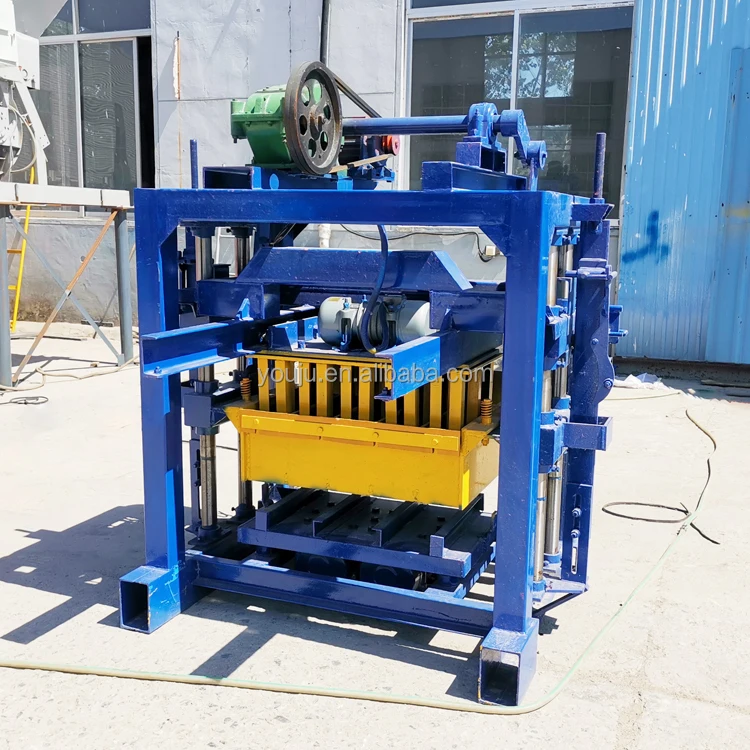
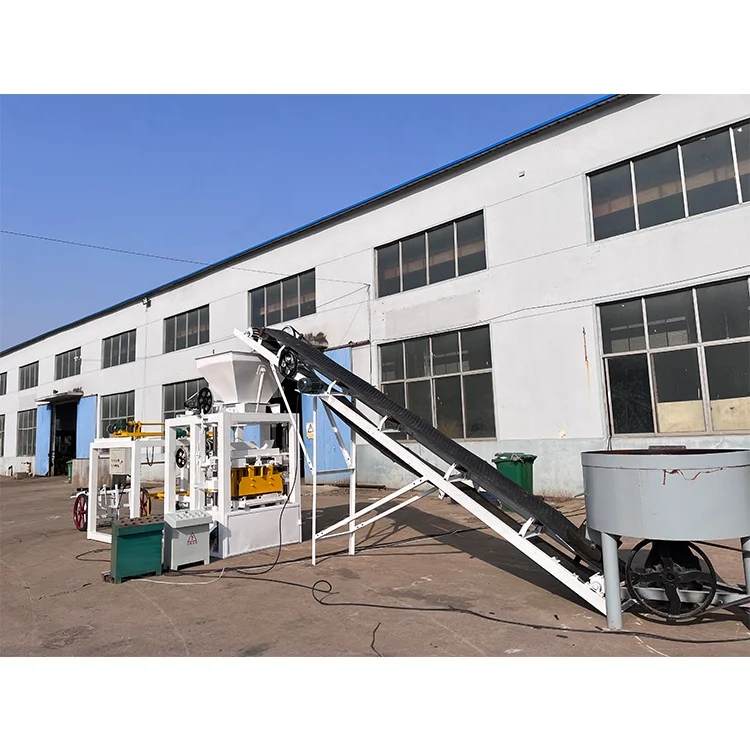 Stationary block machine