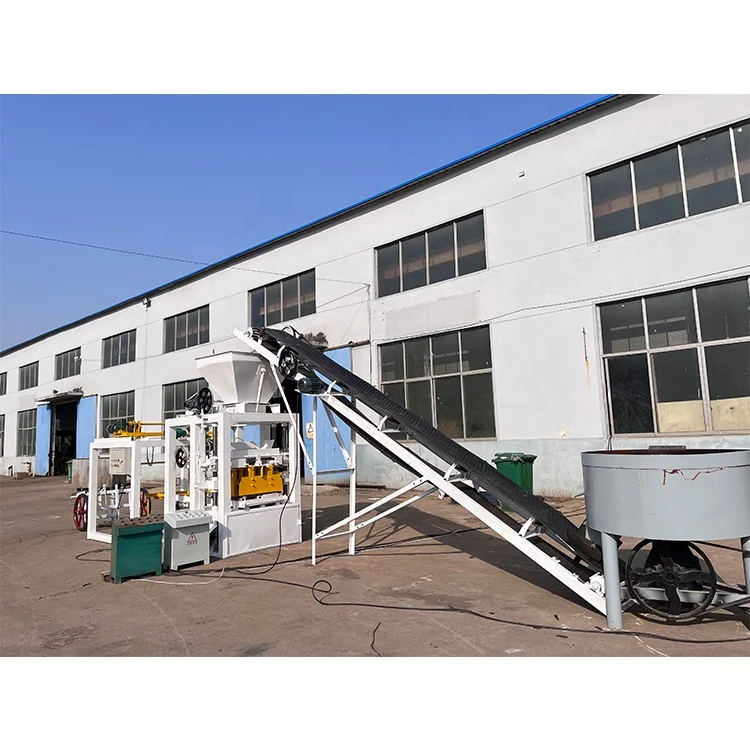
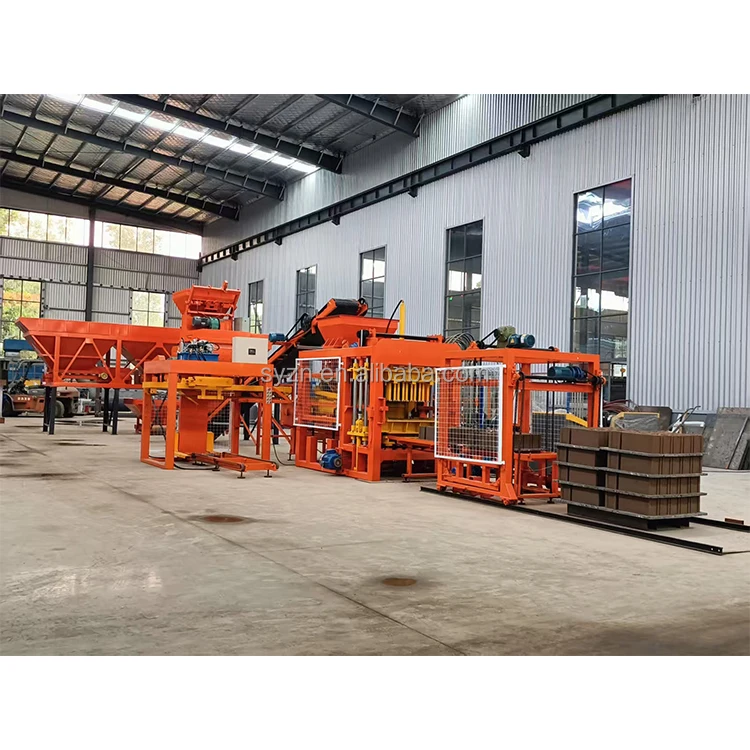
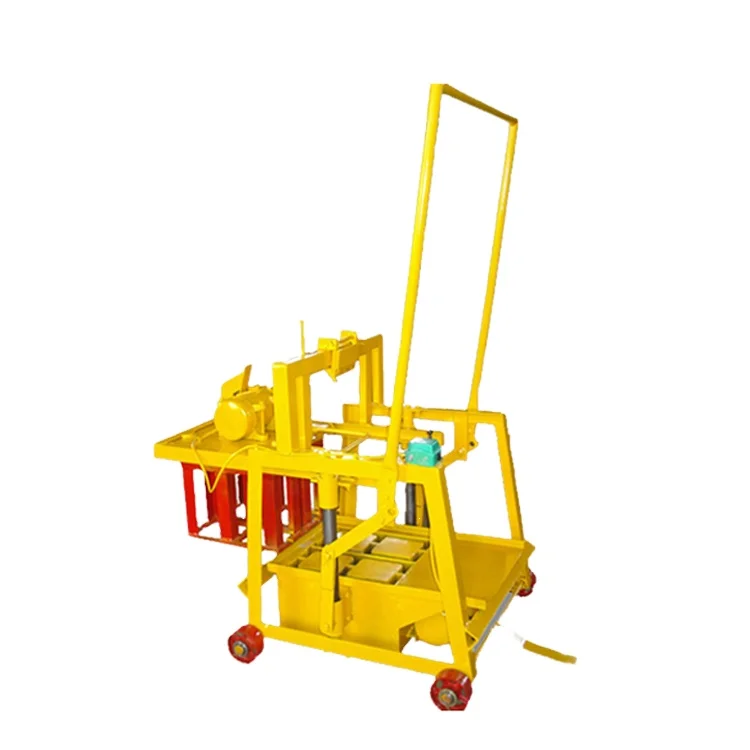
Matched System Specification — the QTJ4-40 block machine, mould, pallet and handling equipment are configured together against your local aggregate and target format, not sourced as mismatched components from different suppliers.
Technical Specifications
| Parameter |
Value |
| Model |
QTJ4-40 |
| Product Type |
Semi-Automatic Concrete Block Making Machine |
| Rated Power |
10.4 kW |
| Molding Cycle |
40 s |
| Theoretical Output (400×200×200 mm hollow, 4 pcs/mould) |
360 pcs/h, 2800 pcs/day (basis: 8-hour shift) |
| Theoretical Output (400×150×200 mm hollow, 5 pcs/mould) |
450 pcs/h, 3600 pcs/day (basis: 8-hour shift) |
| Theoretical Output (225×112.5×60 mm solid brick, 9 pcs/mould) |
800 pcs/h, 6400 pcs/day (basis: 8-hour shift) |
| Raw Materials |
Concrete, sand, cement, fly ash, lime, gypsum |
| Vibration System |
Bed mould vertical vibration + upper mould compression vibration |
| Pallet Size |
850 × 450 mm |
| Overall Dimensions (L×W×H) |
1350 × 1460 × 1800 mm |
| Machine Weight |
1 T |
| Automation Level |
Semi-automatic (top die push-pull, automatic scraper, manual pallet handling) |
| Voltage |
Configurable to buyer’s local voltage and frequency |
| Mould Format Options |
Hollow block, solid brick, custom formats available |
Application Suitability
| Application |
Material or Output |
| Small to medium block plant startups |
Hollow blocks from locally sourced sand, cement and fly ash |
| On-site housing project production |
Solid bricks and hollow blocks using crushed stone aggregate |
| Building material distributors expanding format range |
Paving-style and interlocking formats with custom moulds |
| Construction contractors self-producing blocks |
Daily output matched to project consumption rates on infrastructure sites |
Why Quoted Capacity Numbers Mislead First-Time Buyers
A capacity figure without a stated block format tells you nothing about what your plant will actually produce each day.
The QTJ4-40 block machine manufacturer market is full of quotations claiming thousands of blocks per shift without disclosing whether that number assumes a small solid brick or a large hollow block. When the machine arrives and you run your actual product format, daily output can fall far short of what you planned your business around. Every output figure for the QTJ4-40 is tied to a specific block size, so your planning matches reality [NEED_CITE: block machine capacity quotation standards by format].

Placing the QTJ4-40 in the Full Machine Range
The QTJ4-40 occupies the entry tier of the Shiyue block machine lineup, aimed at buyers who need genuine daily output but do not yet have the floor space, capital or operator team for a fully automatic line. Above it sit higher-output automatic presses with integrated pallet feeding and stacking. Below it are mobile egg-laying machines that produce blocks directly on the ground without pallets. Understanding where this semi-automatic tier sits helps you decide whether you are buying enough capacity or overspending on automation you cannot yet use.
When Semi-Automatic Is the Right Starting Point
A semi-automatic press makes sense when your daily demand is real but your production team is still growing. The QTJ4-40 handles the mould compression and scraper cycle automatically, while pallet feeding and removal remain manual. This keeps the initial investment contained and leaves a clear upgrade path — buyers can move to automatic pallet handling and stacking as volume grows without replacing the press itself [NEED_CITE: semi-automatic to automatic block line upgrade paths].
Reading the Vibration and Pressure Specs
The dual vibration system — vertical vibration on the bed mould combined with compression vibration on the upper mould — directly affects block density and demoulding quality. In my experience setting up machines in East Africa, lightweight volcanic aggregate required careful matching of vibration force to hydraulic pressure; when those two were misaligned, blocks cracked on release. The QTJ4-40’s 10.4 kW rated power drives both systems, and the configuration must be validated against your specific raw material mix before the machine leaves the factory. The 40-second molding cycle is the baseline from which all output calculations derive, and cycle time can vary slightly depending on block height and material flow characteristics.
The Cost of Skipping Configuration Checks
When voltage and frequency are not confirmed before production, a machine built for 380V/50Hz arrives in a market running 440V/60Hz and sits idle until a transformer is sourced locally. Pallet size is another frequent mismatch — the QTJ4-40 uses 850 × 450 mm pallets, and if your existing curing racks and forklift are built around a different dimension, you end up replacing your entire downstream setup or handling pallets by hand [NEED_CITE: industrial equipment voltage and frequency standards by export market]. Control system language is equally important when operators cannot read the display during commissioning.
Why Source the QTJ4-40 Through This Range
Block machinery is the single focus here, which means the QTJ4-40 press, mould, pallet and handling equipment are specified as one matched system rather than assembled from separate vendors. Configuration is set against your actual mix design and local aggregate, not a catalogue default. Mould design covers the formats your market actually sells, including custom drawings when standard formats do not match local building codes. The automation level is selectable so you can start semi-automatic and add automatic pallet handling later. Installation support includes on-site commissioning and operator training so your team is producing saleable blocks before the technician leaves.
Documentation & Verification
- Line layout with capacity calculation stating the block format assumed for each output figure
- Machine specification sheet covering vibration force, hydraulic pressure and cycle time per format
- Mould drawing and format list for every block type included in your order
- Pallet specification cross-checked against your curing area dimensions and forklift capacity
- Voltage, frequency and control display language confirmation signed off before production begins
- Factory test record on your raw material mix before dispatch
Installation, Commissioning & Support
- Foundation requirements calculated for the 1 T machine weight and vibration load during operation
- Dedicated power circuit sized for the 10.4 kW rated power draw at your confirmed voltage and frequency
- Machine delivered assembled with mould installed, pallet system ready for manual handling from day one
- On-site parameter tuning matching vibration and pressure to your local aggregate and mix design
- Operator training covering mould change procedure, daily maintenance and block quality checks
- Wear parts and mould replacement list provided so spares are ordered before the first replacement falls due
What to Share When Requesting a Configuration
To size the QTJ4-40 correctly for your plant, the most useful starting information is your target block format and realistic daily volume requirement. Please also share your local raw material availability, particularly aggregate type and cement grade, along with your workshop floor dimensions and existing power supply specifications. If you already have curing racks or forklifts in place, their dimensions help ensure the pallet system integrates without rework.
Frequently Asked Questions
Q: How is the QTJ4-40’s daily capacity calculated, and which block format does each number assume?
A: Every output figure is tied to a specific block size and mould cavity count. For example, 2800 pieces per day assumes the 400×200×200 mm hollow block with 4 pieces per mould over an 8-hour shift. Different formats produce different daily totals, so confirm which block you plan to sell before comparing capacity across machines.
Q: Where does the QTJ4-40 sit in the Shiyue range compared to automatic and mobile machines?
A: It sits at the entry semi-automatic tier — more output and consistency than a mobile egg-laying machine, but with a smaller footprint and lower investment than a fully automatic line. Buyers often start here and upgrade to automatic pallet handling as their market grows.
Q: What voltage, frequency and control language options are confirmed before shipment?
A: Voltage and frequency are configured to your local grid supply, and the control display language is set to match your operator team. These are confirmed and signed off during the ordering process so no delays occur during commissioning after the machine arrives at your site.
Q: Can the automation level be upgraded later from semi-automatic to a higher tier?
A: The QTJ4-40 is designed so that automatic pallet feeding, stacking and cubing can be added to the existing press as your production volume grows. This means the core machine remains in service while the line around it gains capacity and reduces manual handling.
Q: What installation, commissioning and operator training support is included?
A: On-site installation covers machine positioning, power connection and parameter tuning against your local mix design. Operator training includes daily operation, mould change procedures and routine maintenance so your team produces saleable blocks before the technician departs.

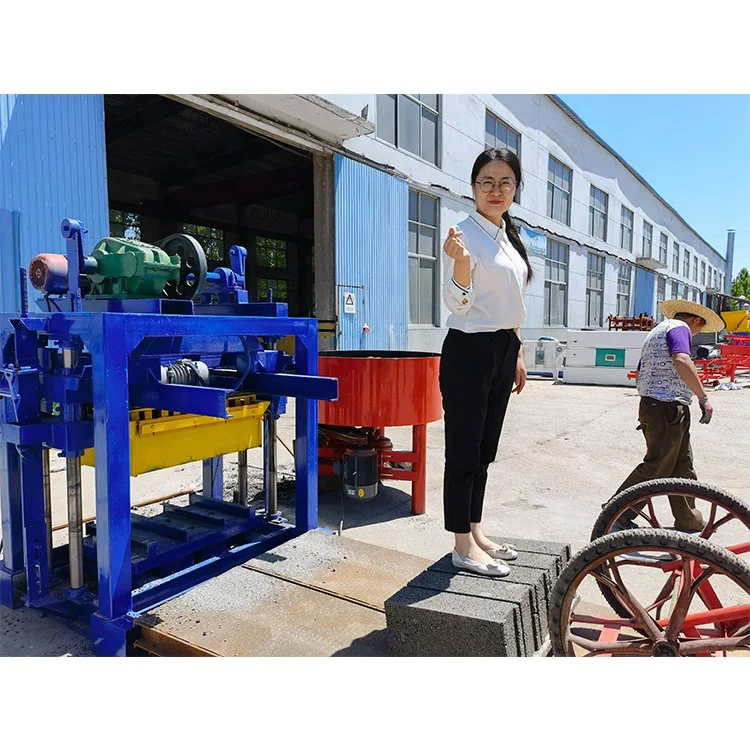
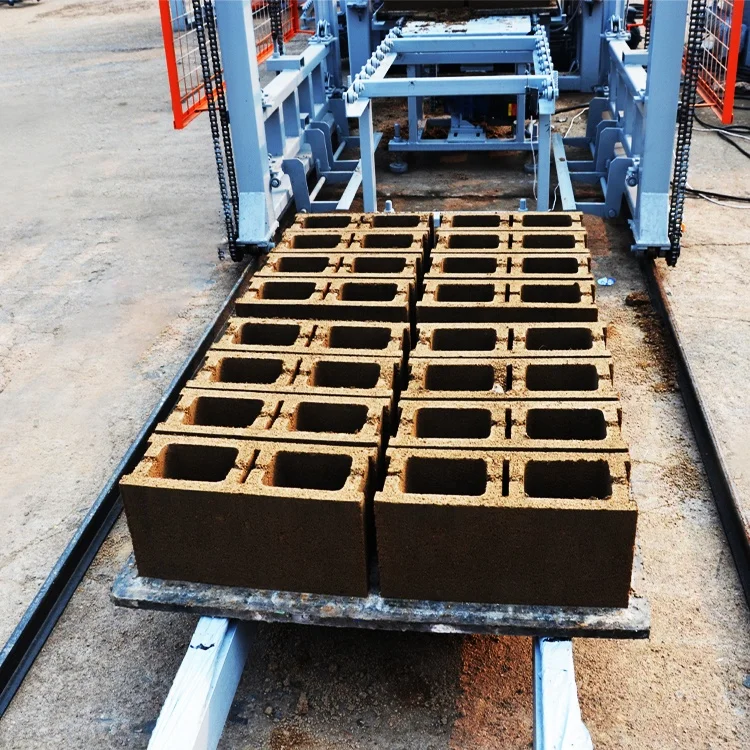 High quality block machine